

It’s been a Monday. What does that mean chez Duxbury? It means a double clinic day (seeing patients at my UAB office all morning and all afternoon – I’m supposed to get an hour for lunch but given that the morning patients always run late and the afternoon patients are always there early, that hour is usually more like fifteen minutes) followed by an opera administrative meeting via zoom followed by a drive across town to arrive at rehearsal on time for two and a half hours of work trying to get Shakespeare on its feet for an opening in two and a half weeks followed by a drive back across town and coming home to two cats upset that no one has been home for the last fourteen hours to give then any kitty treats.
I’m feeling less tired this week. Perhaps I’ve gotten a second wind. Perhaps I’ve had enough nights of decent sleep. Perhaps I’m revved up as the show is getting to the point where we’re starting to stitch the scenes together into a coherent whole. (We ran the first half tonight for the first time. It’s rough in places and lines are not yet sure and firm but the general shape is coming together and the staging is flowing the way that I want it to with the human world within the proscenium and the fairy world of the woods spilling throughout the house). We do the same kind of rough work through of the second half tomorrow night and then I’ve arranged for a crash course in acting Shakespeare for them all from a professional to give them some tips that I just can’t, not being the trained pro that they sometimes think I am.
Tickets are now available on line. I’ll try to remember to put up a post with the link in the comments or later this week. It’s going to be an inexpensive way to spend an evening with some classic theater and some four hundred year old dirty jokes. Our ticket prices are cheaper than ‘Barbie’ and ‘Oppenheimer’, at least at my local multiplex which is one of the reasons I have not yet ventured out to see either. The American Theater may be heading back to its community roots rapidly given the current financial disasters besetting the industry. The model for professional theater (outside of Broadway, which is its own animal and which has more or less become a showcase for expensive and overlong theme park attractions that can get 1500-2000 butts in seats night after night, year after year) has been one of professional (union) and sem-professional (paid stipend, but non-union) companies presenting seasons where their cash flow has depended on a reliable subscriber base ordering up season tickets year after year. The pandemic has changed all that. Some of the subscriber base has died, some is uncomfortable going into closed quarters with others. Some simply got out of the habit of regular theater going during the shut down. But without that reliable income, budgets are out of balance, and companies are hanging on by a thread. Well regarded professional companies are canceling seasons, retrenching, reducing the size and scope of offerings, jettisoning experimental work and everyone is trying to figure out what is going to put butts back into seats.
From what I can tell, if a production speaks to an audience, it sells. The problem is that the professional/semi-pro theater hasn’t figured out who its modern audience is and therefore hasn’t been able to design seasons that will appeal. Not to mention, the all at once expense of season tickets isn’t necessarily easily born by those outside of certain demographics. The audience for theatrical entertainment is out there. Broadway does well (but it’s not necessarily aimed these days at a discerning theater audience). This past weekend at the movies where not one, but two auteur films not part of franchises or featuring superheroes both smashed box office records showed Hollywood that their recent anemic returns may have something to do with having shoveled out little other than recycled manure for most of the past decade. Our local theater companies routinely sell out shows by marketing the community aspects of local theater. Local talent, many of whom are as good as you will see anywhere out.
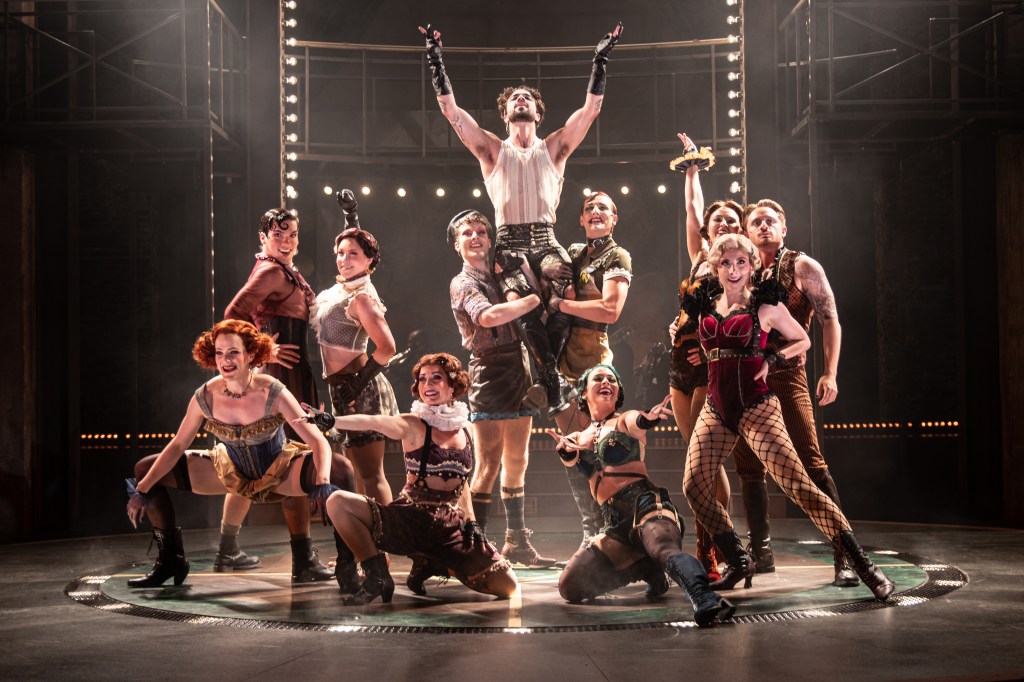
I ventured down to the Alabama Shakespeare Festival this past weekend to see their production of Cabaret. If you’ve been reading my musings for a while, you’ll know that’s one of those shows (along with Sweeney Todd and Into The Woods) that I’ll go see in almost any incarnation. The ASF is the only professional regional theater in the state. Tommy and I used to go routinely when they did festival programming when they ran multiple shows in rep – you could go down for a weekend and see four to six plays – half Shakespeare, half modern. They stopped doing that a number of years ago for a more traditional season form and making the trek to Montgomery for a single show just isn’t as appealing a proposition. Cabaret was a terrific production – incredibly well cast and performed with elements of Hal Prince, Donmar Warehouse/Studio 54 and the current London production all seamlessly blended. The staging of the title number was perhaps the most uncomfortable I’ve felt in a theater for a performer for a long time – which was a good thing. And the house was half empty on a Saturday night. It wasn’t a lack of PR. It wasn’t show quality. It wasn’t recognizability of the title. Something was still missing that was necessary to bring in what should be brought in. And until that missing piece is identified, we’re going to see the collapse of the professional theater industry in this country over the next decade.
My theater career will survive. It’s not professional and doesn’t depend on professional venues and companies. Community theater isn’t going to go anywhere. I’ll be able to perform on local stages, perhaps in somewhat scaled back productions depending on what budgets will allow and I and the other local thespians will continue to feed the need for story telling which creates a unique and intimate bond between performer and audience, something film cannot replicate. Imaginative directors and designers will come up with ways to transport audiences to other places and times with techniques to get them to suspend their disbelief and buy into so much cardboard and muslin and paint are what they purport to be. The budget for the original Broadway production of Oklahoma! was $83,000 in 1943 (roughly 1.5 million in today’s dollars). You couldn’t get a show anywhere near Broadway for that cost now. Most musicals are in the 20 million dollar capitalization range. Would it be so bad if we were to scale back and had simpler productions that fully engaged an audience and fewer flying DeLoreans? Just a thought.
If you’ve ever wondered what audiences saw in 1943, the University of North Carolina produced a meticulous recreation of the original production, researching the sets, the costumes, the lighting plots, the choreography (aided by a few of the dancers who were still living at the time), and every other aspect that had been archived away. It was professionally filmed. Act I –
Act II –
It’s quite the piece of theater history. I wish more of the classic shows would get this treatment.
 Life, The Universe, and Everything