
We’re half way through the second weekend of A Midsummer Night’s Dream and the show is holding up well, getting tighter and tighter as the cast becomes more comfortable with the language and more willing to take the play up to comic brio tempo. I’ve managed to arrange things to be at every performance so far, but I’ll miss tomorrow’s as I have a wedding to go to and I promised to attend nearly a year ago. I’ve known one of the brides since she was a child and have enjoyed watching her grow and mature into an accomplished young woman. I will catch the closing performance of Midsummer on Sunday… and be back in rehearsal for Twelve Angry Jurors on Monday. Fortunately, in the latter, I’m playing the bailiff and have all of five minutes of stage time and four lines so it’s not a huge strain.
Covid numbers are continuing to increase at a somewhat alarming rate. Hospital numbers are increasing at about 10% a week (which means doubling every month and a half) and new variants are popping up. They all appear to be omicron strains so far but I won’t be surprised if we move on to a new Greek letter before the end of the year after some radical new mutation comes to light. I don’t think we’re going to go back to the kind of numbers we saw in 2020 and 2021 as vaccines and natural immunity are now widespread but anything is possible and the general weakening of the health system and public health mechanisms in general are going to put us in a bad position if something major comes down the pike. The ER at UAB and the VA has been filling up again but I haven’t been able to track down how much of that is due to Covid and how much is due to other causes. Our unrelenting heat wave is certainly making people with chronic disease more prone to an exacerbation due to dehydration and heat exhaustion. Still haven’t heard any specific information on the availability of a new Covid booster this fall. We’ve been told it’s coming, but not when or by what means. And it’s likely to cost you. The expiration of the emergency back in May means that the federal government is no longer picking up the vaccine tab.
We’ve been lucky with Midsummer that Covid has stayed out of the cast. (Knocking every piece of wood within reach of my arms). Other local shows have not been so fortunate, having to cut runs short or to rapidly redo rehearsal schedules after a couple of people have gotten sick. And it’s happening elsewhere as well. Josh Groban is out of Sweeney Todd on Broadway due to Covid infection. I’m sure his understudy is perfectly competent but people are paying hundreds of dollars a seat for the star. Cancelling shows, which is extremely disappointing to the cast and crew whom have worked so hard, is also financially devastating to small companies that depend more on box office than the larger rep theaters which get much of their operating budget from grants and major donors. The finances of the American theater industry are in a complete turmoil currently and a lack of performance certainty isn’t helping anyone at any level.

Should we go back to masking? It might not be a bad idea but it only truly works if everyone does it. You don’t so much mask to protect yourself but to protect others from you. If everyone masks, transmission declines. If only a small percentage do, it doesn’t make much difference. You can protect yourself with masking, but really only with properly fitted N-95s which are devilishly uncomfortable to wear. There’s certainly no political will to go back to mandatory masking in this part of the country and even locales with a better track record are going to have a hard time with requirements without a major shift in public opinion (which will probably rely on a major shift in mortality and morbidity statistics).
Speaking of mortality… As they continue to dig more bodies out of the ashes of Lahaina, I’m looking for information as to who the dead are. I’m expecting that we’ll find that most of them were members of what I call the invisible population. I see them because of the nature of my work but most of us never meet them because they rarely appear in public space. They include older individuals who have become physically weaker making it difficult for them to navigate public space without a wheelchair, walker, and the assistance of another person or who are losing mentally capacity and who rarely leave the familiarity of home as the complexity of the outside world is too much for them to handle. They are the morbidly obese who have difficulty leaving the house. The bed and chair bound. The seriously ill who have feeding tubes and catheters and oxygen at home. The relatives who may be able bodied but who are devoted to caring for an incapacitated person and who would not dream of leaving them behind in an emergency. They could not possibly outrun a fast moving firestorm with limited warning. We don’t think of the invisible population because it’s convenient for us not to. Their lives are usually governed by laws and bureaucracy put in place by well meaning people with no practical experience in the issues that the invisible face.
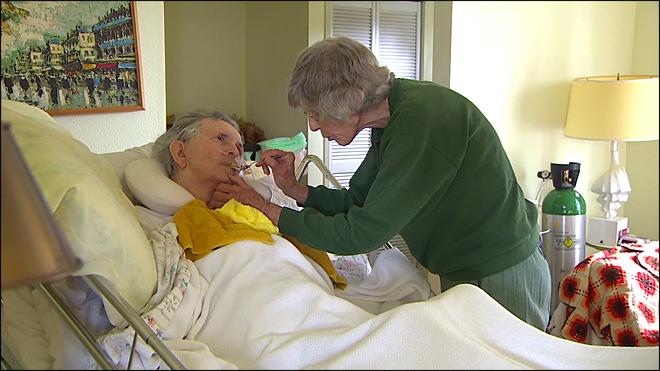
I’ve spent my professional life with the invisible. One of the reasons I’m as effective in my job as I am is that they understand that I am one of the rare authority figures in their lives that truly sees them when most do not. I enter their houses. I hear their hopes and fears and dreams and do my best to at least help them achieve what little balance in life their bodies will allow. But, because I work with the invisible, I and my medical specialty are rendered invisible to the majority of the American health care industry. We in geriatrics don’t generate money or brilliant cures or major headlines and this makes us an afterthought at best or, as one of my internal medicine colleagues once told me, ‘Geriatrics is just Internal Medicine when it doesn’t matter’. Geriatrics as an official boarded specialty isn’t that old. It began the same year that I graduated from medical school so I am the first generation that was formally trained in the subject. And I have watched my entire career as it has been shunted aside and is now in a state of collapse, with the looming retirement of the initial cohort of geriatricians, just as the demographics of the country require the knowledge base with the aging of the baby boom. Jerry Gurwitz, the head of Geriatrics at the University of Massachusetts wrote an Op-Ed in the Journal of the American Medical Association thoroughly discussing this issue which is worth reading. You can find it if you google. (Or at this link https://jamanetwork.com/journals/jama/fullarticle/2808221)
How do we make the invisible visible? Danged if I know. But I have an idea of where to start. We’ve changed the culture away from one which idealizes progress and community to one which worships only material gain. I don’t think fundamental change is possible until we start turning back the other way. That used to the role of religion but that seems to have failed as badly in America as our politics and our economics. This is all making my head hurt so I think it’s time to end this post and put on bad TV. After all, tomorrow is another day.
 Life, The Universe, and Everything