
And the proof pages fly by, one by one. I’m now about two thirds of the way through the final proofs of Volume III of The Accidental Plague Diaries and barring something really unfortunate happening this weekend, it will all be signed, sealed, delivered back to the publisher before the end of the month. Then, assuming all goes well in Seattle, I should be able to announce a publication date for late October or early November and then this project, which has been an over arcing theme in my life for the last nearly four years will be done. Unless I have to put significant time into a Kindle edition, an audio edition, and some sort of monologue adaptation. It’s rather odd to think that I’ve spent more time on this than time in high school, college, or medical school. When I do hold Volume III in my hands, I think I’ll have to figure out some sort of valedictory celebration.
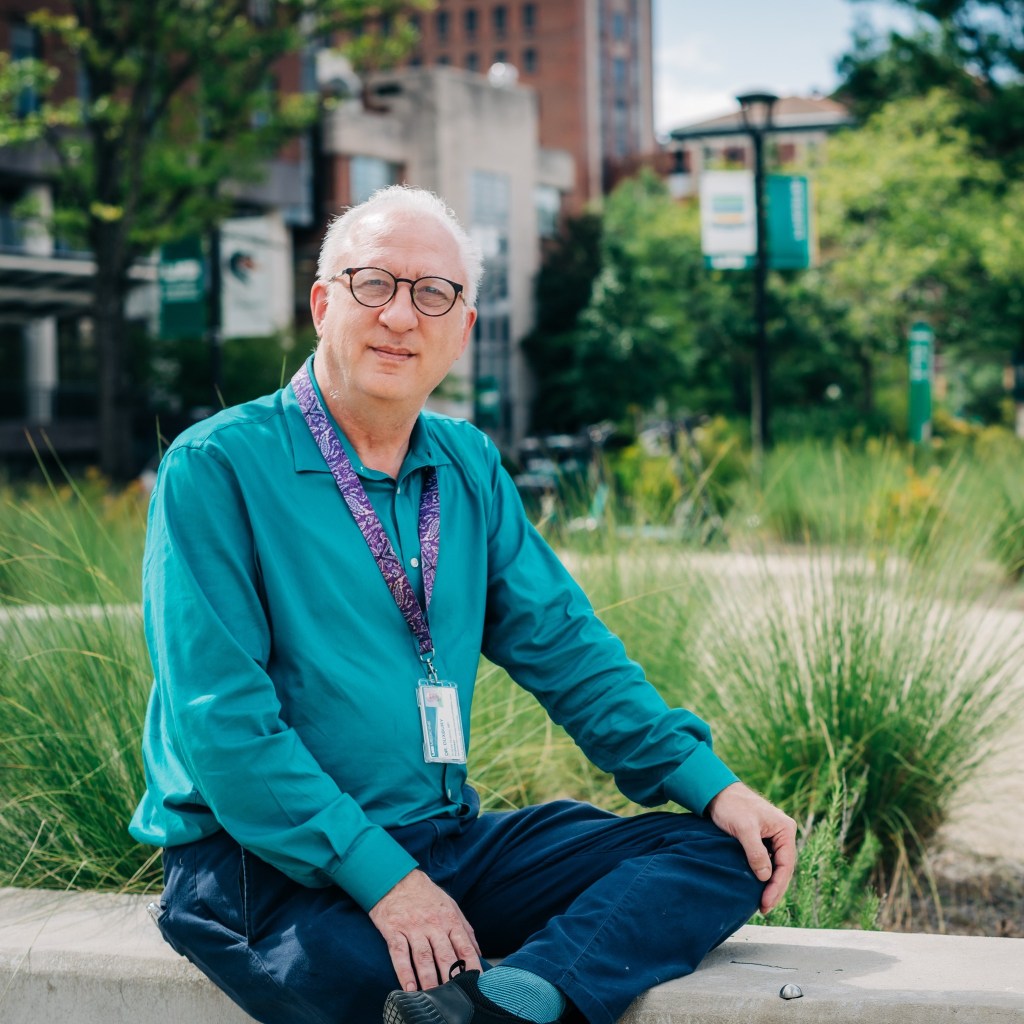
UAB has a new social media initiative ‘Humans of UAB’ based on the New York Times series ‘Humans of New York’ which has been running for the last couple of years. For some reason known only to the PR department, they decided that I was a human this month and the piece came out yesterday. I was quite taken with the photograph they took. (It’s my new profile photo) but I’m not sure that UAB truly appreciated the subtext of my remarks. My comments on being human in medicine, on a reread, suggest that to be human and to work within the modern American healthcare industry, one must forever swim upstream, pushing against the way that things are done. And that this gentle refusal to go along to get along, while better for patients, will limit the ability to rise within the system. I’ve certainly seen that play out in my career both with my personal experiences and in watching others battles. And I came to the conclusion a long time ago that I would rather do the right thing and insulate myself somewhat from the system at large than compromise for the sake of a nicer office or a higher salary.
I had a text conversation this morning with an old friend; she has a sister with a complex, chronic autoimmune disease which has led to a lot of interactions with the the health system. She started out with an innocuous enough question. Was I aware of any local primary care physicians who took care of their own patients when they were in the hospital as well as seeing to their outpatient needs. I really didn’t know of any. And then it occurred to me that that was the standard model of care from the turn of the last century and the beginnings of the modern hospital through the 1980s. I was of the last generation of internists who was trained to be able to do both inpatient and outpatient care and who was expected to follow that sort of career path. I finished by residency in 1991, but by 1995-2000 significant economic changes in medicine led to the creation of the inpatient hospitalist who would to the inpatient work leading primary care physicians to focus on outpatient care. This was a major paradigm shift.
Why did this happen? The shift of the system from its not for profit roots to for profit models demanded greater efficiencies from the parts of the system. Having physicians in the hospital to deal immediately with issues and with the more complex medical illnesses that could now be treated with more modern medications and technology rather than the nurses having to track the physician down in his office down the street for new orders allowed a physician to provide services to more patients at once. At the same time, the reimbursements per patient for non technical services, the thought part of medical practice, were being ratcheted down by the system so a primary care physician needed to see more and more visits per work day to keep the funds flowing in the practice to pay themselves and cover their office overhead. The aging of the population and the survival of more and more individuals with chronic illness that would have carried them off a generation or two ago led to more and more demands for good primary care.
Primary care began to involute. More and more medical school graduates decided to avoid it. In my graduating residency class, about half became primary care internists of one stripe or another. Now only about 15% do based on the last national statistics I’ve seen. They become hospitalists (well paid, shift work so no scheduling hassles, basically the same job they were doing as residents so very familiar working conditions) or technical subspecialists with much higher incomes. I can’t say I blame them. If I was looking at putting three or four kids through college and paying for a couple of society weddings, I might make a similar decision but my children have remained safely unborn. This huge gap between supply and demand is what’s led to the rise of the physician assistant and the nurse practitioner. I’d love to see all of my patients every time they come in but I don’t have thirty hours a day nine days a week.
The stresses and strains of the pandemic, with its mass retirements and various shortages of personnel, equipment and supplies, more or less ripped the veneer off the rickety American health system. It’s well known that our system consumes nearly twice the GDP percentage than it does in other wealthy nations and our outcomes are at the bottom of the heap when it comes to the international rankings. 11th out of 11 of the wealthiest nations and 37th out of all countries on the WHO scoreboard, nestled in between Slovenia and Costa Rica. The built in silo between the worlds of inpatient and outpatient, made rigid through various financial systems, makes it very difficult to coordinate care between those worlds. There are some ways around this. Small rural communities still follow the old way of the generalist providing both inpatient and outpatient care but those hospitals are falling like dominoes in recent years due to unsustainable deficit spending. There’s also the concierge model where you can pay a fee to the practice for ‘non-covered by insurance medical services’. That fee brings money in so that the practice doesn’t have to see an enormous number of individuals daily to keep the doors open, allowing the physicians time for longer consultations and time to make hospital rounds (although even then they usually collaborate with hospitalists due to the acuity of most hospitalized patients these days).

Then there are the complications of our new documentation systems known as Electronic Health Records. In theory, an EHR is a very good thing. One integrated health record usable by all so that things won’t fall through the cracks. In practice, however… The systems were created for administrative tasks – big data collection and analysis, QA projects, billing, and other similar things. And administrators working at home for two years had plenty of time to fool around with them and come up with more and more projects of interest. The problem with big data, however, is someone has to collect and enter the data. And that has usually fallen to the person at bedside inpatient (nurse or physician) or in the clinic exam room (same). These systems are now so chock full of boxes to be checked and data points that it’s often very difficult to separate the wheat from the chaff and therefore, as notes grow to six or seven pages of seemingly unrelated datapoints thrown out automatically by the system, more and more of the notes go unread.
My friend, who helps her sister navigate multiple specialists, is meticulous and keeps excellent notes and records regarding her health conditions and provides written copies to physicians of what they need to know. They are dutifully entered in to systems but there is so much there that no one is likely to ever find or read or act on any of this knowledge that has been obtained through years of trial and error. And she has to start over every time a new character enters the stage. My ultimate suggestions – move somewhere where the old system prevails, leave the country for a place with a health system rather than a health industry, or hold your nose and pay a concierge fee. I’m probably going to do that last should I develop health conditions that start to significantly impact my function. And once again, American capitalism creates an unofficial two tiered system.
Another friend contacted me this week about his 101 year old mother resident in a nursing home and how her care keeps falling through the cracks. Not much I can do directly as she is not my patient, but it all boils down to short staffing. The only way for him to effect change is going to be being present as much as possible and demand that the nursing home deliver the care it’s being paid to deliver. He won’t endear himself to the staff, but his mother will do better in the long run. Sometimes you have to be the squeaky wheel. I get a lot of that kind of family interaction in my practice. I’m fine with it. If it’s something within my control, I’ll fix it to the best of my ability but most of the time, the issue is not something within my purview. I listen and sympathize and try to give constructive suggestions. And realize that being there and letting them vent is probably the best thing I can possibly do. But it does get wearing.
 Life, The Universe, and Everything