

And the Alabama Symphony Orchestra Chorus season is over following two excellent performances of Brahms’ German Requiem this weekend. I wasn’t familiar with the piece prior to this rehearsal period and I have formed some opinions on it after having spent six of the last seven days with it. First, it’s an endurance test. Its seven movements are about an hour and twenty minutes in total and the chorus is never silent for more than about twenty bars so there’s no place to sit and regroup or to rehydrate once we stand and begin. Eighty minutes standing relatively still on concrete under stage lights in a warm room does a number on the back, legs and feet. Most of us ASO choristers are of a certain age and we’ve all been taking our Tylenol and getting into a hot bath at the end of the day. The ASO chorus was joined by the University of The University of Montevallo Concert Choir to bolster numbers. One of the young men went down in the sixth movement Friday night – young physiology/long and lean build/low blood pressure/heat/inability to hydrate. I wasn’t in the least surprised and I had been predicting that someone would go down at some point during performance week for those reasons. I told him afterwards not to be too embarrassed. I once went down in a room with forty medical students and eight surgeons and had some post vaso-vagal seizure activity to boot. That earned me a free trip to the ER and a visit to the neurologists. I was fine.
Second, Brahms has a very peculiar sense of humor when it comes to part writing. The bass part for the most part is a bass part, rarely going above the staff but with an occasional high note. Unfortunately, he put most of them in the last movement when you’ve been singing for over an hour and the voice is getting tired. He also put a lot of the musical climaxes in the sixth movement right before that and wrote it in such a way that there’s little time to even catch breath before coming back in on a blaring middle C or D. Third, the music is gorgeous when the voice parts and orchestra are all put together. As the chorus director said in one of our pep talks, it’s not just a great work of music, it’s a great work of humanity. The great choral requiems are prayers and supplications, and have the ability to transport the listener (and the performer) in a true spiritual experience, no matter what your religious bent may be. I’ve been able to sing most of them in the ten years I’ve been singing with the symphony. I think I’m missing the Berlioz and the Britten. Time to put that score away and break out the script of my next project. More on that later.
I keep nosing around Covidland. Even though I am no longer writing The Accidental Plague Diaries (three volumes were plenty thank you very much) I’m still quite interested in how the pandemic and its aftermath continue to change our politics, economy, and society. A couple of things came to my attention the last few days. The first is the very strong push by the financial sector to try and end the work from home trend. It seems that work from home has been relatively successful in terms of productivity, job satisfaction, and operation of office based business. However, it leads to less demand for office space. This means there’s a lot of vacant commercial real estate and this is putting pressure on the financial sector with its exposure in the commercial real estate market. Wealthy people don’t like to lose money and so the pressure is on, at least in large corporations, for things to go back to prepandemic models. Which of course means back into cube farms with inadequate ventilation as retrofitting for appropriate airflow to reduce the risk of transmission of airborne disease isn’t terribly high on the list of big business’ priorities. Smaller firms which are going with work from home models or hybrid models are growing rapidly. We may be getting into a Darwinian situation where the most adaptable will be the ones which survive.
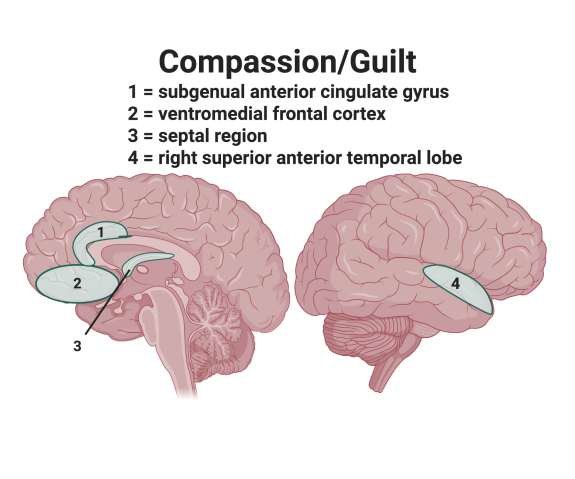
Second, there is some evidence that Covid, in its tour of the body, has a predilection for the central nervous system and, the part of the brain, if most effects is the frontal lobe, especially the areas which create empathy and cooperation. There is speculation at the rapid rise in anti-social behavior over the last few years is due to Covid having damaged the ability of some humans to act in a more civil measure, an infectious sociopathy if you will. This is very preliminary work and may not end up proving true but it’s a fascinating concept. Of course it doesn’t explain the trends prior to 2020 under the previous president. It’s also unclear if the damage is cumulative with each additional infection adding to it or if people can use other parts of their brain to alter and correct sociopathic impulses.
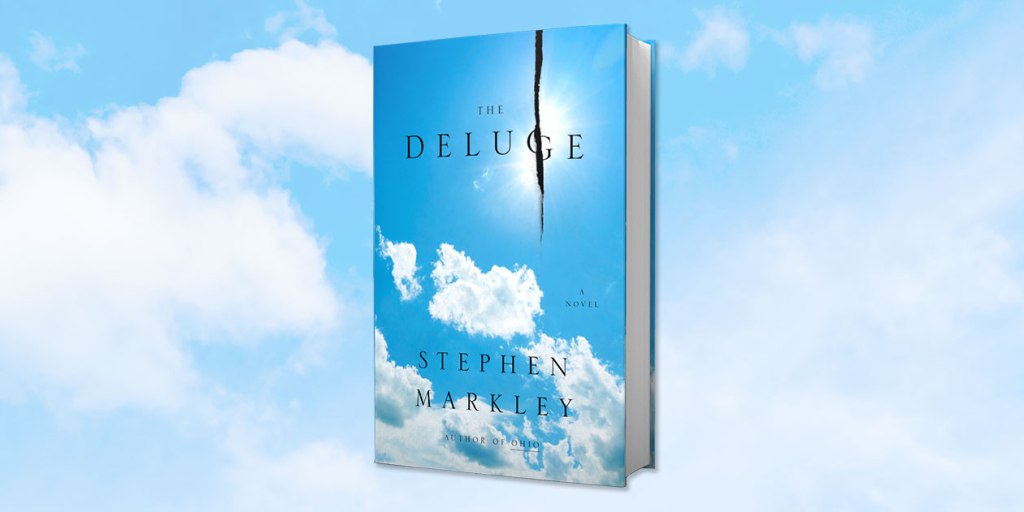
My current car big via Audible is ‘The Deluge’ by Stephen Markley (thank you David Abrams for the suggestion). It’s a sprawling novel of near future dystopia taking our current political, economic, and ecological trends and projecting them out on their logical courses. It is perhaps the most horrifying work of literature I have ever read (and I’m only half way through). The characters – people with whom it is easy to identify – trying to prop up their usual comfortable lives while their civilization is disintegrating around their ears through climate change and the effects that has on politics, economics, and social movements. I concentrate on one piece of this slow collapse, the health care system, but Markley has the imagination to look at all of our collective choices and how that is likely to play out going forward. It’s painful. It’s also giving me a kick in the rear to get going on my next book.
 Life, The Universe, and Everything