
I haven’t written a piece of this type in a while. My publisher calls these sorts of essays my ‘explainers’. This immediately, of course, sets me off into my best Desi impersonation (Looocy, yoou got some splainin to dooo) before buckling down and trying to figure out how to put down complex ideas in simple language and make it palatable and, if possible, mildly amusing for the dozen or so of you who bother to read my stuff. (I suppose it’s more than a dozen as copies of The Accidental Plague Diaries, all three volumes, seem to sell from time to time – I should be able to afford a Starbucks caramel macchiato or even a dozen eggs with this year’s royalty check). So I won’t talk much about Little Women (closed after a successful eight performance run and great word of mouth) or Edward the ghost cat (now willing to leave the office of his own volition and explore the condo a bit more).
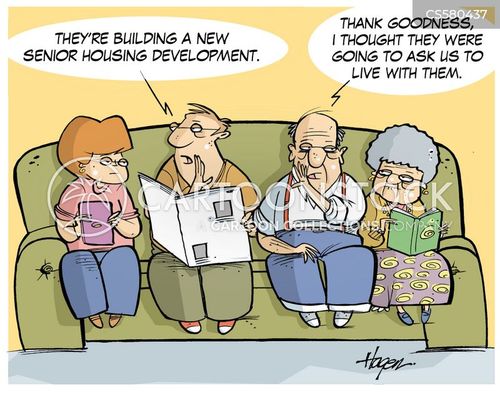
Tonight’s subject is one that I’m sure you’ve all been brooding over this holiday season. What’s going to happen with senior housing. I’ll preface this with an acknowledgement that my crystal ball is over at Madam Arcati’s for repair so I have no absolute idea as to what will happen any more than anyone else does, but there is a rapid collision of various social and market forces coming which I don’t think most of us, especially the policy makers, has really considered. It is likely to lead to the fulfillment of the ancient curse of ‘May you live in interesting times’.

We need to begin with a little demography. After all demography is destiny. The Baby Boom is one year away from beginning to turn eighty. The Boom officially begins on January 1, 1946 (almost exactly nine months after the end of the war in Europe) when the returning GIs came home, settled down and began to create and raise their families. The birthrate in the US began to skyrocket that month and we added roughly 10,000 babies daily to the population for the next nineteen years, things only beginning to slow down some in 1965 when there was a rapid and noticeable drop off in the birthrate, likely due to the widespread introduction of oral contraceptives, the changing role of women in society, and the various social upheavals of the later 1960s. The population of the US in the 1950 census was only about 150 million, less than half of what it is today so that increase had more than double the impact that children have today. (We have about the same number of total births per year now, but spread over a population approaching 350 million).
The sheer numbers of children and rapidity of the revival, refocused post war America away from the horrors of the Great Depression and the Second World War back to domestic concerns leading to the invention of the suburb, the nuclear family as a domestic ideal, prioritizing the educational system, introducing college as a more mainstream life choice, and creating the idea of a protracted adolescence as a somewhat separate stage of life to be protected against adult cares. That was decades ago. The Baby Boom is about to turn eighty. (January 1, 2026 is only one year and two weeks away). Given the sheer number of surviving members of the Boom generation, the current population of Americans over 80 (mainly the Silent Generation with a few scattered GI generation hanging on in their late 90s and early 100s) which is roughly 13 million, will nearly triple to about 33 million before it begins to shrink down due to the inevitable attrition of biological aging. That downhill course will set in sometime in the early 2040s and the Boom will basically be gone by 2060. Of course, the last member of the Baby Boom won’t exit the planet until about 2080. Someone, almost certainly female, from the last year of the Boom (1964) will make it to 115-116 which appears to be about the maximum life span a human can attain.
Where are the senior Boomers going to live as they move through their 80s towards their 90s over the next decade? Most of them likely haven’t given it a lot of thought. For the politically active classes with access to resources (the people who make the decisions regarding what becomes part of the national conversation and what doesn’t), those in the Boom category aren’t yet feeling old. First year Boomers include Dolly Parton, Sally Field, Sylvester Stallone, Cher, and the incoming president. They aren’t a group that’s exactly running around picking out rocking chairs. And, for people with access to education, health care, decent housing, and social supports, the 70s generally aren’t all that bad. There are more aches and pains, you’re a bit slower, the brain doesn’t work as fast, but most of the organ systems keep on going with the occasional tune up. The great public health achievement of the latter half of the 20th century, turning adults away from smoking, has probably helped keeping the playing field a lot more level as time as gone on. Reduction of cigarette use has greatly reduced premature death rates from cardiac and pulmonary disease.

Things start to change rapidly in your 80s. Most men start to hit a wall around 82-85. Most women start to hit a wall around 87-90. (There are both biologic and cultural reasons for this difference). It’s a relatively rare person who can live entirely independently after the age of 90. Joints don’t cooperate, vision, hearing and memory fade, balance sucks, cardiopulmonary capacity is reduced, kidneys stop filtering, the GI tract develops a mind of its own. The list goes on. The emphasis on the nuclear family often leads to each new generation setting up shop at significant difference from the older ones so Boom children and grandchildren aren’t on hand. Higher divorce rates means its more likely for a Boomer to be aging without a partner. Long term married couples who age together often form a symbiote – one functional organism occupying two bodies. That doesn’t work when there is no other half. (Fullly half of Boom women are expected to be living alone as they pass eighty due to never having married, childlessness or estrangement from children, widowhood, or divorce).
One would think that with the numbers of older seniors just about to skyrocket, developers would see an opening and be racing to build senior living facilities of various types to accommodate coming demand. They aren’t. The pandemic, with its need for isolation to protect frail seniors with imperfect and aging immune systems, led to a certain amount of exodus from group living facilities as older adults and families didn’t want to go through that sort of forcible parting. Current inventory has only really begun to fill up again over the last year or so. Most Boomers aren’t yet ready to consider themselves aging or infirm and aren’t willing to consider a transition of living of this nature yet (and will likely put it off as long as possible, only admitting to a need for help after a disaster has befallen a family system and not before).
Senior living is a for profit business. In general, it is paid for privately and not by public funds. (Medicare does not pay for custodial care for frail individuals. Medicaid does and the rules for that are written by each individual state. In Alabama, with certain limited exceptions, Medicaid will only pay for custodial care in a skilled nursing facility, not an assisted living with fancy amenities, and only after you are impoverished having spent all of your assets on care to that point). It tends to jockey to cater to the well heeled who can afford the four to ten thousand dollar a month price tag depending on services and luxuries plus hundreds of thousands of dollars in buy in fees for the most prestigious communities. If the ROI isn’t large enough, no company is going to expand in the sector and it just isn’t at the moment.
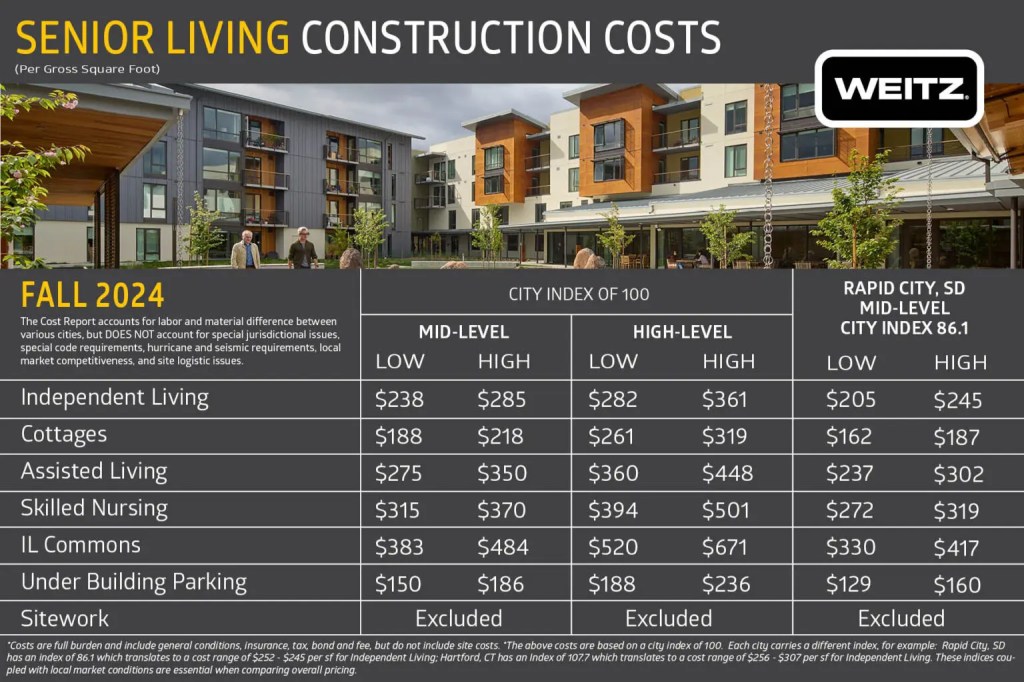
This is due to a couple of things all colliding at once. The first is a sharp uptick in construction costs. The supply chain disruptions and inability to move goods to where they are needed until relatively recently has led to significant increases in the prices of such necessities for building as construction grade lumber. Many of our raw construction materials come from Canada and Mexico. The threat of high tariffs is roiling those markets and, if they actually come into play in 2025, will increase costs to the point of making new builds somewhat impractical. In addition, the sharp spike in interest rates over the last few years is making financing of large projects more and more difficult. Senior living has cycled with the economy in the past. New construction came to a screeching halt with both the dot com bust of 2001 and the recession of 2008. There’s also a certain amount of NIMBYism in more desirable locations that makes the permitting of such facilities difficult.
A whole other issue is labor. As older adults become more and more frail, the human labor needed to keep them healthy and happy rises exponentially. We’re all fairly familiar with what it takes to keep a ten pound baby alive. Now imagine an older adult with similar intellect and functional state and how much muscle power it takes to provide for them – at two hundred pounds. It is work that cannot be automated, cannot be outsourced, and is held in disdain by most of the American workforce. Caregiving, as it is a traditionally female occupation, gets devalued in American society due to the ingrained misogyny of our culture. The industry has been sustained by what has been called a pink collar work force. Women without a lot of skills or education and without access to better job opportunities. The pandemic changed that. When 20% of the providers of clinical care in our health system vanished between 2019 and 2023 (retirement, rearrangement of family structures due to new responsibilities for child or elder care, illness/death etc.) all sorts of new and better paid positions opened up and a lot of the pink collar work force that the industry had long taken for granted dried up. More than 95% of the senior living facilities in the country are short staffed and there is no workforce readily available to staff new ones.
As caregiving jobs are low tier, a lot of them have been filled by recent immigrants, especially in larger cities. I imagine, with the need for warm bodies willing to do the work for the meager paychecks provided, that not all employers have been as diligent at checking immigration status as they might have been at other times. No one knows how many workers in the industry are undocumented but it’s probably not a small number. If some of the threatened purges of the undocumented happen, some facilities will simply become unable to operate. There has been a general improvement of wages in the sector the last few years due to the desperation of facilities to fill their staffing rosters, but the corporations which own the vast majority of senior living at all levels are not in the habit of losing money and if a unit becomes unprofitable, they’ll unload it one way or another.
So what’s the solution? Government policies that give tax breaks or other perks to developers to build more senior housing? A change in building codes so that all new home construction can easily be converted to more senior friendly living? (Levers rather than knobs on doors, walk in showers, wider halls and doorways, grab bars and rails, higher toilet heights etc.) Education of a rapidly aging Baby Boom generation on the realties of aging rather than their fantasies of living to 120 in perfect health? Public campaigns to raise the social status of careers that work in elder services? I haven’t the vaguest. I have a lot of ideas but most of them are politically impractical under Republican administrations as they currently articulate and advocate for social policy. All I can do is say get real with yourself. Nothing lasts forever. Not health, not function, not life. Expect the best, prepare for the worst and take what comes. My solution was to downsize into a dwelling space that my practiced eye determined could easily be modified should I need a wheelchair, a caretaker, or other significant functional help. It’s not a senior facility, it’s a rather nice, if aging condo building (this weeks adventure being the need to replace the boiler – it was nice to have a hot shower today after not having had hot water for nearly a week). I think I can make it work for my planned senior living for another decade or so and. at that point, I’ll probably be throwing myself on the pity of my nieces. As the early Boomers are going to start noticing their difficulties with stairs, after dark driving, and other common functional changes within the next five years, properties like this are going to become harder and harder to find. If a move is your solution, I’d start thinking about it sooner rather than later.
 Life, The Universe, and Everything