
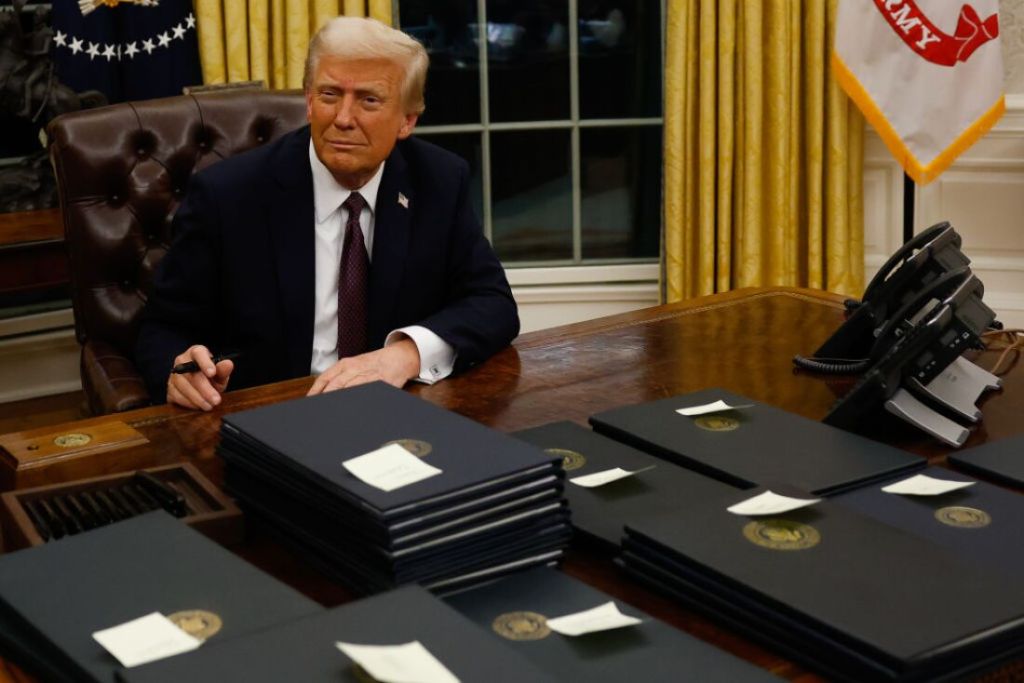
We’re three days in to the new administration and I’m already feeling like things fall apart, the center does not hold. I’m not surprised. Those now in power have spent the last four years carefully contriving a slate of ideas which were then word smithed into executive orders designed to rapidly destabilize and then hopefully undo the modern bureaucratic nation state that has been slowly built after World War II. The speed at which these have been released is deliberate in that it prevents any sort of organized response as there is too much too fast for most of us to actually comprehend what is happening and what the consequences will likely be. (See Naomi Klein’s The Shock Doctrine). There is much more to come. It’s no secret. It was all laid out on paper in the Project 2025 manifesto from The Heritage Foundation. All of those who claimed that that would never happen conveniently forgot the first rule of dealing with authoritarians. Believe what they tell you the first time.
I don’t plan on turning these continuing essays into some sort of play by play of the second Trump administration as I really don’t have the background or connections in politics and political thought that I do in health care. I will address those policies which have bearing on health or elder / aging issues as I feel like I have some expertise in those areas. Believe me, I would rather write about my travels, amusing anecdotes, and the vagaries of pop culture but there are other things currently foremost in my mind. And I’ve also got a heck of a lot of writing to do on new editions of The Accidental Plague Diaries and side projects flowing from these. The goal is roughly 1500-2000 words a day over the next couple of months… if I can keep Edward the polter-cat from walking across my keyboard every few minutes. He’s currently curled up at my side and Binx is curled up at my feet, I’ll take it.
There are two of the recent flurry of executive orders that are causing significant issues in my little corner of the health world. The first is the one which places an absolute moratorium on federal hiring for ninety days (with no exceptions as of yet). The federal department for which I work is the Department of Veteran’s Affairs which includes the Veteran’s Health Administration which flows down through multiple layers of bureaucracy to the Birmingham VA Medical Center and to its Geriatrics and Extended Care service line of which the Home Based Primary Care program (VA house calls) is one. UAB has assigned a significant portion of my time to this program for the last dozen years or so. I enjoy it. It’s not difficult work for me but, because I do the rural areas outside of metro Birmingham, its very time consuming with lots of travel time involved. Because of a lack of physicians with my skill set, I cover about twice as many veterans as I should given the national guidelines regarding patient load. We were going to solve this problem with a nurse practitioner who actually lives in my northwest territory. The process to get her hired was arduous and took well over a year. She was due to get her final hire letter today. Her job offer was rescinded by the hiring freeze.
The VA health system has a fairly high turn over. Federal pay scales are usually lower than comparable community jobs. People can move upwards in the federal system relatively easily once initially hired. It needs to hire 40,000 people a year just to keep up with the natural attrition rate. The rapid departure of the workforce from clinical healthcare roles with the pandemic (about 20% of the national workforce in those positions left between 2020 and 2024) hit the VA as much as anyone else. This had led to an additional deficit. Federal hiring rules make the approval of new positions a bit of a chore. It’s not like you can stick a ‘Help Wanted’ sign in the window. On Monday, January 20th, there were about 8,000 new VA employees nationally who had been offered jobs but had not yet received final contracts. The hiring freeze has forced every one of those offers to be rescinded and it is unclear if any of these positions will be reopened for these candidates after the initial ninety days passes. In many cases, these are people who moved to new cities to begin new jobs, bought houses, uprooted families trusting to the good faith of the US government who have been left with nothing.

The VA is an integral part of the US medical training system. Many VAs have close affiliations with medical schools (as is the case between the Birmingham VA and UAB Heersink School of Medicine). The VA funds an enormous number of the training slots for interns, residents and fellows in medicine and in all sorts of allied health programs. They get the benefit of good trainees who will help with veteran health for relatively bargain prices. The academic year begins July 1 which means that now (January) is the time that people interview for these positions. The current hiring freeze, by not exempting health profession trainees (which has always been done in the past) means that there is no guarantee that there will be any support for these positions this next year. Residency programs are going to have to scramble and, if I were on the interview trail, I would certainly think twice about choosing any program with a significant VA component. The aging of the Vietnam Vet cohort is putting significant strains on VA health services and policies that prevent hiring, in a time when there are distinct shortages of qualified health providers, strikes me as, at the very least, counter productive.
Another executive order that was put into effect yesterday, interrupts the normal functions of the top federal health institutions including the National Institutes of Health, the Center for Disease Control, and the Food and Drug Administration. They are prohibited from communicating with the public. The routine gatherings to review research at NIH have been suspended. For the first time since 1961, the CDC will not be issuing its Morbidity and Mortality World Report (MMWR) which has long been the way in which our fractured public health system learns about troubling trends in health and the pieces can be put together to stop disease spread before it becomes worse. The administration has been close mouthed as to their reasoning behind these decisions but its fairly clear to me that particular political views regarding infectious disease, vaccination, and related topics are going to be injected into the scientific method. Science explains how our complicated world works. You can pass laws based in belief but that won’t change how it works and preventing scientific investigation just means you’d rather be in the dark – Plato’s cave analogy comes to mind. There may be very real economic consequences if the NIH is no longer able to fund in the way that it has. UAB is the state of Alabama’s largest employer. Something over 400 million of its revenue comes from NIH grants (it’s in the top 1% of institutions that receive grants). Significant reductions will lead to significant layoffs and brain drain – a state like Alabama won’t be able to make up for federal cuts. Wealthy states like California or Massachusetts can.
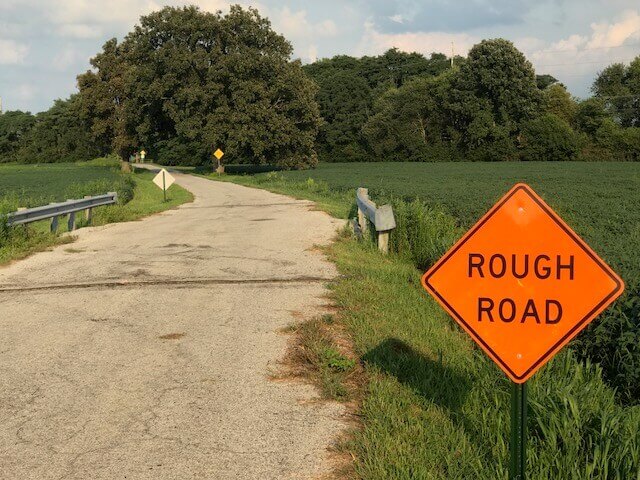
I don’t know where all this is going but I don’t like the road signs.
 Life, The Universe, and Everything