

And the hits keep on coming. I did a certain amount of predicting a while ago that the new administration was likely to do something that would upset the delicate financial ecosystem that allows our academic health centers to exist and that axe fell late yesterday. The National Institutes of Health are savagely cutting back what is known as indirect costs from the various rates that are carefully worked out based on the nature of the research involved and the expense of supporting the labs and other things necessary to make sure that it is done properly, safely, and ethically. NIH is now imposing a maximum 15% in indirect costs to be paid to universities and other institutions rather than current rates which usually run 20-50% depending on exactly what is being studied and how.
I have mentioned before that UAB is the state’s largest employer with 28,000 employees across undergraduate programs, schools of medicine, nursing, and other health professions, and a robust research program that received about 400 million from NIH last year. (It’s somewhere around #25 on the list of top universities for research funding). A draconian cut like this is going to lead to something like 75 million less coming in to university coffers starting immediately. I’ve been around academia a long time. I know what comes next. Those at the top of the food chain circle the wagons in self protection and the pain gets forced down to more rank and file individuals. Secretarial/administrative support? Gone. Fewer custodians. Less food service. Deferred maintenance projects get canceled and facilities continue to deteriorate. And then the ripple effects when hundreds, if not thousands of ex-University employees no longer buy houses, patronize restaurants shop in local stores and otherwise contribute to the economy. It’s way too early to know what the actual effects are going to be but my guess is they’re not going to be pretty. And this is going to play out in every community supported by a university with an academic health center nationwide. It took many decades to create them and the miracles they are able to produce. They can easily be severely damaged if not destroyed very quickly. I know we’re not supposed to draw Nazi parallels due to Godwin’s law but I often think of the University of Vienna. In the late 19th and early 20th centuries, it was the pinnacle of medical learning in the world. Nothing in the US could compare. After the Anschluss, the new regime fired all the Jewish faculty – to this day, the institution has never been able to rebuild what it once had. The destruction that World War II unleashed on Europe was what allowed American universities to enter the void and grow and flourish.

Elon and his flying monkeys (although I prefer Elon and the Muskrats even if it does sound like a minor British Invasion band) continue to rampage across the federal landscape. I am not adverse to budget cuts and fiscal discipline. I am fine with a light being shown into the darker recesses of federal agencies and pointing out that maybe tax dollars should not be appropriated for certain expenditures. But there is a right way and a wrong way to go about this. The constitution was carefully constructed to prevent the consolidation of power in any one branch or individual through the system of checks and balances. It makes for an unwieldy system with a lot of stalemates but that’s intentional and why it’s been able to function for the last 235 years or so. It requires are politics to be measured, to rely on negotiation, and to approach some sort of consensus before big changes which can cause societal upheaval are put into play. The abandonment of the power of the purse by congress to a ketamine addled narcissistic billionaire longing for the apartheid of his youth and a bunch of grad school tech nerds who have basically been granted license to do whatever they feel like is a recipe for disaster.
Finding something you don’t agree with for ideological reasons in the federal budget does not mean fraud. If congress appropriated funds, it is not fraud by any definition. The administration is free to go to congress and propose a bill which will eliminate any program or department they so choose and, if congress passes it, so be it. Congress knows, however, that the passage of bills that cut things is difficult and usually unpopular with the voting public which is likely why they are letting this happen. They can sit there and say ‘It wasn’t me – my hands are clean’. But, as there are no checks on what is happening, there’s going to be throwing a lot of babies out with the bathwater. Shutting down USAID is going to hurt American farmers and manufacturers, lead to hundreds of thousands starving in the poorer quarters of the world and likely lead to more and more epidemic disease which, with modern transportation, will be more than happy to hitch rides back to the US. (Not to mention it’s illegal. As USAID was created by congressional statute, it requires an act of congress to shut it down).

Trump’s latest bit of self-aggrandizement was to fire the Kennedy Center Board and to appoint himself its new head. (Again, illegal, the Kennedy Center is not part of the executive branch and the board doesn’t work for him in any capacity – cue the lawsuits in 3…2…1…) It’s easy to be facetious and speculate as to whether Mel Gibson or Kid Rock will be up for a Kennedy Center honor next year or wonder when the Kennedy Center production of Dreamgirls starring Laura Osnes is likely to open but there’s another thread of totalitarianism here. When the state declares what is or is not art, culture stultifies. Think of all of the dreary statuary in the Eastern Bloc from the last century or the truly bad paintings of mid 20th Century Germany after the Nazis tried to suppress modern art as ‘degenerate’. Art is not supposed to glorify the status quo. It’s supposed to hold a mirror up to who we are and reflect us warts and all and make us want to be better and to move forward. It needs to experiment. It needs to shock. It needs to foment anger. Major leaps forward are often reviled in their time – the original reception of Stravinsky’s The Rite of Spring, for example. Then, thought and people and culture catch up. I don’t know what Trump’s definition of ‘golden age of American Art’ is but I’m pretty sure it’s quite different from mine.
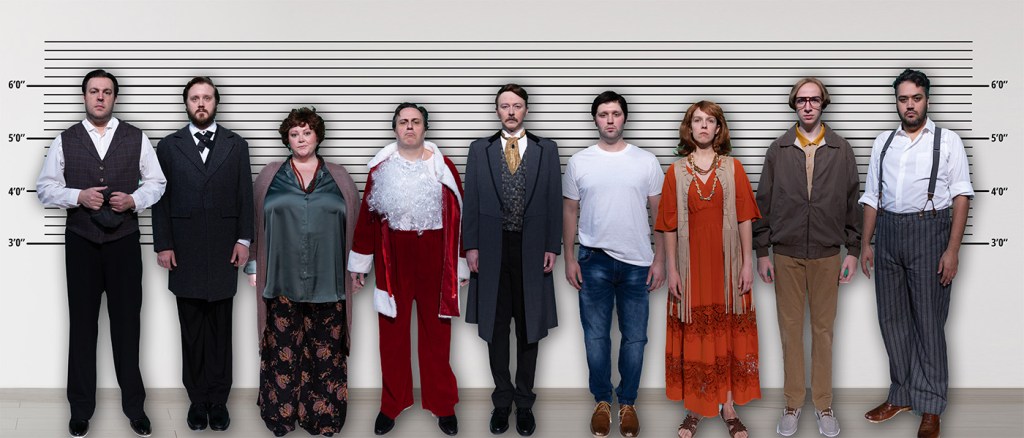
Speaking of envelope pushing art, the Virginia Samford Theatre opened a new production of Stephen Sondheim’s Assassins this week. I went to opening night on Thursday (I’m on the board so I figured I should show up). I’ve known the show for more than thirty years, read it, seen clips, listened to various cast albums, but this was the first time I had a chance to see a full staged production. For those who do not worship at the altar of the god Sondheim, the show is a vaudeville telling the stories of various presidential assassins from the famous (John Wilkes Booth, Lee Harvey Oswald) to the more obscure would bes like (Sam Byck who tried to kill Nixon by flying a 747 into the White House and Giuseppe Zangara who failed to shoot FDR (but did manage to kill the mayor of Chicago)). I’m not advocating an assassination by any means – we have enough troubles – but the underlying message of the show is that there is a dark side to America which creates outcasts and misfits who see their only hope of redemption as one vainglorious act. Late in the show, the assassins all sing a song ‘Another National Anthem’ which lays all of this bear and, in this particular political moment, the lyrics cut deep. The show is absolutely terrific so, if you’re in the greater Birmingham area, don’t miss it.
Not everything is bad. I seem to have fixed whatever it was that was making Edward the polter-cat unhappy. He has not peed in the bed the last few days. And there was much rejoicing (other than in the frozen land of Nador).
 Life, The Universe, and Everything