

Dateline – Seattle, Washington
I’m up here on a quick jaunt to see the family and check up on my father in his 93rd year making sure that he and his life are in sync with each other. Many decades of experience in geriatric medicine has taught me that the majority of problems occur when an elder has changed, either physically or cognitively, enough so that the life they have designed for themselves no longer fits. Most of what I do is getting the person and the life back together and in sync with each other. Sometimes that involves providing the individual with adaptations. Sometimes that involves changing the contours of living in such a way that the elder can continue to succeed. It’s a constantly evolving dance, with ever more intricate moves as time goes on. My parents, having made good decisions some fifteen years ago, have managed to do relatively well with minimal intervention. As I no longer live within 2500 miles, I have to do most of my work through gentle, well timed suggestions. I know all to well what happens when people and families try to create stasis. It never ends well.
I’ve been promising to write a significant essay on elder housing and what may be coming in the time of Trump. I’ll start on it tonight but I am unlikely to complete all of my ideas in this particular missive. I’ve got a lot to say and we’ll see where it goes. My belly is full of Hispanic Heritage month buffet dinner at my father’s senior living community where I am in residence for the nexxt few days. As it was accompanied by a large margarita and I had to get up at 3:30 AM local time to catch my flight, I am likely to conk out long before I get all of this down. Not to mention that I do feel compelled to comment on some of the political developments of the last few days as I feel they are of some significance.

We’ll start with that. I never met Charlie Kirk. I paid very little attention to Charlie Kirk when he was alive other than to know that he was a figure in the alt-right movement who seemed to relish in being a provocateur and a sort of slick styled enfant terrible who would do what was necessary for clicks, likes, exposure, and networking. The Sufi poet Rumi is credited with coming up with the following dictum about speech – before speaking, ask if it is true, if it is necessary, and if it is kind. I try to follow that with my public speech (which consists mainly of these writings these days – I’m imperfect and have violated this rule on a number of occasions but I always carry it with me). I’ll let you make up your own mind as to whether Mr. Kirk adhered to such rules of civilized discourse.
What I find fascinating is not so much his assassination. I find that incredibly sad – especially as the film clips of his shooting will haunt his friends and family for the rest of their lives. But rather the national response to his assassination. Right wing powers in this country are busy with his apotheosis – flags lowered, bills to allow him to lie in state at the Capitol, a social media led purge of anyone who dares to not show proper respect for his death. To my knowledge, he has done nothing in service to this country that would make such honors appropriate. He held no public office. He created no major policy. He is most famous for being willing to speak ideas against mainstream cultural thought but from what I could tell, they were almost always from a place of the arrogance of youth without a balancing of the humility which comes with maturity.
The fact that all of this has developed so rapidly, eclipsing the annual rememberance of 9/11 (and if any ordinary civilians should have been accorded the honor of a state funeral, the passengers of flight 93 or the members of the NYPD and NYFD would have been deserving), makes me think that the MAGA movement has been preparing for and in need of a martyr for some time. Given the number of guns in our society, the amount of mental health issues among young men, and the shredding of our mental health care system over the last four decades, it was only a matter of time until something happened which would fit the bill. The fallout is continuing. The early attempts to pin the shooting on radical leftist ideology aren’t passing the sniff test so it will be interesting to see how long this lasts on the cultural radar and what both sides of our divide learn from it when the next sociopolitical figure is killed. It will happen.
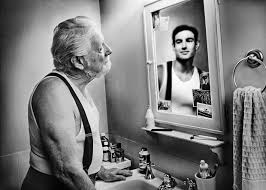
Back to elder housing. The first thing to understand about aging is that aging is change. And it’s change that our own brains do not understand. Our bodies and our brains grow, mature, and change together during our first quarter century. We are very different people at 5, 10, 15, 20, 25. And society recognizes this. We don’t send young people of vastly different ages to the same educational institutions. We give people different limits and privileges as they mature. A younger teen may be limited in terms of their exploration of their world by what’s available by bicycle and public transportation but once they have a driver’s license, their world opens up in new ways. The college or military experience may completely reshape how a young person thinks about the world. Sometime in our mid to late 20s, however, our brain finishes its developmental cycle. It’s done. We become the mature adult we were destined to be and we no longer make the impulsive decisions we might have made just a few years earlier. And our brain continues to hold that self image and the body we have at that time of our lives becomes what it considers to be the adullt norm and we build our neurologic autopilot around that healthy young adult body. We will consider ourselves that person the rest of our lives. As the decades march on, we still feel like that internally and we watch the physical changes in the mirror going ‘What’s happening?’ and our brain doesn’t really understand them.
As we are Cro-Magnons and as, from an evolutionary point of view, they had to live long enough for the tribe to continue i.e. becoming a successful grandparent, our bodies needed to last into our forties. And that they do. There are not a lot of things tht go wrong prior to the age of fifty. Everything more or less works as designed. In pre-civilization times, very few individuals made it much past forty or so so there has been no evolutionary pressure to get rid of problems that occur after that age. Six thousand years of civilization is not enough time to change who or what we are at the biological level. These days, however, with a modicum of common sense, most of us will make it into our 60s, 70s, 80s, and beyond.
When we hit our 70s and 80s, if we’ve been in reasonable health,, our brains autopilot settings still try to get us to work our bodies as if they are some fifty years younger than they are. We’ll do things the way we’ve always done them but changes in our musculoskeletal system and neurologic systems keep us from completing those tasks in the usual ways. This is where things start to get messy. The first option in regards to aging is called aging in place which means living in your same house and doing things the way you always have. Most people, when asked, prefer this over other options. There are a number of issues that come up with this, especially over the age of 80 that need to be considered.
First: as the realtors say, location location location. Everyone, if they live long enough, is likely to lose the ability to drive. It may be a mobility problem – arthritic joints that don’t allow you to operate pedals or turn your head to check blind spots. It may be vision – I can already tell that my night vision is changing. It may be cognition where you can operate the car fine but you cannot react to all of the other idiots the state granted a drivers license. Key questions to ask are: if I cannot drive, how will I get food/shopping? How will I be able to keep medical appointments? How will I socialize? If I live in a more rural setting, how quickly can I expect help to arrive in an emergency? If I live in an isolated home, can I protect myself?
Closely related to this is the design of the house. Many homes built a few years ago are split level or have sunken living rooms or other changes in height requiring stairs. Stairs are difficult to negotiate as one ages and should not be attempted without the use of another point of balance such as a handrail. The leading preventable cause of death for elders is a bad fall with a broken bone or a head injury. I am forever going on about the need for appropriate light in stairwells, sturdy hand rails, and understanding that things such as trays or laundry baskets that require two hands to carry should not be taken up or down stairs. And don’t get me started on ladders. I lose a patient every holiday season or two from falling off a ladder while hanging decorations on the outside of the house. Don’t do it if you’re over 70.

If you make it into your 80s or 90s, you will still likely be able to walk but not without additional points of balance constantly. This usually requires a walker and occasionally a wheelchair. Are doors and halls wide enough in your home to accomodate this? Is the bathroom designed in such a way that you can bathe without stepping up and into a tub? Are there enough points of balance to be able to get up and down from the commode? And the toiletpaper holder doesn’t count. It wasn’t designed to support your weight.
Most of us live in pairs and age in pairs. This is a good thing. Long term couples often become symbiotic organisms with one life being lived in two bodies. We can get quite creative in designing life patterns around a couple with different strengths and weaknesses. Something that we do not discuss in our culture, however, is that one of the pair is likely to outlive the other. What happens when that piece of your life isn’t available? Will that shared living space still function for you? It’s always best to open these discussions when everyone is hale and hearty and not at 3 am in an Emergency Room. In the Baby Boom generation, many of the women are aging alone. Divorce, childlessness or estrangement, widowhood. Society has never taken kindly to an abundance of older women. See witch hunts.
If you are aging alone and want to age in place, you are likely to need another adult in your life on a regular basis to help cope with everything life can throw at you. If you have family or close friends who can fill this role, great. What if you don’t? American society has been very loath to expend public dollars on elder caregiving in the home and for the most part it is not financed through public programs and depends entirely on your personal financial resources. There are some exceptions. Certain states have made Medicaid dollars available for these kinds of services to prevent an elder from being institutionalized at a much higher cost to the state. The VA has programs for veterans. There are some other programs for specail populations. If you have long term care insurance, it may pay for these kinds of services. I do not expect these services to expand in the next decade or so. There are too many aging adults to make it attractive for public entities to take on new programs or benefits. If anything, they will contract given the way in which the Trump administration is approaching health and social services in general.
If aging in place is your choice, I suggest the following happen with your retirement and later life planning. A consultation with an elder law attorney for will and estate planning. If you have significant assets, a financial counselor/manager to make sure your income streams can meet your life demands. And lastly, a professional geriatric care manager who can sit down with you and family and help you think through the thousand and one things in your life that may need to adjust as your body changes. At the age of 63 with a planned retirement age of 65, I’m putting all of this together for myself. I’m not immune to the slings and arrows of outrageous fortune. If you don’t already have long term care insurance, you’re probably out of luck. Most companies have withdrawn from that market as it’s actuarially unsound. People are living far longer and needing many more months of benefits than the initial calculations predicted.
This has gone on long enough. I’ll write more tomorrow or the next day regarding other types of options in senior housing.
 Life, The Universe, and Everything