
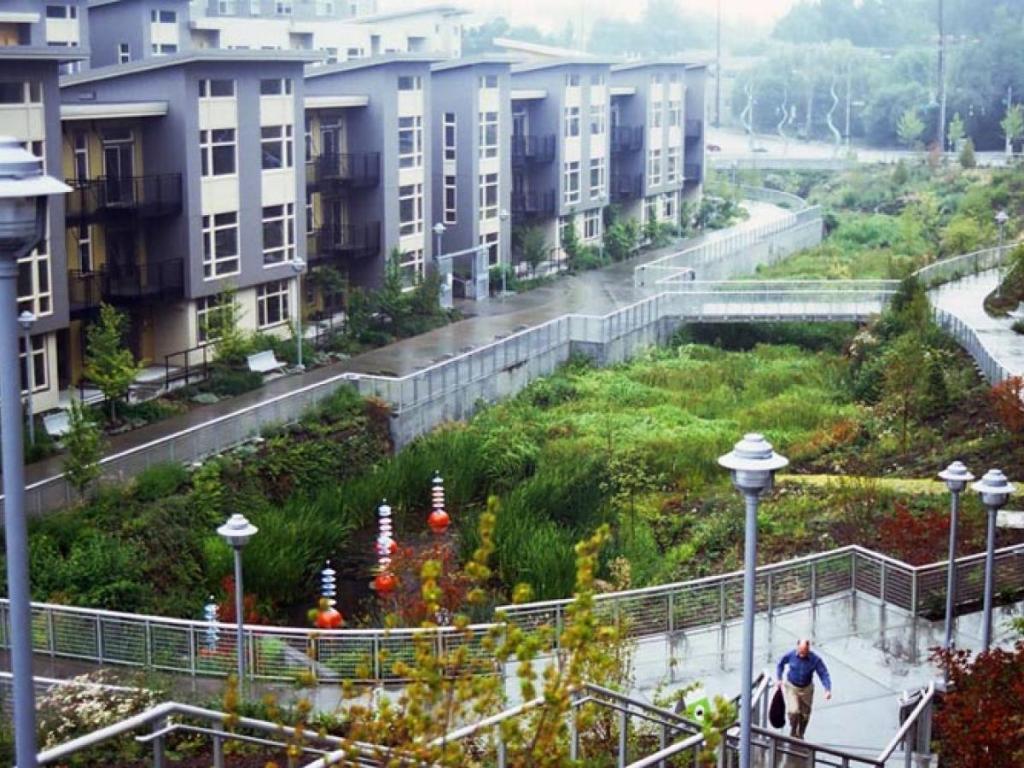
Dateline – Seattle, Washington
I don’t have much to add to the travelogue today as there’s not a lot going on at Aljoya at Thornton Place today. I had a bit of a sleep in, a couple of good meals, a meeting with my editor/publisher which confirmed what I had suspected, and time to catch up on some backlog of work progress notes. Not too shabby for a sunny Saturday in Seattle. Therefore I’ll continue on with the discussion of senior housing issues begun yesterday. And try to ignore the fact that a top White House official called for the social ruination of anyone not in step with Charlie Kirk’s political views and a major daytime talk show host advocated with the state sanctioned murder of the entire homeless population. I can’t think why anyone would be disturbed by such public pronouncements.
Yesterday, I discussed the first, and perhaps the most popular option regarding housing and aging, so called aging in place where an individual continues to occupy the same life space they did when they were younger but accomodations are made for the physical and cognitive changes that accompany aging. This option is not practical for everyone so today we’ll explore community based solutions to senior housing and some of the issues involved. The third and last piece of the discussion will appear maybe tomorrow and maybe later in the week depending on how I feel and will discuss institutional housing and the issues that arise when considering those options.
Community based senior housing encompasses a wide range of options and practices which happen when an elder leaves the home of their mature adulthood to live elsewhere but does not enter a formal institution such as a nursing home or assisted living facility. Most of these options depend on family structures, cultural norms, and financial resources and I don’t specifically advocate one over every other. Every person and every life pattern is individual and must be thought about as a fresh problem to be solved. Anyone who thinks that one size fits all rules or solutions are going to work has no experience with the real world.
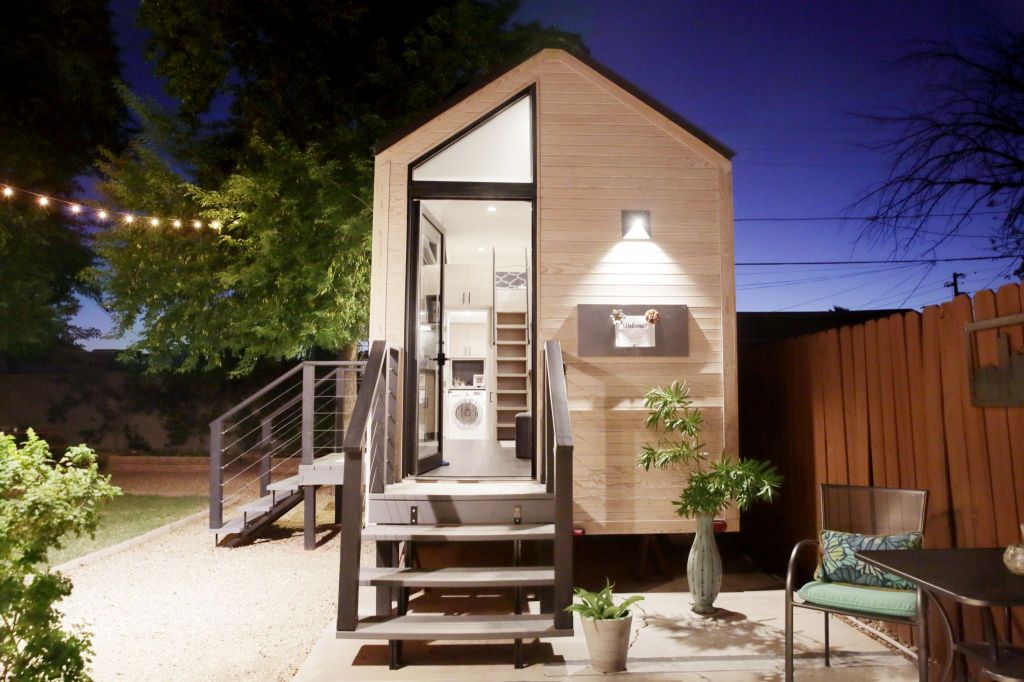
Living with family is probably the most common of these practices. Either the elders move in with the kids and grandkids or other younger family members or the various family generations make agreements to move together to new housing which can better accomodate multiple generations. This is hardly a new model. It’s the way most families worked prior to the 1950s and multigenerational families in the same dwelling remains the norm in most of the world. The US model of the nuclear family is an exception, not the general rule when looking at family structures globally. A new US variant on this is the tiny house phenomenon, sometimes referred to as a ‘granny pod’ in which a small prefab home is placed on the same property as another family member’s home allowing both independence and proximity when help is needed. Having the kids move in with the elder is more akin to the adaptations made with aging in place. All of these allow for mutual support. Elders can help with household chores or childcare to the best of their abilities while knowing that family with (hopefully) their best interests at heart are around and can assist with what they need and the whole family unit can adapt to change together.
There are a host of issues when adult children who have been independent and parents get back together again in a shared household. Traditions may have evolved or changed. There may be subtle (and not so subtle) pushes to assert dominance over a family system. There are problems with role reversal when it becomes necessary for the children to parent the parent, particularly when ti comes to curtailing activities which may be beyond their capabilities due to change. The one that causes the most friction is driving. We don’t have a lot of markers of independent adulthood in our society. The driver’s license is one of the most important and a lot of our identity (especially for men) is bound up with the idea that we are free to go anywhere at anytime and that usually requires a car. Even when we don’t do it, the thought that we could sustains us and cutting that off is traumatic.
In these sort of family arrangements, finances, if any are involved, are usually a private matter worked out in the family and there is no regulation of these arrangements by the state short of zoning and building codes when doing things like remodeling for a mother in law apartment in the basement or installing a tiny home on the property. There is one more model that usually depends on private financial arrangements and that is cohousing. This has never really been that popular in this country but, with more and more single people in the aging Boom generation it’s starting to catch on.
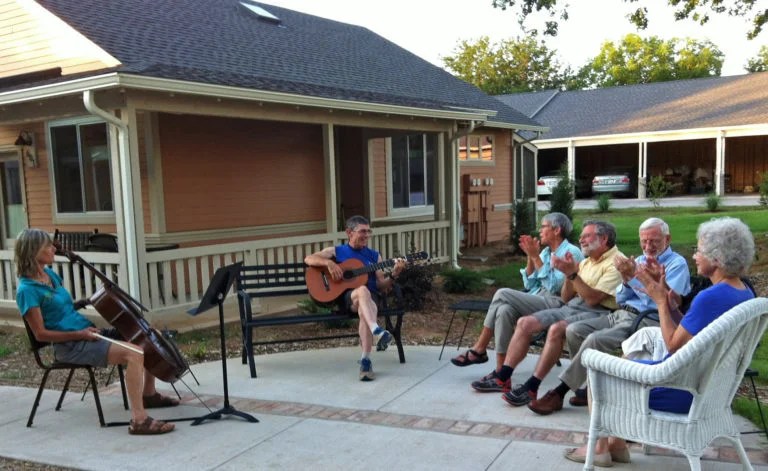
In cohousing, a group of like minded individuals make the decision to live together as chosen family. These relationships are not blessed by the state and if they are to be recognized legally or for matters of health care decisions, powers of attorney will be required. Sometimes a large dwelling with many bedrooms is purchased or rented and shared, sometimes a number of smaller dwellings in close proximity are used, often with a certain amount of communal facilities which may include communal laundry or kitchen. Elders live together in mutual support, share in the finacial burdens and the everyday aggravations of chores and home maintenance, and functional communal living is achieved. Sometimes the best intentions founder in acrimony. Anyone who wants to explore this sort of arrangement should enter into it with eyes open and legal contracts regarding rights and responsibilities in place. I am aware of a number of these communities working well on the west coast or in larger cities. They may be regarded with suspicion by the neighbors in smaller towns. It also bears researching both local and state law. There are laws in some jurisdictions that require any home that houses three or more unrelated senior adults be licensed as a senior care facility. All of the successful ventures of this type of which I am aware are headed and run by women. It likely has something to do with the socialization of the genders in earlier generations.
If you are not of mind or finances to purchase, there are various rental options available to seniors. Just like any other adult, they can rent an apartment or a home on the open market. In terms of making decisions regarding a rental, they should be similar to the ones made when assessing a home for its potential to be age friendly. Are there stairs or steps? Where is it located? Can I pursue my usual life from it if I no longer drive? Is it in a community where neighbors will help each other? There are rental properties being developed specifically limited to older (usually defined as over 55) renters. These usually have bathrooms that are suitable for the physical needs of aging. They may or may not have an office staffed with someone knowledgeable in local elder services who can assist when there are problems. Some buildings and communities participate in what is known as Section 8. This is a federal program which provides subsidies to allow the building owner to rent to elders on fixed incomes to rent for far below market value. One must apply and be qualified for the program based on income and assets. Section 8 rental units vary from the decrepit to the spartan to the adequate. It usually depends on who owns the building and their motivations for participating in the program. In general, the best communities are owned and run by charitable organizations with a mission to do social good and have funding streams outside of the rents.

There are, especially in rural areas, individuals with large homes who may open them up as a senior boarding home. These usually come with a bedroom and meals and are, in general, much cheaper than institutional senior living. They exist in a bit of a legal gray zone depending on state and local law but most, if they are non-exploitative, will be allowed to continue as the state knows quite well that if they were to close them down, that most of the residents would be compelled to enter nursing homes at great expense to state Medicaid. I am aware of a number of these in the greater Birmingham area which do very well with family style care but they are usually due to the labors of a central figure who works 24/7/365 and if anything happens to that person, things rapidly deteriorate.
I’m going to have an after dinner brandy and watch some bad TV. Stay tuned for part 3 – institutional care.
 Life, The Universe, and Everything