
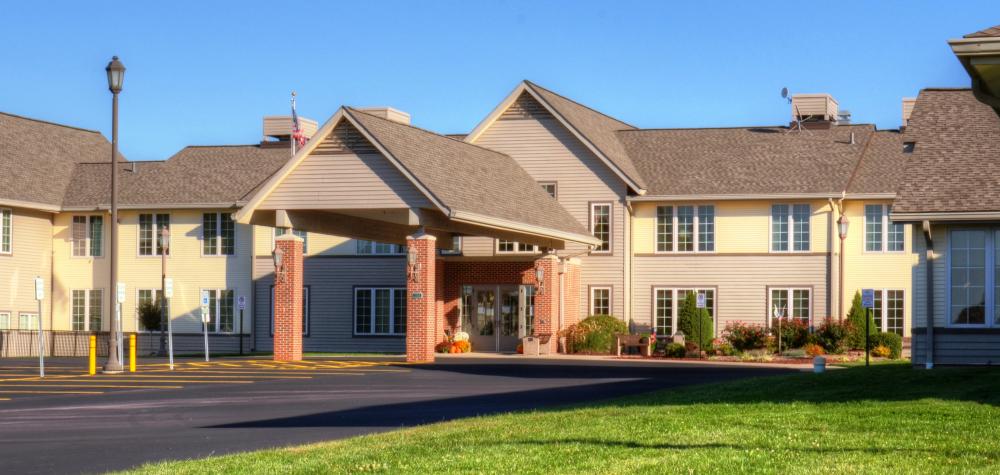
And he’s back… home that is. Not much to say about the end of my quick trip to Seattle. I did my usual Q and A on elder health concerns for the residents of my father’s senior living community. It was well attended and allowed me to practice my standup medical advice skills which I have been honing for decades. They laughed. I went into it expecting a bunch of questions on health politics surrounding DHHS and Kennedy and vaccines but didn’t get a one. Popular topics this time were fall prevention, dementia prevention, and the side effects of various medications. This was followed by a family dinner for all the members of the immediate family (everyone is doing well and getting along fine – the nieces have both turned into capable young women. The elder is in year two of teaching science at Garfield High School in Seattle and the younger, having just finished college, is on a job hunt for something beyond barista). Got a good night’s sleep, left early this morning, battled the usual zoo at Sea-Tac International airport and got home without significant incident. The kitties were a little miffed at my absence at first but they have now joined me on the bed so I think they have gotten over it.
Time to launch into the third and final installment of my essay on options in senior living andd some of what is going on with them. In the first two parts we covered aging in place and adaptation of one’s usual residence and then community based options. This one is going to discuss institutional options. By institutional options, I refer to the various types of senior housing communities operated as businesses with the specific mission of helping individuals cope with the issues and problems of aging. There are two major types – those which provide skilled nursing care and those that do not.
We’ll start with those who do not provide skilled care. As they are, in general, ineligible to receive federal health dollars through either the Medicare or the Medicaid programs, they are not regulated by the types of federal law that cover health care, hospitals, home health agencies, hospices, and all of the other pieces of the health system that can bill the Center for Medicare and Medicaid Services (CMS). Some states do allow for Medicaid funds to be spent on these institutions (Alabama is not one of them) but in general, these funds are additional state funds placed into their Medicaid program and not federal. There are three basic types – independent living facilities (ILF), assisted living facilities (ALF), and specialty care (dementia) living facilities (SCALF). These terminologies may vary state to state as their regulation is at the state and not at the national level.
Senior communities can consist of one type, or multiple types colocated. The different types may be in different buildings or wings or services may be brought up under an individual in the same dwelling changing the environment and supports without the person having to move. They generally are not paid for with public funds and therefore entering and residing in one usually depends on private pay from savings or family resources. Medicare is not an option. Long term care insurance will generally pay for this sort of living but the amount it will pay will depend entirely on the insurance contract and may or may not cover the total cost. As I mentioned earlier, long term care insurance is now difficult to find as the market prove actuarially unsound over the last three or four decades.

Independent Living usually consists of apartments or sometimes clusters of small garden homes. Residents are expected to support themselves in the same way they would in the general community. There are often community amenities available such as congregate dining should they choose not to shop and cook routinely. There may be a certain amount of on site health care, recreational activities and organized events. Many residents still drive and have no issues accessing the world so these communities are often built in somewhat isolated suburban locations. Depending on location and amenities, costs can vary from about 2500-6000 a month. Some communities require a buy in as if one were purchasing a condo or coop but a certain percentage is refunded at move out. These communities are usually beyond the financial reach of lower socioeconomic groups. There has been a move to develop some lower priced models, often by converting older motels, but there’s not a lot of money in the low end so development has been sluggish. There are a few communities owned and operated by charitable groups with social mission with alternative funding streams that allows them to keep prices down. These communities usually have very long waiting lists and may have restrictions on who is eligible for residency. A lot of the nicer ones are owned by either regional or national coprorations on a for profit model. If a particular community becomes unprofitable, it can be suddenly closed, just like any other business.
Assisted living facilities are for those who cannot live completely independently without daily attention from another adult who can assist with basic tasks of living such as bathing safely, dressing, getting to meals, or safely handling medications. In general, the living spaces are significantly smaller than ILF spaces and are designed more for the convenience of the staff than for the resident. Meals are usually prepared and served in a dining room but residents can have a small fridge and microwave for snacks. They’re not dissimilar from college dorms of my generation. In general, one must be ablebodied enough to help oneself to exit the building in an emergency and must have enough cognitive capacity to understand their medications, even if they are being given by staff in a med pass. Keeping your own medications, even Tylenol, requires a physician order. Most residents need assistive devices such as walkers but can walk some. The staff in these facilities are generally not medically trained. They are expected to cook, clean, help residents get around, help with bathing and personal care but not to help with medical issues although there may be the ability to do simple monitoring such as checking of blood pressure or blood sugar. Residents are free to come and go as they please. Most don’t have the ability to drive but if they want to go out, it’s their business although the facility usually requires residents to sign in and out so they know where people are. Costs vary but are generally in the 4000-7000 a month range.
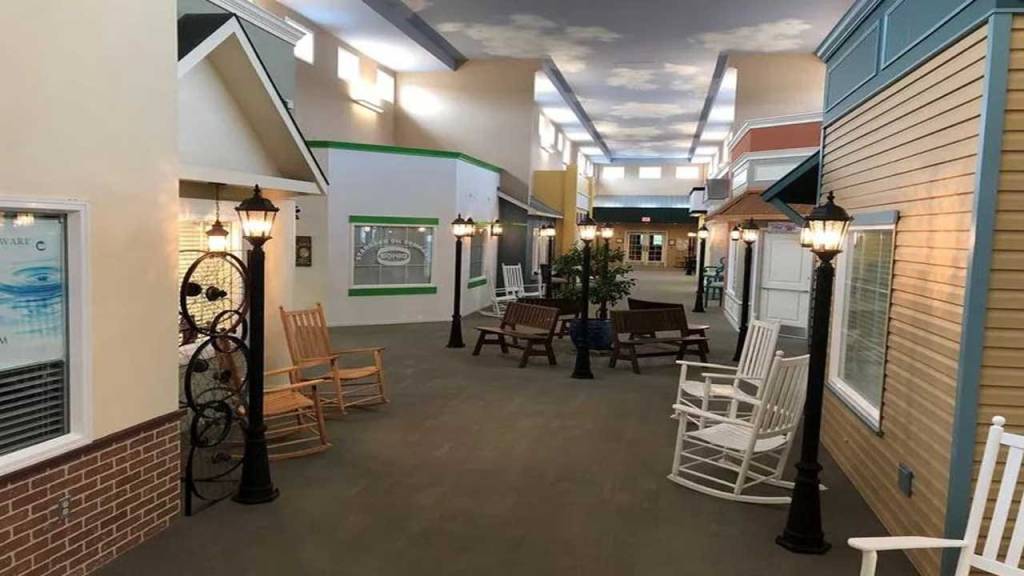
Specialty Care Assisted Living looks a lot like regular assisted living but there’s one major difference. To qualify for SCALF, your cognition must be such that you cannot handle your own needs due to confusion. Therefore, these are locked units and the staff is legally allowed to prevent you from leaving for your own safety. Families can take people out but they must be signed out and there may be rules on how long they can be absent. All medications are handled by staff for safety. Staff must prevent physical relationships from developing between residents due to the inability to consent. Most residents are ambulatory and well designed facilities are usually circular with interior courts and gardens to allow people to wander. They are generally significantly more expensive than regular assisted living due to higher staffing needs starting around 5000 a month and I have seen some has high as 10000.
Skilled Nursing Facilities (SNF) or nursing homes are a completely different type of facility. As they are eligible for CMMS payments, they must adhere to a myriad of federal rules and regulations. It’s been estimated that there are more federal rules and regulations regarding long term care than there are on nuclear power and commercial aviation. All of these rules pretty much guarantee that all the SNFs in the country run roughly the same – in theory. As one who reviews medicolegal records on a consultantcy basis (those donations to Birmingham theatre have to come from somewhere…), I have seen all sorts of interesting things happen in the name of profit. SNFs are for those who require daily assistance for medical basis that nursing must address. In general, to be eligible for admission, you need to be missing three of your basic activities of daily living (bathing, dressing, grooming, ambulating, transferring, toileting, and feeding). They are, in general, designed and run along hospital lines as that’s more or less what the rules require. There are some which try to create a more homey environment but they are a minority.
Medicare pays for admission to skilled nursing in limited circumstances, generally following a hospitalization for illness or injury where some additional rehab and support will help with recovery. Most are eligible for a twenty day stay (which can be extended with additional copays in limited circumstances). Anyone who requires a longer stay is going to need to pay with either private pay or with long term care insurance. Costs are usually 5000-8000 a month. In states where Medicaid does not pay for ALF or SCALF, those without funds who qualify for Medicaid and do not have adequate community support to remain at home with be placed at SNF, even if they would do well at a lower level of care. Federal rules require that those resident in a SNF get a medical visit on a monthly basis from a physician or an NP. (These days it’s usually the latter). There are also rules requiring medication review from pharmacists, especially for psychoactive medications.
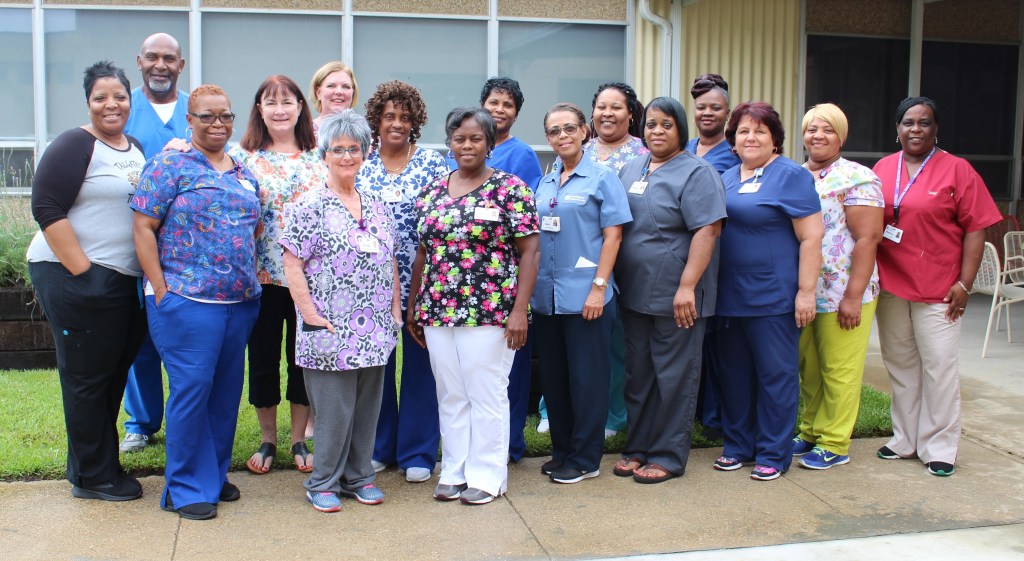
The actual nursing care at SNF is rarely provided by an RN. Usually there’s only one RN in the facility (on day shift) and their role is mainly administrative as much of the federal paperwork requires completion by an RN. The nurses on the floor are LPNs (LVNs in some states) who are responsible for meds and certain skilled treatments. The vast majority of the hands on care is done by nursing assistants – jobs which are heavy physical labor and low wage and consequently high turnover. The pandemic, which led to roughly 20% of the workforce in clinical healthcare leaving the field, has hit SNFs particulary hard. About 98% of SNFs nationwide are now understaffed. Rules are being changed as no one can meet the old metrics. In much of the country nursing assistant jobs have long been held by new immigrants. This population is rapidly being withdrawn from the workforce.
There are three enormous issues colliding regarding institutional long term care. The first is demographic. The Boomers are on the cusp of turning 80 and that’s generally the time at which a signifcant portion of the population cannot be adequately supported in usual home environments and starts looking for alternative arrangements. There are nowhere enough ILF, ALF, SCALF, and SNF beds available for the projected needs of the next twenty years and there’s been no significant push to develop new communities in any number. These are pretty much all for profit and the profits just aren’t there in the way that they were. I don’t see this changing much in the next few years unless there’s some sort of incentives put in place at either federal or state level but rhe current federal administration is unlikely to undertake any new housing programs and state budgets are strapped to the gills with those they are already tasked with caring for on Medicaid rolls. The cynical part of my brain wonders if the dismantling of public health is in part deliberate to reduce the number of elderly with chronic illness and I’ve seen a number of essays discussing a coming necocracy for all but the obscenely wealthy.

The second is cultural. The general design of senior living communities was put in place starting in the 1970s for the needs of the aging World War II and Silent Generations. Their social patterns and ideas of pleasurable activities are very different from those of the Boom. The newly minted octogenarians are not going to be content with shuffleboard and bingo and I haven’t seen a lot of radical reassessment of how senior communities are going to adapt to changing demands. Even the architecture of such communities may need to be rethought but I don’t see a lot of the owners, whose corporate structures often flow up to venture capital firms, being willing to expend enormous sums on reconfiguring living space.
The third is economic. There are all sort of poison pills within the Big Beautiful Bill of this spring which will trigger significant cuts to Medicare and Medicaid going forward. Downturns in the economy due to shortsighted economic policies are likely to prevent any new dollars being pushed towards ong term care. Communities which can’t be profit centers, especially in more rural areas, are likely to close. This will be exacerbated by a worsening of the staffing problems mentioned above. We’ve lost about 20% of the workforce in the last five years. Recent polls suggest that 50% of the remaining workforce in clinical healthcare is thinking about leaving their jobs due to the strains and cuts happening within the system. I’m one of them.
I have no solutions to these problems. All I can do is identify them. I’ve put in my 35 years in geriatrics and it’s going to be up to a younger generation to figure out what’s next.
 Life, The Universe, and Everything