
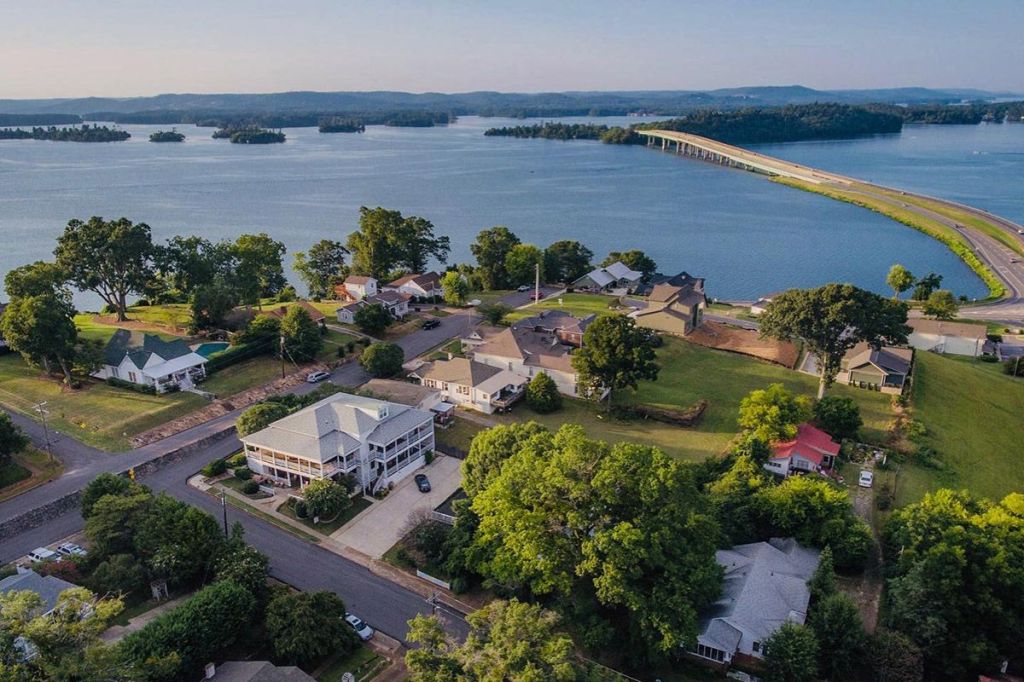
The world is coming apart again, at least according to the keyboard warriors on both the right and the left. I couldn’t tell. I went to work, did house calls on a lovely day around Lake Guntersville (one of the perks of the VA half of my job is driving around Alabama the Beautiful), had lunch with colleagues, came home and played with the cats for a bit before launching into a combination of work stuff and chores. There was no blood, no fire, and I managed to get my clothes on and off without falling over. This doesn’t mean that I am unconcerned with the state of the world but it does mean that I have found it necessary to not let it become all consuming.
What am I worried about? The first is the declaration that Antifa, which is an idea, is a ‘terrorist organization’. Why does this bother me? Antifa, which stands for anti-fascist for the few of you who slept through the last decade, is not an entity. There is no organization. It is not run by anyone. It is not funded by anyone. It’s simply the idea that Americans, based on our beliefs and history should stand up to fascist impulses and those who embody them. By declaring an idea a terrorist organization, it allows the administration to pretty much label anyone who states that a political move or policy is fascist by nature as anti-fascist and therefore opens that individual up to accusations of terrorism. And how is that person supposed to prove they are not Antifa? This could easily prove, over the next few years, a very convenient way for the administration to neatly remove political opponents or dissidents of all stripes.
As I look over the right’s social media movement in the wake of Charlie Kirk’s murder, I see many who are cheerfully turning themselves into the 21st century version of the Stasi, combinng over other’s social media posts, compiling lists of individuals they feel have been disrespectful, siccing armies of trolls on employers in attempts (occasionally successful) to get people fired for having political opinions at odds with theirs. I am against cancelling, whether it’s coming from the right or the left. I wasn’t a fan when it was sweeping the entertainment industry driven by the left a few years ago and I’m not a fan when it’s coming from the right as they try to turn a pundit into a holy martyr. We are all flawed. We all have our foot in mouth moments or intemperate posts. There’s something terribly wrong about gleefully trying to destroy the life of a human being whom you have never met based on one tiny sliver of who they are. The fact that so many of my fellow citizens, on both sides, seem to think this is an armchair sport bothers me a great deal.
Much has been made over the sudden dropping of Jimmy Kimmel’s late night talk show, especially in the wake of the dropping of Stephen Colbert’s some weeks ago. What’s going on here is interesting as it’s the collision of 20th century rules of broadcasting with 21st century technology and viewing habits. Back in the olden days, all television was broadcast over the public airwaves. There were three major networks – ABC, NBC, and CBS (there were other minor ones that came and went like Dumont but these are the three that endured and became national). We all watched their programs and got our news from their nightly programs because there weren’t any television alternatives. As the airwaves were part of the commons and belonged to the public, they needed to be regulated and the Federal Communications Commission (FCC) was born along with such things as the fairness doctrine (equal opportunity for opposinng viewpoints) on the news etc. In the 1980s with the rise of cable, new channels, some devoted to news, were created. Cable was never part of the commons – it was private companies and therefore the FCC never had any real jurisdiction over its content. It was self policing and, has the goal was money and ratings, not dissimination of quality information, there was a rise of news programing that began to deviate far from journalistic standards. (Fox News has repeatedly stated in court filings that they are ‘entertainment” and not ‘news’ in order to duck legal responsibility for various issues they’ve created over the years).
Because the big networks are subject to the FCC, and the cable and streaming channels are not, any financial change such as a merger which involves these companies or their parent companies must have FCC approval. In the past, this has usually been a matter of course, but we now live in interesting times. The current chair of the FCC, a loyal Trump appointee, is well aware of which television personalities the president disapproves. The president and the executive branch agencies cannot silence these voices directly due to the first amendment. But they can make it plain that certain business deals will not receive FCC approval if certain shows remain on the air. Colbert was a casualty of the Skydance/Paramount merger. The billionaires who control these massive companies are not going to let anything stand in the way of their profits and will be sure things fall into line to get the approvals they need.

The Kimmel case is a bit different. Here, a company called Nextstar which owns multiple local television stations is attempting to merge with another called Tegna, also a major owner of local TV stations. Jimmy Kimmel made comments about the Kirk murder which MAGA, Trump, and Brendan Carr, the head of the FCC did not like. Nextstar (in an attempt to curry favor for the merger?) announced it would no longer carry the program on the ABC affiliates it owns. It was joined shortly thereafter by Sinclair broadcasting. ABC rapidly dropped the show to keep its affiliates happy. The question here is did the executive branch or its officers, prohibited from censoring speech by the first amendment, influence the decisions of Nextstar and others and create the conditions of censorship in an indirect fashion. If they did, a technique kown as jawboning, it’s just as illegal (affirmed in NRA v Vullo by this supreme court last year in a 9-0 decision). If the private companies did what they did strictly as a business decision, the first amendment does not apply and they are perfectly in their rights to make any decision they choose regarding what they broadcast. I predict lawyers getting rich in 3… 2…1…
What happens next? I suspect The View will be rapidly cancelled in the not too distant future in similar circumstances. The remaining late night comedians may continue on for a while but they’re likely to avoid certain types of political comedy. I imagine Jon Stewart will have a few things to say on The Daily Show (Comedy Central not being subject to FCC and I don’t think it’s caught up in any major mergers and acquisitions that would require federal approval). But ultimately, due to the fragmentation of the audience by first cable and then streaming, the numbers just haven’t been there for the late night hosts and the genre has been waning since the glory days of Johnny Carson and David Letterman. And, ultimately, in the USA, particularly these days, all decisions come down to the greatest profit (usually for the smallest number).
 Life, The Universe, and Everything