

Ba-dee-ya – it’s the 21st day of September. For Children of the 70s, it’s Earth, Wind and Fire Day. Theatre Kids, of course, wait two days until the 23rd day of September and celebrate Little Shop of Horrors Day. I, being both of these, plan to celebrate all week. I’m not sure that my employers will buy that as an excuse for skipping out on clinical responsibilities so back to the salt mines tomorrow. Two more weeks before some R and R. The weather forecast is beginning to promise some fall weather this week which will be a nice break from the unseasonable August temperatures we’ve had recently. Fall is my favorite time of year and I’m looking forward to the leaves turning, cloudy skies, everyone arguing about sportsball, but you can keep the pumpkin spice. Not a huge fan.
My trusty iPhone 12 which I’ve had for about five years has been acting up in recent months so I took part of my unexpected bonus check which I received for seeing 50% more patients than the powers that be had predicted and headed down to the Apple Store and am upgraded to an iPhone 17. I haven’t figured out all the quirks yet. The biggest issue I’ve had is dealing with the various UAB apps and firewalls. I have lost access to charts, email, the paging system and other things useful in my job. Six phone calls to the IT department this weekend to try to fix things have produced no results. Maybe someone will call me back on Monday. Maybe I’ll just have to go back to the way we did things in the olden days with cuneiform and clay tablets.
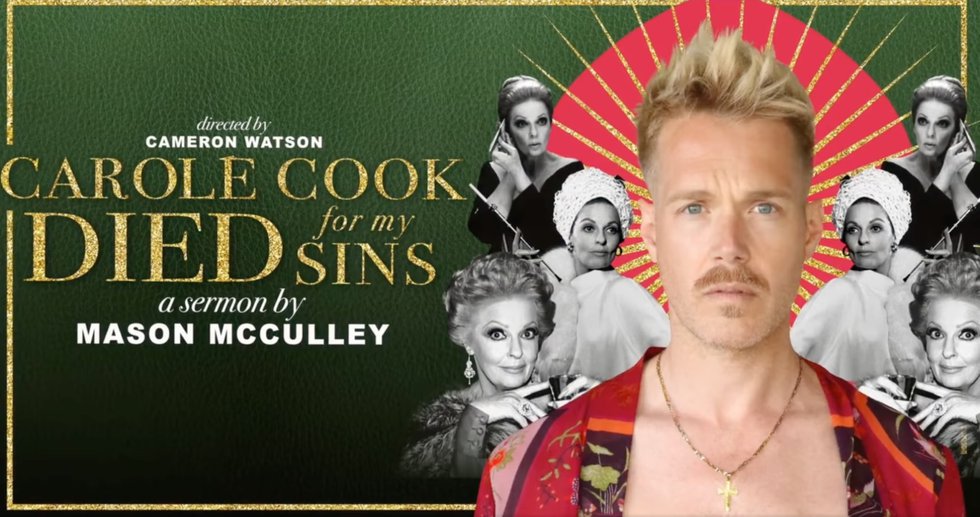
I did a bunch of normal people socializing over the weekend. Two plays – both gay humor campfests of various stripes. We Three Queens at Theatre Downtown written by my old friend Billy Ray Brewton was a riotous and politically incorrect farrago of nonsense about an 80s girl band trio (played by lip synching men in drag) who collapse at the height of their fame and then must go through a rather hysterical redemption and reunion arc. And, at a matinee today at Virginia Samford Theatre, Carole Cook Died for My Sins – a one man performance piece written by and starring Mason McCulley combining gay humor, family coping with dementia, diva worship, addiction narratives, and dry martini wit. I don’t know Mr. McCulley but multiple people have told me that we really need to meet each other and suss each other out. No theatre on Saturday. Instead, dinner and bowling with friends. I did improve on my usual score of 30 something with a score of 50 something. Bowling is not my game.
My political rant of the day is tangential to Trump announcing that he is signing an executive order which will require companies hiring skilled foreign workers through the H1B visa program to commence paying $100,000 per position (up from the roughly $1,000 it currently costs). Knowing that there are a lot of Visa holders employed within American health care, I decided to look up some hard numbers to see how this might impact the ability of someone in this country being able to get a doctor’s appointment over the next few years. These are hard numbers and easily obtainable by anyone with Google on their browser.
There are currently 155 accredited medical schools in the USA and, in addition, 37 accredited osteopathic schools. Medical schools produce MDs and osteopathic schools produce DOs but they do the same residencies and, for all practical purposes are interchangeable. This past year, there were 22,657 MD graduates and 9,285 DO graduates for a total of 31,942 brand new physicians. This is roughly double the number in my graduating class of 1988 which included 15,947 MDs and 1,534 DOs. But then again, the population has increased a bit over 40% or something over 100 miliion people since that year.

Those 32,000 new doctors enter a matching program which determines the next phase of their training, their residency which will separate them according to specialty. There are about thirty basic types of residency programs and hundreds of subspecialty programs after a specialty has been mastered. The match takes the preferences of the resident in regards to specialty and location and cross references that with the preferences of the educational programs. Many computer algorithms later, graduating medical students are handed an envelope in mid March the contents of which tell them where they will spend the next three to eight years of their lives.
There were 43,237 first year residency positions offered this past year in the US. About 11,300 more than US medical graduates. This imbalance has been true for decades and therefore US training programs have long been open to graduates of medical training outside of the US. We’ve been importing physicians for years. Not everyone who applies to the match gets a position. There were 47,208 completed applications this last year for those 43,237 slots. Those who remain unmatched are usually international medical graduates (IMGs). Of those that matched this past year, 9,095 were IMGs. 3,231 of these were US citizens who went to medical school outside of the US (mainly in the Caribbean) and 5,864 were non-citizen IMGs.
US medical school graduates have strong preferences regarding the specialties they wish to pursue. The surgical and technical specialties are very competitive and almost all residents selected for these programs come from US training. US graduates avoid primary care specialties like the plague. There are lots of complicated reasons for this – some economic, some cultural. The end result is that while only 0.87% of first year orthopedic surgery residents are IMGs, fully 32% of first year family practice and 43% of first year internal medicine residents are IMGs.

Non citizen IMGs are predominantly admitted to the US and employed under the J1 visa program which is a nonimmigrant visa. You are allowed to come for training and, after that is complete you are supposed to return to your home country. Once training is completed, and these highly skilled individuals are sought after for employment (we have a huge doctor shortage in this country as there was essentially no increase in medical training slots between 1980 and 2005 despite an enormous surge in population), many opt to stay and their visas must be converted to H1B which does allow for continued employment, permanent residency, and eventually citizenship. IMGs have filled in all sorts of gaps in the system working in rural communities, smaller health systems, and underserved specialties allowing the medical system to function. No one has yet come up with an enticement to get US graduates to take these jobs. (Student loan forgiveness might do the trick but congress hasn’t been especially bullish on this recently).
So what happens when H1B visas are priced out of practicality? Young IMGs will not be able to remain and work in the system and we’ll lose about 5-6,000 potential physicians a year. And they’ll be from some of the most fragile and tenuous parts of the system. Rural communities will be unable to find staff for their hospitals. The primary care fields will be devastated unless someone can figure out how to get US graduates to consider primary care worthy of their time and energy. Forget there being much in the way of new geriatricians to take care of teh rapidly aging Baby Boom cohort. It’s not like we can create 6,000 new US medical school graduates a year. Creating a physician is labor intensive and expensive for society. Alaska, Montana, Wyoming and Idaho do not have the resources to sponsor a state medical school at all. (Their residents can attend medical school in Washington under a special program). We would need to open 25-30 new medical schools or greatly expand the ones we have to make this happen and that would require significant societal investment. Given that society is busy dismantling science and evidence based medicine in favor of politics and gut belief, I don’t see this happening.
This change to H1B visas may or may not happen. There may be a carve out for the medical profession. I have no crystal ball. The problem is that those with power and influence to create policy have no issues accessing their own health care and therefore tend to be unmoved by the needs of populations not like them. I’d be happy to take Katie Britt or Tommy Tuberville along on my rural house call route and give them a dose of reality, but I don’t expect either of their offices will be calling.
 Life, The Universe, and Everything