
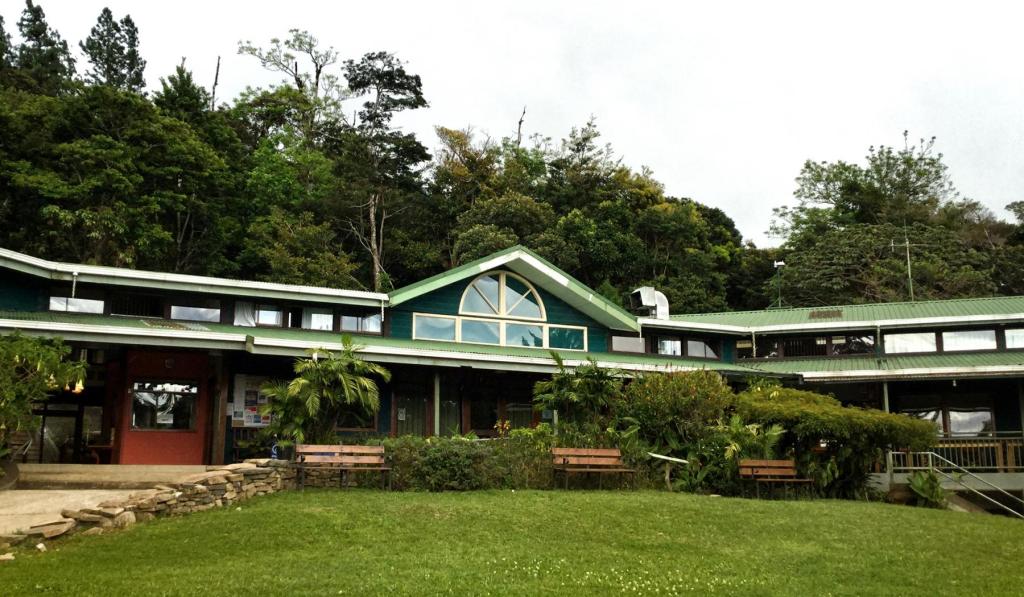
Dateline – Monteverde, Costa Rica
Today was eco-tourist day. I got up early to lovely weather, low 70s and no humidity here in the mountains of the cloud forest and, after breakfast (more delicious pineapple), got on the van with my fellow travelers for a trip up the now familiar unpaved and minimally graded roads to the Monteverde Cloud Forest reserve. There, a delightful nature walk and a climb up an observation tower to Lake Arenal far below and the volcanic cone in the distance. Mammals spotted included a tree dwelling porcupine taking a nap and an agouti out for a morning stroll. Most of the other spottings were birds – no toucans or quetzals – and a very large tarantula. Bouncing back down the hill and over to the Monteverde Ecological Institute for a talk on the natural history of the area, some minor help with a reforestation project which consisted of filling small plastic bags with earth in preparation for oak seedlings followed by lunch.
After lunch, some time to explore the large local town of Saint Elena – not so large that it couldn’t be seen in an hour followed by a nap as the alternate plan of zip lining again was again stymied by the threat of thunderstorms. I was going to stroll back into town for dinner this evening when the heavens finally opened and it poured for several hours. That nixed the idea of wandering off the hotel property so it was dinner at the hotel restaurant with fellow travelers instead. The rains broke after dinner but I’m not pushing my luck.
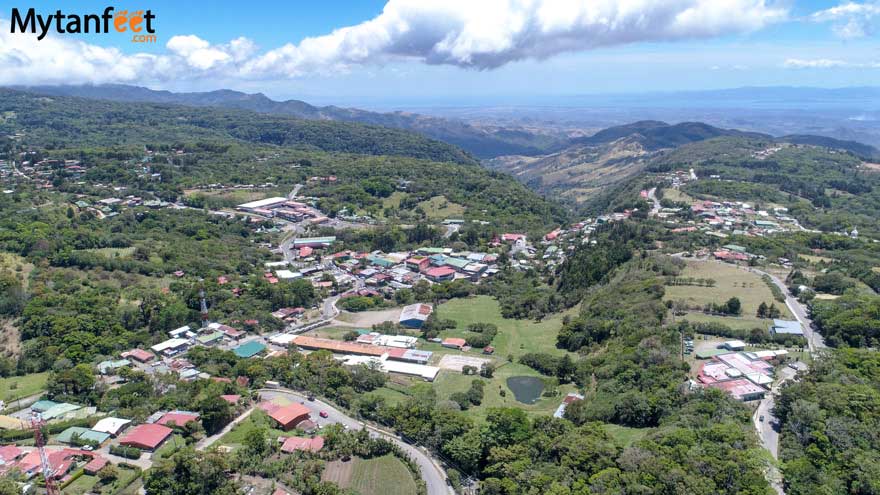
What I learned about modern Costa Rican history. From the 1920s through the 1980s, Costa Rica, like most of the rest of Central and South America deforested much of its land taking it from nearly 100% forest cover down to less than 30% and based its economy on agriculture. In the 1980s, the government and the people realized how unique they were with the mountain range between two major oceans and how biodiverse and how many microclimates and ecosystems they had in such a small land area. (4% of the world’s species in 0.03% of it’s land). There was conscious effort to move away from agriculture towards a more harmonious balance between the population and nature. They began an aggressive reforestation campaign (things grow quickly with their rainfall) and now nearly 70% of the land area is covered with cloud forest, rain forest and other woodlands. They are working diligently to become carbon neutral with nearly all of their power coming from renwables. They are now becoming a leader in tech and tourism. With no military budget, the growing economy is plowed back into education, health care and support for the people. I wish we would take a few lessons from them regarding how a society should work. And the US health care system and the Costa Rican are practically tied on the WHO list of best health care systems. The US is number 37 and Costa Rica number 38.
I feel the need to write a bit of a history of American health care and partisan politics given some of the more lunatic beliefs out there regarding the current federal shut down. But I don’t think tonight is the night.
 Life, The Universe, and Everything