

I should have written a long post earlier this week. I had time. I had plenty of things about which to write but something kept preventing me. I think it’s an emotional response to the state of the world and the continuous firehose of news that ricochets between the tragic and the absurd. I know it’s making a lot of my fellow citizens who see the world through a more progressive lens angry. It seems to be provoking glee in some of my more reactionary acquaintances, although I cannot find anything to celebrate in government initiatives based in callousness and cruelty. In me, it’s just creating sadness. It’s not the sadness of clinical depression (which I have experienced in my life) but something more existential, a feeling of needing to say goodbye to all that (to borrow a phrase from Robert Graves who lived through a similar period of societal upheaval in the wake of the First World War).
The early decades of the 20th century, with two catastrophic World Wars and the Great Depression, led the United States to become one of the chief architects of Post-War Western Civilization, a rules based order guided by diplomacy, economic cooperation. The children of these planners and civil servants, the Baby Boom, were to be spared at all costs the horrors that had been visited on their parents. Now, eighty years later, those same children, now in their early geriatric years, are in the process of tearing down the systems their parents so lovingly built to protect them, prefering instead to rapidly institute a society more similar to that of the 18th and 19th centuries – one in which resources are not equitably distributed, opportunities are limited to the connected, and tribalism is not only encouraged but revered.
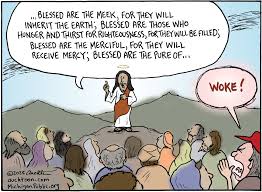
I don’t see much good coming from any of this. Tribal impulses are hardwired into our brains by evolution as our unit of survival is not the individual, but the tribe. We are social animals and we rise and fall on our ability to work together cooperatively. When we look around and define who we are by our social connections, one of the first things we do in order to make ourselves feel special is to define who or what we are not. We create out groups and underclasses and state that certain belief systems or philosophies should be spurned, if not outright suppressed. As we grew from nomadic bands into civilized urban society, it became clear that open societies more accepting of different kinds of thought or custom excelled quicker than those hwo took more repressive stances. Religion frequently became the means of overcoming the innate distrust of out groups through its messages of compassion and welcoming the stranger. Religious teachers were quick to recognize how strong the impulse to retreat across the moat and behind the walls is and how there must be countervailing messages. Of course, many of the keepers of American Christianity are abandoning this key role of religion and discounting the messages of the Bible which speak to this. I read somewhere that in a number of Evangelical denominations, The Sermon on the Mount (Matthew 5-7), the key teachings of Jesus, are basically being phased out for being too ‘woke’. Reverend Dale Turner, my pastor at University Congregational Church in Seattle when I was growing up, would be absolutely appalled.
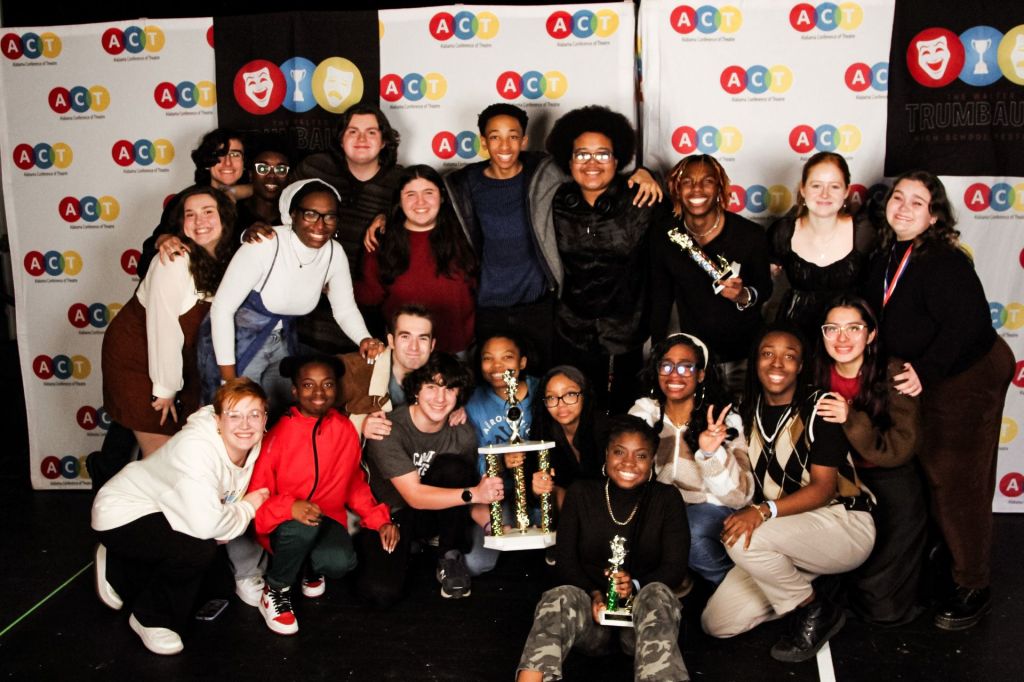
We’re in a period of change. Nothing can stop that. Socio/economic/political forces beyond the control of any individual have been unleashed. There’s lot of destruction in the change as it has happened over the last year. Physical destruction of public monuments, suppression of people and ideas outside of prescribed orthodoxy. Torture and murder condoned by the highest of officers. But the new cannot happen if the old stands in the way. I am trusting that the forest fire engulfing us clears out the brush and the deadwood and allows the cones of the giant redwoods to open and allow a new generation to come up with something better than we have had. Yesterday I was a judge at the Alabama State High School Theatre competition. 2500 theatre kids from all over the state descended on UAB along with their teachers, parents, friends, and other entourage. The Alys Stephens Center and surrounding buildings were bursting with youthful energy and idealism. There were teenagers rehearsing Shakespeare on lawns and perfecting their song phrasing in stairwells. The kids I met through the day were smart, kind, intuitive and a few were enormously talented. The kids are all right if we will just nurture them a bit longer and let them takee center stage. Unfortunately, that will require the Boom to exit stage left (pursued by bear?) and they will not relinquish the spotlight willingly. However, time and biology care not for their wishes and they will become culturally irrelevant around 2040 as their die off accelerates.
I suppose the essential question is which will come faster, the die off of the older generation or the repurposing of society to a model that the Georgians and Victorians would recognize. We are going that way. Despite the platitudes coming from the White House press office, our economy is in serious trouble for average Americans. (And it’s not because immigrants are stealing our jobs or eathing our pets and it’s not because Venezuelan narco-terrorists have somehow figured out how to run fentanyl (a product they do not make) over more than a thousand miles of open sea in small boats with at best a 150-200 mile range). Wealth has moved upward into fewer and fewer hands so fast that we now have greater economic inequities than existed in 1789 France and 1917 Russia. We are and remain the wealthiest society the planet has ever produced. If you run the numbers, mean household income in the US is about $100,000 a year. However, that is skewed upward significantly by the enormous gains of the very wealthy. If you remove the top 1% of earners, mean household income plummets down to about $75,000. If you remove the top 5% of earners, it goes down closer to $65,000. It’s this last figure that’s likely the one we should be considering when discussing economic policy, not the first. What is likely saving our social stability is our relatively recent ability to better control our reproductive habits. We are having far fewer children and revolutions happen when we reach a tipping point of too many mamas not able to feed their babies. Of course this is going to create a fresh set of issues in the late 21st century based in demography… and we’ve done such a good job with the glaringly obvious current one, the aging of the boom, which has been apparent for about sixty years now. I’ve spent thirty-five years of professional life playing Cassandra and telling several generations of health administrators about what was going to be necessary as we approach peak age in 2030. I’ve had zero luck getting any of them to listen or to make forward thinking changes. This, more than anything else, is what is driving me rapidly into retirement.

I finished work early on Friday so I did something I have not done in some time. I took myself to a matinee movie and went to see the new film version of the recent Broadway production of Merrily We Roll Along. After paying nearly $40 for a ticket, popcorn, a dink and a bag of peanut M&Ms, I remembered why I don’t head out to the movies as often as I used to. From the mid 70s through the 90s, I went to a film at least once a week, and often more frequently than that. But not at those prices. Most of you who know me at all know that I worship at the altar of Stephen Sondheim and have since I was in my teens. Merrily We Roll Along has a special place in the canon for my generation. I was 19 years old when the original production opened, crashed and burned, shifting Sondheim’s career. The show was cast with performers of my generation and spoke to what it meant to be in that first stage of adulthood when everything was possible and nothing made sense. When the album came out a few months later, it became part of the soundtrack of my college life. I even had a Charlie and Mary in Craig Mollerstuen and Vickie Rozell. ‘Old Friends’ has remained our theme song since 1982 and we still sing it to each other on those occasions when we get together. Unlike the fictional trio, we developed adult lives without betrayals and we remain close. I saw the stage production twice in New York a couple years ago so the film held no surprises for me in terms of plot or musical choices or design or performance. What did surprise me was director Maria Friedman’s decision to film most of the show in close up and two shot. It allowed me, sitting out there in the dark, to understand and develop a more intimate emotional connection with the principal characters as I could see details of facial expression or eye movement that I couldn’t catch from the mezzanine of the Hudson Theater. As the reverse chronology carried them back from jaded middle age to idealistic youth, culminating in the exquisite Our Time trio on a Manhattan rooftop, I found my brain a jumble of memory. Memories of my life choices and the ramifications they proved to have. Memories of other productions of Merrily We Roll Along I had seen (and I’ve seen a lot – I first met Sondheim at one in Seattle at ACT Theater in 1988). Memories of Daniel Radcliffe growing up over eight Harry Potter movies (particular favorites of Tommy’s. He loved to have them playing when he was in his wig studio). I came out of the theater teary eyed and thinking about how everything used to be so clear and straightforward when I was that age and now nothing is and what were my contributions to all of those things that are currently making our world and our politics a mess and is it possible to atone.
I try to be a mensch. It isn’t always easy but I figure that’s what I’ve got to give. That and doing my bit to make sure that the young will get their time. Give them room and start the clock.
 Life, The Universe, and Everything