

Dateline – Seattle, Washington
The gathering of the clan is accomplished. Food has been eaten, family jokes repeated, a new boyfriend of the younger niece welcomed into the family circle. Time for a little relaxation before having to get up in the morning and repeat all of the usual rigors of modern air travel to get myself back to Birmingham so I can appear bright eyed and bushy tailed at work on Tuesday morning. (Unpaid TSA agents, East coast blizzard, and Mexican civil war willing and not causing complete havoc on schedules and routes). I could be spending these few hours with Netflix but I have decided instead to finish up my thoughts on the uncertain 80s begun yesterday and so rudely interrupted by the arrival of the dinner hour. Note to those who do not know: do not get between a resident of a senior living facility and their 5:15 dinner time. It doesn’t end well.
My comments of yesterday were looking at the changes that happen in ones ninth decade, physical and cognitive and which in general turn the population who are majority healthy and functional at age eighty to a small minority who can maintain the same level of ability ten years later at age ninety. The pivot point for most of the population will arrive sometime during that decade and what it may be is different for all of us. For some, it will be an insidious chronic disease that knocks out a vital organ. For others it will be small problems that added together tip them over the edge. Some will have a single catastrophic accident such as a serious fall from a ladder or a car crash. Others will become slowly crushed with care burdens for a failing spouse and high levels of constant circulating stress hormones playing havoc on physiology until they drop in harness. It’s a chapter of our life history that we don’t get to write. We simply must learn to play the cards that we are dealt.

How long can we live? There seems to be an outside limit of about 115. According to the current Wikipedia list of oldest living individuals, there are only four people on the planet who can be verified as having past their 115th birthday and that’s been fairly consistent for decades. Only one person, Jeanne Marie Calment of Arles, France has ever been proven to break 120. (She made it to 122). In forty years of geriatrics, I have only ever met one person over the age of 110 and we usually only have one or two people in our practice of several thousand seniors who has made it past 105. Of the 350 million Americans currently living, about 100,000 are over the age of 100. It’s a small and select group. Currently, your chances of joining it are about one in 3500. It’s still one of the fastest growing demographics, however, as it was much less common fifty years ago, more like one in 25,000.
There are two basic concepts I find useful in terms of understanding who does well and is able to delay their pivot point to ninety and beyond: Balance Point and Life Space. We’ll start with Balance Point. Most humans, especially humans of age, have been living with their bodies for quite some time and they know through long experience what makes them feel their best and what works and does not work for them. They sit on a balance point where they, through diet, exercise, life choices, medical care, and many other variables, can keep themselves going with minimal fuss in the way they prefer. This balance point is very wide in young adults. You can throw all sorts of stuff at them – injuries, illnesses, rapid changing environments, and they just handle it and keep on going. But, with age, the balance point inevitably and inexorably shrinks and by the time someone reaches eighty or so it is significantly smaller and small issues, which would not bother a younger person too much, can push them off that balance point and into disaster. There are a lot of common examples of this. Over the counter medications rarely have side effects in young adults (which is why they are allowed to be sold over the counter) but can have major issues in older bodies and brains with side effects that can render an older individual non-functional. Something as simple as a urinary tract infection, which is generally a nuisance in a young woman, can cause significant cognitive dysfunction in older women leading to confusion or serious falls which can then lead to hip fracture and a major downhill spiral.
Much of what I do in clinical medicine is about trying to identify if a patient is on their balance point or if they are not and, if they are not, what is the least invasive and gentlest thing I can do to push them back onto it because if I push them too hard, they’ll go flyiing off it again in a different direction and end up even worse off. It’s a gentle art and I depend a lot on clinical acumen gained over decades and thousands upon thousands of patients. Many physicians are not very good at this. They don’t really know their patients that well and can’t identify their balance point. Instead, they rely on the results of tests and then treat to hard data points and numbers rather than by looking at the patient in front of them and how they are doing in the life they have designed for themselves. I try long and hard with my trainees to get them to not base all their clinical reasoning on numbers but it’s difficult as that’s what the modern medical system is designed around – the manipulation of big data sets and standardization of care.
The second concept is that of Life Space. Life space is the multidimensional environment which our physical function, cognition, social resources, finances and the like allow us to inhabit. Our life space early in life is very small. It consists of our bed and our parents’ arms. As we grow in ability it enlarges to home, yard, neighborhood, school and, as we enter adolescence with driving privileges, expands exponentially until as healthy young adults there’s little of the planet that’s not potential life space.
Now that I am in my sixties, I feel my life space shrinking a bit from what it was. I will no longer downhill ski. I don’t trust my knees. I am unlikely to book a trip to climb Everest. I won’t be doing any triathlons. My flying trapeze days are behind me. I don’t mind driving distance still but I’ll no longer allow myself to drive 700 miles a day solo cross country. But it’s still pretty large. I do most of the things I have always done, have some adventurous travel booked, and am not worried about driving myself to Atlanta or even Chicago (although I’m going to split that drive in two these days).
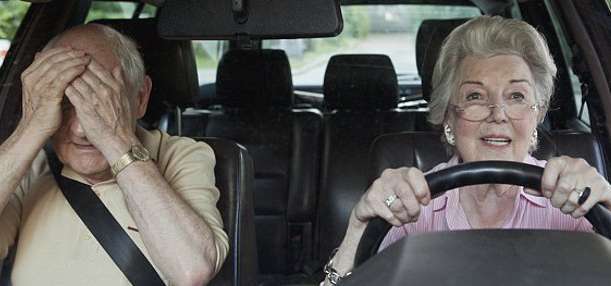
Those in their eighties however, usually enter the decade with farily expansive life space but leave the decade with it much reduced. Much of this is related to driving. Stopping driving cuts life space dramatically which is why it is such a touchy subject between senior adults and their families. There is no chronologic moment when one should stop driving but the changes in mobility, vision and cognition that accelerate at this time of life usually come together to make it less than safe at some point. I bought the condo I bought because it is located in a place where, if I stop driving, I will still be able to access shopping, cultural activities, restaurants, and the like inexpensively. But many use the freedom of retirement to find or build dream homes on a lake or in the mountains, not recognizing that they become virtual prisons without easy access to a car. Stairs can make all the difference between successfully maintaining life space and failing. Again, I bought a condo where it is unnecessary for me to use stairs either in my unit or to access the building. I have seen ill – designed sunken living rooms, split level homes, stairs for entry, and all sort of other things cause significant challenges for aging adults.
Most of us want to age in place, not in a senior facility of some sort. What are the usual dividing lines between the two? I have found, in general there are three issues that tip the balance. The first is the inability to handle medications and health issues unassisted. Cognitive decline is usually behind this one, but not always. Remember that medications are basically controlled doses of poisons so misuse and mistakes can cause major problems. The second is falls or threat of falls and stairs are often part of this equation, especially if there are important areas of the home that cannot be accessed without going up and down stairs like the bath. The third is continence issues and inability to maintain hygiene. There are a lof ot things that can contribute to this one and it’s usually multifactorial in nature and it often takes a skilled health care provider to navigate all of the issues and come up with a decent treatment plan. Unfortunately, as elimination is a bit of a taboo subject in our culture, problems are often covered up until it’s too late to do much about them.
How long will I live? I have no idea. I have some chronic health issues, mainly genetic in nature, which are definitely getting a bit worse with time but they’re mainly of the nuisance variety. But given what I know about aging, I know that things will likely compound and get worse with time. It’s one of the reasons I am planning my retirement in my mid 60s rather than in my 70s. I have a number of things I want to accomplish and I want to have made a major dent in my bucket list by the time I turn eighty. I have seen far too many people put off their goals until ‘later’ and then be cheated out of them by the vagaries of life. If I get healthy functional years beyond eighty, great! I’ll use them. But they’re going to be extra innings.
 Life, The Universe, and Everything