

Between Opera Birmingham, UAB, and the Birmingham VA, I have pretty much zero free time between now and April 19th. It’s been seven years since I’ve done opera chorus in a fully staged show and I had forgotten how much mental and physical energy it takes to sing for three hours, try to remember lyrics in a language you don’t speak, keep your staging correct so you don’t end up in someone’s way, and try to act all at the same time. I’ll make it but I can tell both body and brain have aged over the last seven years. It’s not as easy as it once was. For those interested in seeing me playing a priest and an Italian peasant, further information can be found at Opera Birmingham – two performances only. Friday evening April 17th and Sunday matinee April 19th at the DJD Theater at ASFA. I’ll post production photos when they are available but that isn’t going to be for another ten days or so. I don’t know about all my looks yet but I tried on a great pair of pants with all sorts of buttons at my costume fitting last week.
Not much out of the ordinary happening on the work front. I continue to plow forward caring for my patients the best I can, both in clinic and with house calls. All the clinical programs with which I am involved appear to be relatively robust at this point and should be well positioned to survive my pending retirement. (Still slated for 2027 and likely staged in between February and July depending on things over which I have zero control). Whether they will survive the calamities happening in the greater world of American health care, I know not nor do I have any sway over the more ridiculous moves of the current administration. There are those in congress and the federal court system who do have some power and, while the court system has been pushing back in recent months against executive overreach, congress continues to be content to blissfully abandon its article I powers to a rapacious regime.

What’s going on in health? On the Covid front there’s been a number of headlines about the Cicada strain. The clickbait sensationalistic articles on social media have been overstating its dangers. As a strain, it’s been around for some years, much more prevalent in other parts of the world than in the USA. It’s still an omicron lineage variant so the population is relatively well protected from prior infections/antibodies and from vaccines. It’s about 10% of current US infections and clinically, these patients do not appear to be any sicker or have any more risks than those infected with other covid strains. It just has a jazzy new nickname that’s easy for the public to remember.
I’ve seen a bunch of misinformation circulating recently regarding covid infections and covid vaccines. The truth is that we’re currently at a relatively low ebb in terms of both infection and hospitalization and there’s nothing in current data (still collected by various state and municipal departments of public health even if the feds have abandoned the job) to suggest any sort of surge coming in the near future. Six years later we’re pretty much reaching a more commensal state with the virus. It’s still quite capable of making you sick, however, and I wouldn’t go seeking it out. Should you get a new booster this fall? There’s no reason not to if you haven’t had issues with prior vaccinations – but that’s assuming we have new boosters this fall. That’s not a done deal.

There’s been a bunch of chatter about covid and premature dementia with some doom and gloom stories that everyone now in their fifties and sixties is going to end up demented before the age of seventy because of (depending on the source) covid infections or covid vaccinations. I went and looked at the literature to see if there was any real scientific reportage suggesting this was true and found little to support this. What is true is that those with severe covid and prolonged infection and hospitalization have some evidence of inflammatory brain states and amyloid plaque deposition similar to that of Alzheimer’s disease. It’s not inevitable and there’s no evidence yet showing that those with serious covid actually develop Alzheimer’s disease sooner or that it progresses more rapidly than it does in the population at large. There was one study done on macaques showing that those infected with covid were more likely to develop Lewy bodies (another brain pathology which causes a different type of dementing process than Alzheimer’s disease). This finding has not been found in humans. Therefore, if you are like me, in your mid-60s, I wouldn’t assume that your mind will be gone within the next decade.
We’ve got plenty of issues afoot with older generations now in their 80s and 90s in whom dementia is endemic. (In general, dementia as roughly a 20% prevalence at age 80, 40% at age 85, 60% at age 90, 80% at age 95 and it’s pretty universal at age 100). We all know of anecdotal evidence of people in their 90s and beyond who remain quite sharp but they are the exceptions, not the rule. The uncertain 80s, which I have referred to before, continues to change the population from roughly 75% fully functional at age 80 to about 20% fully functional at age 90. As the Boomers now enter their uncertain 80s, I’ve been watching certain trends in elder care, especially when it comes to funding care for those of age who can no longer live independently. Medicare has been on the chopping block for a while (it can’t be eliminated without a riot but they can certainly cut out benefits or make them harder to obtain) and the president announced in a national address this week that the federal budget should be going to his war efforts rather than to health and human services programs.
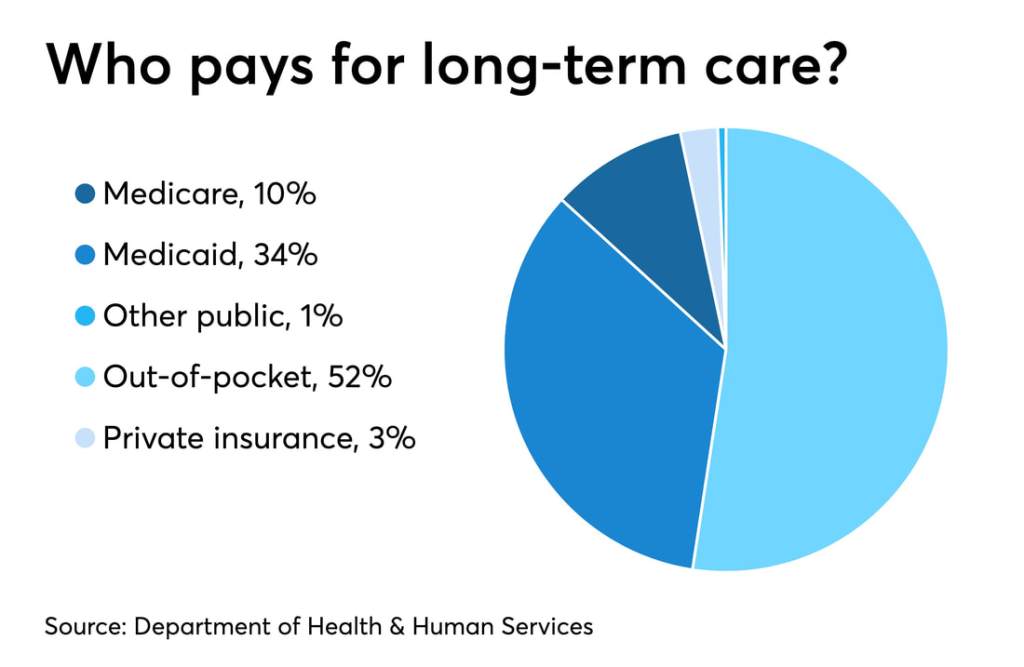
Medicare, however, does not, for the most part fund custodial care for the elderly. That is the purview of Medicaid (for the impoverished) or a private responsibility of older folk and their families. The senior living industry is undergoing a huge transition. Much of the corporate ownership has been gobbled up by venture capital interested in the real estate and the money that can be extracted, not in the actual desires and needs of aging adults. Costs have risen about fifty percent since the start of the pandemic and changes in the workforce have left the majority of facilities, no matter how nice the dining room or how many chandeliers in the grand foyer, significantly understaffed. Then there are the desires of the aging boom generation. Shuffleboard, bingo, and bridge club aren’t necessarily going to be to their taste and most facilities have not yet begun to revamp their programs for a generation with very different wants and needs than their parents. Then there’s family structures which have shifted. Generation X is a small generation so there are fewer children available to pitch in for aging parents. Broader divorce and remarriage may make a Gen X household responsible for more than two parents and two parents in law. The Boom, as a whole, were not the savers their parents were and in general don’t have as many resources available to put towards their own maintenance as they age (not to mention the generational belief that they remain the youth generation and really don’t age. Biology would like to have a word.)
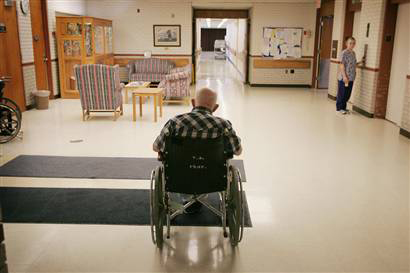
I am asked, pretty much on a daily basis, to recommend one senior living facility over another in the local marketplace. I can no longer do so. Things have changed so drastically over the six years in terms of administration, staffing, programs, facility maintenance, kitchen quality, and all the rest of it that I’m as at sea as the rest of the world. I hear good things. Then, a month later, due to turnover, I hear bad things. I have a few places which I consistently hear bad things about (mainly due to their having been purchased by a new corporate owner that has come in and slashed functional programs in the name of profit) and which I will tell people to avoid but, beyond that, who knows? What may be functional in April may be a disaster in May or vice versa.
My personal plan is to remain in my condo as long as possible. I bought a space that is easily adaptable to needs should I have either mobility or cognitive problems. It has the capacity for me to have a live in if needed (and I would rather have that than live in assisted living) and I have been socking away money for decades to allow that to happen should it be necessary. I am hopeful that I have about fifteen to twenty more good years before I really have to make a major change but you never know. I wasn’t expecting to have emergency surgery earlier this month and we all know how that turned out.
Must write progress notes, get sleep, get up, get dressed. go out, and do good tomorrow. With a visit to my accountant to go over the taxes (Eeek!) and an opera rehearsal thrown into the mix.
 Life, The Universe, and Everything