December 17, 2024

I haven’t written a piece of this type in a while. My publisher calls these sorts of essays my ‘explainers’. This immediately, of course, sets me off into my best Desi impersonation (Looocy, yoou got some splainin to dooo) before buckling down and trying to figure out how to put down complex ideas in simple language and make it palatable and, if possible, mildly amusing for the dozen or so of you who bother to read my stuff. (I suppose it’s more than a dozen as copies of The Accidental Plague Diaries, all three volumes, seem to sell from time to time – I should be able to afford a Starbucks caramel macchiato or even a dozen eggs with this year’s royalty check). So I won’t talk much about Little Women (closed after a successful eight performance run and great word of mouth) or Edward the ghost cat (now willing to leave the office of his own volition and explore the condo a bit more).

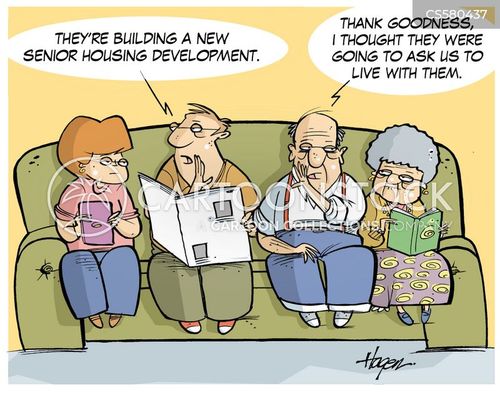
Tonight’s subject is one that I’m sure you’ve all been brooding over this holiday season. What’s going to happen with senior housing. I’ll preface this with an acknowledgement that my crystal ball is over at Madam Arcati’s for repair so I have no absolute idea as to what will happen any more than anyone else does, but there is a rapid collision of various social and market forces coming which I don’t think most of us, especially the policy makers, has really considered. It is likely to lead to the fulfillment of the ancient curse of ‘May you live in interesting times’.

We need to begin with a little demography. After all demography is destiny. The Baby Boom is one year away from beginning to turn eighty. The Boom officially begins on January 1, 1946 (almost exactly nine months after the end of the war in Europe) when the returning GIs came home, settled down and began to create and raise their families. The birthrate in the US began to skyrocket that month and we added roughly 10,000 babies daily to the population for the next nineteen years, things only beginning to slow down some in 1965 when there was a rapid and noticeable drop off in the birthrate, likely due to the widespread introduction of oral contraceptives, the changing role of women in society, and the various social upheavals of the later 1960s. The population of the US in the 1950 census was only about 150 million, less than half of what it is today so that increase had more than double the impact that children have today. (We have about the same number of total births per year now, but spread over a population approaching 350 million).

The sheer numbers of children and rapidity of the revival, refocused post war America away from the horrors of the Great Depression and the Second World War back to domestic concerns leading to the invention of the suburb, the nuclear family as a domestic ideal, prioritizing the educational system, introducing college as a more mainstream life choice, and creating the idea of a protracted adolescence as a somewhat separate stage of life to be protected against adult cares. That was decades ago. The Baby Boom is about to turn eighty. (January 1, 2026 is only one year and two weeks away). Given the sheer number of surviving members of the Boom generation, the current population of Americans over 80 (mainly the Silent Generation with a few scattered GI generation hanging on in their late 90s and early 100s) which is roughly 13 million, will nearly triple to about 33 million before it begins to shrink down due to the inevitable attrition of biological aging. That downhill course will set in sometime in the early 2040s and the Boom will basically be gone by 2060. Of course, the last member of the Baby Boom won’t exit the planet until about 2080. Someone, almost certainly female, from the last year of the Boom (1964) will make it to 115-116 which appears to be about the maximum life span a human can attain.

Where are the senior Boomers going to live as they move through their 80s towards their 90s over the next decade? Most of them likely haven’t given it a lot of thought. For the politically active classes with access to resources (the people who make the decisions regarding what becomes part of the national conversation and what doesn’t), those in the Boom category aren’t yet feeling old. First year Boomers include Dolly Parton, Sally Field, Sylvester Stallone, Cher, and the incoming president. They aren’t a group that’s exactly running around picking out rocking chairs. And, for people with access to education, health care, decent housing, and social supports, the 70s generally aren’t all that bad. There are more aches and pains, you’re a bit slower, the brain doesn’t work as fast, but most of the organ systems keep on going with the occasional tune up. The great public health achievement of the latter half of the 20th century, turning adults away from smoking, has probably helped keeping the playing field a lot more level as time as gone on. Reduction of cigarette use has greatly reduced premature death rates from cardiac and pulmonary disease.

Things start to change rapidly in your 80s. Most men start to hit a wall around 82-85. Most women start to hit a wall around 87-90. (There are both biologic and cultural reasons for this difference). It’s a relatively rare person who can live entirely independently after the age of 90. Joints don’t cooperate, vision, hearing and memory fade, balance sucks, cardiopulmonary capacity is reduced, kidneys stop filtering, the GI tract develops a mind of its own. The list goes on. The emphasis on the nuclear family often leads to each new generation setting up shop at significant difference from the older ones so Boom children and grandchildren aren’t on hand. Higher divorce rates means its more likely for a Boomer to be aging without a partner. Long term married couples who age together often form a symbiote – one functional organism occupying two bodies. That doesn’t work when there is no other half. (Fullly half of Boom women are expected to be living alone as they pass eighty due to never having married, childlessness or estrangement from children, widowhood, or divorce).

One would think that with the numbers of older seniors just about to skyrocket, developers would see an opening and be racing to build senior living facilities of various types to accommodate coming demand. They aren’t. The pandemic, with its need for isolation to protect frail seniors with imperfect and aging immune systems, led to a certain amount of exodus from group living facilities as older adults and families didn’t want to go through that sort of forcible parting. Current inventory has only really begun to fill up again over the last year or so. Most Boomers aren’t yet ready to consider themselves aging or infirm and aren’t willing to consider a transition of living of this nature yet (and will likely put it off as long as possible, only admitting to a need for help after a disaster has befallen a family system and not before).

Senior living is a for profit business. In general, it is paid for privately and not by public funds. (Medicare does not pay for custodial care for frail individuals. Medicaid does and the rules for that are written by each individual state. In Alabama, with certain limited exceptions, Medicaid will only pay for custodial care in a skilled nursing facility, not an assisted living with fancy amenities, and only after you are impoverished having spent all of your assets on care to that point). It tends to jockey to cater to the well heeled who can afford the four to ten thousand dollar a month price tag depending on services and luxuries plus hundreds of thousands of dollars in buy in fees for the most prestigious communities. If the ROI isn’t large enough, no company is going to expand in the sector and it just isn’t at the moment.

This is due to a couple of things all colliding at once. The first is a sharp uptick in construction costs. The supply chain disruptions and inability to move goods to where they are needed until relatively recently has led to significant increases in the prices of such necessities for building as construction grade lumber. Many of our raw construction materials come from Canada and Mexico. The threat of high tariffs is roiling those markets and, if they actually come into play in 2025, will increase costs to the point of making new builds somewhat impractical. In addition, the sharp spike in interest rates over the last few years is making financing of large projects more and more difficult. Senior living has cycled with the economy in the past. New construction came to a screeching halt with both the dot com bust of 2001 and the recession of 2008. There’s also a certain amount of NIMBYism in more desirable locations that makes the permitting of such facilities difficult.

A whole other issue is labor. As older adults become more and more frail, the human labor needed to keep them healthy and happy rises exponentially. We’re all fairly familiar with what it takes to keep a ten pound baby alive. Now imagine an older adult with similar intellect and functional state and how much muscle power it takes to provide for them – at two hundred pounds. It is work that cannot be automated, cannot be outsourced, and is held in disdain by most of the American workforce. Caregiving, as it is a traditionally female occupation, gets devalued in American society due to the ingrained misogyny of our culture. The industry has been sustained by what has been called a pink collar work force. Women without a lot of skills or education and without access to better job opportunities. The pandemic changed that. When 20% of the providers of clinical care in our health system vanished between 2019 and 2023 (retirement, rearrangement of family structures due to new responsibilities for child or elder care, illness/death etc.) all sorts of new and better paid positions opened up and a lot of the pink collar work force that the industry had long taken for granted dried up. More than 95% of the senior living facilities in the country are short staffed and there is no workforce readily available to staff new ones.

As caregiving jobs are low tier, a lot of them have been filled by recent immigrants, especially in larger cities. I imagine, with the need for warm bodies willing to do the work for the meager paychecks provided, that not all employers have been as diligent at checking immigration status as they might have been at other times. No one knows how many workers in the industry are undocumented but it’s probably not a small number. If some of the threatened purges of the undocumented happen, some facilities will simply become unable to operate. There has been a general improvement of wages in the sector the last few years due to the desperation of facilities to fill their staffing rosters, but the corporations which own the vast majority of senior living at all levels are not in the habit of losing money and if a unit becomes unprofitable, they’ll unload it one way or another.

So what’s the solution? Government policies that give tax breaks or other perks to developers to build more senior housing? A change in building codes so that all new home construction can easily be converted to more senior friendly living? (Levers rather than knobs on doors, walk in showers, wider halls and doorways, grab bars and rails, higher toilet heights etc.) Education of a rapidly aging Baby Boom generation on the realties of aging rather than their fantasies of living to 120 in perfect health? Public campaigns to raise the social status of careers that work in elder services? I haven’t the vaguest. I have a lot of ideas but most of them are politically impractical under Republican administrations as they currently articulate and advocate for social policy. All I can do is say get real with yourself. Nothing lasts forever. Not health, not function, not life. Expect the best, prepare for the worst and take what comes. My solution was to downsize into a dwelling space that my practiced eye determined could easily be modified should I need a wheelchair, a caretaker, or other significant functional help. It’s not a senior facility, it’s a rather nice, if aging condo building (this weeks adventure being the need to replace the boiler – it was nice to have a hot shower today after not having had hot water for nearly a week). I think I can make it work for my planned senior living for another decade or so and. at that point, I’ll probably be throwing myself on the pity of my nieces. As the early Boomers are going to start noticing their difficulties with stairs, after dark driving, and other common functional changes within the next five years, properties like this are going to become harder and harder to find. If a move is your solution, I’d start thinking about it sooner rather than later.

December 13, 2024

I was going to write a piece this afternoon after my audition for a reader’s theater piece (I got the role…) but when I came home, opened my laptop and started to gather my thoughts, I immediately fell asleep and woke up ten minutes before call time for this evening’s performance. Fortunately. I live less than five minutes from the theater and arrived with a few minutes to spare. Another solid performance (and I seem to be beating those paraphrases back into the ground) and I am home with a little energy and so I write when most people my age are settling in with their cocoa and something on the telly. I have, of course, completely forgotten what I was going to write about this afternoon so we’ll see where this goes.

News of the week: Edward, the ghost cat, has started to come out from under the office supplies on his own volition. I have actually seen him slinking around the condo one or twice and he seems to be spending most of his time under the library table in my office. He doesn’t immediately vanish when I enter the room and even deigned to go so far as to cautiously approach me and take a kitty treat from my hand. Baby steps. I think Binx has been communicating with him in Catese (Catanian? Catalan?) that this is a safe environment. They used to yowl at each other at odd hours of the night. Now they seem to just look at each other and move on about their business if they cross paths. I bought them a cat tree for Christmas. We’ll see if they can share it, or if they even attempt to use it.

I awoke this morning to news that one of RFK Jrs. attorney friends has filed suit to try and get the FDA to rescind approval of the polio vaccine. I’m not old enough to remember how frightened parents were of that disease when it ran rampant and what a miracle first the Salk and then the Sabin vaccines were considered when they became available in the 1950s but I am old enough to have heard the stories. My very first memory, from back when I was about 18 months old, was of the girl next door who was a few years older than I and who walked with metal braces on her legs due to her bout with polio some years earlier. It’s highly unlikely that this particular lawsuit is going to go anywhere or that the polio vaccine is going to go away in the near future but one really has to wonder what sort of twisted world view makes someone wish to see rows of children in iron lungs again. I can’t help but wonder what Mitch McConnell, architect of so much that is wrong with current politics and himself a victim of polio (and likely post-polio syndrome given what I can tell from video of his moving and walking) thinks of this particular fruit of the poisoned tree.

Checking in on pandemics and potential pandemics is always a good way to occupy my time so I looked up a few of the numbers. Covid numbers are down significantly from the spike this summer. Where we were up around 1200 deaths a week in the US back then, we’re down to between 300 and 400 deaths a week currently. Wastewater surveillance and other indicators are also low. We’ve usually had a winter spike in previous years so things may start to trend back up again in January, likely driven by holiday travel and gathering, but we’re not there yet. Keep those hands washed and, if you have respiratory symptoms, wearing a mask to protect others is never a bad idea. The flu season is continuing to rise somewhat. The big issue there remains H5N1 avian flu which has been spreading rapidly in both poultry and dairy herds the last few months. There have been only sporadic cases of human illness so far but we’re only a mutation or two away from it becoming human to human transmissible. And this could be a problem as it has about a 50% mortality rate in humans.

And then there’s the new kid on the block. An unknown virus that’s been spreading in the Democratic Republic of Congo, affecting mainly children and with a relatively high mortality rate. This seems like a bad case of deja vu five years later. An unknown virus in a remote location, far away from our personal concerns, tales of spread and lack of containment, and then… There hasn’t been any significant spread outside of the initial outbreak as of yet but in these days of rapid international travel, it only takes one infectious individual to seed a new population and, if it’s a newly mutated virus to which we have minimal immunity, we’re off to the races again. I’m not particularly worried about this virus becoming a new pandemic… yet. I am worried that we have so seriously damaged our public health responses administratively and politically (and that’s even before the new administration takes the reins) that we won’t be able to take proper action if and when a time comes where a decisive plan is what makes all the difference. I also worry that the usual strategy of ‘let’s fight it there so we don’t have to fight it here’ may fall victim to America First thinking and an unwillingness to grant foreign aid. Unfortunately, that sort of isolationist thinking no longer really works in an integrated global society as we have built since World War II.

I’m reserving judgment on what’s going to happen to public health and Medicare and medical schools and all of the other things that impact my professional life until after the new administration assumes power in a month or so. I think I know some of what’s coming but anyone who thinks they can completely predict this level of disruption in advance is lying to you. I’m planning on keeping on keeping on but there are a few things that will make me pack up my toys and go home. I will not take mandatory classes in MAGA ethics and philosophy. I will not violate the fundamental rule of medicine – primum non nocere. I will not assist federal bureaucrats in identifying patients for potentially nefarious purposes. I will not compromise my practice of medicine to ‘get along’ (and I know a whole lot about how to fight systems to better patient care – I’ve got nearly four decades of experience in that one).

I should have some announcements regarding writing projects soon. There’s a number of things that seem to be coming to fruition. Some of it depends on Armenian subcontractors and I don’t completely understand all the details yet but I’ll let people know when I have good solid information. Perhaps I’ll get a trip to Yerevan out of all of this. It wasn’t on the bucket list but I’ve never minded a more obscure destination.

December 6, 2024

It’s been a week. The usual full work week plus tech rehearsals and now the first two performances (of eight) of Little Women. I can tell I’m getting older. I was tired heading into the theater this evening and I didn’t get my usual bump of energy getting ready for the show through the rituals of mic check and makeup and getting the costume on and running lines in my head. And it wasn’t my best performance. Every scene I had had at least one line come out as a complete paraphrase. So apologies to my fellow cast mates (and to the authors). I have nothing that must be done tomorrow morning so I plan to sleep in and hopefully a wallow in bed will restore the missing synapses. Fortunately, I’m an old hand at this performing thing now so even if the words weren’t quite right, the intent was proper and I didn’t drop character or change anything all that much so the audience wouldn’t know unless they were following along with a script in their hands.

So how is the show? I am not the correct one to judge. The buzz I am hearing back from reliable sources is that it is quite good. I know those of us on stage have all been a bit nervous. A chamber musical with a cast of ten means that there is no where for any of us to hide. There’s a certain safety in numbers on stage, especially in a musical but this one leaves each and every one of us exposed and needing to use our abilities to create character, mood, scene, and emotion to draw the audience in to the storytelling. The one thing I will say about it, from watching most of it from the wings, is that I think we have found the heart of the show and that the actresses portraying the various March women have created a family which the audience can identify and sympathize with and whom we all relate to on a very fundamental level which is the magic that Louisa May Alcott brought forth in the original novel, based on her own family and upbringing and why one hundred and sixty years later it is still read and admired.

When I do a show like this, with performers good enough to have national careers if life circumstance did not keep them in Birmingham, I constantly ask myself why the hell am I on the stage with these incredibly talented people when I’m so ordinary. I can act a little, I can sing a little but am more of a choral singer than any sort of solo vocalist. I lost whatever minimal dance talent I once had to age over the last decade. But I do show up for rehearsals prepared to work and I’m generally a nice guy who rarely creates drama in a company so I guess people like having me around. I wonder how much longer I’ll have the stamina for the fourteen to sixteen hour days. Retirement from medicine will help that issue but there’s still a few more years before that takes place, unless the incoming Trump administration makes it impossible for me to continue in medicine while being true to my personal moral and ethical code regarding patient care. I don’t have any shows lined up after this one closes. But I know me. There’s a need for me to be part of the creative process of music theater. It’s my version of team sports. I’ll audition or get asked to be part of something and next thing you know I’ll be cursing myself as I try to shove new lines and lyrics into my rapidly aging brain.

There was an assassination on the streets of New York this week. An unknown gunman shot and killed the CEO of one of the largest health insurers in the country as he prepared to enter the annual shareholders meeting. I cannot condone violence or murder but it’s been very interesting to watch the political discussion and fallout of the act. United Health Care has made many rich by denying service to its clients. Somewhere between 20 and 30 percent of its claims are denied payment, a much higher rate than most insurers. Its profits are astronomical. Social media posts about the crime are followed by page after page of comments from ordinary Americans who have personal stories of denials, medical bankruptcies, and loss of health or even life from delayed or denied care. There is a certain amount of celebration of the act of the Ding Dong the Witch is Dead variety. (I finally did see Wicked – I liked it). There is a lot of discussion that the establishment is far more upset about this particular gun crime (with one victim) than the hundreds of school shootings with thousands of victims over the last few decades. The CEO class seems to have recognized they are somewhat vulnerable and corporate websites are rapidly scrubbing identifying details on their top executives. There seems to be some turning to the incoming administration (whose ranks are full of the CEO class – I believe thirteen billionaires have been nominated to high level positions) to do something. Perhaps the Republicans may start to realize that a lack of second amendment controls and flooding the nation with more guns than citizens wasn’t such a good idea.

If you look at the distribution of wealth in the US today, so much has been sucked out of the former middle class and redistributed to our aristocracy that the imbalance is now worse than France under Louis XVI and we all know how that turned out. Are we on the edge of revolution again? Did those who voted for Trump based on populism and a belief that he would somehow magically restore the economic success of the middle class understand that he would place everything under the control of the financial aristocracy whose main aim is to continue to enrich themselves and their ilk at the expense of everyone else? When Trump is no longer able to command his cult and that is fully exposed, where do those energies go? Was January 6th our Bastille moment? Is it yet to come? Will the Republicans or the Democrats produce the new Danton and Robespierre and Marat or will they arise from some new coalition that forms as the population continues to be pushed down towards economic serfdom? Can deflective campaigns against immigrants and transsexuals, designed to distract people’s attention from the real economic forces that are pushing them towards lower standards of living, continue to work or will Joe and Jane America finally see the emperor is without his clothes? Why am I writing this rather than curling up with the cat and trying to get a full night’s sleep before tomorrow’s matinee?

The murder of Brian Thompson may prove to be an inflection point in the history of our health system. Our system has been dysfunctional for decades. It has been in a state of slow collapse in recent years, starting with the economic forces unleashed with the privatization and for profit motives introduced in the late 70s and accelerated in the 80s. This was accelerated by the strains of the pandemic. The next major stressor, the aging of the Baby Boom is just about to hit. The oldest boomers turn 80 in just over a year and the system has done nothing to prepare itself for the needs of that population. One killing on the streets of New York has ripped off the scab allowing frustrations to rush out of the wound, allowing both left and right to understand that they have been equally harmed by our ridiculous health care industry and exposing its iniquities in a new way. A social problem that we can agree on as a problem, even if we may not agree on the path to solution, is a start to reestablishing common ground, and exactly opposite to what the incoming administration wants or needs as they plan on a government solely for their benefit. It may get awfully interesting. And I think I’m seeing some new themes for my next book.

November 29, 2024

I’ve been living in a world of musical theater over the last week or so. Last weekend, I attended Terrific New Theatre‘s opening production in their brand new space (for which I bought them one of the dressing rooms in memoriam Tommy) – Sunday in the Park with George. I also saw a performance of the new national tour of the revival production of Chicago as two friends were on stage – Brent Crawford Mauldin as the band leader and Drew Fillinger as Mary Sunshine. I am boning up on my lines and lyrics for Little Women as we start the tech process on Sunday (we’re in good shape and I’m looking forward to seeing everyone in costume and makeup and under stage light). I’ve been listening to the OBC recording of Ragtime as I hadn’t had it in rotation for a while and the recent Encores production in New York, of which I saw a few clips, reminded me of just how good it is. Tomorrow, I venture out to the IMAX to see the new film version of Wicked which all the theatre kids have been raving about.

A lot of people who know me through other walks of life think that my preoccupation with music theater art forms is something between eccentric and frivolous but as we continue to descend into uncertain political times, I am constantly reminded as to how much these works of art have to teach us. The good shows that get revived over and over have very deep themes that hold up a mirror to the audience that views them and , even though they may not completely understand what they are seeing or being told, there’s something subconscious that lingers after the final curtain comes down and stays with them.

Let’s just take the ones that have entered my life this past week. Sunday in the Park with George is probably one of the lesser known masterpieces of the American musical cannon as it’s just not done as often as it should be. The music is difficult and requires actors with a high degree of musicianship. As the show (at least the first act) is about the creation of Seurat’s Sunday Afternoon on the Istand of La Grande Jatte, there are very specific technical requirements so that the audience can see the famous painting come to life as tableau vivant. But what is the show really about? It is about creation. It is about the need for change. It is about how we define our legacies. Complicated philosophical subjects to be sure. A production at this time of uncertainty and change outside of any of our control brings all this to the front. Late in the second act, a contemporary artist, George (who may or may not be Seurat’s great grandson) meets with his great grandmother who is the principal figure in the painting and they sing a duet ‘Move On’. It contains the following lyric which I always find myself referring to when I am uncertain. ‘I chose and my world was shaken. So what? The choice may have been mistaken. The choosing was not. You have to move on.’ One could easily apply this to the recent election.

‘Chicago’ is a very different show with a very different message. When it premiered in 1975 in a brilliant Bob Fosse staging with Gwen Verdon, Chita Rivera and Jerry Orbach in the principal roles, it was successful, but not a phenomenon. It had the misfortune to open opposite another show, A Chorus Line, which helped revolutionize the direction of musical theater. Fosse’s concept was to use classic vaudeville tropes to tell the cynical story of Roxie Hart, the murderess who manipulates the system to get away with it. I’m old enough to have seen the very last bus and truck tour of the original production and I still love the colorful circuslike atmosphere of that original staging. The original production left a lot of people cold as there’s no one to root for. Everyone is equally corrupt and unpleasant. Encores brought the show back in the mid 90s in a simple staging, very sleek and black and white, overseen by Ann Reinking, Fosse’s muse. This version was a sensation, transferred to Broadway, and is still running nearly thirty years later. I think this was a case of the audience catching up with the show. Between the time of the original production and the time of the revival, we were subject to the OJ Simpson trial and that opened a lot of eyes to the sordid intersection of criminal law and showbiz. Now, of course, we realize that most of our major institutions are corrupt and spin is everything so Chicago simply affirms our current world view.

Little Women is a modern adaptation of Louisa May Alcott’s classic novel of the 19th century March family. With this book, she more or less invented Young Adult fiction, helping define a literature with themes appropriate for older children and adolescents. I had never read the book (until last month when I listened to the unabridged audio in the car as part of my research for my role) nor seen any of the multiple film or stage adaptations so I approached the material with relatively fresh eyes. What impressed me the most was how far ahead of the curve Ms. Alcott was in defining the lives and roles of women outside of the usual strictures of Victorian living. Jo, who has been a role model for countless girls over the years, in dress and behavior is what we might refer to today as non-binary and very much takes her life and decisions into her own hands. The men in the story are very much subservient to the lives and needs of the four March girls and their beloved Marmee. The show takes a long and somewhat complex story and boils it down to just over two hours and ten characters. And we see both the girls and the adult women they become. It really is an excellent example of the craft of adapting literary source material to the musical stage. The hardest element of a musical is not the music and not the lyrics. It’s the structure and style of the book. It’s so difficult that there are very few good musical book writers out there.

Ragtime is about America. It tells the story of the birth of modern America through several families whose lives intertwine in the first decade of the 20th century. There are the traditional WASPs. There are the African Americans. And there are the recently arrived Eastern European Immigrants. In a brilliant opening number, these three populations, eye each other suspiciously, circle around each other, and sing of their lives, traditional Western, African-American, and Eastern European/Jewish musical influences melding together to create the musical form of Ragtime which becomes a metaphor for the nation entering a new century as a world power. One of the first rules of musical theater is that you have roughly 10-15 minutes to introduce the audience to the musical, visual, and stylistic language that will govern the evening. If you can successfully do that, the audience will follow you to the end of the show. If you fail at this task, they’ll start looking at their watches half way through the first act and a number will drift away at intermission and, no matter how good your second act is, the show still won’t land. Ragtime succeeds brilliantly and that opening number gets us launched on a sprawling canvas with dozens of characters but we never get lost or cease to care. Ragtime is another show that speaks to the moment we find ourselves in, making the case that our varied cultures are all equally important in creating who we are and where we are going. Anti minority and anti immigrant sentiment may bubble up but they cannot be separated from the fabric of society without destroying it.

I haven’t seen Wicked yet. I’ll see it tomorrow. I have seen the original stage production several times. (Tommy and I saw the original cast in 2003 on our first trip to New York together). It’s not my favorite show. I think it has book problems, trying to stuff far too much plot into too short a time (especially in the second act – the two part long running time of the movie will likely solve that issue). I’m also not overly keen on the score as it does not appear to hang together all of a piece. It’s stylistically all over the map. But yet again, the story of strong woman standing up against a weak male leader who is trying to cover up his failings by rousing the populace against a harmless minority has a few parallels to the moment in which we find ourselves. I wonder if the hordes at the multiplex will understand that? Perhaps not on the surface but again, when you add music to storytelling, it goes through different brain centers and gets processed in ways that lead to alterations in consciousness. Perhaps people will begin to alter their behavior unconsciously for good.

Thus endeth today’s lesson in history of the American Musical Theater.

Get up. Get dressed. Go out. Do good. (Now available in T-shirt form).

November 26, 2024

I haven’t written a long post in a week and a half so I suppose I better break out the laptop, move the cat out of the way before he can walk over the keyboard and screw it up again and let my fingers do the walking as I download some of the things currently rattling around my brain. This is going to be one of those just start writing and see where it goes entries. Sometimes I have a plan with specific points I want to make. Sometimes it gets vomited up whole from some dark place in my interior. Sometimes it’s random stuff that bubbles up and then gets connected to the next topic through the weird tangents that my mind tends to create. I think this is one of the latter.

A friend asked me earlier this week why I tend to keep myself so busy trying to keep all of the balls in the air and all of the various activities balanced. This week, for instance, I have usual work issues, a legal case to finish reviewing, the last few runs of Little Women before tech is upon us, a need to finish a rough outline of the new book, and various social obligations. My answer was to say I really have two choices. I can either keep myself busy and engaged and structured with my time well accounted for or I can sit in my bedroom and scream into the void. And the former seems to be more productive.

I, of course, continue to read the political news (my moratorium on consuming any televised news programs continues) and roll my eyes at the choices of leadership being announced by the incoming administration. No one is asking my opinion on any of this so I, like the rest of the country, will have to learn to live with what is imposed upon us. That’s the way our political system works. If we don’t like it, we’ll have to get off our collective butts and change it but I don’t see that happening in a society that’s either narcotized by the proverbial bread and circuses or leading lives of quite desperation in the cycles of continual debt that late stage vulture capitalism is forcing upon the majority of the younger working population. The one thing I won’t do, however, is dismiss the worst ideas coming out of the new regime as simply being political rhetoric. One of the first rules of dealing with authoritarians is believe what they tell you the first time. I find myself time and again going back to Masha Gessen’s 2016 essay ‘Autocracy: Rules of Survival’ written at the time of Trump’s first election. She’s expanded it into book form in the intervening years and should be required reading, but won’t be.

I am approaching the next six months in my medical career cautiously. I have no idea which poorly thought out ideas will or will not become government mandates and in what order. I will remain at my post as long as I am not asked to compromise my personal or professional ethical codes and continue to deliver the highest quality care possible within the constraints of a changing and collapsing system. Will I be able to continue to work for a few more years as planned? That remains unknown. Here are some of the more serious issues I see coming down the pike.

1. The continued erosion, if not the downright destruction of the public health system. Various political actors, mainly with no real knowledge of how science of healthcare actually work, remain upset by what they see as chicanery around the pandemic shutdowns and vaccinations. As our public health system is highly fractured between states, counties, and municipalities, none is big enough to withstand coordinated attacks for long and it will be fairly easy for significant defunding of programs. There are new pathogens always waiting just around the corner for just the right conditions to allow for a new outbreak. H5N1 influenza, which can have up to a 50% mortality rate in humans, has been spreading in the dairy and poultry industries. There have been sporadic human cases which may have been caused by human to human contact. We don’t have the conditions yet for a major event but just the right mutation could change that rapidly.

2. Endangered academic health centers. Medical schools are finely tuned ecosystems depending on flows of funds from the federal level, mainly for research through the NIH and education/clinical care through Medicare and, to a lesser extent, Medicaid. Many of the expenditures made might, to an untrained eye, look spurious or like a waste but science depends on a certain amount of free inquiry. We have antibiotics because Alexander Fleming got interested in a moldy orange. A DOGE bureaucrat, thinking that the modern equivalent of the study of rotting citrus is not useful, could completely upend decades of work and potential new advances without understanding what they are doing. It won’t take a lot of redirected or removed funds to push these institutions towards insolvency in their current form.

3. Disavowal of science for common wisdom. Dr. Mehmet Oz looks to become the new director of CMS which administers Medicare and Medicaid. These are huge government programs and Medicare in particular is the 600 pound gorilla around which the whole health care system revolves. Dr. Oz is personable and presents a lot of carefully calibrated ‘common sense’ in his media appearances. Unfortunately, when you look over time at what he advocates, 40-45% of his recommendations have no medical or scientific basis and another 15-20% are the opposite of what medicine and science have shown to be true. I use plenty of common sense in my practice, but I temper it with what I know has good science behind it, otherwise I might be bleeding people, using leeches, and refusing to wash my hands (all things that were accepted common sense in their day).

4. Inability to provide care. A crackdown on immigration is going to decimate the already limited pink collar work force from which the day to day workers in nursing homes and other senior care institutions are drawn. As most of these businesses have been purchased over the last two decades by conglomerates for a purpose of profit, they will be closed down if they prove unprofitable, either because of a need to pay higher salaries than business plans intend or because of fewer paying customers due to a collapse in quality or other factors. No senior living facilities, than middle America will have to figure out who takes the elders in and who has to remove themselves from the workforce to provide the care at home.

5. Continued societal denial of aging. As the World War II generation is nearly completely gone and the Silent generation is predominantly in their 80s and 90s, the Baby Boom will be moving into their aged years rapidly (13 months to go before they hit their 80th birthday). They have denied the realities of aging for decades and I don’t see them embracing them now and will likely try to arm themselves for a war against inevitability which they will lose as has every other generation that has come before them but with what collateral damage to societal institutions and younger generations.

But not all is bad. I’ve been to the theater a few times. The new movie version of Wicked is out and I’ll get to see it this weekend and I have to put on some holiday clothes and head out to a tree lighting ceremony soon. I’m going to focus on the good stuff.

Get up. Get dressed. Go out. Do good.

(A friend asked if he could sell T-shirts with this, my latest mantra on them. I said why not? If they come to market, I’ll post a link…)

November 15, 2024

I get earworms all the time. I have a surefire cure. If there’s a tune rattling around my brain that refuses to leave, a verse of ‘It’s a Small World After All’ usually banishes the culprit back to the misty regions whence it sprang. Today’s earworm, which I’m sure was inspired by the gleeful annihilation of post-World War II American society represented by the revelations of each new choice for the incoming cabinet, is the old Tom Lehrer song ‘Who’s Next?’ Lehrer wrote it in the early 60s in response to the proliferation of nuclear weapons during the Cold War, but the rising tension and comic dread of the song could apply to any rapid sociopolitical change outside the control of the average citizen. The last lyric of the song ‘We’ll try to remain serene and calm when Alabama gets the bomb” was a dig at the contemporaneous civil rights violence but it still hits home. The nutty politics of this state disfigured by the overemphasis of God/gun/gays have metastasized out of Montgomery and are basically the engine that runs the current Republican party. It’s more or less prevented any improvement in the lives of Alabama citizens for years and that’s coming soon to a state near you.

Tom Lehrer, who is still very much alive and with us at the age of 96, was a comic genius. As a young Harvard math professor, he took his skills at musical pastiche and wordplay and had a brief, but illustrious career as a musical satirist, performing in night clubs and releasing three albums of comic songs which, for the most part, remain funny to this day. As someone who wrote political satire for fifteen years for the Politically Incorrect Cabaret, I don’t think most realize how difficult it is to write this sort of humor in a way that doesn’t quickly date and grow stale. Listen to some Lehrer (if you’ve never heard of him, you might start with ‘Poisoning Pigeons in the Park’) and then listen to some Capitol Steps recordings from the Bush/Clinton years. Lehrer still works. The Capitol Steps is way too topical and of the moment to have any resonance decades later. They’re almost painful. Speaking of the PIC – don’t any of my Millennial theater friends or Gen Z theater kids want to take it over? I’ll help with the transitions and the first show of a new regime, and I think I have an appropriate venue which can host it for minimal investment. Cabaret type satire is one of the most effective ways of punching up at the power structure and holding a mirror up to the audience to show them the parts of themselves they’d rather not acknowledge. Besides, there’s always the fun these days of getting on an ‘Enemies of the State’ list.

I’m remaining relatively calm as the bus lurches towards the cliff. I’ve been here before. I think I expended all of my angst and weltschmerz during the first Trump administration and its sequel, Covid pandemic. No point in wasting energy doing that again. Nothing I can do is going to change any of it. We all had our chance to cast our votes, and we chose. However, for my mental health, I am keeping my television off news channels. I have replaced news radio in the car with audiobooks. I am staying out of the darker corners of the internet and social media where the unhinged loons of both the left and the right gather and hurl invective at each other as if that ever solved anything. I’ve come up with a new mantra (that one of my friends turned into a meme which is now rocketing around various places). Get up. Get dressed. Go out. Do good. After all it’s all any of us can really do. As my career has progressed, I find that the macros I keep in my head for explaining the complex paradoxes of geriatric medicine to patients and the lay public keep getting shorter and shorter. Back in my early career, I would speak for five minutes to older people about the importance of balance and the use of assistive devices in fall prevention. Now I just look at them and say ‘Floor hard. Fall bad.’ At least they remember that.

I’m not quite sure who the highly unqualified and in some cases downright mentally disordered individuals being served up to guide the nation are supposed to appeal to. There is a wing of the modern Republican party, whose most vocal mouthpiece appears to be Steve Bannon who have decided the post War nation state which runs on bureaucracy and a professional civil service is a great evil that must be quickly destroyed. I’d be willing to listen to that argument if any sort of alternative that will allow a nation of 330 million, living in the richest society this planet has ever produced, function in a globalized technocratic world were placed on the table. But they only seem to have thought about the destruction and not what comes after. And this is a problem. Destruction happens quickly. Construction can take decades.

All of the big federal departments impact our lives in a myriad of ways but the two with the most direct effect on me are the Department of Health and Human Services and the Department of Veteran’s Affairs. I occupy a hybrid position half funded by a major academic health system and half funded by the Veteran’s Health Service. Doug Collins, the putative pick for Veteran’s Affairs is a former Georgia congressperson who, on the surface, doesn’t seem dreadful. He has some odd ideas about religion and proselytizing in the armed forces and has sworn his undying loyalty to Trump, but other than that seems rather conventional. The executives that want to privatize the VA system are probably lurking around in some dark corner, but they haven’t been announced for anything requiring confirmation as of yet. Robert F. Kennedy Jr. for Health and Human Services could be an absolute disaster. He has a distaste for science when not in downright denialism. His beliefs regarding the nature of disease and health seem to spring from charlatans, self-promoters, and bloviators rather than those who have spent their lives actually studying the human body and its marvelous biologic workings and how it interfaces with all the other living things on the planet, especially the microbes.

One of the great marvels of modern American society are the academic health centers that house the nation’s medical schools. These are essentially knowledge factories. Since the 1940s, they have been designed to create new information that has helped us live longer, healthier and more active lives. Compare the average 80-year-old you would have met in the 1960s and 1970s to the average 80 year old you might meet today. (Hint: Dolly Parton turns 80 in about a year). They are large, cumbersome, bureaucratic, byzantine, and frustrating beyond belief, both for those living within them and those that merely deal tangentially with them around health care. (I’m allowed to say this as I’ve been part of that world for more than forty years now). But with every year, they have inched progress forward and we can do things now that would have seemed impossible only a few decades ago: robotic surgery, advanced fertility treatments, turning HIV from a death sentence to a manageable chronic disease. But these institutions are fragile. They require funding from Medicare and NIH to survive and thrive. If the Department of HHS begins to monkey majorly with the ecosystem, it may quickly spiral into disastrous unintended consequences. I can say this with some certainty based on historical precedent. In the 1930s, the most famous, prestigious, and advanced medical school in the world was that of the University of Vienna in Austria. When the Nazi’s annexed Austria in the Anschluss and took over the society, the Jewish faculty were purged. The institution went into free fall and has never been able to return to what it was. It only took a year or two.

I have no idea as to what mischief might be cooking with Medicare. The introduction of Medicare Advantage with the Medicare Modernization Act of 2004 has dramatically shifted a number of trends within the program over the ensuing two decades. We could see the entire program forced into that model or we could see cuts which will lead to rationing of services, or we may see physicians required to take courses in the proper application of essential oils. I’m biding my time and watching which way the winds blow. My planned retirement date is in the spring of 2027. If HHS removes science and evidence in favor of hope and belief, I’m going to be moving that up quite a bit. I will not sacrifice my moral and ethical self on the altar of partisan politics. Stay tuned. I’m sure I’ll have a lot to say as things develop. Perhaps that’s another book.

We all know Kennedy’s attitude towards vaccines. I’ve given up fighting people on them. All I will say is that nature and viruses don’t give a damn about your political opinions. If we stop vaccinating our children (and there are parts of the US with worse vaccination rates than sub-Saharan Africa), previously vanquished diseases will come back and eventually we’ll have wards of children in iron lungs. I will have to give him credit for wanting to take a hard look at the American diet and see what can be done to make that healthier. Michelle Obama did the same thing during her husband’s administration to nothing but derision from the Republicans of the time. He’s going to have a couple of problems to surmount though. A healthier diet would require more whole foods, and another branch of the administration wants to deport most of the agricultural labor force that would allow more of that to land on kitchen tables. And then there’s the taking on of the giant food product conglomerates who would rather their revenue streams be left alone. Not to mention the great American public that wants easy access to their Mountain Dew and Funyuns.

That’s enough for tonight. I have to get ready to go off to Massachusetts with the cast of Little Women for a few hours. Get some sleep tonight and tomorrow: get up, get dressed, go out, do good.

November 10, 2024

It’s my page and I’ll post what I want to, post what I want to… Lots of people seem to read the things that show up here when I’m in need of a brain dump and I’d like to remind them that everything that appears here is colored by my thought processes, lived life experiences, inherent biases, educational background, and the phases of the moon. None of it should be taken as the revealed word from on high. I am frequently wrong, am perfectly OK with counter arguments which present ideas or thoughts that I might not have taken into account or of which I might be unaware, and I have been known to change my mind on subjects, especially political ones, over time. When I first became aware of national politics and how our system operates in the 1970s, I would have described myself as a moderate Republican of a type that has been drummed out of the party starting with the ascendancy of Ronald Reagan. I now cannot think of a single Republican policy on a national level which I can support.

I remain an individual who believes in rationality, expertise, the scientific method, consensus, inclusivity, stewardship of resources for future generations, and strategic use of finances to jump start the solving of problems. I believe that tradition has a place in holding a society together but that tradition should adapt itself to new realities rather than we try to alter reality to fit tradition. I believe that religion is important in grappling with the mysteries of life where science may not yet have the ability to provide answers, but I do not think that dogma should override science or set public policy. There are 330 million of us sharing this country each with our own interior lives and understandings and none of our religious conceptions or beliefs is more correct than any other.

I am saddened to think that a majority of my fellow citizens do not think the way I do, or at least did not cast votes last week suggesting that they think the way I do. But I’m used to being in a minority class. This country has been pulling away of Enlightenment liberal values toward a more authoritarian form of social organization my entire adult life, fueled by a rise in unbridled capitalism that had allowed an enormous percentage of the wealth of the richest society this planet has ever seen becoming more and more concentrated in fewer and fewer hands. I voted for the first time in 1980. There was huge social shift at the time which I could see in my peers. As a freshman in college, when I looked at the upper classmen, they were using their educations to explore, to develop themselves, to figure out how they could use their skills and their privileges for better. As a senior, when I looked at the incoming freshmen, their motivation was how to use their educational opportunities solely to improve their personal financial position and make more money. Perhaps it was the influence of the economic conditions of the 70s and early 80s. Perhaps it was the skyrocketing cost of an education which really started to take off in that period. But I find it unsurprising that it’s my generation (45-65) that really broke for Trump while the Boomers and Silent Generation (65+) did not.

The breakdown in social order of the late 60s fueled the rise of a more conservative Republicanism under Richard Nixon which completely crushed the Democrats by 1972. Nixon, however, overreached in what we now call Watergate and, as the press and the American public of the time still cared about corruption and criminal activity in high office, the Democrats were able to temporarily rebound with Carter in the late 70s. The malaise of that time, in terms of the economy and foreign policy doomed his reelection and in 1980, the Reagan Republicans rode into town.

Reagan and Bush I (pretty much a third Reagan term) would likely have held on to power had not Ross Perot run his independent campaign in 1992 which shifted enough of the Republican vote away to allow Clinton to squeak through. His administration turned out to be well run and the 90s were an economically stable time and he won reelection. He should have been able to hand power over to Gore in the election of 2000 but a combination of an emboldened Supreme Court deciding that the separation of powers no longer really mattered plus some dirty tricks with vote counting in Florida doomed that. Bush II used war mongering to stay in power through two terms but the great recession of 2008 led to enough economic desperation for voters to want to try something else allowing for Obama to win. The Republican machine felt cheated and, starting with the TEA party and the reaction of Obamacare, built the current leviathan that will be very difficult to combat, giving us Trump. A pandemic limited Trump to one term but that was a wounding, not a mortal blow. Reagan/Bush II/Trump is a natural arc towards very specific ends. It’s been designed and executed by the Heritage Foundation and any number of other right wing, well funded civic groups, aided and abetted by a media machine with little respect for objectivity or truth. The left has had no similar infrastructure on a national level. The well organized and financed progressive groups also spend way too much of their time infighting or expending all of their resources on unimportant short term wins rather than working on long term strategy. Clinton/Obama/Biden were helped by specific events that coincided with their initial elections, not by a long term plan. Reaction rather than action.

What now? I may be grieving on some level but I’m not withdrawing with Edward under the office supply shelves and licking my wounds for the next four years. There’s work to be done. I can’t undo the election but I can get up, get dressed, go out, and do good in the world. And that’s what I am planning on for the foreseeable future. There are people who are likely to be hurt by new policies and laws. I can help care for them, one at a time. (That’s always been my motto for my medical career – save the world one patient at a time). I can shine a light on injustice and make sure it is seen for what it is. I can contribute my skills together with others to help create alternative ideas and ideals. I can take inspiration from the wonderful African-American community among whom I live and who have been repeatedly denied full participation in our society for four hundred years now and still live, love, create and have lives filled with joy. I can keep on writing now that I’ve figured out how to do it. Given that my books and essays have been critical of the incoming administration in the past, I shan’t be in the least surprised if I am eventually suppressed or deplatformed and, if I am, I’ll take it as a badge of honor.

I’ll probably write a bunch about politics the next few months as it’s occupying my mind. That doesn’t mean I’ve stopped working on my other projects. I’ve just found it healthy these last few years to do these brain dumps. I would start writing a Politically Incorrect Cabaret but I’ve gotten too dang old. Any twenty or thirty somethings out there want to pick up that torch? The moment is right.

November 7, 2024

Like everyone else in the country, ad a good fraction of the world’s population as well, I am working through my reactions to the results of this week’s election. I am not surprised by the Trump victory. I had prepared myself for that weeks and weeks ago as while I found Kamala Harris a fine candidate, I was unsure of her electability. I am surprised by the decisiveness of Trump’s victory with a commanding lead in the popular vote as well as the electoral college. He was unable to win the popular vote in either 2016 or 2020 so I am still puzzling out why he did this time around. I’ve read dozens of opinion columns with pundits of various political stripes pointing fingers at all sorts of bogeymen but my guess is that Occam’s razor will leave us with the simplest answer. This country has always been and remains a patriarchy. It’s baked into our cultural DNA.

Our culture derives primarily from the British colonists who crossed the Atlantic in the 17th and 18th centuries. People do not pull up stakes and undertake a difficult voyage fraught with the privations of travel at the time if their lives are going well. It’s the dispossessed, the endangered, the family that sees little hope for their children with the status quo, that are willing to make that sacrifice. (The same motives that are driving immigration northward from Latin America). The outgroup in the 17th century were the English puritans and related continental religious groups who rejected the empty pomp of the established state churches and came for religious freedom – The Congregationalists to Massachusetts, the Quakers to Pennsylvania etc. Their austere interpretation of religious doctrine and its role in public life infused the new world with a patriarchal world view, a culture of self denial, and the famous puritan work ethic. This way of seeing and doing things spread from the early metropolitan areas of New York, Boston, and Philadelphia to the rest of the country as a formal union of the states created a national identity. (There are a few outliers – New Orleans, having developed from French/Spanish/Creole culture has a completely different set of mores from most of the rest of the country, most easily seen in the toleration of public drinking).

While we didn’t exactly relegate women entirely to the status of chattel, we certainly circumscribed their lives and made them dependent on the existence of their men folk in ways that the women of Saudi Arabia would recognize. Women were not granted the right to vote until 1920, 72 years after the famous Seneca Falls convention where the leading women’s rights advocates of the day met and drafter their strategies for empowering women politically. Women were not allowed financial independence from men until the mid 1970s when they were finally allowed to open bank accounts and have credit accounts in their own name. They could be legally raped by their husbands until 1993. They still have not achieved full bodily autonomy.

Patriarchal attitudes, especially as filtered through Victorian mores, have created a culture of idealized feminine purity which still infiltrates so much of what we do without thinking. The white wedding dress and veil and the giving away of the bride, the double standard in regards to sexual behavior and slut shaming, the idea that women and girls need to be protected from the harsher elements of life. When our culture ventures out of these unwritten rules, punishment is quick and severe. When Alfred Kinsey published ‘Sexual Behavior in the Human Male’ in 1947, it was a cultural sensation and he was lauded for demystifying the subject. The intelligentsia all read it for titillation if for no other reason. When he published ‘Sexual Behavior in the Human Female’ a year or so later, there was outrage. How dare such filthy things we said about wives, mothers, sisters, daughters. His career and research never recovered. When pop music in the late 70s was taken over by singers and creators who were predominantly female, people of color, and members of the LGBTQ community, the culture responded with ‘Disco sucks’ and a quick elevation of straight male hard rock bands. (Dressed mainly in outfits from the Atlanta Eagle, courtesy of the influence of Rob Halford of Judas Priest). When then First Lady Hilary Clinton came up with quite reasonable solutions to the problems in the American health care system, she had to be laughed off Capitol Hill. Then there’s the sad tale of the Equal Rights Amendment.

Whatever the reason, patriarchy or other, we have the result that we have. The Democrats are too adult to march on the Capitol brandishing AK-47s and pooping on congressional desks so we’ll have a peaceful transfer of power (although I have the feeling that Biden has prepared for this moment and has a couple of tricks up his sleeve after the Supremes basically declared the president above the law). January 20th will roll around and we’ll be off to the races again. Just a reminder – when dealing with authoritarians – believe what they tell you. We will get at least parts of Project 2025. I hope the worst parts will become mired in constitutional challenges. We are likely to get a cabinet and senior government filled with sycophants rather than individuals of talent and capability. This may speed up my retirement plans. I’m not sure I can function in a health system guided by Joseph Ladapo and RFK Jr. (Between the pandemic and the aging of the boom, it’s already in crisis and that’s not the team that’s going to be able to shore it up). How much of the immigrant pronouncements are rhetoric and how much will be acted upon I simply don’t know. Rounding up and deporting tens of millions of undocumented individuals is possible (Nazi Germany showed us that – just take a look at the story of the Hungarian Jews). All I can say is if it begins, do not let it happen under cover of darkness and behind closed doors. Find out and publicize exactly what goes on in detention centers. Even a partially successful mass deportation will decimate the agriculture, construction and hospitality sectors. There will be no nursing assistants in nursing homes so you’ll have to take grandma in. Tariffs will cause price spikes so be ready to forego those cheap and readily available consumer goods. If we withdraw from NATO, forget that European vacation. Those with American passports may not be welcome.

What am I not going to do? I am not going to cut people with differing political ideas completely out of my life. I am not them. I don’t know what combination and culmination of personal choices has allowed them to select as they have. I will be polite, but I am likely to give them a wider berth and share less but I will not be an absolutist. That leads to an even wider divide in society and it’s wide enough already. Plus, politics are a funny thing. Things can change much faster than you might think. When I lived in California in the 80s and 90s, it had a Republican governor and a very conservative state house. In 2008, California voters passed Proposition 8 which made gay marriage illegal. Just a few years later, Windsor and Obergefell changed all of that and just this week, California voters passed a state constitutional amendment enshrining gay marriage as a right. It only took sixteen years for everything to change, not 72.

As the Chinese curse proverb goes – May you live in interesting times.

I think I need a drink.

November 5, 2024

It’s getting late on election day. The polls are closing and now we wait. I don’t know about turn out nationally, but locally it’s a good deal higher than it has been for some time with long lines at some polling places. I got up and voted prior to heading in to work, arriving about 7:45 and it took me about 45 minutes to wind my way through the line to collect, fill out, and deposit my ballot. I haven’t a clue what will happen tonight, but whatever it is, I’ll be getting up tomorrow and going in and taking care of patients because that’s what I do and that’s what’s really important – people helping others rather than trying to destroy them in pursuit of temporary political power.

I also see the spinal surgeons tomorrow in regards to my cervical spondylosis which has been causing spasms in my left shoulder girdle for the last six months. I have no intention of actually having surgery on my neck as I can deal with the pain and I haven’t had any functional issues, but I think it’s wise to know all of the alternatives. My guess is I’ll end up with some physical therapy and traction. The only issue will be trying to figure out how to fit in some physical therapy appointments into my already overly crowded schedule.

I was supposed to be at Little Women rehearsal this evening but illness in a key team member caused a quick adjustment to the rehearsal schedule and I am not needed. I thought about taking myself out to dinner and a movie, but decided instead to stay home and do some writing, catch up on progress notes, and go to bed early. I’m a bit fatigued after this weekend. As I didn’t have anything specific on the schedule, I raced over to South Carolina on Saturday to see Frank Thompson as Mortimer Brewster in a production of Arsenic and Old Lace (it was a bucket list role for him) and raced back on Sunday. It would have been relatively uneventful but in my throwing things into a duffel for the overnight, I somehow forgot to pack my CPAP and therefore slept very badly Saturday night. That combined with twelve hours of driving has left me a little bushed.

It has been some years since I last saw Arsenic and Old Lace produced on stage. I had forgotten what a singularly odd play it is – a farcical comedy about mass murder with galloping insanity, spoofing of religion and the police, and various 30s horror movie tropes thrown in for good measure. There’s nothing else quite like it in the American theater cannon. It still works with all the grisly humor played for laughs leaving the audience giggling at highly inappropriate subjects, similar to Sweeney Todd, although many of the references, while au courant for 1941, have fallen into obscurity. There are few under the age of sixty who will understand a joke about Judith Anderson. I don’t remember the last time it was produced locally (probably the South City production I saw about fifteen years ago) but I can think of a number of members of the theater community who would be perfect for various roles. I’ve aged out of the juicer roles myself and would probably have to settle for one of the lonely old men in the cellar.

Covid is still very much out there. It’s not at the 1/40 Americans infected that it was this summer, it’s more like 1/120 Americans currently has a case. Vaccination rates with the current booster remain low. I saw a statistic today that bothered me. Only 15% of currently employed health care workers have taken advantage of the most recent booster since it became available a couple of months ago. For the most part, it’s mandatory that health care workers receive flu shots. Both UAB and VA employee health start chasing me every October until I get one and I won’t be allowed to work in patient care until I can either prove my adherence or provide a medical reason why I cannot be vaccinated. No such rules have come down for covid boosters. I’m not saying that they should necessarily, but I find it interesting to compare and contrast.

The big issue is not acute covid infections. For the most part, between vaccine and natural immunities we’re doing pretty well at keeping ourselves out of the hospital. The issue is the long term complications of long covid which has somewhere between a 3 and 10 percent chance of occurring after even mild cases. Long covid significantly raises the chance of chronic respiratory illness, heart disease including heart attack and congestive failure, stroke, and dementia. For those in my generation who are starting to see the dementia belt approaching, keeping up to date on covid immunity is probably statistically the best thing you can do for yourself to stave dementia off.

One of the essays I’m toying with is something along the lines of ‘We Will All Have Long Covid’. If we are so lack luster at taking preventive steps, have significant chances of developing the issue, and enough time passes, by the 2030s we may have an enormous burden of what should have been preventable chronic disease above and beyond that brought by the aging processes of the baby boom (now fourteen months away from turning eighty). I sit and ponder these things and start flipping calendar pages and calculating my retirement date again.

I am not raising my blood pressure by watching the election returns tonight. I can do nothing about them and it’s not like I won’t find out. I’m sure to be beaten over the head with the result tomorrow morning when I wake up and open my computer. Good night and good luck.

October 27, 2024

Ghost cat Edward remains a ghost cat. He’s moved out from behind the dryer, and also abandoned his hole under the spare leaf for the dining room table. He seems to have taken up semi-permanent residence in the bottom of the office supply closet. I check to make sure he’s breathing. Leave him some kitty treats and make sure there’s food and water in his bowls and that there are signs of litterbox use. He may decide to emerge at some point. He may decide that life is better hiding under a shelf with a large box of legal envelopes next to the paper cutter. And given the mass hysteria gripping the land eight days prior to the election, he may have the right idea.

So far today, I have received three e-mails and six text messages begging me to contribute to a national political campaign. I don’t watch commercial TV so I am spared the barrage of television advertisements. I tend to get my political news from a number of national digests that repackage AP, Reuters, the WaPo, NYT, NPR, and various other major dailies. My take aways are as follows. Is there actually anyone who has not yet made up their mind regarding whom they support in the presidential race? I think the mythical undecideds that the last minute push is chasing is a huge waste of money, which various consultancies and media companies are all too happy to accept. The Democrats great weaknesses are an inability to communicate how national policies will translate into actual effects for the majority of the population, especially regarding kitchen table issues such as the spike in housing, energy and food costs which have increased far beyond the ability of most wages to keep up. Combine this with the usual circular firing squad tactics and ridiculous ideological purity tests and there’s no way to shift middle America. The Republicans great weaknesses are a candidate whose behavior is, at best, reprehensible and who seems to be in the early stages of cognitive decline, and a replacement of seasoned politicos with fantasists who think that truth comes from belief rather than the other way round. I may crawl into the closet with Edward and remain there until long after election day. Somebody come in the morning and leave me pastry and coffee rather than kitty treats though.

The rehearsal process has started for Little Women. We have six weeks to whip it into shape. After a week of music rehearsal, the songs are starting to come together. We start blocking this next week. Now that I’ve had some time to study the script and score, I’m not as worried about it as I was. Everything I am being called on to do is well within my wheelhouse. I don’t have anything theatrical set for winter/spring as of yet but there’s likely to be some push on writing projects so it may be best if I do not overload myself too much. I always say that and then someone offers me a part I want to do or a show I love or the chance to work with others in the theater community whom I sincerely admire and we’re off to the races again and I’m running around trying to make sure that all the parts of life are evenly balanced and I’m in the right building at the right time on the right day. I can see myself coming down with an early dementia and singing show tunes while making house calls and trying to do histories and physicals on the stage crew at the theater. I have found, in my senior life with many years of experience under my belt, that showing up is the most important part of the task. If you do that, you can usually wing the rest.

My editor/publisher (who is becoming coauthor on the next series of books given the way they are developing) as all sorts of ideas regarding the material that became The Accidental Plague Diaries (and which I continue to dash off at uneven intervals – you’re reading today’s variation on a theme now). It seems to include websites. interactivity, artificial intelligence, and new publishing models. I don’t understand half of it. I’m letting him figure all that out. All I know how to do is write. I’ve told him tell me what you need an essay on and I should be able to get it to you by the end of the week. I’m fine if it becomes a living document with clickable links, and AI pulls from the historical record but I’m not the guy who’s going to figure that all out. I may have grown up four or five blocks away from Bill Gates but I did not get his programming skills. Must have been something in the water in our part of Laurelhurst. That being said, we may be beta testing some things in a few months and I will direct my readers (all six of you) at that time to read some things and try some stuff out.

Time concept using a distorted clock.

The essay I am working on at the moment involves how the pandemic has changed our perceptions of time in various ways. It’s something I have noticed as being pretty universal among my friends and acquaintances. The accurate assessment of time and past and relative order of events has taken a blow due to two plus years of disruption in all of the usual orders and patterns of our lives. Whether we like it or not, evolution helped condition us to live with a certain rhythm of life, dictated by seasons and seasonal rituals, all of which went to hell in a handbasket in the early 2020s. I think becoming untethered form those cycles has had some rather profound effects. I’m not going to write them down today. I’m still working out my ideas and I want you all to have your interest piqued regarding the next writing project. (It does not yet have a title.)

I haven’t done a Covid update for a while so I took a look at the latest numbers this afternoon. We seem to be coming out of the summer surge. Test positivity rate has been dropping from over 10% to about 6% this past week. Waste water surveillance shows less virus. Deaths are under 600 a week nationwide (mainly in elderly and chronically ill individuals but there are still cases of robust healthy young people catching it and dying in ways that they did early in the pandemic). The updated Covid booster has been available since Labor Day. To date, about 30% of senior adults over 65 have been boosted. The general adult population is not racing out for their boosters though. They’re at about 13% boosted. Pro tip: the best reason to stay up to date with boosters is not to prevent the disease but to prevent long covid which can be disastrous. Even mild cases can turn into long covid in some individuals but the vaccine data shows remarkable protection against these complications.

There are still a large number of people opposed to the vaccine on philosophical grounds. I believe in bodily autonomy so I never argue with people about it. I will just take my chances with a vaccine with a documented complication rate of about 1/100,000 over a disease that killed one out of every 250 people in the country and has the possibility of crippling me every time I come down with it. But that’s just me.