March 13, 2023

Dateline – Augusta, Georgia

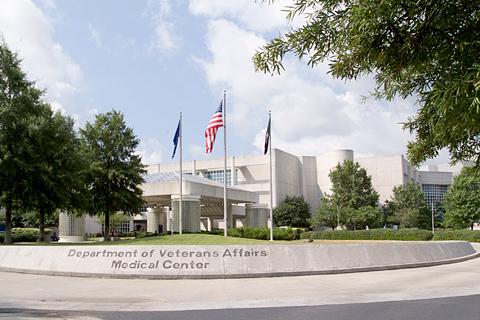
He’s in travel mode again… But it’s nothing terribly exciting. Just a quick hop over to East Georgia in order to make a presentation about The Accidental Plague Diaries to the regional VA geriatrics consortium. I wish I could give you a breathless description of cultural wonders and impressive scenery but five hours of I-20 eastbound simply isn’t conducive to that. The best I have to say is that the redbuds and the wisteria along the interstate are all in bloom. And something is blooming that’s making my eyes sting and water occasionally. It only seems to happen when I’m in the car so I assume it’s something that gets into the air circulation system from the outside and then blows repeatedly in my face until I’m tearing so badly that I can barely see.

There is one respite from rolling hills and vegetation at the half way point, but that’s downtown Atlanta, which remains one of my least favorite American cities. At least I timed it so I didn’t hit it at rush hour and there were only a couple of brief slowdowns as I made my way through. I do take an occasional Atlanta weekend, mainly around a theater production or opera I want to see. Atlanta Opera is doing Paul Moravec’s The Shining next season (yes, based on that novel) and I will make an attempt to go see that as I just want to see how it adapts itself to the opera stage. The themes are certainly operatic in scope and the word of mouth on previous productions has been pretty positive so I’m hopeful. Although I assume blowing up the hotel and a few things of that type will have to be presented conceptually rather than fully staged. The fire department frowns when you burn down the theater with an audience inside it. Shades of the Iroquois in Chicago…

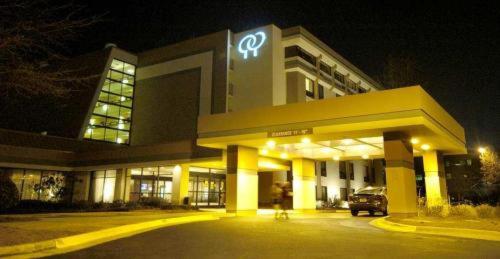
I made it to Augusta unscathed and am ensconced at the Doubletree on the federal government rate. I’m also in one of the oddest hotel rooms I have ever occupied. It’s a pretty standard queen double, but the one window looks out into a hallway and this floor’s elevator lobby. I have drawn the blackout drapes as I really don’t wish to have an audience of random passers by as I sleep tonight. I can’t imagine this was designed deliberately but is rather a consequence of some building addition blocking the previous view of the parking lot. But one never knows, does one.

I think I’m ready for my presentation tomorrow morning. As it’s more or less about narrative in medicine and how my interest in that subject was one of the impetuses that led me to do the writing that became the two, soon to be three, volumes of The Accidental Plague Diaries, I’m pretty much going to wing it from an outline. If you’re going to tell stories, it’s best to just tell them but have a good idea beforehand where they’re supposed to go so you don’t wander too far out into the rough. I’m giving a pulpit message at church in a couple of weeks on a somewhat similar topic. That I will fully write before hand. When you’re in a pulpit you need to consider all of your words carefully. Plus I’ll want Reverend Julie to vet it before hand to make sure there’s nothing in there that would rebound on her or the church in someway, particularly as we now stream all the services on YouTube and who knows who is watching.

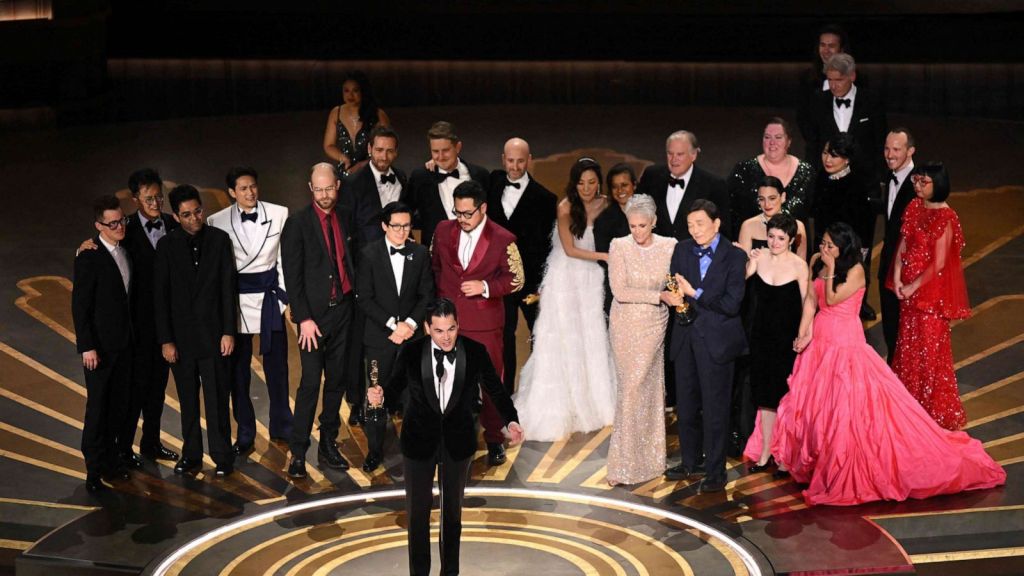
I missed the Oscar telecast last night due to Opera Birmingham commitments but there were a couple of awards that connected into my life. The big winners were, of course, the team behind Everything, Everywhere, All at Once which is an incredibly unique film and worth a watch if you have not yet seen it. I’ve now seen it twice and I’m sure there’s lots I still haven’t got what with its multiple parallel universes and interacting story lines. It was written and directed by Daniel Scheinert and Daniel Kwan, collectively known as the Daniels. Daniel Scheinert is a local boy who came out of Birmingham theater. I met him a couple of times fifteen years ago when he was doing local stage and before he gravitated to film but I can’t say I really know him, but lots of friends know him and his family well and all of Birmingham performing arts has been rooting for him all awards season. I can certainly see the influence of the anarchic early Theater Downtown and enfant terrible Billy Ray Brewton in his movie work. The other winner I crossed paths with years ago was Brendan Fraser, back when he was a gawky teen drama student at Cornish Institute and the box office assistant for my friend Sue at Intiman Theater in the late 80s. Those of us who knew him then would not have picked him as he once was to be a movie star and Oscar winner. Things change.

This isn’t my first time in Augusta. Tommy and I spent a few weekends here over the years. We had a few favorite restaurants and walks we used to do. I don’t think I have the heart to look any of them up this trip. I’ll probably stick pretty close to the hotel. I wouldn’t turn down an invitation to see the club that’s the home of The Masters but I doubt that’s forthcoming. I’m not important enough.

March 12, 2023

S

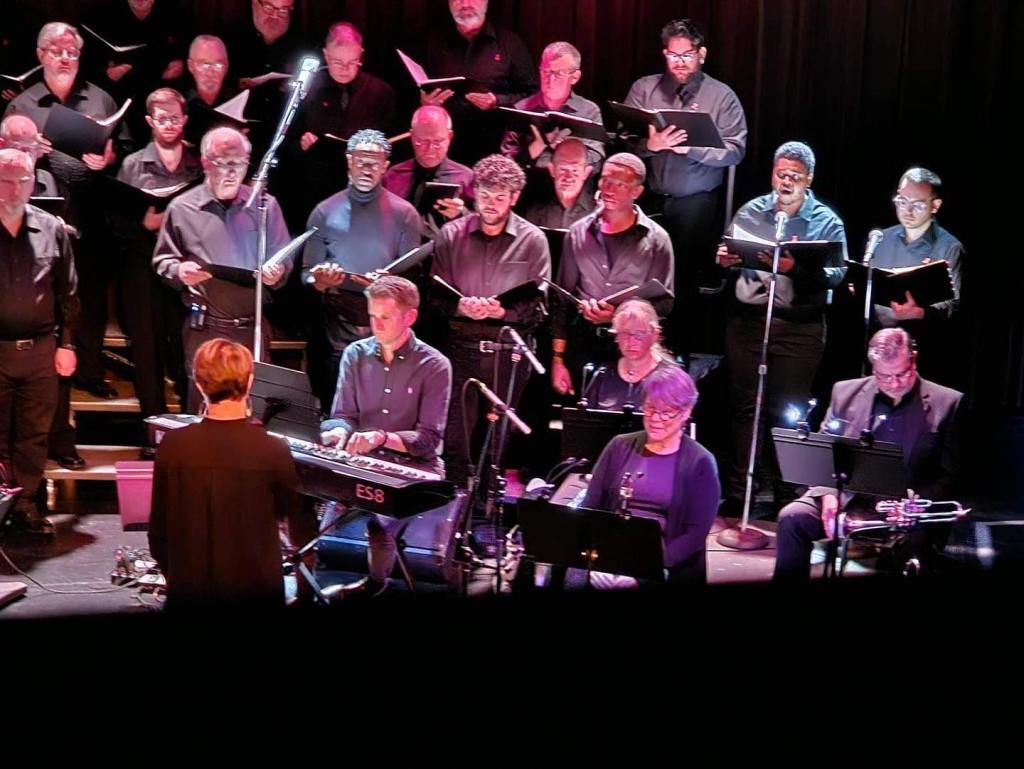
It’s spring ahead weekend again so here I am on what I think should be Sunday morning and it’s already Sunday afternoon. Thank goodness the choir was off this morning at church so I didn’t have to get myself up and out the door in time for rehearsal or I would be sitting there bleary eyed trying to sight read the first hymn while the congregation is busy singing the second. This is my 20th continuous year with the Unitarian Universalist Church of Birmingham choir and I have aged into being one of the more senior members. There’s only a half dozen or so who predate me. If someone were to tell my younger self that I would be singing in a church choir much less for decades on end, I would have assumed that person either had a major Axis I disorder or was on some sort of drugs, but here we are.

I was raised with church affiliation. My parents thought it was important that we have some understanding of religious life and its place in society and had very strong ideas of what religion should not be. It should not coerce. It should not narrow a world view and allow for exploration and free thinking. It should not preach one thing from the pulpit and practice something else the other six days a week. But, I was also raised in the Pacific Northwest, the most unchurched region in the country. The denizens of Seattle had figured out how to organize society without a significant religious component before World War II. I suppose it had something to do with all of the free thinkers being driven west and north by the attitudes of their more church going neighbors throughout the 19th century.

My father was of the Pacific Northwest, having been born and raised in Olympia, gravitating to Seattle for college. He grew up in a strong fundamentalist Methodist household but he rejected it as he hit later adolescence due to the blatant hypocrisy he found between what church members said in church and what they did the rest of the time. My mother, growing up in her transplanted British household in San Francisco, was nominally Church of England on one side and Church of Scotland on the other, but again, found much of the thinking too narrow for her taste. After they married, they didn’t have much to do with church. They were briefly members of a Unitarian fellowship when they found themselves in rural Texas as my father finished his PhD but I think this was a survival mechanism as it didn’t stick. Once they were settled in Seattle with multiple children, they decided to find something.

What they found was the local Congregationalist church, under the Reverend Dale Turner. Dr. Turner was an outspoken voice for liberal values and the inclusion for all at the table within the confines of church teachings and was very much to their taste regarding the role of religion in public life. Dr. Turner was a much beloved figure in Seattle religious circles for years and, even after he retired from the pulpit, wrote a much admired weekly column for the Seattle Times. So, even while we were not particularly regular church goers, we were active in the congregation (my mother ran the holiday food box program for decades), and it was my home church. I suppose a lot of my underlying empathy for the other, strong belief in equitable solutions for society, and belief that religion, while important, should be kept within oneself and one’s spiritual home rather than trumpeted in every public sphere all comes from these beginnings.

In adulthood, I moved a little bit further left from Congregationalist to Unitarian-Universalist. When I look at the style of worship, the content of sermons, the function of religious education and all the rest of it, there’s not a lot of difference between University Congregational Church in Seattle and the Unitarian Universalist Church of Birmingham. The major difference is that UCC had a cross at the front of the sanctuary and mentioned Jesus a bit more while UUCB has a flaming chalice and Jesus comes up as a great teacher rather than as a divine being. The move is courtesy of Steve who wavered back and forth between Metropolitan Community Church (of which he was one of the twelve apostles – having been one of the twelve at the very first service in Troy Perry’s living room back in the early 70s) and the UU church in Los Angeles. He did the same thing in Sacramento during our time together. When we ended up in Birmingham and truly needed a religious support group due to the stresses and strains of his terminal illness, the UUs won out and so here I am. The music piece is, of course, thanks to Tommy who pretty much demanded that I join the choir soon after we got together as a couple.

I hadn’t planned on writing about my personal spiritual journey today. it’s just what came out. When I sit down to write these pieces, I just get in the zone and let the fingers fly across the keyboard. Any number of things can happen. Church is on my mind as we had our annual Stewardship dinner last night. It’s the focal point of pledge season where we try to chivvy the membership into giving enough money for the next fiscal year so we can pay the salaries and keep the lights on. As a relatively young church, we don’t have an enormous endowment to draw on but we do own our building and land outright and are out of debt. I was asked to be the MC. Twenty-one years ago, I was the MC for the first time and, as things were a bit more free wheeling in those days, the character who became the Ansager for the Politically Incorrect Cabaret was born. He’s now old enough to drink. Watch out world…

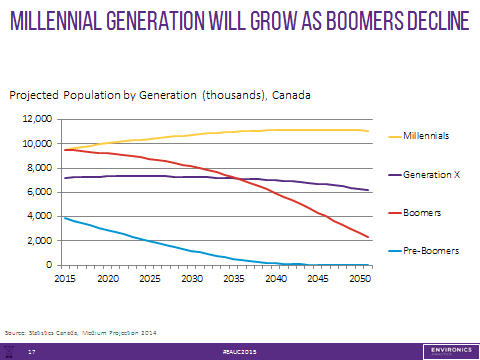
Today, on the other hand, is all about opera. It’s the weekend of Opera Birmingham’s annual vocal competition. Ten young artists competing for prizes and a gala dinner. As president of the board, I’m expected to show up. One of the competitors, a tenor, is lodging in my guest room, likely as a sneaky way to make sure I don’t forget to turn up and make whatever speech and toast is expected of me this evening. While UU is Steve’s gift, opera is definitely Tommy’s. Over the last two decades I’ve gone from being an irregular attendee to an active participant on stage, behind the scenes, and in the rarified world of movers and shakers that keep the art form alive in this country, not easy when younger generations have greatly shortened attention spans and music training has been tossed out the window in many of our schools.

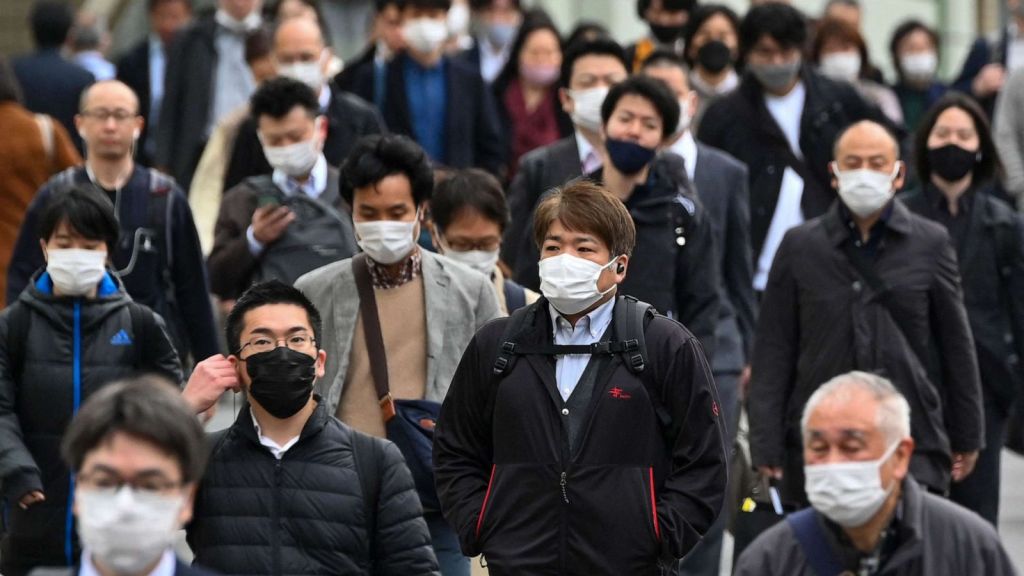
It’s nice that the pandemic has receded enough that large public dinners are a thing again. I’m still keeping my hands washed. And I’ve had all my boosters.

March 8, 2023

WASHINGTON, DC – MARCH 08: (L-R) Former editor at The New York Times and author Nicholas Wade, Atlantic Council Senior Fellow Dr. Jamie Metzl, Dr. Paul Auwaerter of Johns Hopkins School of Medicine and Dr. Robert Redfield, director of the U.S. Centers for Disease Control and Prevention under former President Donald Trump, testify before the House Select Subcommittee on the Coronavirus Pandemic in the Rayburn House Office Building on Capitol Hill on March 08, 2023 in Washington, DC. Witnesses and members of the subcommittee aired and debated their disagreements about the possible origins of the COVID-19 coronavirus and whether it came from nature or a laboratory in China. (Photo by Chip Somodevilla/Getty Images)

Tonight, I’m wondering what we’ve learned from the last three years. From my news feeds of the last day or two, I’ve come to the conclusion ‘not much’. I had hoped that the pandemic, with its overwhelming concerns and the risks that were universal might have unlocked a certain amount of cooperation in society. It didn’t. Where we should have emerged a bit of a kinder, gentler nation, more empathic toward each other and more willing to extend a hand after suffering under a natural disaster beyond any of our control, we seem instead to have become more and more bent on driving anyone out of our social circles who might not view the world in quite the same way we do ourselves.

The landscape is littered with new laws that will gut the public health system’s ability to deal with the next viral pandemic that arrives. And there will be a next. Some states and localities have banned public health authorities from instituting any sort of societal shut downs or banning of public gatherings. Others have carved out special exemptions for religious services, as if viruses would know not to travel within the confines of a church or a temple versus a theater or a school. Some have defunded public health infrastructure to the point of minimal function. We can only hope that the next pandemic is less lethal than Covid. If it’s more lethal, especially if it’s a filovirus like Ebola or Marburg we are well and totally screwed as the spread won’t slow down while we consider whether our previous actions were ill advised and whether we should backtrack. It’ll just spread and the tools we have to stop it will be locked in the woodshed for political reasons and unavailable in any sort of timely fashion.

There are congressional hearings happening on Capitol Hill regarding the pandemic and its response. From what I can tell, they seem more interested in political revisionism and arguments over issues that cannot be resolved on the current evidence such as natural vs. lab origin than in any sort of debate that could help protect us and do better in the future. After looking at a few clips and a bit of the transcripts, all I could do was roll my eyes. There seems to be a complete lack of understanding of what science is and is not on the part of most of the speakers. I am assuming the loudest voices in the room will suck all of the oxygen out and we’ll end up with a lot of sound and fury signifying nothing by the time the television cameras have moved on to the next sound bites.

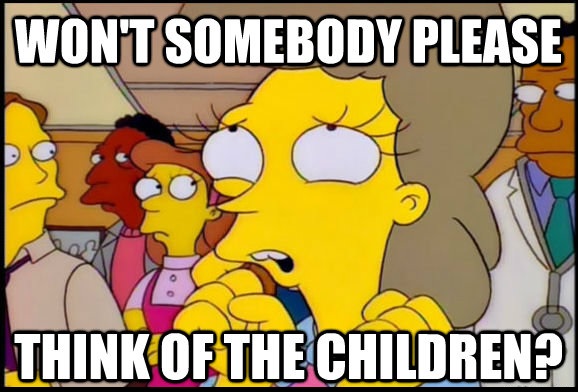
The failures of society have, of course, created a need for useful distractions to keep public debate going, centered far away from the items we should be discussing such as the continuing collapse of the health system and education as pandemic stoked changes have chased away so much human capital from the sectors. The big issue at the moment appears to be protecting children from the horrors of transexual people and drag queens. The legislation being passed left and right would be risible if it didn’t have such real world effects on perfectly innocent people just trying to live their lives. The vaguely worded laws in Tennessee, Florida, and other states could be interpreted in such a way that you could be prosecuted for a felony if you take your grandchildren to a matinee of Peter Pan where a young woman traditionally plays a boy. As children understand the concept of dress up quite well, they aren’t going to be psychosexually confused by drag. Besides which, while I see any number of news stories about church officials involved in crimes against children, I don’t believe I’ve ever seen one about a drag queen behaving inappropriately with them. I know lots of them and, like most gay men, they are well aware of societal opprobrium and are most circumspect in their behavior around kids. I’ve made it a hard and fast rule for years that I don’t let underage people in my home without their parents or other adults around at all times. It’s just one of those things you have to do as a responsible LGBTQIA adult.

While the media continues to melt down with sound bites about drag brunch, I continue to try and function in a fundamentally broken health care system. I’ve had three work days so far this week and each has presented another aspect of how it no longer functions properly. Over the weekend, a patient of mine fell at home. She went to an outside emergency room where Xrays showed she had fractured her third cervical vertebra. Broken necks are a major emergency and that hospital tried to admit her. No beds were to be had. She waited in the ER the whole day and into the night, got tired of waiting and signed herself out and went home to get some sleep, calling me on Monday morning to let me know she was wandering around with a broken neck. I had her come in to our ER post haste for evaluation as she was one bad neck jerk away from becoming a quadriplegic and needed urgent spinal evaluation. I then had to deal with multiple calls from various administrators mad at me for having sent her to the ER without evaluating her in clinic first. Now there’s a lot I can do in my clinic, but treating cervical fractures is way out of my pay grade so I had to waste a bunch of time telling these individuals who apparently had no critical thinking skills that ‘her neck done broke’ was indeed an emergency. That’s time and energy I’ll never get back.

The next day had to do with mental health issues. A patient of mine with a significant dementia has a serious problem with violent acting out. Her senior living facility couldn’t handle it and she was sent to the ER. She was admitted, given some tranquilizers, and sent back. She was returned to the ER again in a few hours once the tranquilizers wore off a bit and she started throwing things at the staff. She is badly in need of a good geropsychiatrist and a psychiatric bed but there are none to be had so she is in four point restraints on the medical ward waiting for next to non-existent services. Geriatric medicine and geriatric psychiatry have been decimated in recent years by departures from the field and no attempts by the American health system to attract new blood. At the same time, I was attempting to help a friend find psychiatric help for her son who has developed a major anxiety disorder and in need of psychiatric care. There are no appointments available with anyone in the metro area for the next three to four weeks.

Today’s theme was a number of complaints from patients regarding their medications. Many of the Medicare Advantage plan formularies shifted as of the first of the year, dropping some drugs, adding others, changing copays. Patients who have been stable on a particular regimen for years are now finding that some of their medications are now no longer covered and are getting huge non-formulary bills at the pharmacy. They then call us and we have to spend hours on the phone with their insurers trying to figure out how to substitute and adjust their medications in such a way as to keep their medical conditions under control and keep them from having to mortgage the house in order to afford them.

I and my heroic staff spend most of our time these days doing things that really don’t contribute much to stabilizing chronic conditions or making people well. The energy is going into administrative black holes at all levels. It’s the disrespect of the system where non-clinicians question and micromanage the decisions I think are best with my more than thirty years of experience in geriatric medicine that’s driving me towards contemplating retirement. The pandemic, with it’s wild effects on staffing and medical economics has just aggravated this to the nth degree and I just don’t know how much longer I can put up with it all.

I can put up with it this week, and this month. I just have to keep breaking it down to one step at a time. Sorry for the whine. I’ll go have some cheese with it.

March 4, 2023

It’s a new month. I guess that means roughly 1/6 of 2023 has already gone by and I’m just at the point where I’m writing 23 rather than 22 when I’m dating things. I have to sign and date a lot of paperwork. Nothing happens in US healthcare without a physicians signed order resting behind it and, as I work in a specialty which requires a lot of coordination with outside agencies, the pieces of paper fly thick and fast toward my inbox, demanding a hastily scrawled signature and date. No one really cares what I scrawl as long as it’s something that can be attested to as my mark at a later date should any questions arise. Light days see 20 or 30 pieces of paper looking for my pen. Heavy days are closer to 75 or so. More and more of the intra-system works on electronic records and electronic signatures which are relatively easy but the minute you get outside of your home system, that all breaks down as no two electronic health records speak to each other and so off to the fax machine you go with your little pile heading off to home health agencies, assisted livings, hospices, and the like. We’re the only sector still dependent on fax as we’re still operating under 1980s and 90s rules regarding data management. Someday, they will be overhauled and we’ll join the 21st century. I’m likely to be retired by that time though…

I’m feeling a bit beat down by it all at work currently. My clinical partner is on an extended leave. We’re so short staffed this means I basically have to do both jobs until her return. We’re also onboarding new staff and are facing a move to a new suite in June. It’s always something. If the system were operating smoothly, all of us this could be handled in good grace, but it’s not. There’s a lack of both clinical and administrative staff which means referrals are not handled in a timely fashion. No senior living facility has adequate staffing at the moment meaning that those who live there are not as well monitored as in years past and are brought to attention at a later stage of disease making patients more difficult to care for. The pandemic driven consolidation in health care agencies has led to a noticeable decline in the quality of services available. The level of comfort with email and portal messaging on the part of patients and their families has led to an explosion in the number of contacts as they write in for every little thing, most of which are variations on normal. I really don’t need to review pages of unsolicited blood pressure readings and I really don’t need photographs of mom’s bowel movements. OK I’ve got that off my chest…

It will get better. My mood will improve or I’ll have a really good day at work or I’ll meet a new patient with a really interesting story about his or her life and I’ll be reminded why I do what I do. In the meantime, let me wallow a little bit. I think I deserve it. As long as it doesn’t continue for more than a couple of days…

I am slowly getting my backlog of projects under control. The financial records have all been collected for the taxes and my usual accordion file is ready for my accountant. I made my quarterly run to Costco. I got the shopping for the week done. I’ve reviewed the Sunday school lesson I need to teach tomorrow. (Pity the elementary class that gets me as their teacher). I finished up the legal case I needed to have done by the weekend. On the docket for tomorrow is getting the back broken on the talk I have to give in Augusta on the 14th. I have a basic gist of an idea in my head but I do have to get something on paper. As it’s going to be more or less about the importance of narrative in health care and senior services, I’m not going to prepare powerpoints or anything, I’m just going to talk and tell the story, but I sill need to have some signposts in front of me while I do that to be sure I don’t wander too far off into the rough. (See what I did there – Augusta – golf metaphor…)

I’m behind on my editing of volume 3 of the book. I should be able to get to that this next week. To be frank, I’m a bit scared to look over those entries. There’s this piece of me that’s afraid that I’ll read them and hate them all as they’ll be too repetitive and too filled with navel gazing to be of any interest. But there’s another piece of me that feels the story of the pandemic, as told in the book, remains unfinished and that third volume is necessary for the work to make sense as a whole. I’ll let me cognitive dissonance fight with itself for a while and something will eventually come of the battle. And what emerges usually ends up being pretty good.

I’m feeling the need to rant in depth on something in regards to the health system but I’m not sure what I can talk about that I haven’t already dissected in some way and I don’t want to repeat myself ad nauseam. Maybe I should move out of health care but the only other subject area in which I have significant learning is in musical theater and I’m not sure anyone wants my in depth analysis of the works of Rodgers and Hammerstein as compared to Kander and Ebb. If anyone has a request, I’ll take it under advisement.

A friend from opera circles made his Met debut today. I will never sing on stage at the Met (unless I join the cleaning crew) but I’m always thrilled when someone of my acquaintance attains that milestone. The combination of pandemic and finances has kept the Opera Birmingham chorus relatively silent in recent years but I should be back on an opera stage in 2024 (I know what the show is but I’m not authorized to reveal it). It will be the first time since 2019. There’s been some operetta in between but Covid pretty much knocked out most things the last few years and the 2022 and 2023 grand opera offerings used very small choruses and I’m not at the top of the list when you only have twelve slots. I have been back in voice lessons so my technique is improving slowly so by spring of 2024, I should be up to snuff.

I did get to sing once on a Broadway stage. I was invited backstage at the 46th Street Theater after a performance of Hamilton a few years ago. I made sure to go down to the lip and sing a few bars to the empty house so I could say truthfully that I have sung on Broadway… It counts, doesn’t it?

February 27, 2023

And just like that, Dearly Departed has departed; whether dearly or not can be debated. On the whole, I was very pleased with the run. The cast really found their footing and timing in the second weekend and the audience responded with hoots and hollers to all sorts of highly inappropriate material such as family fistfights, adulterous affairs, funeral price gouging and diarrheal vicars. I’m not really sure that the play is a comedy, even though it is sold as such. I see it as much more of a dramedy with a slightly heightened reality and I kept telling my cast that for the humor to work, it had to be grounded and centered in real lived experiences. If you’ve ever spent any time in the small town South, you will have met people just like them and the play works because it balances the ridiculous situations with moments of heart where we realize that these are not caricatures, but characters just trying to live their best lives through the crap life flings at them. Will I direct again? Who knows. I seem to remember what I’m doing and I’ve been doing it for 43 years so maybe someone will ask again.

I have nothing else specific on my theatrical calendar moving forward but I’m not worried about it. Something will turn up. It usually does. There aren’t that many actors of my age and type in town and there’s lots of character parts written for aging men. I have the advantage of easily aging up on stage due to the white hair and that has opened up even more opportunities to sink my teeth into some interesting roles the last few years. I’ve been asked to reprise my performance as Mr. Pendleton in Choir Boy for a production in Utah this next season. It’s unlikely to work with my medical professional schedule but it’s highly flattering to be asked. When I do retire, I’ve thought about exploring film/TV work in Atlanta some. Screen acting requires a very different set of skills than stage acting and I’m not sure I have them though.

Our old friend Covid is not gone. Other viruses are making their usual seasonal rounds as well. Norovirus, which pops up every February and March, has been making local inroads the last few weeks. It causes a rather nasty watery diarrhea which is uncomfortable and inconvenient in most adults but which can cause grave issues in my patient population with their reduced physiologic reserve. It doesn’t take much to tip them over into dehydration which can then start a cascade of events that you really don’t want. I was on call this past weekend and I got an emergency call yesterday evening from a patient family. Patient and adult children all came down with Covid. Paxlovid now! I got everybody’s prescriptions called in to profuse thanks. More messages first thing this morning. The patient’s Paxlovid was somehow left in the middle of the front lawn overnight and rained on. Can a new prescription be sent now? I’ve learned never to ask, just accept and move on to the next semi-urgent message in the queue.

Katelyn Jetelina, whose substack is incredibly helpful for understanding the public health science around Covid and other disease processes, put together a very good summary of what we know about vaccines based on reports that came out of the Advisory Committee on Immunization Practices meetings that recently happened at the CDC. Takeaways included that the bivalent booster vaccine, offered since September, has been very effective at preventing hospitalization from Covid. This is particularly true for the over 65 population. (I’ve been reading, writing and thinking about the over 65 population for decades and it’s finally dawning on me that I will be one of them in just over four years). It looks like the data is supporting the idea of an annual booster moving forward but time will tell and I still think there are a few surprises in store for us from Covid before it’s done with us.

There is still some unease in the use of the boosters in adolescents due to the chance of myocarditis, especially in young men. Fortunately, the bivalent booster has had no reported cases of myocarditis and the calculated risk of the vaccine is below the risk of hospitalization and death from no vaccine. The chance of myocarditis is no higher than 1/10,000 and probably closer to 1/100,000, well below my threshold of the 1/8,000 chance all Americans have of dying in a traffic accident in any given year.

I thought about taking every evening this week off to veg after the business of the last few weeks but, alas, I still have to finish the taxes and have talks to write and a book to edit so, as we say to the god of death, ‘Not today’. But I will allow bad TV and musical cast albums in the background as I go through these chores.

February 22, 2023

Does one wish others a happy Ash Wednesday? The start of Lent should probably not be thought of as an occasion for merriment. The day before however… As I am neither particularly Christian nor residing in New Orleans, the last two days have not been anything outside of the usual work load. I did have yesterday evening off from all rehearsal and other obligations but rather than running naked through the streets, begging for beads, I used it to break the back on sorting my 2022 financial records so my accountant can make some semblance of sense of my 1040 when I take them all in next month. I’ve decided I’m not broke yet and can afford to live another year as long as I continue slaving away for UAB and the VA.

I am participating in Unitarian Universalist social media Lent which involves posting a picture a day through the forty day period exemplifying various positive qualities and emotions. That’s something I can get behind. As far as giving something up, I’ve decided that this year it’s ice cream. I don’t eat a lot of it anyway, not that I don’t like it, I just don’t so it shouldn’t be too hard for me to deny myself of something pleasurable. Other thoughts were women (not at all difficult) and exercise (not the best of ideas) so ice cream it is until mid April. Given that it was 83 degrees this afternoon in Birmingham and feels more like June than February out there, this might be trickier than I first assumed. As we’re in the semitropics and most of the rest of the country is in frigid storm, I’m assuming we’ll have another clash of weather fronts shortly and we’ll all be watching our weather maps around here for tornadoes. They rarely bother us here in the Jones Valley where central Birmingham is located and where I live and work so I don’t spend a lot of time worrying about them. Besides, I live in an eight story concrete fortress of a building that’s not going anywhere. My house call territories are within various tornado belts in the hinterlands but we’re smart enough to cancel or postpone if the weather looks that dubious.

Dearly Departed has one more weekend to run. Tomorrow, Friday, and Saturday evenings at 7:30 and Sunday matinee at 2:30. Those of you locally whom I have supported over the years by attending your shows and financially donating to your companies and productions need to get yourself over to a performance and honor your fellow creators of theater. What will fill its place in my social/artistic calendar? It’s not completely clear yet. I got a message about doing a one off special concert earlier today and I have some other oddball gigs on the books in the spring, but no specific shows are there yet. There was one I kind of hoped to do coming up in May but I took another look at the production schedule and I have conflicts the last weekend of performance so that’s out.

I had two multi hour board meetings this afternoon/evening for two different social service agencies. I currently sit on four boards – two performing arts companies and two social service agencies with programs for seniors. That’s about my limit with my work and other commitments. I can see that part of my life expanding greatly when I retire and having far more than four in my life. I was raised in a culture that believed that professionals such as myself were obligated to give back to their communities in exchange for the relatively high status their qualifications give them and I’ve always sat on boards and taken part in civic affairs in one way or another. One of the destructive things to come out of the last five years or so, as we tear ourselves apart into various armed social camps, is a deterioration of this sort of understanding that society doesn’t function properly if we don’t give back to it each in our own way and learn to cooperate and work together with others who may view things very differently than ourselves. The gut reaction today seems to be if your ideas are different, I’ll just call you names and then go home and post nasty memes about you and people like you to my social media. If we all keep doing that, there’s not going to be a civic organization left that actually functions.

Jason Robert Brown’s musical, Parade, is having a major revival on Broadway. It’s first preview was last night. It’s not an especially well known show outside the theater community despite having won Tony’s for best book and score. It dramatizes the Leo Frank trial and ultimately his lynching outside of Atlanta in the years leading up to World War I. It’s a heavy subject and the incident still casts a pall over Southern Jewish life more than a century later. (If you’re unfamiliar with Leo Frank and his saga, read up on it). Theater goers in New York were met with neo-Nazi protesters in front of the theater last night. I’m not exactly sure what their point was, probably just free publicity, but the fact that something like that even happens in this country today shows just how low public discourse has fallen over the last few years. Between that, book bannings (which haven’t quite reached the stage of book burnings yet – but it will), members of congress advocating the dissolution of the union, politicians meddling with the free expression of ideas in higher education, and various steps being taken to reintroduce the subjugation of women, I sometimes wonder just what historical period I’m living in. At first I assumed it was the 1930s but with various revelations of child labor and an Alaskan politician advocating for the death of abused children as an economic benefit, now I’m thinking the 1830s. We may get back to the 1730s in another six months.

Theater is the mirror of society. Each generation takes the text and mounts it in a new way to reflect the current audience. Parade may be just the show we need to show us who we are.

February 18, 2023

Dearly Departed opened last night with the first of its six scheduled performances. Was it flawless? No. A couch made an unexpected appearance in the middle of Act I, there were some minor lighting and sound kerfuffles, and at least one key prop didn’t make it onstage for its starring role. But most of it were things that an audience unfamiliar with the production would\not have picked up on (except the couch – no hiding that one…) and the comments I heard from the audience were highly complimentary, declaring the show a success given the limitations of budget, equipment, and time that plague any community theater production. I was very proud of my actors. It was the first time I was able to simply sit there and watch the show without picking apart the myriad details that my minds eye tells me would make it better. I had no notes to take, no technical snafus to try and solve, no trying to figure out how to coach an actor to the next level through positive reinforcement. Tommy once said that his goal was to go to local theater and see everyone he knew on stage and still see no one he knew on stage. I think my cast achieved that. As I just let the rhythms and language of the misadventures of the Turpin family envelop me, I was seeing those characters, not the actors I’ve been working with so diligently.

Much of Dearly Departed is relatively short blackout scenes, usually of two or three people. I’ve seen other productions of the piece where two or three people talking at a kitchen table quickly gets boring. I was never bored. My cast has learned to work together as an ensemble and support each other and create layers and nuances that keep the ball rolling. My favorite scene in the play is just two brothers sitting on the porch steps with pint bottles of bourbon. It took me all of about fifteen minutes to stage it – what can you do with sitting on the porch steps? But, as it was performed last night, there was a current of humanity and universal concerns of love, death, and family that came through to me in ways it never had in rehearsal when I was so caught up in the details. So, if you happen to be in Birmingham next weekend, honor those eleven people on stage (and the other three behind the scenes) and go see what they’ve created. I’m not sure I had that much to do with it.

Now that the show is open (my job ended when the lights went down last night – I can turn up for performances but I’m certainly not needed), I have to start turning my attention to the various piles of things that have fetched up on the dining room table these last few weeks, dropped there to be dealt with ‘once the show is open’. I have a talk to give on The Accidental Plague Diaries and how it relates to trends in senior care in Mid March, a pulpit message about my writing in early April, a trip to Seattle to check up on the paterfamilias, a symphonic choral work to learn, and a couple of legal cases to delve into. Should keep me off the streets the next few weeks.

There’s been almost no reportage on Covid over the last few weeks. At least there’s been nothing that’s penetrated my little theatrical world bubble. So I poked around a bit this afternoon through my usual sources. We’re still losing about 2500-3000 people a week and there’s still 30,000 people in the hospital nationwide (with about 3500 in intensive care. It remains way down from the previous peaks but it’s still an unfathomable number of people in the aggregate. As a comparison, it’s roughly three times the number of women who die of breast cancer weekly and about the same as the number of Americans who die of stroke. One of the programs under the federal pandemic response legislation was one that has subsidized data collection from all of the individual health departments at state and local level and allowed us to see the total numbers in something approximating real time. As of May 11th, when the emergency phase of the pandemic officially comes to an end, that funding ends as well. The numbers will again come piecemeal and poorer states are likely not to report much at all. We’ll also lose things like wastewater surveillance which has been very useful in determining where Covid is actively spreading even when the official numbers have been somewhat murky.

Healthcare is pouring money and resources into community based care programs to try and decentralize medical care away from the hospital and back to the home and the community for things that do not require hospital care. This is laudatory but the ravaged landscape of healthcare post Covid means that we simply don’t have the man power to enact all of the programs and ideas that the ‘Make It So’ administrators sitting in corporate offices are churning out. Somewhere around 10-12% of the healthcare work force quit or retired during the acute phase of the pandemic and there’s a couple of other percentage points headed towards the exits as their lives have become more and more intolerable as they have to pick up the slack for their missing colleagues. It’s going to take a generation to replace those numbers and the expertise that was lost as most of the departed were older and seasoned professionals. We sit around our conference table in our clinic and house call program offices trying desperately to figure out how to find more qualified providers and how to fairly divvy the workload among those we do have. And try not to roll our eyes too much when someone in central administration wants to replace our house call vehicles with an all electric fleet. (Bureaucrats haven’t quite figured out that there are no charging stations in rural Alabama and that the lightweight vehicles they are considering will never make it to the mobile home in the holler where you take the county road, turn off on the gravel road, head down the dirt road and then descend the creek bed.) As one of the few physicians around who understands the world of community medicine and the world of long term care medicine and all of the weird interplays between them, I’m constantly putting out fires that I think simply require a little common sense. At least I have job security. There simply aren’t younger ones coming up beneath me with the same skill set.

Going to eat the other half of my Hawaiian pizza (pineapple does belong on pizza and I will die on this hill) and make my way out to tonight’s performance of Dearly Departed to provide moral support.

February 12, 2023

I feel like things are moving a bit and I’m coming out of the funk and torpor of the last week. It’s not my doing. It’s just what seems to be happening to and around me. All three careers are heating up a bit and making me have to move forward on commitments and goals. My usual coping mechanism is to keep myself so busy that I don’t have time to wallow. It works pretty well until I get to the point where I look at the calendar trying to find a weekend for a get away for self care purposes and find I’m having to look into July. As the old saying goes, I’ll rest when I’m dead. It’s a side effect of having been born into a generation of gay men who watched their peers and mentors die, lives cut short by societal indifference to HIV in the 1980s. You know there won’t ever be enough time.

I’ve been asked to be in the pulpit in early April at church and to talk again about my writing and books. I’ve come up with a title – Unfinished Stories – and some vague concepts about how that relates to my writing, my life and society at large. I haven’t started to write the sermon yet. It will have to wait until Dearly Departed becomes a finished story as of the 26th of February. I don’t have another theatrical project on the horizon, just a symphony concert or two so that should give me the time to get that done and to break the back on editing of Volume III of the Accidental Plague Diaries. I got a nice mention in the local on line press this week. Hopefully that will translate into a few sales and the Northern Alabama bookstores displaying it more prominently on their local authors tables. We no longer have a daily paper in Birmingham, just on line. As a geriatrician, I find this problematic as so many of my patients have developed lives free from the chains of modern technology and now they’re being forced into the cesspool of television news if they want to keep up with the world. And I’ll have to chase after them with amlodipine and lisinopril trying to keep up with their blood pressure.

On Tuesday, I received an email from regional VA headquarters inviting me to be their keynote speaker at their annual convention for senior care next month. I was flattered but a little mystified as it was very short notice and I had no idea why they would single me out. I learned long ago that the best way to cope with a large federal agency was to keep your head down and just do your job and stay off the radar. It turned out that someone at regional headquarters had been given the book (Volume I I assume) and actually read it, loved it and then figured out that I work for them. So, off to Augusta I go in mid March to speak on the book and the pandemic and the long term effects of the pandemic on elder care programs. That gig should be good for some sales. I wonder if I can get the VA to order and sell a few cases in the vendor’s area?

Technical rehearsals for Dearly Departed begin tomorrow. I’m not worried about my actors but it remains to be seen if lights and sound effects and set changes will all come together as envisioned. I guess I’ll find out. Someone at church asked me what does a director do when it comes to putting a piece on stage? My first thought was what doesn’t a director do, but that struck me as an impolite answer. I basically said that a director is responsible for everything the audience experiences from the moment the doors open until the moment the audience files out. The producer or production company finds the resources for a show, human and material and manages the nuts and bolts of the theater as a space and place of business. The director creates the world of the show using performers and collaborations with the design departments (set, costume, light, sound etc.) to take the words on the page and turn them into something more than any individual could achieve. If theater is a team sport, they’re the head coach.

My favorite thing about directing is watching all of the half formed ideas in your head take shape and appear in front of you. Sometimes they are exactly what you envisioned. Sometimes an actor finds a different nuance that takes a scene in an unexpected direction and then it becomes my job to make sure what they are doing supports the whole and to shape and change things so that they become cohesive and part of a unified vision. An actor cannot see their own performance. It’s up to the director to watch it and help them adjust, to help them identify the conflicts, to make sure they work together with other performances rather than against them. And then there’s the technical departments. I’ve worked in most of them over the years but my knowledge base is limited. It’s not really my world and I trust in a design team to bring it. For this show, I knew, for instance, what I wanted for the set conceptually and the genius set/costume/technical director guy I’m working with took his knowledge base and kicked it up a couple of notches.

There are some things I tend to do differently when I direct. For instance, I hate curtain speeches. Having someone who is not part of the show come out and give the announcements bothers me and takes me right out of the suspension of disbelief I’ve been working to create from the time I sat down. I know that information has to be there, so I always try to put it in as a voice over and to somehow have that fit in with the style of the show and the preshow soundscape. That was relatively easy to do with this one. I also try to make sure that shows flow and that scene shifts are as quick and minimal as possible. We’re still having to work on that one with Dearly Departed. When I first started directing, nearly 45 years ago, I took almost all negative notes. What was bad and needed fixing. I now try to take a balance of negative and positive. What I’ve learned from working with teams in health care has carried over into theater and vice versa. Positive reinforcement is a good thing.

The directors job during tech is to sit out in the house and take copious notes about how to encourage, fix, adjust, and make the show better. I’ll do my best to get everything right by Thursday night…

February 8, 2023

I’m having one of those periods where I’m feeling disconnected. I assume I’m not alone in having those. It’s as if I were almost an observer in my own life. There’s nothing particularly wrong but I’m still just sort of going through the motions, almost as if it were someone else’s existence while the part that I feel is most truly me sits curled up in a corner of my brain just watching it all unfold. I’ve always felt like the person looking in through the window at the party rather than the person who’s in the middle of the dance. It might explain why I love Sondheim so much; most of his art revolves around outsider characters who never quite belong and that ends up being their tragic flaw and source of dramatic conflict. It may also explain my affinity for ‘Cabaret’ – the whole ‘I am a camera’ thing that infuses Christopher Isherwood’s original Berlin Stories.

I don’t feel bad or depressed when I get like this. I’ve had true depression before, fortunately not for quite some time. When I have it, it’s a true physical feeling and it takes all the energy I can muster to get out of bed and meet my obligations. I’m feeling normal, other than the post inflammatory reactive airway cough that continues after my nasty respiratory virus of last month. I’m getting up and greeting the day in my usual way – which is often accompanied by a few curses and a couple of raps on the snooze bar. I am not a morning person. But as I spend my time with patients and in rehearsal and coping with all of the usual vicissitudes of life, nothing is feeling quite real, as if I’m marking time, waiting for something new to begin.

Perhaps this is my next phase of post-pandemic recovery. I went through the exhaustion and sleeping too much phase and now I’m in the detached and protect myself from the craziness phase. My life isn’t particularly crazy at the moment but I can’t say the same about society. Politics seems to be more about self-aggrandizement than improving of society. Education appears to be falling into thousands of little pieces. Economic life continues to descend into late stage vulture capitalism. My own little world of medicine continues to reel from the forces unleashed by Covid and there’s no end in sight.

I read somewhere this week that over the three year period of 2020-2022, coinciding with the pandemic, roughly 115,000 US physicians retired or otherwise left the practice of medicine. The number of active physicians in the country runs just under a million (roughly 940,000 at last count from the statistics I’ve been able to find). That’s 12.2% of the physician work force gone in three years. All is not lost, during that same period, 40,000 new physicians began their careers after graduating from training or through immigration so the net deficit is only about 8%. It’s no wonder that none of us can get an appointment in any sort of timely fashion. The design of the US health system to run lean and mean and pretty much at full capacity without any fat in the system means there’s no elasticity when 8% of the work force suddenly disappears.

Another news article that came to my attention this week reported that fifteen Alabama hospitals are insolvent and in danger of shuttering this year. That’s out of 126 total. That’s a similar 12%. The hospitals in danger are predominantly smaller, rural, and often the economic engines of little downs being one of the few employers offering stable positions and good wages. Alabama is one of the Republican dominated states that has refused to expand Medicaid under the PPACA legislation and, twelve years later, disenfranchised populations will pay the price. They’ll lose local health care and doctors. The wealthy populations of Birmingham, Huntsville and Mobile won’t be inconvenienced. But those poorer folk who have lost their local emergency department will still need care and will have to go somewhere and they’ll start occupying beds in communities where the system still functions leading to more shortages and so it goes.

These existential crises of manpower and economics should be making the C suites of health care companies sit up and take notice. They are, but not necessarily in the way you might think. American health care has drifted away from patient care to care of the quarterly balance sheet. More and more decisions are predicated on the profit motive than on the societal good motive. Health care providers of all stripes are waking up to this basic fact and the cognitive dissonance being created in the wake of the war between their ethical and clinical mission and the corporate rules under which they are forced to live are creating a bit of a moral crisis in the profession. It’s becoming more and more obvious that the flow of funds, which for clinicians boils down to data collection and signing of forms and choosing the correct codes of various stripes is far more important to the powers that be than empathy and active listening or even accurate diagnosing. After all, if you don’t get it right the first time, there can be more tests and more charges. I’m probably being unfair as most of the hospital administrators I know are good people trying to do a good job and they’re probably just as frustrated by what’s happening in their own ways.

Suffice it to say, that I have come full circle in my professional life. My first grown up job, in 1977 at age 15, was as a keypunch operator. (My younger readers will have no idea what a keypunch is – they’ll have to resort to Wikipedia). Basically, I was doing data entry. And now, 45 years later, I find myself again employed as a data entry clerk. And God forbid if I hit the wrong button or choose the wrong code because when I do and the form won’t go through or the note is kicked back because something is outside the computer’s understanding, the nasty grams start arriving in the email to make sure I fix it quickly because the funds must flow.

I’ve made a pact with myself. On the day I retire, I’m taking one of the computer terminals out of the office, carrying it out to the three story glass atrium, and drop kicking it off the top level to shatter on the marble below. There would be something immensely satisfying in seeing all of its electronic guts spread across the floor, winking in the fluorescent light. When I was in college, I came across a great way of stress relief finals week. Head off to the thrift store, buy some real cheap porcelain dinnerware, and heave it off the roof of the dorm into the dumpster. The sound of shattering crockery could bring even the highest levels of anxiety down a notch. I’ve always had to be controlled in the destruction of things as I don’t like making a mess. Neither Tommy nor Steve was that way. If they were in high dudgeon, they would often reach for the nearest object and fling it in a fit of pique without regard to its value or fragility. More than once I had to look at them and say something along the lines of ‘Clean that up. I’m going to bed.’ I’ve got far too many things stuffed into this condo. Maybe I ought to break a few of them. Maybe it’ll get me out of my head and reconnected.

February 3, 2023

It was the best of times; it was the worst of times. Sounds like it could be a good opening line for ‘A Tale of Two Viruses’ – one of which became a pandemic and one of which did not. The one that did, Covid, arrived and swept through the general population, causing chaos in its wake and permanently altering our society and the trajectories of many of our social institutions. What about the one that didn’t? Mpox, formerly known as monkey pox, arrived about six months ago, was spreading rapidly and is now basically contained with only a few cases here and there. Why the difference?

In the case of mpox, the public health system swung into action and there were no arguments. There were no internet forums devoted to the evils of the mpox vaccine. There were no promotions of dubious cures by national figures. No one was suggesting injecting bleach or gargling betadine. The populations most at risk were identified and they quickly took precautions and got themselves vaccinated, breaking the transmission chains and keeping the virus from spreading wider and wider. That’s because the most at risk group was gay men. Gay men have had significant interplay with viral pandemics over the last couple of generations. They’ve learned how to listen to public health authorities, accept their expertise, and do what is required for the greater community good with a minimum of fuss. Covid could have gone the same way but the wider American society couldn’t pull it’s act together for common cause as the vaccines rolled out. Maybe it should take a few cues from a marginalized population, once again under vicious attack (this time in the name of protecting the children), who knows that it has to hang together in the face of threats.

There’s little to report on the Covid front. Numbers remain fairly constant. Hospitalizations are around 25,000 on any given day and about 3,000 people a week continue to lose their lives on any given day in the good old USA. At current trends, Covid looks like it’s going to settle in as the fourth leading cause of death for 2022 and it’s likely to remain that way for 2023 and beyond. I suppose coming down from third, where it ranked in 2020 and 2021 is an improvement. I was digging through some mortality data from the pandemic and ran across something interesting. Throughout the pandemic, mortality was far above what actuarial calculations foretold but, when Covid deaths were subtracted out, there remained a significant excess mortality – higher death rates than were predicted all through the 2020-2022 period. What’s more, the excess mortality rates pretty much tracked with the rise and fall of Covid numbers. What’s suspected is that these deaths, natural causes of various stripes, were likely Covid induced but not counted in official statistics due to lack of documentation of infection. Say a ninety year old who lived alone at home and was found dead in bed. If there was no one to observe symptoms and no testing, the death might have been coded as cardiac in nature as often happens in such cases. If even half of the excess deaths are from unrecorded Covid cases, the number of total deaths from the disease goes up fairly significantly from the 1.1 million currently on the books to something closer to 1.4 million. The pandemic killed roughly 1/200 Americans who celebrated New Years 2020.

We now have an official end date for the pandemic emergency. May 11, 2023. On that date, all of the various public health emergency orders put in place over the last few years to combat Covid will come to a close. There’s a piece of me that wants to think it’s a personal salute of some sort as that’s my birthday (I’ll be 61 if anyone is counting). Of course that doesn’t mean the disease goes away on that date, but it does give bureaucracy something to work with. It needs hard figures like dates. And it does give me the right date on which to write the epilogue for the final volume of The Accidental Plague Diaries. The last book won’t run through then as I’ve sort of spent all my ideas regarding pandemic tangential topics to write about but I think it will be a satisfying coda. There could also be another mutation in April and all bets will be off.

The next couple of weeks will be consumed by getting The Bell Tower Players production of Dearly Departed up on its feet. Scripts are coming out of hands, actors are finding their characters and rhythms, scenes are coming together and are finding the blend of comedy, pain, and humanity that I’m looking for. In some ways, that was the easy part. Now it’s a never ending sea of details regarding costumes and props and set changes and sound cues and lighting instruments and all of the hundreds of things that have to come together just right for theatrical production. There comes a time in every show I’ve ever done where I’ve turned to the person next to me and said ‘Why do we do this? Why don’t we just go out in the alley and beat each other with pointed sticks? It would be less painful.’ Why do I do it? It fulfills my need to create. It’s my version of team sports: getting a group of people to do something that none of them could accomplish on their own. It restores my soul and faith in humanity to work together with friends on a larger goal. All I can say is ‘Gods of the theater smile on us…’

It’s cold out tonight. There are freezes and ice storms in neighboring states but so far they are missing us. We’re just cold and wet and dreary. I think it will be a good weekend to stay in and work on sound cues and catch up on progress notes and maybe finally finish taking down the Christmas Tree. Binx the cat has made a good start; he’s decided it’s a fun game to bat at the low hanging ornaments until they come down on his head, then he bolts under the couch. At least he hasn’t tried to climb it or knocked it over or anything else equally disastrous. I should also try to do some writing – but I still haven’t figured out what the next major writing project should be. I assume it’ll come to me eventually. It usually does.