July 16, 2022

And the numbers continue to rise. The number of inpatients with Covid at the Birmingham VA has quadrupled over the last two weeks. I haven’t seen the numbers for UAB hospital, but scuttlebutt is that they’re on the way up as well. Test positivity rate has climbed from about 5% to 30% here in Alabama and, at last count, 22 of the athletes here for the World Games have tested positive, although none has required hospitalization. The numbers are equally bleak on the national level. There are well over 100,000 new diagnoses daily, 40,000 people are in the hospital, and the national death rate, which was down around 200 a few weeks ago, has more than doubled. The BA 5 wave is definitely here (and the BA 2.75 wave is hot on its heels. It’ll be interesting to see which of those two outcompetes the other over the next month or so).

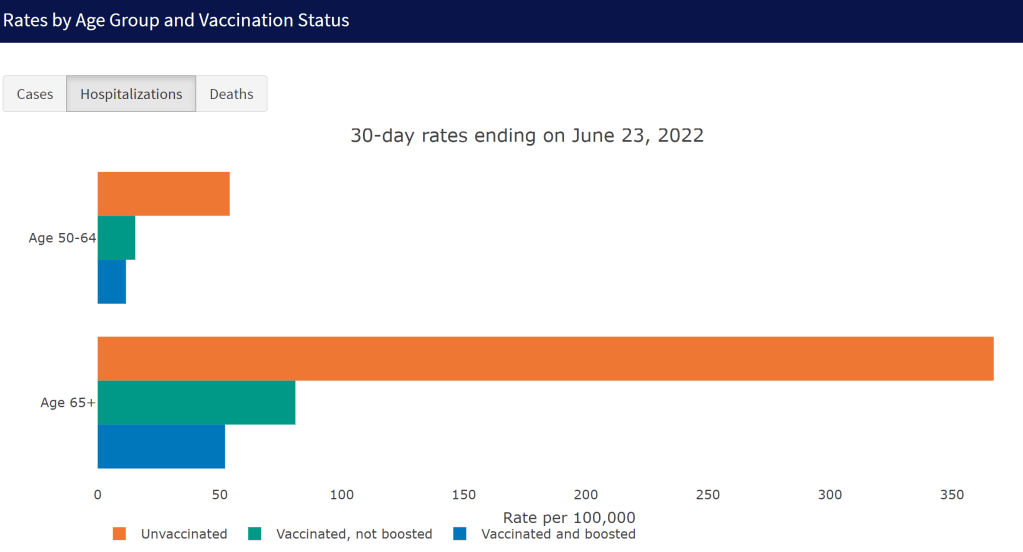
Will it be as bad as the omicron wave of this past winter? Unlikely as there is still lingering community immunity from those cases. Natural immunity seems to be in the four to eight month range so it is starting to fall off somewhat and the current BA strains are quite resourceful at getting around the immune system so I don’t trust that particular defensive line to hold a whole lot longer. Then there are the vaccinations. I would strongly suggest anyone eligible for a second booster go get it as vaccination remains our best bet to keep hospital and mortality numbers down. Death rates continue to run six to seven times as high in the unvaccinated population. The health care system is on somewhat shaky ground, as anyone who works in it or who has tried to use it recently can attest, and another out of control wave that shoots the number of patients requiring hospitalization back to extremely high levels may be enough to start bringing some of it crashing down.

I know you’re all tired of this mess. I’m just as tired as you are but the virus isn’t. It’s too simple an organism to have emotional states. It’s just going to keep on searching for hosts and replicating and mutating. That’s it’s only aim and mission. There are a few things we can all do besides getting vaccinated. We can make sure that public spaces are properly ventilated. We can mask up indoors and outdoors in crowds. We can properly quarantine if we get sick to help break transmission chains. We can pretend that we give a good god damn about each other. I know that’s unfashionable these days but cooperation is the only way through all of this and it’s going to have to be on a global scale as there isn’t a human on the planet that’s not at risk.

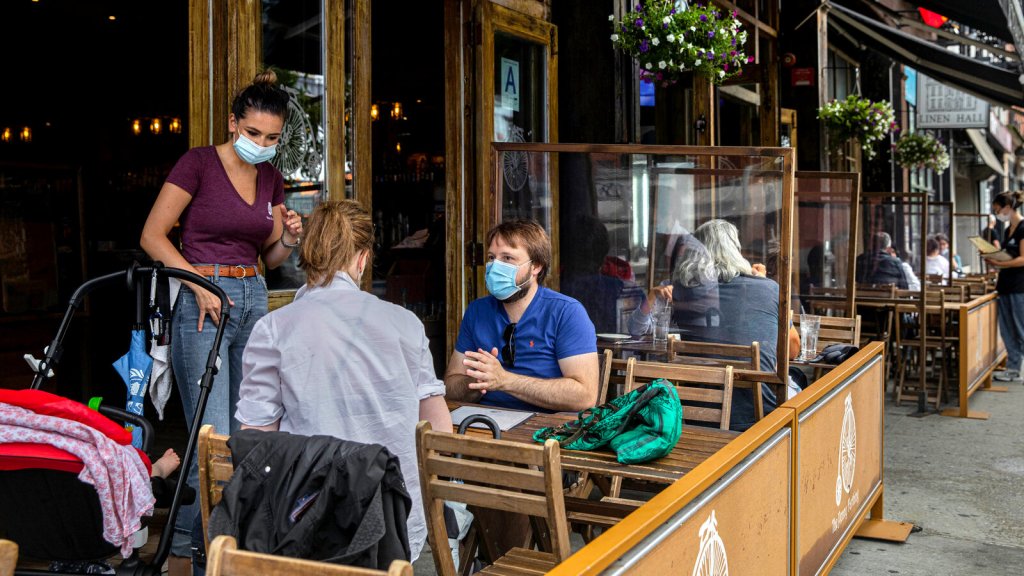
Am I going to turn myself into a hermit again? Wasn’t planning on it. Like everyone else, I’m doing my risk/benefit calculations regarding activities and public mingling. I’m still eating out some, but I look at table spacing and ventilation and how crowded the dining area is. I go to live theater as I tend to trust that the type of people who comprise theater audiences are likely vaccinated and making the same sort of calculations I’m making. I’m not going to the movies very often, and when I do, sit away from others. I continue to mask up at work when around patients. I fully expect to be reinfected at some point. I don’t know that it’s possible to completely avoid it. I’m going to trust to two boosters, some lingering natural immunity from January and my fairly solid constitution to keep me from becoming too ill.

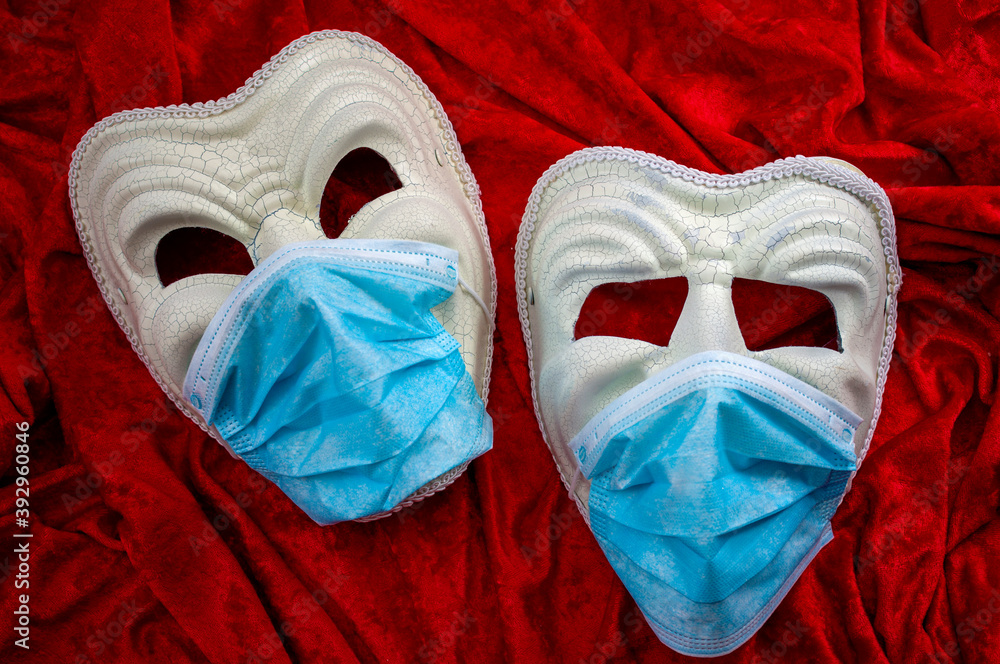
Where do we go with live theater as the pandemic grinds on? Both of the large companies in town lost performances in June to Covid in the cast despite significant precautions. Smaller companies locally also had to cancel or reschedule shows due to illness in key roles. And this was when numbers were down prior to the new omicron BA surge that’s now taking shape. Backstage areas are cramped and require a lot of hanging out together for entrances. Dressing rooms and lobbies are often in older buildings that are inadequately ventilated and companies don’t have the money necessary to upgrade. There are newer performance spaces for hire that are built with better safety measures in place but they’re beyond the budget of most production companies. Even Broadway continues to have significant issues with show cancellations or unscheduled understudy appearances with Covid spreading backstage.

Over the last century or so, long before the pandemic took shape, live theater in the US began to morph from a populist art form accessible to pretty much anyone to an expensive hobby, confined mainly to the professional and upper classes. Movies and television took over mass audiences and theater stars and authors, once familiar from variety shows, and talk shows, and other pop culture organs were gradually relegated to a small group of cognoscenti. Productions that gained national attention, tended to do so based on spectacle, becoming elaborate theme park type attractions, rather than on superior artistic expression. When I was a child, everyone knew who Richard Rodgers, Mary Martin, Ethel Merman, and Jerome Robbins were. If you’re not a theater person, you might not know the names Duncan Sheikh, Gavin Creel, Jerry Zaks, and Sutton Foster.

At the same time, public funding for theater to keep it accessible to the population as a whole more or less dried up. Most advanced countries have strong support for art and culture. Not the US where everything is supposed to sink or swim on its own in the marketplace. There is some private philanthropic support, but it’s not broad based and is usually disinclined to support nontraditional ways of presenting theater. The beauty of theater is its temporary nature. Every performance becomes a cooperative venture between production and audience, never to be repeated. It truly serves as the mirror of society in ways that film or television cannot but to really do so, it needs to grow and evolve along with society and each generation needs to revisit the texts and the scores and use them in new ways to enlighten and illuminate. Reinterpretations may not always be successful, but they give theater life and vitality. To me, there’s room for both a classic production of a classic work and a radical rethinking and both give us something. The classic allows us to see and better understand the past. The rethinking allows us to better see ourselves and how we have changed, for good or ill.

So how do we make all of this work in a time where gathering together indoors is possibly dangerous, both for performers and for audience? A couple of things come to mind. One, public funding for retrofitting of theater buildings with better ventilation systems, for any place of public gathering as a matter of fact. It needs to be part of the continuing work to improve infrastructure. When climate permits, more outdoor performance. Long before there was electric light and smoke machines, there were ampitheaters with engaged and attentive audiences. It may require training performers to project and audiences to listen and not rely on amplification but I don’t have a problem with that. We need to culturally normalize good theater as existing outside of the Broadway spectacles and their touring versions coming soon to a civic barn near you. Good theater does not require top notch production values and million dollar sets and costumes. It requires performers that can cast the spell which gets the audience to suspend their disbelief for a couple of hours. Time and again I have found that I have enjoyed a small scale local production of something far more than a national tour but the public has been trained that unless it has a high ticket price and the imprimatur of Broadway in the advertising, it’s not a worthy endeavor.

Theater will survive, it always has, because the people who create it are passionate about the work and the people who feel uplifted by the connection that only live performance can make will seek it out, whether it be in a Broadway house or a church basement. We just all need to be prepared to do our part for society in order for it to continue in its current forms… get vaccinated, provide the financial support to production companies to forge ahead, lobby for societal support for infrastructure improvements, be prepared to explore new venues and ways of presentation in this moment of change. We live in interesting times.

July 11, 2022

It’s 7-11 and no Slurpee… Do they even have 7-11 stores anymore? I haven’t seen one in years but they may be a West Coast thing. They certainly aren’t here in Alabama. We have our own versions such as Kangaroo Mart and the ubiquitous Family Dollar and Dollar General stores. But 7-11 is always going to mean something a bit different to me. It was my and Tommy’s legal anniversary. It’s not the date we celebrated as our anniversary (that was October 27th, the day of our first date) but the day, some eleven years later that we stood in front of the judge at the King County criminal court, right after the grand theft auto trial, and said our ‘I dos’ and emerged with a legal document declaring us husband and husband. It was a year before Obergefell so same sex marriage hadn’t yet arrived in Alabama but it was after Windsor so the federal government was recognizing a valid state marriage for tax and other purposes so Tommy and I decided on one of our trips to Seattle to visit family, to tie the knot for mutual protection as Washington had recently legalized same sex marriage. I got hold of an old high school friend who put us in touch with a judge and the pieces fell into place. We knew we didn’t want a wedding… we’d been together too long so a simple courtroom ceremony with a couple of witnesses and a family dinner to follow was about right. Tommy has now been dead longer than our legal marriage lasted, cut short by his untimely demise.

Covid numbers continue to increase across the country, fueled by the fast spread of omicron BA 5. It’s more contagious than prior, more apt to elude immunity, and even outdoor events are becoming super spreaders. The hospital numbers are beginning to increase in New York City and other urban areas so I expect death numbers to begin going up as well. Should we be concerned? I don’t know that I can completely answer that. Most people are coming down with mild disease and recovering with minimal difficulty but I don’t know that things will remain that way. And then there’s the prospect of long covid.

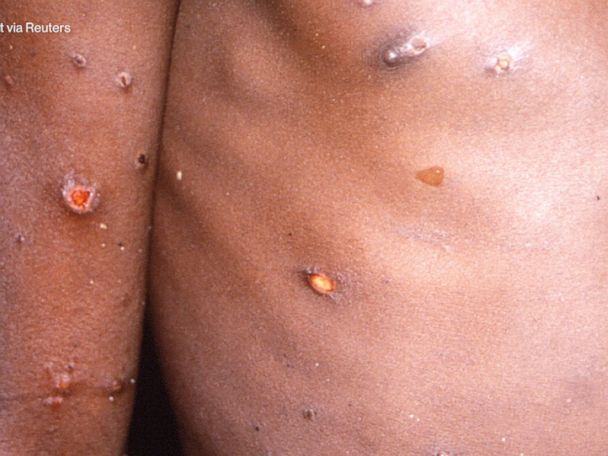
If you do much reading regarding COVID and its symptoms these days, you eventually run into the terms ‘Long Covid’ or ‘Post Covid Syndrome’ being applied to people still experiencing symptoms of the disease months after the acute infection or, in some cases, having entirely new symptoms and problems that can be traced back to an initial COVID infection of some months previously. It appears to be an issue in all sorts of people and can occur whether the initial infection was mild or life-threatening.

Long Covid Issues

It’s a tricky issue to study. How do we make determinations about chronic disease with an infectious agent that’s only been present in human beings for less than three years? How do we even define which cases fit a definition of Long Covid when neither the CDC or the WHO, or any other major public health body, has standardized any sort of definition for what constitutes the disease and what does not? Enough data has been coming in over the second year and into the third of the pandemic to suggest that Long Covid is a real entity. It’s not at all clear what causes it.

One theory is that in some people, the immune system is ineffective at fully clearing the virus from the body, and that there are small pockets of viral load hidden within various internal organs which are continuing to infect cells and creating new symptoms. Another theory is that there is a cross-reactivity between the immune system and normal tissue. The virus stimulates the immune system to attack normal body tissues and cells in an autoimmune response creating the symptoms. Either is possible and we’ll likely eventually figure it out but who knows at this point?

How many people have Long Covid? No one knows as no one can even agree on what it is. The UK has put out studies estimating that about 3% of those who catch and recover from the disease will have long term sequelae. Some groups in the USA have suggested that this is a gross undercount and that upwards of 25-30% may have some sort of long term issues. This means that somewhere between two and 20 million Americans currently have Long Covid. What sort of treatments and supports they might need now and in months to come are anybody’s guess. Most large health systems, especially those with an academic component, have established specialty Post-Covid Clinics for long term monitoring and symptomatic therapy. As they collect and publish data over the next few years, we’re going to learn a lot more.

What tissues are involved? Well, the angiotensin converting enzyme (ACE) receptors which act as the doorway to the cell for the virus (it’s the thing in the cell wall that the spike protein is able to grab onto and anchor down) are found throughout the body. They are especially prevalent in the heart and vascular system. One of the more common groups of blood pressure medicines, the ACE inhibitors like lisinopril and enalapril also work through these proteins. It’s thought that the propensity of the virus to induce clotting may be somehow related to this concentration in the vasculature. The big issue here is the heart, which has the highest concentrations of ACE receptors. Data coming out of the VA suggests that prior COVID infection is a significant risk factor for later heart and cardiovascular complications with rates of stroke, heart attack, inflammation of the heart muscle, and arrhythmias all much higher in those who had infection versus those who did not. Serious infections requiring hospitalization or ICU stay increased risks of heart issues astronomically after recovery with rates four or five times those of control populations. Exactly what mechanisms are involved aren’t known as of yet.

Studies out of Europe show that the patterns of Long Covid vary significantly by sex and age. Women, especially younger women, seem to be at highest risk. Some of that may be due to women’s more frequent seeking of health care and encounters with the health care system leading to higher levels of reporting but there’s also some thought that the immune systems of women of reproductive age, being somewhat more active so as to protect the potential fetus, might be working slightly differently when they encounter the virus. Younger people of both sexes are more likely to report altered taste and smell over prolonged time than older people, while older people are more likely to have GI effects.

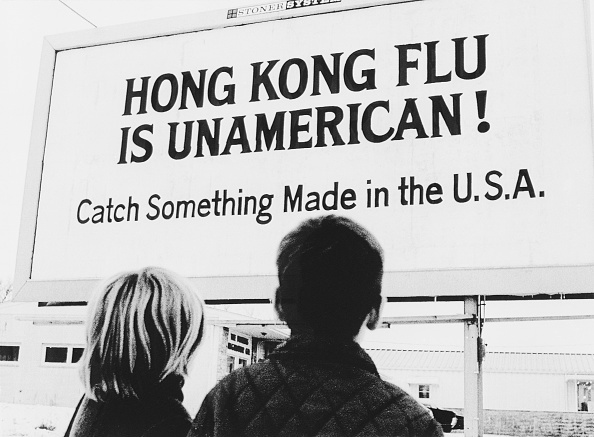
In about 40% of people, Long Covid presents as a relapse several months after the initial infection has been cleared. They may be well for three or four months and then start to have fatigue and other significant issues that may limit activity. These kinds of symptoms aren’t unique to Covid. Other viruses can cause post-viral symptoms, including the closely related SARS and MERS, but even more common things like the flu can do it, too.

What does all this mean? It means the coronavirus is not a great thing to have in your body and should, therefore, be avoided. If you do get it, you want it to be the mildest case possible. A case that puts you in the hospital may have unpleasant side effects down the road. How can you ensure that? Get your vaccine and your boosters. It’s by far the best weapon we’ve got to keep people as hale and hearty as they can be.

July 7, 2022

Interesting times in Covidland. Omicron variant BA5 tends to be the major variant spreading in the US. BA 4, which was spreading along with it, has rapidly been outcompeted and looks like it’s on its way out. There’s a new sublineage, omicron BA 2.75 which has spread rapidly in India, especially around Mumbai and which has a number of new mutations on the spike protein that may allow it to get around both natural and vaccine induced immunity but it’s hard to tell as India doesn’t have the infrastructure for surveillance testing that exists in the first world so numbers are incomplete. BA 2.75 hasn’t his the US yet, but with travel having picked up to record levels following two years of the world having been cooped up, it will get here eventually and we’ll see what it does.

There’s about 100,000 new cases of Covid reported in the US daily to public health authorities. Given that the majority of testing is now home testing, this is likely only a small fraction of the total number of cases happening per day which is likely closer to 1,000,000. While this seems like a shockingly high number, at the peak of the original omicron wave six months ago, we were up as high as 4,000,000 new cases daily so we’re still well under that number. It does mean, however, that every time I open my social media accounts, four or five more friends are displaying pictures of their positive test results and cancelling out their lives for a week. Fortunately, hospitalizations and deaths remain relatively low, although up about 30% from a couple of weeks ago and they could start taking off again like a rocket at any time. Deaths, which had dropped as low as about 150 a day at the nadir are now between 350 and 400 a day in the USA and are continuing to slowly trend up.

What does all this mean for practical purposes? We’re not out of the woods yet even though Covid news has, for the most part, fallen off the front pages and things are in flux and not in the right direction. My advice? Get your second booster if you’re at higher risk (over 50, chronic health issues, immune system issues), put the mask back on in crowded indoor situations, especially if they’re not well ventilated, and keep those hands clean. Stuff I’ve been harping on for a couple of years now. Should you cancel that party or skip that trip or forego that outing? I think that depends on your individual risk tolerance. If you or someone you spend time with is of significant risk, take some basic precautions and keep an eye on the reporting, even if it has fallen to the back of the national news section, underneath the feature article on fifty fun things to do with styrofoam.

Today is the opening of the 2022 World Games here in lil ol Birmingham. We have a new football stadium downtown, home of the USFL Birmingham Stallions and also used by the UAB Blazers during college season. (See, I do know something about sportsball…) Tonight it’s being used for the World Game Opening Ceremonies. As it was over 100 degrees this afternoon, and projected to still be in the 90s this evening, plus humid, plus no wind, I can think of a lot of places I would rather be than an open stadium so I did not attend the festivities. The World Games appear to be the international championships for events not sanctioned by the IOC and not part of the Olympics but which world class athletes still participate in and more than a hundred countries have shown up for Archery, Ballroom dancing, Rock Climbing, Sumo Wrestling, and Rhythmic Gymnastics amongst others. Many are Olympic medalists in IOC sanctioned events. Other than the weather, there’s a bit of a party spirit in town but I’m being curmudgeonly and staying in my HVAC cooled condo and hoping that traffic isn’t too bad in the morning when I have to go into work. (UAB is the site of the athlete’s village, the dorms having been given over to them and my clinic is a block away from some of the bigger ones).

I’m just hoping that everyone enjoys themselves without spreading too many microbes and sharing too much of their international biomes with us locals. I don’t have too much going on currently so if I got sick and had to go out on quarantine, it wouldn’t cause too many problems other than mucking up my clinical schedules for a few weeks. But I really don’t want to see Birmingham get an international black eye. It doesn’t have the best reputation internationally due to events and attitudes of decades past and it would be nice for others to see beyond that to this small dynamic city that I’ve called home for two dozen years now. I never thought I’d move here. When I did, I never thought I would stay. And I certainly never thought I would become as firmly integrated into the city as I have with fingers in a dozen different civic pies with friends and acquaintances amidst the arts, the medical, the activist, and the business communities.

Birmingham frustrates me. It has so much to offer and so much that holds it back. It’s a very pretty small city with its rolling hills and streams and lush vegetation but it has a summer climate that this poor west coast boy finds relatively intolerable. (Visit spring or fall). It has great wealth and dire poverty. It has a burgeoning arts scene and an indifferent local population to that talent. It has dozens of squabbling suburbs that refuse to cooperate with the central city without understanding that they could not exist without that energy and those amenities. It has the most amazing restaurants. It has an incredible system of mountain parks. It has a political culture that resembles two armed camps in a sort of sullen detente. It has monuments to tolerance and nasty levels of bigotry which often sneaks up on you from a surprising source. Why my life should have been reordered at age 36 to push me here remains one of the great mysteries. It has been the site of my greatest heartaches and the site of my greatest triumphs. Perhaps with all of my personal inherent contradictions and paradoxes it was inevitable that we would be drawn together. Perhaps, in a very real way, I am Birmingham and will remain so.

July 3, 2022

And it’s another new month. This time, we enter the second half of 2022, the second sequel of 2020. I don’t think any of us expected, when we entered the new decade two and a half years ago, that we were going to enter an era of time compression and continuation. I know that I have a difficult time keeping my sense of time about these last few years straight in my head. In some ways, things feel like they have moved quickly and changed radically and in others, I feel like we’re still in the midst of 2020 or maybe early 2021. It’s another long weekend – happy Fourth of July to all those who celebrate. We’ve made it for 246 years. Maybe we’ll make it a few more. I read somewhere that the average life span of an empire is 250 years. On that scale, I suppose we’re about due for a fall but we really haven’t been an empire since 1776. That didn’t really start to happen until some sixty or seventy years later with the westward expansion and the Mexican American war. And there are others who would use the Spanish American war, fifty years after that as the start of our imperium.

So what am I doing for my long weekend? Very little. I’m caught up with immediate work tasks and with book editing on Volume 2 of the Accidental Plague Diaries. I’m therefore treating myself to some naps and some television and a couple of films. I’m just about finished with the last two mega episodes of Stranger Things, a series I have quite enjoyed mainly as I remember the 80s fondly and the Duffer Brothers have got the period details right. I’m about ten years older than our fictional protagonists. While they are in middle school and just entering high school in the mid 80s, I was in late college and in med school so my interests were a bit different than theirs but I was still aware enough of pop culture to absorb all of the media images and trends. You lay down the patterns of your life between roughly ages 10 and 25. Whatever you were watching, whatever you were playing, whatever you were listening to in that period is what informs your adult life ever after. After 25 or so, you’re interest in pop culture drops off quickly and it’s pretty much gone by 35, left to a new generation to reorder that aspect of our world. For me, that key period is mid 70s to mid/late 80s. To this day, ABBA and disco classics and 80s movies evoke a certain nostalgia nothing else does. As the early Boomers are starting to enter the middle old years and will edge into the dementia belt in about another five, I wonder how nursing facilities and dementia day programs are going to retool for the radically different generation that’s going to shortly need their services. It will be interesting to watch from a professional point of view.

The Covid numbers continue to march upwards. The CDC is now recommending indoor masking again for much of the country. From what I can tell, no one is paying much attention. I was one of the few masked on my Costco run today. I’ve decided I’m going to retrain myself to mask indoors in public again. I’m not worried about me in the least between two boosters and native immunity from my previous omicron infection but I do feel like I should lead by example. I’m keeping tabs on various health websites to try and figure out what’s going on but, as society as more or less moved on, the quality of data out there just isn’t as good as it was. The one good thing is that hospitalizations don’t seem to be zooming up at all. I hope it stays that way.

The airline industry seems to be a complete disaster due to understaffing, Covid absences, and lack of air traffic controllers. I suppose this is what we all get from deregulating the airlines fifty years ago and letting them all work as for profit companies rather than as public services. Everything is always going to focus on next quarter’s balance sheet rather than what people actually need in regards to travel. I am glad that I did not book a major vacation this summer given some of the horror stories I’ve heard back from friends. I’ll look and see if the budget can support something this fall and I do have my long delayed trip to London at New Year’s. I did book a round trip ticket to Seattle for mid August to go see my family for a couple of days but I did it on Delta, not on a discount airline. The initial fares I was encountering were nearly $1800 from BHM to SEA but by driving to ATL and flying directly in and out of there, I was able to reduce it significantly. I also have some date flexibility so if flights are canceled and/or rerouted, I shouldn’t have too much trouble. Famous last words…

I’ve been getting a lot of complaints from friends about the health system in general over the last couple of months, mainly regarding delays in care and difficulties in getting appointments in a timely fashion. Some of this is warranted. Some of this is not. American consumers are used to same day service with a smile and do not like to be told that they will have to wait. This has been one of the main arguments used against adopting more socialized models of health care rather than our crazy backwards employment driven system (that exists nowhere else in the world as no other population would put up with it). ‘You’ll have to wait’ has always been anathema to us, whether it’s for an MRI scan or for an oil change or for a McDonald’s burger. The delays in the health world, just as frustrating to me as to everyone else, are due to a host of reasons in our late pandemic world. The first is short staffing. An enormous number of physicians, nurses and other providers of services used the pandemic as an excuse to leave the health professions. In addition, the relatively low salaries that systems have been used to offering support staff aren’t attracting new hires. (We’ve been looking for a lead nurse for my clinic for a year now…) Nursing, in particular, has been rocked by the migration of nurses away from staff jobs to temp and travel jobs which pay better and which short staffed institutions are forced to rely upon. There are supply chain issues in healthcare as there are everywhere else. Not a day goes by without a notice of shortfalls in some pharmaceutical or contrast material or the inability to get some part to keep some machine in proper repair.

Then there’s the rapid aging of the population, many of whom delayed care for this and that the last few years. The sheer numbers of the boom means that disease case loads, especially in the chronic diseases that start to strike significantly in the 70s, are way way up and there just aren’t the numbers of specialists available to handle these increases – and the medical education system is not designed to pump out more doctors quickly. It took me thirteen years of higher education to become what I am. I figure I have somewhere between two and seven more years of full time working life left, depending on health – physical, mental and financial. That’s enough time for me to train up three or four clones but we can’t find much of anyone interested in dedicating their career to geriatrics. Over the last five years, we’ve lost eight clinical faculty to retirement, other job opportunities, or spousal needs. We gained two during that same period so we’ve got a significant net deficit which is really affecting how all of our clinical programs run.

There’s not too much for me to write about Covid currently as I continue these Accidental Plague Diaries. That could change at any time. It’s not over and I’m pretty sure it has one or two more nasty surprises to throw at us before it fades away. So, I’m thinking I’ll probably be writing more about the cracks in our various institutions that have widened under the strain of the pandemic and its inherent social changes. I don’t think we have a good understanding of all that yet and I’m trying to educate myself on it, at least as it applies to the health care system where the order of the day seems to be stamp out today’s fire today and stamp out tomorrow’s fire tomorrow. I would love to have a work day where I didn’t feel like the whole system could come crashing down overnight (or over a long weekend). If it does, I’m pretty resourceful and I’ll take care of my patients the best I can. My focus for this year is trying to catch up on preventive measures that fell by the wayside over the last few years and which might be helpful.

If anyone has a particular topic you’d like me to think about and maybe tackle, drop me a line. All reasonable requests entertained. In the meantime, the mask is in the back pocket, the sanitizer is on every desk I use and in the car, and I muddle through one day at a time.

June 30, 2022

Omicron continues. The BA 4 and 5 variants of omicron are swiftly becoming the dominant strains in the US as they have elsewhere in the world. The good news is that they are not that different from the initial omicron strain which first appeared around last Thanksgiving and immunity from either natural infection or vaccination appears to be holding, at least for serious disease. It’s difficult to interpret the numbers these days due to so many tests not being reported to health authorities as they are done at home but we do still get reasonable data from hospitals and, at the moment, the number of patients requiring hospital care for Covid and its complications continues to remain mercifully low. Still, we’re at about 32,000 hospitalized nationwide (well below the hundreds of thousands during previous surges) and the numbers have been trending up by between five and ten percent a week over the last month ago. We’re also still having between three and four hundred deaths a day nationally, or the number of people killed on 9/11 every two weeks.

The vaccines seem to be working relatively well. You’re about forty times more likely to be hospitalized if you’re unvaccinated. Those with two boosters have about 1/4 the hospitalization rate of those with one booster. The biggest issue is that immunity from vaccines does not appear to be long lasting and starts to wane after six months or so. This is particularly important in older people and in those with immune compromise. There is, therefore, a lot of debate about what to do next. Should there be another round of boosters in the fall? Both Pfizer and Moderna have been retooling their vaccines to offer better omicron coverage and the preliminary results of studies on these new formulations look promising. The FDA is in the process of discussing whether another booster should be made available in the fall and if it should be changed for better omicron coverage. The final decisions aren’t out yet but it looks like the answers are yes and yes. It may be that we are going to be getting Covid boosters once or twice a year for a while. The flip side of this is modelling what is likely to happen should we not make new boosters available and the short answer to that is a few hundred thousand more people dead.

Locally, the issue continues to be rapid spread among small populations with close contact. At least three shows in local theaters had to shut down and cancel performances in recent weeks once it got into the cast and crew. Fortunately, all of my performances, since the original omicron wave, were Covid free. I’m also performance free for a while. Taking my usual rehearsal time to finish up Volume 2 of these Accidental Plague Diaries for publication and then trying to take stock of my theatrical life and see what I can do to simplify. I’m responsible for two quasi-defunct production companies, a storage space full of theatrical paraphernalia, presidency of the opera board, a couple of other theater boards, and helping with a few capital campaigns. It also seems to be spreading in the main VA hospital with about 3% of the workforce out on quarantine this week. My VA job is peripheral to the hospital so I rarely go in and haven’t come into contact with anyone sick to my knowledge. I thoroughly expect to get reinfected at some time… but not today.

I taught an undergraduate class on the biology of aging and aging research opportunities via zoom yesterday. I hate teaching on line. I guess it’s my stage performance heart. I need to connect with my audience and read them and know when and how to time my jokes and when to get serious and when they’re into what I’m saying and when they’re falling asleep and checking their phones they think they’re successfully hiding in their laps. When they’re all just in little tiles a la The Brady Bunch titles, none of that works. I just have to start talking and hope that at least one point will trigger each of them in some way. They were all rising juniors planning on pursuing medical school and health care careers. It got me thinking back on me at that age. I was at Stanford. Ronald Reagan was president (first term) and I was vaguely thinking of a bench science research career in some sort of toxicology. It’s not where I ended up but the longer I live, the more I learn that life’s about the journeys and not the destinations.

I don’t necessarily have the fondest memories of my classes my junior year of college. It was the year I battled p-chem, quantum physics, group theory, and vertebrate anatomy. My MCAT was in the middle of it. This was long before computer terminals and on line testing so I took mine with several hundred other premeds using pencil, paper and a fill in the bubble form. Due to inopportune scheduling, my MCAT was at the same time as the second tech of ‘Hello, Dolly!’ which I was assistant directing for the big student theater group. Fortunately, the testing classroom was in the building next door to the theater so I was able to run over during all the breaks, check in, and then run back and settled down to the next section of the test. I can’t say it was ideal test taking conditions, but it seems to have worked as I did reasonably well on my MCAT and managed to make it into medical school about eight months later.

Most of my friends and colleagues have been preoccupied with distressing political news this past week, be it heinous supreme court decisions, testimony in the January 6th hearings, or prognostications regarding the midterm elections coming up in the fall. I refuse to go into a funk. Don’t like what politics is doing? Go out there and get to work and change it. The current conservative surge has been fifty years in the making and has succeeding due to a fundamental understanding of how our system works. It’s a winner take all system with judiciary as the referees. Want a different result, get out there and do the dirty work in the trenches of precinct politics. Volunteer for candidates of choice. Help build institutions that will produce trained minds that are qualified for the judiciary that will view the world as you do. Sniping at each other, edging others out for not holding quite the same views or being as idealogically pure as you, ginning up division on identity lines are all recipes for ultimate failure in the zero sum game of American politics where with 50.001% of the vote, you take it all. If you lose, you mourn for a day or so, then you have to roll up your sleeves, get out there and get to work. It’s the only thing that has ever succeeded.

There’s left over Chinese in the fridge and I’m hungry. Gonna stop now and eat. But wash my hands first.

June 24, 2022

Another work week over. This one punctuated by the collapse of Roe vs. Wade in the official release of the Supreme Court’s vote and opinion in the Dobbs case. This is where we are: a political system in which the minority party is busy dismantling the election apparatus in plain sight and a judicial system where the supreme arbiters are hell bent on imposing the world views of a particular religious minority on the majority. I can’t fix any of it so I’m not going to let any of it ruin my life. It will be interesting, however, to see what happens when there is no longer the unifying force of ‘overturn Roe’ keeping all of the disparate groups and agendas on the conservative side of the political agenda pulling together. Will they now start turning on each other over finer points of theology and doctrine? Will the money behind them whip them into a frenzy over a new target? (If this is what’s next, I’m likely to have a large bullseye on my back). Time will tell.

My friends in the local emergency departments are reporting a sharp uptick in people with Covid related illness over the last week. Most are not ill enough to require hospital support and are sent home with comfort meds and prescriptions for antivirals if warranted but the number of inpatients are creeping back up again. The bigger issue for the health system currently isn’t the patients but the workforce. When one of us catches it, we’re out for five to ten days on quarantine and as the case numbers climb, the number of nurses and doctors and therapists and pharmacists and housekeepers and billing clerks going out climbs putting additional burdens on those who remain to close the gaps. It’s leading to more and more erosions of care. There isn’t a specialty service I’ve called with a referral this past month that doesn’t have a six to twelve week waiting list for appointments. If I pull in favors and it’s urgent, I can sometimes get that down to a couple of weeks but forget getting someone in the next day or by the end of the week. Anyone I think’s emergent generally has to go to the ER if I’m going to have a prayer of getting it looked at in a timely fashion. It’s not a great use of ER resources but my hands are tied and my first responsibility is to the needs of my patients.

We’re seeing this play out in another industry, travel. I’m very glad that I decided to forego booking a significant vacation this summer (a combination of needing new kitchen appliances and expenses around the 60th birthday bash took care of that). The news from the front lines of travel, especially by air, is shall we say, chaotic at least and its a world wide phenomenon. It’s driven by a couple of things. The first is an inadequate workforce and understaffing (this one sounds familiar). The rapid fall off in travel in 2020 due to the pandemic led to the airlines hemorrhaging money and, like any for profit business they did what they could to shore themselves up. They offered early retirements and buyouts to senior staff to save on salaries and trimmed their work force. Now, everyone wants to travel again and the airlines just don’t have the flight crews – and it’s not like they can create a pilot from a willing applicant with a couple of weekend seminars, an on line training course and a couple of YouTube videos. Then there’s the lifting of the universal masking mandate on transport. Masking only really works properly when everyone does it and, in the airline industry, it helped keep the chances of flight crew getting ill and out on quarantine lower. Without it, the pilots and cabin crew are more likely to get sick, go out on quarantine and there you have it, not enough on the duty roster for all the scheduled flights to take off. The same thing is happening in medicine, just replace flight with elective surgery or MRI scan with contrast or rheumatology appointment.

The piece of the health system that looks like it’s going to collapse the first is the long term care industry. By the latest numbers, 98% of nursing homes and long term care facilities are understaffed and 73% are in the red as they have to spend additional dollars on agency staff to make up for additional employees coupled with inflation in food and energy costs. The pandemic also has made families rethink when to use group living for elders and a lot of the patients who would have been relatively easy care as their needs are fewer are being kept at home making the per capita acuity of those that remain higher, and therefore more expensive. In the middle of the last century, long term care was mainly a not for profit sector with the nursing home generally reserved only for those who could not be cared for at home by family and often subsidized by either a governmental or religious entity. As the industry was transformed with advances in medicine into more of a step down hospital role, and with more certainty of payments with the introduction of Medicaid for the indigent, for profit corporate entities began to buy up nursing homes as revenue generators and put processes in place to allow for economies of scale. For profit operators aren’t going to want to carry chronically money losing businesses on their books and I foresee a rash of closures coming over the next few years.

Closing nursing homes are going to run into smack dab into several other trends which are pushing the opposite direction. The first is the continued aging of the Baby Boom generation, that huge cohort of individuals that’s just starting to age into the chronologic band where long term care becomes necessary for a portion of the population. The lead edge is 76 this year. They’ll be 80 in four short years and with that, the number who will not be able to care for themselves due to physical and or cognitive decline will start to increase exponentially. The second is the financial strain that Medicaid places on state budgets. Medicare, which is a federal program and solely consists of federal dollars, does not pay for long term care. It will pay for brief stints in a nursing home for rehabilitative purposes to recover from illness or injury if certain conditions are met. If you require a permanent stay, you are on your own (unless you have private long term care insurance – a product that as now near impossible to obtain as it’s actuarially unsound). If you have either exhausted or cleverly hidden your assets from the state, than Medicaid, a joint federal/state program steps in to pay the bill to maintain you.

We don’t tend to think much of nursing home residents as they are a hidden population from society. You don’t see them walking down the street or out to dinner or at the football game but there are about one and a half million nationwide. Roughly 40-50% of a state’s total Medicaid budget flows to nursing homes annually. Medicaid is about 20% of the average state’s general fund spending so nursing homes take about one dollar in ten of a state’s discretionary spending. If nursing homes start to close, there’s going to be an enormous financial pressure on states to try and get out of future nursing home payments as most state budgets are pretty cash strapped. There’s not going to be a lot of push for the public sector to step in with new beds. I think there’s going to be pressure instead to get families to step up and house and nurse their own elders as in times past. There will likely be promise for new pots of public money to provide assistive services to make that more successful but the reality is likely to mirror the deinstitutionalization of the mentally ill some years ago. The mental hospitals were closed but the promised community based programs and funds that were to replace them somehow never materialized.

If you’re in my peer group and contemplating retirement and the unknown country of age and infirmity, it’s a good idea to sit down and make some plans and talk to the kids now. The old models aren’t likely to last. It’s one of the reasons I made my decision a couple of years ago to downsize to this condo. It’s a space I can age in with minimal supports. Take it from the geriatrician. Your golden years are coming, like it or not. Unless, of course, you skip your vaccines, expose yourself to sick people and don’t wash your hands.

June 20, 2022

Today is Juneteenth. And all good wishes to my African American friends and colleagues who are celebrating today. Both UAB and the VA are observing the holiday so I have a three day weekend and I used the first part of mine to sleep in after the excitement of the show this past week. I would like to use the rest of today to laze around, but unwritten progress notes, a lecture to prepare, and the usual unending supply of household projects and performing arts organizations requiring assistance in terms of planning will keep me busy until sometime in the evening.

Covid has been on the back burner the last few weeks while other life areas have taken precedence but I was jolted back to reality after receiving an email this morning about a potential exposure. I’m not worried. I’ve had both shots, both boosters, and natural immunity to omicron following my bout six months ago. I was feeling a little blah yesterday so I stayed home from a planned outing and went to bed early. I’m fine this morning. Hopefully noting will sneak up on me over the course of the day. It’s just a reminder that as much as the culture at large is moving on to a post pandemic mindset, we’re not completely out of this thing. I hadn’t looked for a bit so I checked the numbers. On a national level, they’re still rising but not at the rate they were a month ago, having flattened a bit over the last two weeks. The current hotspots are in the Rocky Mountain states and in Appalachia. Why that should be is anybody’s guess. Perhaps the virus is hitching a ride as people are escaping the sweltering summer heat to the relative coolness of mountain towns. Alabama numbers are similar. A general slow increase, but without a significant rise in hospitalizations or deaths. But it’s hard to say what’s really going on locally – the reported cases are those from testing done in hospitals or pharmacies or public health departments. Home tests have no convenient way to be included in the totals in this state. And most of the people of my acquaintance who have gotten sick recently have all been diagnosed with home testing.

The other big development is the approval of Covid vaccinations for children under the age of 5. The number of parents planning on getting their children a vaccine is distressingly small, likely due to the collapse of trust in expertise that politics has engendered over the last half dozen years or so. Actually, it’s been brewing a lot longer than that but that’s a subject for discussion another day. Katelyn Jetelina, who goes by the moniker YLE (Your Local Epidemiologist) has put together a very nice one pager on the vaccine for young kids based solely on the science and I highly recommend searching that out if you have children in that age group and questions. Her writings on Covid, while occasionally over my head as I am not a trained epidemiologist, are a great way to keep up on the latest regarding the pandemic and the science driving the response at institutions such as the WHO and the CDC. I find her a much better source than many of the more usual mainstream media writings which tend to over simplify or try to find some sort of clickbait angle to use.

Most of this past week, when not at work, was spent on the fundraising cabaret show, Little Black Dresses and Bowties. It was a Broadway Backwards or Miscast type revue where we all got to sing songs we would never be allowed to in the context of a real production as we would be the wrong gender or type for the role. With that in mind, we were somewhat genderqueer in our costume choices. I was the MC so I did a bit of a riff on my traditional garb as the MC of Politically Incorrect Cabaret – tail coat, white tie and vest (but without a shirt) for the top and pleather hot pants, fish nets and pumps with three inch heels below. The show was a success. I’ve gotten more compliments on my legs this past week (thank you Peloton and enjoying a good walk) and it has helped with coming out of my omigod I’m sixty funk. I did a lot of age jokes in my MC patter for the show as I’m pretty good at poking fun at myself. One I didn’t make, and should of, was that if I fell off those damned heels, I would have to yell out ‘Is there another doctor in the house?’.

It was one of the fastest turn arounds I’ve had in stage performance. Half an hour with the pianist on Sunday to figure out tempi and style. Meet and greet with the rest of the cast Tuesday evening and first band rehearsal and figure out some basic staging. The band was a standard jazz combo of keyboards, bass and drums and Sebastian Black, Lee Wright and Joe Cooley worked amazingly well together. Tech/dress Wednesday to iron out light cues and any other bobbles. Run Thursday-Saturday. We all had a great time as did the audiences and have decided that it should perhaps become an annual event. If it does, I’ll get smart and wear those pumps around the house for a few days prior to rehearsals. I’ll just have to come up with women’s up tempo Broadway numbers that I can sing. ‘Don’t Tell Mama’ was a good choice. Perhaps ‘Dance Ten, Looks Three’ for next year.

I have noting booked on my performance calendar at this time. I’m not worried about it. Sumer is a slow season for music-theater and something will eventually turn up. It always does. The venue we did this last show in would be perfect for Politically Incorrect Cabaret so perhaps it’s time to come up with another edition of that. If so, I think it’s time for a bit of a reboot. After nearly 20 years, those of us who survive from the original crew are getting a bit long in the tooth and I think I need to find some thirty somethings with an interest in political satire and street theater and cabaret forms and let them run with it. So, if you’re one of my local theater friends and you have any interest in this, drop me a line. The bigger theaters in town have announced their line ups for next season. I, of course, immediately scan them looking for parts I might be appropriate for. Not a lot has turned up so far. Choices seem to be trending female and young. I suppose I could get out one of Tommy’s wigs and put my pumps back on and audition for Truvy in Steel Magnolias, but I doubt I’d fit in with the rest of the cast – unless we’re all men and I just don’t see this particular company doing that. Oh well, any time I don’t use on theater projects can be used getting the next volume of The Accidental Plague Diaries ready for publication. We’re still shooting for September.

June 15, 2022

It’s been a bit of a wild few days.  There’s a new charter school in town, The Magic City Acceptance Academy, targeted especially at LGBTQ kids who, in the homophobic culture of the Deep South, are psychologically brutalized by their peers in most of the local public schools.  It opened this past year and the inaugural classes have been blossoming in an educational atmosphere that allows the kids to be themselves resulting in improved learning and test scores.  It’s the only school of its kind in this region of the country and is attracting students from outside the city and I am very proud of my friends who have worked incessantly to make it a reality over the last few years.  It wasn’t an easy job.  And then it came into being in the midst of the pandemic… 

There has, inevitably, been a backlash as the right wing noise machine has been going after gender nonconforming individuals over the last six months or so.  It culminated here with one of the more homophobic, and less successful gubernatorial candidates taking photos of the kids at MCCA and using them, without permission, in attack ads claiming untruthfully that the school was using tax dollars to turn kids gay or some such.  That particular noise machine has been ratcheted up to eleven in recent months as we head into the midterm elections because, I assume, that some Republican research firm determined in focus groups that attacking LGBTQ folk plays well to the base and those that will be hurt by it aren’t likely to be voting Republican anyway so what do they matter. It matters because political movements based on dehumanization of the other have a long and sorry history and it rarely stops with name calling and political attack ads.

One of the local theater companies put together a genderqueer Broadway cabaret as a fundraiser for the school and I was asked to do a number and be the MC for the evening.  Now standup really isn’t my forte but nearly two decades of being the MC of Politically Incorrect Cabaret has given me a certain skill set in terms of telling jokes, reading an audience, and guiding a mishmash of musical entertainment from one end of an evening to another.  This show, which opened last night and continues through the weekend, is a Broadway Backwards evening with the men singing women’s numbers and vice versa.  I start things off with ‘Don’t Tell Mama’ from Cabaret. I have to do uptempo numbers for something like this because I’m not really a singer.  I’m an actor who sings a little so I need a song that I can sell to an audience rather than them having to endure me butchering some leading man ballad written for the typical Broadway bariten, which I am not, being just a step or two above basso profundo in my natural range.

In keeping with the gender fluidity of the evening, I’m doing the whole show in pumps with three inch heels.  I’ve worn women’s shoes and heels before, but never for a whole two hour show with multiple entrances and I’m getting a new level of respect for women and for drag queens.  How the heck do you manage to descend a staircase without literally breaking your neck at every step?  The show is fun.  Audiences are enjoying it, and are being encouraged to be slightly raucous at every innuendo.  We’ve managed to keep Covid out of the cast.  My projects this spring/early summer have been remarkably Covid free.  That’s not been true of some other productions in town.  The local production of Kinky Boots has had to shut down for ten days due to multiple cases in the cast, but it will be back next week.

The local patterns of Covid are fascinating.  It’s impossible to tell what’s going on from the official numbers as so many people are home testing and not bothering to take the steps to report to the local public health authorities. I have friends who are going out on quarantine on pretty much a daily basis but none of them has been sick for more than a day or two.  The numbers in the hospital remain extremely low.  I got a report from the VA Medical Center yesterday.  Two inpatients with Covid (they generally were running more than twenty or thirty during the surges) but forty employees out on quarantine.  Maybe we’re starting to reach the end of the road of Covid as a serious disease that causes hospital level sickness.  Maybe we’re not. Time will tell.

There was another mass shooting last night.  They seem to be taking place pretty much on a daily basis.  This one was uncomfortably close to home, in a local church during a senior citizen’s potluck supper.  There are three dead, a suspect in custody, and a reeling community as Birmingham is a city that revolves around church membership.  Everyone with a wide circle of acquaintance knows a congregant at pretty much any church in town so I know parishioners, choir members and staff from this church.  There’s been no official statements yet on motives but a lot of rampant water cooler speculation.  My church has a whole active shooter safety plan.  We have to.  As Unitarian Universalists are not a conservative Christian denomination, we’re a target.  There was a mass shooting at the UU Church in Knoxville in 2008 during service which killed two and wounded six.  The motivation of the gunman?  Hatred of liberals, Democrats, homosexuals, and African Americans.  And this was before the poison of intolerance really started to metastasize in our society around 2015. I’m not particularly afraid of being taken out in a mass shooting event.  I figure if I’m in the wrong place at the wrong time, that’s just the luck of the draw.  The thing that scares me the most about guns is when they fall into the hands of the demented.  I do a lot of rural house calls and I am not trained or equipped to take away a firearm from a paranoid patient. If anyone on any of my teams runs across a demented person with an unsecured gun, we hightail it out of there and inform the family we aren’t coming back until something is done.

When you compare the number of innocents that have been harmed by guns over the years to the number harmed by drag queens, I think it’s pretty clear as to which needs more societal control.

June 11, 2022

Mutations, mutations…

I’m behind. I should have written an entry a couple of days ago. I do my best to write at least two of these musings a week, unless life is really intervening. I failed at it this week. I suppose I’m still in recovery mode from the last show plus I had to use a number of my evenings this week to run around and see all of my friends shows (most notably local productions of Kinky Boots and The Sound of Music). I’m also in that weird headspace where I’m still trying to sell Volume I, editing Volume II and realizing that what I’m writing now will be Volume III if I choose to keep this project moving forward.

At least current Covid numbers are suggestive that there will not be a Volume IV. I will be able to take my imagination and my thoughts and apply them elsewhere. Maybe a novel, maybe a play. Maybe I’ll just get drunk on apple wine. In the meantime, however, I still don’t think we’re completely out of the woods. Coronaviruses in general become less active in the summer months and more active in the winter. (This is why you’re more likely to get a bad cold in the winter.) Some of our respite may be due to this natural cycling. If this is the case, things may start shifting again around football system when fall nips the air. The Covid coronavirus mutates about four times faster than the common influenza viruses and we are all familiar with how we have to get vaccines for flu every year based on the best educated guess as to the circulating strains. Sometimes we get it right, and the season is mild. Sometimes we don’t and it’s a heavy flu season. Is this where we’re headed with Covid? Annual shots and some good and some not so good years? There’s so much that’s unknown. Mutations, population behavior, politics, the ingenuity of vaccine manufacturers – it all adds in.

The official Covid numbers locally remain relatively low (and the number of people in the hospital with Covid also remains low and well within manageable limits). However, I hear of new cases among friends on nearly a daily basis. I think that some of that comes from these writings and the erroneous presumption that I must be some sort of Covid guru or Covid whisperer and so I get calls and texts and messages from everyone if they get sick and likely hear about it more than most. Most of my friends, long vaccinated and boosted, aren’t getting terribly ill and generally have been tested with home tests so I don’t think they’re being well counted by the public health authorities. And I think that’s likely happening most places as the pandemic slides into endemic mode – outside of some relatively narrow areas of study, it’s slipping from our daily consciousness, replaced by new worries about inflation, and gun violence, and war in Eastern Europe. I’ll take it, and the lessened burdens on health care and society, even if it’s going out with a whimper rather than a bang. I’m still not completely convinced, however, that there’s not at least one more very nasty surprise coming our way before it all runs its course.

I don’t think we’ve even begun to come to grips with what the pandemic has done to society over the last couple of years. We’re all too busy trying to restore ‘normality’ and making up for lost time to have the ability to sit down and take a sober accounting of how different things are from early 2020. I think some of the changes are too wrenching to fully comprehend. That’s certainly true of what’s going on within the health care system. The combination of loss of seasoned workers to early retirements or different ways of using their skill sets combined with the financial pressures placed on health care institutions is only just now starting to cause significant changes in the way business is done. What am I seeing? An acceleration of the system’s view of health care providers solely as revenue generating cogs in a large machine and significant pushes to increase and maximize that revenue at the expense of providers abilities – which basically translates into do more with lots less. Needs of patients and society are, at best, a secondary consideration as armies of administrators try to shore up the bulwarks of systems financially battered over the last few years.

The federal support that allowed health care to fight Covid has more or less come to an end. There’s not going to be more public funding of vaccines, reimbursement for indigent care, or extra payments to hospitals for their increased expenses going forward. And if there’s no money, there won’t be a lot of motivation to provide services. If another surge starts to take hold, response may be more sluggish than in the past. Congress could, of course, put additional dollars into public health but congress doesn’t seem to be able to do much these days other than conduct a cold civil war inside the capitol.

At the age of sixty, I’m getting a bit tired at being asked to do more with less yet again (this sort of thing happens every time there’s a downturn in the economy). I love my work. I love my patients. I don’t even mind tilting at the healthcare windmills out there but eventually it starts to all feel a bit much. I’m seeing a landscape where many of the support services I rely on – senior housing and health care facilities, home health agencies, meals on wheels etc. – buckling under a combination of inflationary pressures and the inability to hire and retain competent staff. This is combined with a rapidly aging population and the enormous boom generation right on the cusp of needing these services. It’s going to get really ugly over the next decade or so as more and more start competing for fewer and fewer available resources in a country with a fraying social contract and no political will to provide money for social programs for fear that someone unlike you might tangibly benefit.

Is the healthcare sector broken? It’s still intact but it’s frayed and needs some TLC in order to repair itself. If we define our system as the way in which those in need of health services are matched and receive proper treatment in a timely fashion, then yes certain things aren’t working too well. The numbers of aging adults means that specialty services commonly required by them are full up. It’s not unusual for me to be quoted a three to six month wait time for an appointment when I make a referral. Insurance programs, trying to staunch losses, are more likely to fight about the need for a service than in the past and that puts extra hours of work on my office staff. We’re out of IV contrast for certain X-rays preventing timely diagnosis (a supply chain / manufacture issue). Administrators are constantly looking for ways to reduce costs – replacing staff with lower cost/lower knowledge base individuals ensuring that more questions come up the ladder to me and my partners or no longer allowing us to launder white coats through hospital laundry. The little time sucks and aggravations add up. But, without some serious rethinking by those in positions of control, there’s going to be continued decline in human capital in healthcare for the foreseeable future.

June 5, 2022

The Merry Widow – Act II Finale

The Merry Widow has been put to bed. Scratch that. That has the wrong connotations. The Merry Widow has been struck. That’s not a lot better. Suffice it to say, the show is over and the Birmingham Music Club operetta has been put away for another year. I was asked what I would like to see programmed next year in the operetta genre. I had two ideas. The first was The Mikado, but do a conceptual production that gets rid of the problematic orientalism. As Gilbert and Sullivan were satirizing their own society, why not do a production that satirized our own and set it in Japan County, Alabama in the county seat of Titipu. My second thought was The Threepenny Opera, a work I dearly love but which needs to have a scabrous production for our current political climate and I don’t think Birmingham Music Club is willing to get quite that political. As long as it’s not Rose Marie…

The show was a good experience. Cast, orchestra, and staff all got along well without much in the way of backstage drama and, to my knowledge, no one has gotten Covid from participating. Alabama numbers are inching up again. We’re up about 75% over the last two weeks and hospitalizations are running slightly higher than they were, but nothing like previous surge numbers. Is that due to the new omicron variants? Behavioral change? The start of the summer heat pushing people indoors into air conditioning? The waning of vaccine immunity and natural immunity from the omicron surge of this past winter? No one really knows. I’m keeping an eye on the statistics and on what’s happening in both the UAB and the VA hospital systems so I can make good decisions and offer tempered advice. A lot of people I know have had a case in the last month, but none of them has been off their feet for more than two or three days with bad cold symptoms, but then they are all vaccinated and boostered.

Garth Brooks had an outdoor concert at the new football stadium in downtown Birmingham last night. 52,000 attendees. It will be interesting to see if that has any effect on local numbers. At least it was an outdoor venue which should help keep spread down. The only major thing on my social calendar this next week is the annual Pride Parade which is also out of doors so I’m not worried about that. In two weeks, I am the emcee for a fund raising pride concert, which will be indoors. If I don’t like what the numbers are doing, I’ll put a mask on. I’ll just draw a ridiculous face on it first with colored sharpies. It’ll save on stage makeup.

I, like many gay men of my generation, have a somewhat ambivalent relationship with Pride Parades. I’ve been around them a long time and have attended a number of them on several continents over the decades. They were incredibly important back in the day as they were one of the few ways in which the community had any visibility in the eyes of the larger straight world. Of course the straight world were always given a distorted view of the proceedings as the TV cameras would always focus on the more visual outre elements such as the leather guys, and the go go boys. A group of gay accountants in business suits just doesn’t make for great television. By the 90s, when corporate America realized that the gay community had disposable income, the proceedings became bigger and more monetized. Now they are increasingly falling prey to the fractious politics of the left where groups that don’t meet the ideological purity test de jour are pushed out and then push back leading to the usual circular firing squad that liberals are so good at enacting.

The politics of the gay world has changed so much since I started making my first timid steps out of the closet forty years ago. Back then, the gay community was invisible unless you knew where and how to look for it. The one place it was visible was in the HIV epidemic which brought its own set of cultural issues into play. Over time, as more and more people came out, and social attitudes began to change, it became more visible to more people, leading to quiet acceptance in some quarters of society and backlash in others. This is still going on. On the one hand, my church was full of rainbow streamers this morning. On the other hand, a gay bar in Dallas was attacked today by a group of conservative activists yelling that the patrons were ‘groomers’ and a threat to children. I don’t know how many times I have to say this but no gay people of my acquaintance has ever been a pedophile. We don’t go looking for children. Certain young people, when they reach an age of understanding of themselves, come looking for us.

June, as Pride month, leads to a flurry of LGBTQ focused advertising and rainbows in store displays as if it were just the next in our cycle of secular holidays, slotting in between Easter and The Fourth of July. I suppose ultimately, we’re going to have Pride mattress sales. I had to make a run to Target his evening and there were Pride T-shirts and greeting cards near the registers, next to the special on Pop-Tarts and Marvel movies. This would have been completely unthinkable a generation ago. So, on the one hand, I’m grateful that at least in my urban oasis here in Alabama that it’s treated in such a blase manner and that the young folk today coming up won’t have to fight the battles I had to. On the other, it’s sort of sad to see something that was emblematic of a long and painful struggle reduced in such a way.

There’s always been a battle in the gay community between the assimilationists – those who believe that LGBTQ people are like everyone else and should just be different colored tiles in the mosaic of American society – and the separationists – those who believe that LGBTQ people are fundamentally different and should therefore not subscribe to usual societal norms but instead create their own society and rules in which they can feel safe and protected. Outside of the big cities with a heavy LGBTQ population such as New York or San Francisco, a separationist life isn’t really possible so those looking for it tend to gravitate to one of those meccas and ghettoize themselves on arrival. I can understand the impulse, but it doesn’t speak to me. I am an assimilationist and always will be as the LGBTQ part of my identity is only a small fraction of who I am as a total person and I need to be part of a full society in order to feed all of my different parts.

I’ve lived long enough to become an eldergay, one of those older guys who is past his prime and is therefore no longer seen as any sort of sexual threat by straight society. These men are allowed to be out, as flamboyant as they want to be, and are, to a certain extent indulged in their eccentricities. Me, Ian McKellen, George Takei, Leslie Jordan… I don’t mind being an eldergay. It allows me to fulfill my natural role as mentor and storyteller. When I meet college kids now, just beginning to establish their identities as gay men, I have my stories from the 80s and beyond, and I can still share Steve’s stories of the 60s and 70s and provide them with a link as to who they are and where they fit in the rich cultural history of American society. They will have choices regarding marriage and children that weren’t open to me. I don’t begrudge them things I was denied. I’m just happy I was able to do some of the work necessary so that those doors are now open. And I have a feeling there is a lot of work still to be done to keep those doors open as there are some heavy hitting cultural forces who feel like they are on a roll who would like to see those doors slammed shut and some more extreme elements who would not just like us back in the shadows, but eliminated entirely. I don’t think it’s going to come to anything like that but the events of the last decade have taught me that anything is possible in our current times.