October 5, 2025

Dateline – La Fortuna, Costa Rica

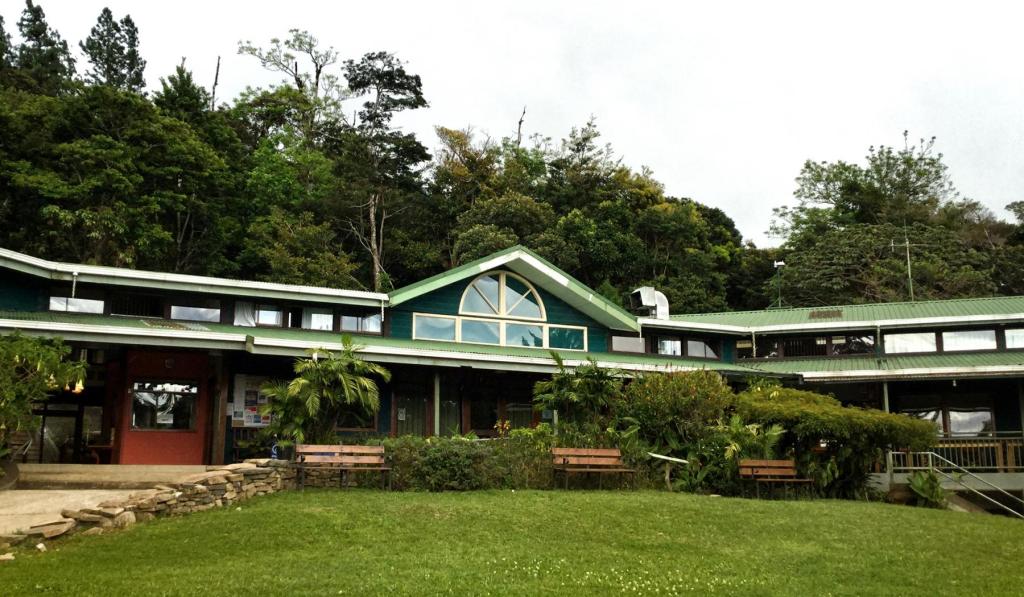
And off we go from the urban sprawl of San Jose and into the wilds of the country. Costa Rica, as a nation, is only a bit larger than my VA housecalls catchment area or about 40% the size of the state of Alabama. However, given its unique topography with a high volcanic mountain chain separating two major oceans, neither the roads not the climate is straightforward. La Fortuna, where I am for the next day or so, is only about fifty miles as the crow flies from San Jose. To get here requires about four and a half hours of drive time over windy mountain roads and across the continental divide. We went from urban center (warm and humid), to relatively temperate mountain heights (much cooler and drier and perfect for coffee, strawberries, and dairy cattle), to tropical rainforest (warm, wet, and much more humid), each with their own types of vegetation.

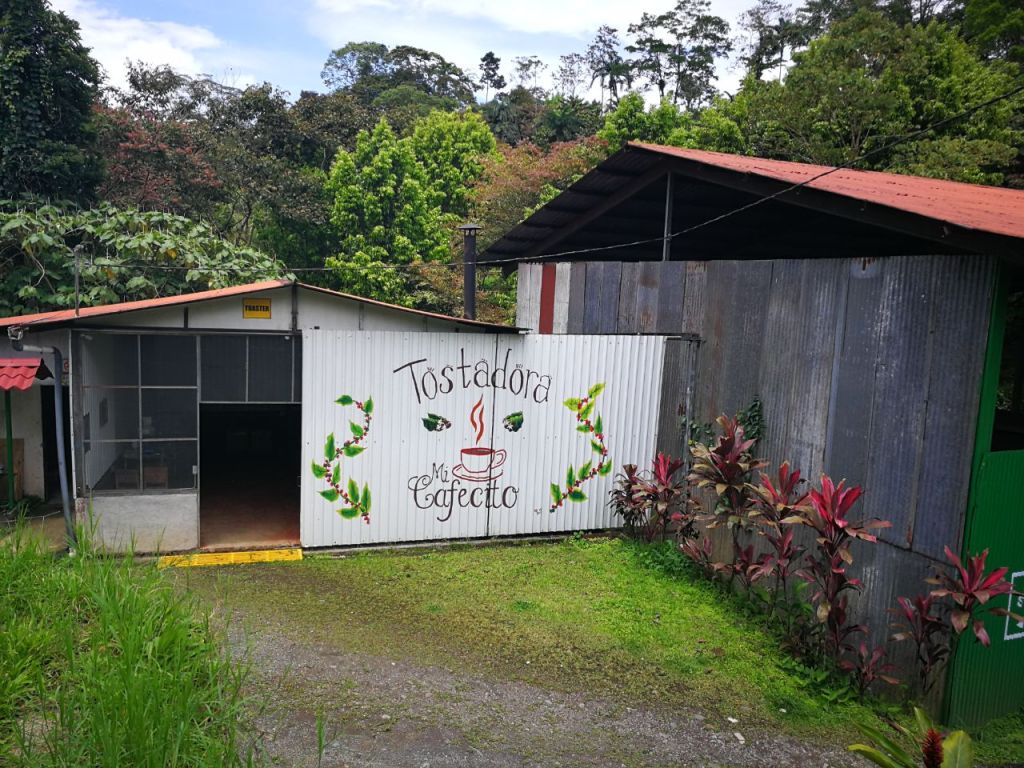
The climb up the mountains to the east of San Jose was an exercise in maneuvering a small bus around roads originally designed for oxcarts and therefore narrow and winding with the contours of the land. They were built for the coffee industry in the early 19th century and were simply paved over in the 20th. the bridges, in particular, are pretty much one lane. Our driver seemed adept and no major mishaps occurred but the skills, acquired in San Jose, of checking carefully both ways, and then dashing across the street to avoid the driver that appears out of nowhere and comes careening through continue to serve me well. We had two stops up in the mountain heights. The first for snacks and potty break for those in need and the second at a working coffee processing cooperative, Mi Cafecito. It’s a small operation, a cooperative for local growers which puts out a relatively small amount of quality product. As it was Sunday, the plant was not in operation so we could climb all over the various machines used to process the berries and then the beans, followed by a taditional Costa Rican lunch.

After lunch down the mountains on the Caribbean side including a stop at a particularly scenic waterfall and then, as our sharp eyed driver spotted a sloth, an unscheduled one to watch mama sloth at the top of a tree cuddling her baby. We also passed a tribe of howler monkeys in a food coma but we didn’t stop for them. I’ve been informed there are many more simians to come. A sloth in the wild was my goal for mammals this trip so I can tick that off (also saw a white nosed coati that was staring inquisitively at passing traffic). On the avian side, I’m hoping for toucans (again) and a quetzal. No luch so far, just a flock of green macaws in the distance making a hellacious racket.

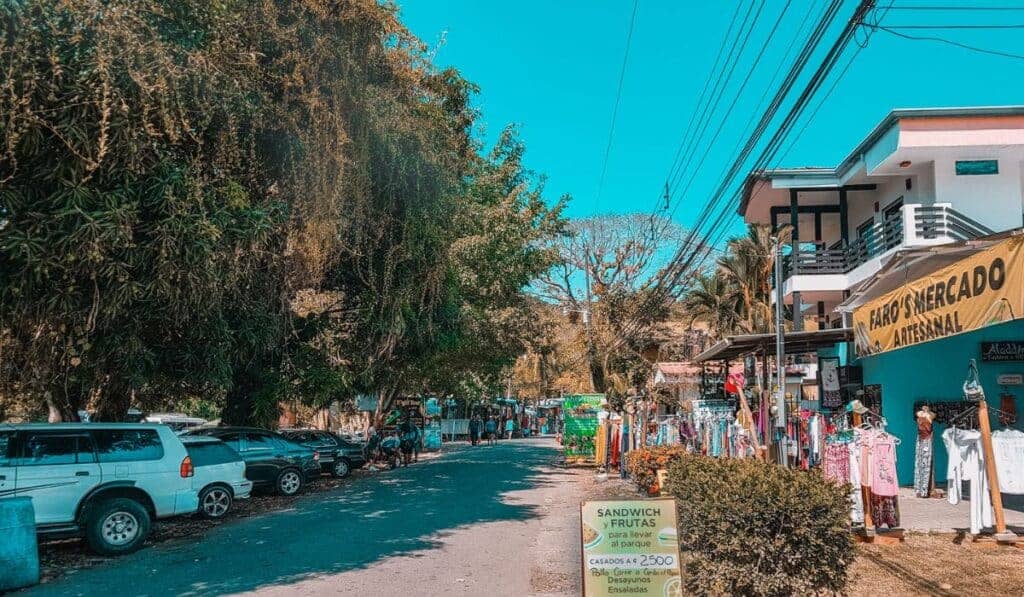
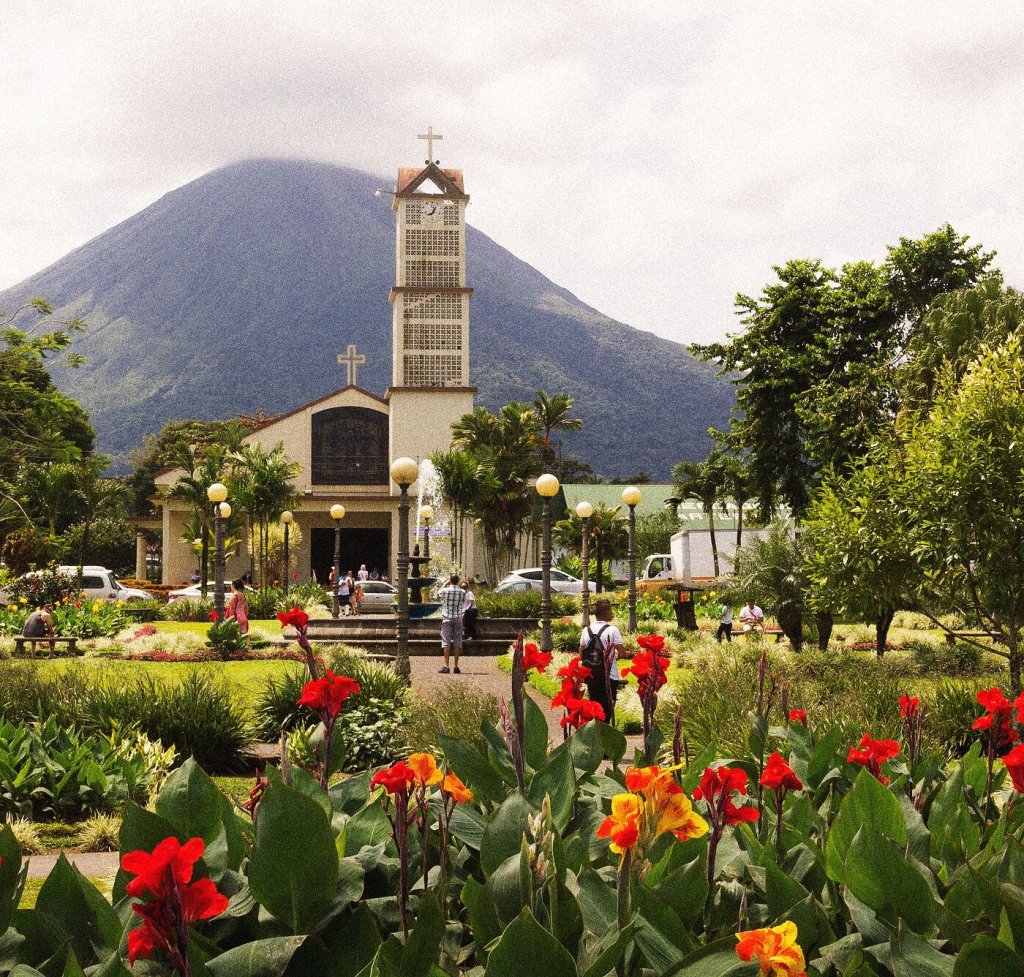
We are staying in the town of La Fortuna tonight and tomorrow night which is at the foot of the Arenal volcano. It’s like tourist resort towns anywhere. T-shirt shops, inexpensive restaurants, ice cream places, souvenir and trinket stands. I’ve booked a couple of outings for tomorrow. (More on that later). In the meantime, I wandered around town (which didn’t take long – it’s not very large) and then it was time to get back on the bus for dinner. Dinner was up in the hills at a private home which prepares meals for tourist groups – La Cocina de Dona Mara. Dona Mara herself was a lovely motherly woman of about sixty who had us make her own tortillas and bake them on her wood fired griddle before treating us to a delicious dinner of spicy shredded chicken, black beans, rice, carmelized plantain, some root vegetable I didn’t catch the name of, and a sort of stir fried vegetable medley. it was all delicious. I flunked tortilla making 101 when mine stuck to my hand when dropping it on the griddle so it came out as a lump rather than a flat piece of dough and had to be scraped off and remade.

Fully fed and, as there isn’t a whole lot of night life, in rural Costa Rica, I’m going to do some reading and go to bed relatively early.

October 4, 2025

Dateline – San Jose Costa Rica

I let myself sleep in this morning to make up for the prolonged travel day yesterday but I was still up and out by 9 am (we’re on Mountain Time here so I’m stirring earlier than I might otherwise). Breakfast was typical upscale hotel breakfast buffet but it did have fried plantains (which I do enjoy) and the pineapple was fresh and juicy which is always a treat. You only get really good pineapple in the tropics as they have to cut it early for shipping purposes and it’s never quite as good in more temperate climes.

The weather was reasonable after thunderstorms last night so I took a long meandering walk through town to the city center. Costa Rica has a reputation of having somewhat terrible drivers. I learned very quickly that the best way to cross a street is at a dead run as they tend to barrel forward at high speeds, no matter what color the lights may be or what the street signs may say. I still have all my limbs intact so so far, so good. Tomorrow we have five hour drive on mountain roads. We’ll see how that goes.

I ended up in the central plaza downtown and proceeded to explore the museums. First stop was the National Museum chronicling the history of Costa Rica from neolithic times through today. It’s located in the old national army barracks up on a hill with a nice view of the city. Costa Rica got rid of its military in the late 40s after World War II, preferring to put its resources into bettering the quality of life of its people. I don’t see that happening in the US soon. There is a national police force to keep order but the country has been politically stable for decades, unlike most of the other Central American states, and there isn’t a lot for them to do. The exhibits, consisting mainly of artifacts and drawings or photos of various historical periods are well presented but it’s not that different from dozens of other museums of its type that I’ve been too over the years. It is, however, the first history museum I have been to where the main entrance is through a butterfly garden.

After completing the National Museum, off across the square to the Jade Museum which covers pre-Columbian cultures and artifacts (many made of jade, hence the name). It’s a modern and spacious building well thought out and designed with exhibits both for adults and children. Lots of stone metates, ocarinas and other musical instruments, and various adornments in jade, copper and gold. I found myself puffing a bit on the stairs going up and wondered why until I remembered that we’re at about 4,000 feet here, not at sea level and it’s been a while since I’ve spent any time at elevation. More wandering through the city and ending up at the Gold Museum, which is more pre-Columbian artifacts and antiquities, this time focusing on the gold which brought the Spaniards and caused them to name the area Costa Rica (rich coast). This one is also quite modern, only you descend into subterranean depths and pass through vault doors to enter. I guess they’re trying to keep conquistadors from running off with what remains. Warrior adornments in gold were fascinating but I think they would be somewhat impractical as protective armor.

More wandering, a bit quicker this time as it was starting to rain, and eventually back to the hotel for a quick nap before meeting the tour group I am joining. This is going to be a very different group than my usual. Often, I am at the young end of the age spectrum represented by my fellow travelers. This time I am older than everyone else by a good twenty years. This will either make me the sage or the old guy that everyone expects not to be able to keep up. Forty years of medicine and twenty years of performing on top of that have given me significant stamina. I think they’re going to be surprised. The group comprises of a family of four with two teens from Florida on their first international trip, a mother and teen son from Nashville on fall break, young newlyweds from Virginia, a young lady from Germany who has done eight other National Geographic tours and loves them, and a forty something year old birdwatching woman from Scotland. We got the intro to the week from the guide and then had dinner together. I think we’ll all be compatible.

Have to be up early to catch the van for tomorrow’s trip to the Caribbean side.

October 3, 2025

things to do in San Jose

Dateline – San Jose, Costa Rica

And I’m back in travel mode. It hasn’t been the most interesting vacation day as it was primarily devoted to getting here and, as I was up past midnight completing everything that had to be done for work before I left together with having to get up at 4:30 AM in order to catch an early morning flight, I’m a bit on the tired side and am lolling around the hotel room before going to bed early. The tour I am on (sponsored by National Geographic) begins tomorrow evening. There appear to be a dozen of us in total. I’ve been with groups of that size that have bonded (Spain/Portugal in 2021) and that have definitely not (Ireland 2025). No clue what this group will turn out to be. It’s usually a mixed bag. As this is more of a jungle adventure trip than a lets see the cathedrals and museums trip, I expect it to skew a bit younger. I’ll find out soon enough.

Alarm at 4:30 AM. In the Uber at 4:50 AM (would have been sooner but my driver was very confused by the entrance to my complex and drove up and down Arlington past me a couple of times). At the airport at 5:05 AM. Cleared check in and security at 5:35 AM. Boarded first flight at 6:10 AM with Starbucks venti caramel macchiato in hand. Take off 6:35 AM. Landed in Atlanta 8:10 AM (time change forward one hour). Disembarked and headed to the next gate arriving at 8:40 AM. Boarding flight to San Jose 9:40 AM. Take off 10: 20 AM. Landed in San Jose 12:20 PM (time change backward two hours). Cleared customs and immigration and found hotel shuttle 1:30 PM. Arrive hotel and collapse face first on rather comfortable king size bed 2:40 PM. Just a bit over eleven hours in toto. It could be worse. It could have been a redeye.

I haven’t got much of a feel for San Jose yet. It’s rather sprawling across a number of low hills and river valleys at the foot of some volcanic mountains. The weather is warm in the low 70s, without being hot. Unfortunately, it’s accompanied by 110% humidity and low clouds making it feel like it will start storming any moment. (It did this evening, fortunately after I was alreday in). The hotel (the Radisson) is in the Northern part of the city which feels a bit like Guadalajara or Mazatlan. I’m not picking up the European vibes of a Buenos Aires or Mexico City and, as the country is much smaller, it doesn’t have the veneer of wealth one finds there with the aristocracy – or at least I haven;’t run across it yet. After a bit of a nap, I wandered around the piece of the central city closest to the hotel and, as the weather was looking fearsome and darkness comes early in the tropics, I headed back for a bite to eat and hopefully a long comfortable sleep.

This latter may be an issue this trip. Earlier this week, my left shoulder began to ache in the way it did last year and which took a facet joint injection in the neck to resolve. I did not bring my fluoroscope with me so that isn’t going to happen until after I get back. I will make do with Tylenol, Aleve, and good hot showers. This last shot lasted for roughly a year which is a reasonable run for such things. I’m resigning myself to the fact that I’m likely going to have to go through this once a year or so for a while. There might be a more permanent surgical solution but I’ve seen far too many disasters following elective neck surgery to really want to go that route.

As I was sitting around airport waiting areas for some hours, I had time to dive into the news and do some reading on current events from perspectives on both sides of the aisle. If I am reading the tea leaves right, based on current events in Portland, Memphis, and Chicago we are heading into a heap of trouble. ICE appears to be operating unchecked by norm or law with some backing from the National Guard. The raid on the Chicago apartment building where everyone (mainly citizens) was taken into custody while their homes were trashed put me in mind of the sequence in Schindler’s List with the girl in the red coat. The only reason I can find for it was as an exercise in raw power of the ‘look what we can do to you and you’re next if you don’t submit’ variety. And most of us will stay quiet. But we’re getting to the point where abstention is becoming complicity. The good people of Portlandia are reacting in the way that population does, with general weirdness which appears to be taking the shape of a naked bike ride in protest.

I am not one who likes conspiracy theories or unsupported interpretations of events but I did pick up on something regarding the gathering of the generals earlier this week. That the true purpose was not the photo op or the messages delivered from the podium, but rather to study the reactions of senior military leaders and begin to determine which ones might be willing to obey unlawful orders from above regarding use of military force on American citizens in Democratic leaning cities. I read one piece claiming that there are new AI tools that can pick up and interpret even small facial reactions and infer emotional states and thought processes and that these will be used on footage of the audience. I would really like to disbelieve this one.

A dangerous trend that is well supported by fact is coroporate media owners, of both print and televised news, are coming down hard on reporters and news rooms to spin the news in ways that will be looked upon favorably by the administration. There have been a number of high profile resignations of journalists due to these trends and, if this continues (in clear violation of journalistic ethics and likely the first amendment), there’s not going to be a lot of quality investigative and independent reporting left. And most Americans will be blissfully unaware that what they’re being fed is a combination of propaganda and a single side of the story.

I think I’ll take my news from the Costa Rican press the next couple of weeks. It may be in Spanish (a language in which I am in no way fluent), but it’s likely to be a more honest appraisal into what’s going on in the world.

September 28, 2025

Another day, another mass shooting in a public place. I wll admit that this one, at a waterfront bar in North Carolina, is the first time I’ve heard of a float by shooting. The perpatrator, surprise surpirse – a cis-white male with mental health issues. If we really want to profile people in this country for general safety, white men should be allowed nowhere near firearms, also automobiles and ladders according to national statistics. Of course, correlation is not causation but higher levels of testosterone and less regard of risk do seem to travel together. Someday we’ll get over our worship of the second clause of the second amendment while completely ignoring the first, the one about a well regulated militia. Until that time, we will continue to pay the price in mass shootings to satisfy the Moloch of the NRA and affiliated groups. Of course we could adequately fund a robost mental health system as an alternative but we seem to be hell bend on destroying health care in general so that’s going to be a non-starter.

I leave the country on Friday for two weeks in Costa Rica (cue the travelogue). It will be interesting to get out of the pressure cooker of modern American life and times for a bit and see what’s going on through other perspectives. It was healthy when I did it in May and, at least through my personal lens, we’re worse off than we were thenso I assume that I have even more that requires venting. I used to have a T-shirt reading ‘Danger: Contents May Explode Under Pressure’. I may need to get another one the way things seem to be ratcheting down.

What’s going on this week? The continued collapse of civil society. I knew we were long past civil some months ago but the final nail in the coffin is the President of the United States telling his political opposition to ‘go fuck yourself’ on camera. Now I know that’s an old word that’s been part of the language for 1500 plus years but most politicians are wise enough to avoid it. Especially the representative of the party that’s sending its shock troops out to ban books from schools for ‘lewdness’ and threatening to pull network broadcast licenses based on speech issues. It also represents the intellectual level on which many of our leaders are now operating when they can’t come up with something more clever than a 5th grade playground remark.

The occasion of said remark was a question about the impending governmental shutdown which begins on Wednesday unless congress begins to do its job. As it hasn’t really been too keen on this since the days of New Gingrich, I’m not holding my breath. Those behing project 2025 are breaking out the champagne as they see this as a way to dramatically downsize the government by mass firing workers and closing government agencies (rather than keeping everyone on and paying them their arrears once the budget issues are worked out legislatively). Can’t say what will happen but don’t be surprised when there are closed signs at the national parks, you can’t get assistance with your taxes or social security, and your medical bills that flow through government programs are unpaid. Most Americans are savvy enough to recognize that the Republicans control all three branches of government currently. There will try to be a spin that ia shutdown is somehow the fault of the Democrats but I don’t think it’ll stick. But then again they’re still trying to spin the January 6th insurrection as some sort of picnic and capitol tour. If so, I’d pay to see video of that group’s visit to Disneyworld.

Trump has taken off the gloves when it comes to persecuting political enemies, firing lawyers who won’t indict those he doesn’t like on non-existent or flimsy evidence. Most attorneys who like having a license and shreds of a reputation seem to be avoiding getting involved in these shenanigans so a real estate attorney with no prosecutorial experience is trying to take down James Comey. I don’t think any judge worth his or her salt, no matter who may have appointed him or her, is likely to let that case get very far. Various White House apparatchiks have been circulating lists of other prominent Democrats who are on the enemies list. The big issue here is their attempting to criminalize ‘antifa’ or any sort of organized protest against current policy and weaponize it. We haven’t started marching members of congress off to political prison yet but that’s where that goes if left unchecked.

And here’s where things could get very dangerous indeed. After a couple of test runs, the administration is sending the military into ‘war ravaged’ Portland, Oregon. This is very deliberate as there has been more organized anti-ICE protest in Portlandia than in most other cities with a lot of of-nonviolent protests over the course of the summer being met with escalating response by ICE and federal officers. (The last arrests of protestors stepping over the line into violence was in July). I’m betting that the stage is being set to goad the more radical fringes of Portland into something that will trigger a major response. Whether that will be a Jallianwalla Bagh, galvanizing a society into viewing a situation in a completely different light or a Wounded Knee where the government gave out double the Medals of Honor they gave out on D-Day to try and cover up general thuggery time will tell. I can’t help but wonder if Hegseth’s summoning of all of the senior military commanders before the president on Tuesday, the day before shutdown, isn’t tied in. Will they be charged with a loyalty oath to the administration rather than to the constitution. Will they be required to prepare military force against the citizenry within the country in violation of constitutional principles and the Posse Comitatus act? Given the character of those in charge. Anything is possible. I guess we’ll all know in a few days, or will we?

I’m looking forward to writing about jungles and volcanoes and beaches and sloths and quetzals for a while.

September 21, 2025

Ba-dee-ya – it’s the 21st day of September. For Children of the 70s, it’s Earth, Wind and Fire Day. Theatre Kids, of course, wait two days until the 23rd day of September and celebrate Little Shop of Horrors Day. I, being both of these, plan to celebrate all week. I’m not sure that my employers will buy that as an excuse for skipping out on clinical responsibilities so back to the salt mines tomorrow. Two more weeks before some R and R. The weather forecast is beginning to promise some fall weather this week which will be a nice break from the unseasonable August temperatures we’ve had recently. Fall is my favorite time of year and I’m looking forward to the leaves turning, cloudy skies, everyone arguing about sportsball, but you can keep the pumpkin spice. Not a huge fan.

My trusty iPhone 12 which I’ve had for about five years has been acting up in recent months so I took part of my unexpected bonus check which I received for seeing 50% more patients than the powers that be had predicted and headed down to the Apple Store and am upgraded to an iPhone 17. I haven’t figured out all the quirks yet. The biggest issue I’ve had is dealing with the various UAB apps and firewalls. I have lost access to charts, email, the paging system and other things useful in my job. Six phone calls to the IT department this weekend to try to fix things have produced no results. Maybe someone will call me back on Monday. Maybe I’ll just have to go back to the way we did things in the olden days with cuneiform and clay tablets.

I did a bunch of normal people socializing over the weekend. Two plays – both gay humor campfests of various stripes. We Three Queens at Theatre Downtown written by my old friend Billy Ray Brewton was a riotous and politically incorrect farrago of nonsense about an 80s girl band trio (played by lip synching men in drag) who collapse at the height of their fame and then must go through a rather hysterical redemption and reunion arc. And, at a matinee today at Virginia Samford Theatre, Carole Cook Died for My Sins – a one man performance piece written by and starring Mason McCulley combining gay humor, family coping with dementia, diva worship, addiction narratives, and dry martini wit. I don’t know Mr. McCulley but multiple people have told me that we really need to meet each other and suss each other out. No theatre on Saturday. Instead, dinner and bowling with friends. I did improve on my usual score of 30 something with a score of 50 something. Bowling is not my game.

My political rant of the day is tangential to Trump announcing that he is signing an executive order which will require companies hiring skilled foreign workers through the H1B visa program to commence paying $100,000 per position (up from the roughly $1,000 it currently costs). Knowing that there are a lot of Visa holders employed within American health care, I decided to look up some hard numbers to see how this might impact the ability of someone in this country being able to get a doctor’s appointment over the next few years. These are hard numbers and easily obtainable by anyone with Google on their browser.

There are currently 155 accredited medical schools in the USA and, in addition, 37 accredited osteopathic schools. Medical schools produce MDs and osteopathic schools produce DOs but they do the same residencies and, for all practical purposes are interchangeable. This past year, there were 22,657 MD graduates and 9,285 DO graduates for a total of 31,942 brand new physicians. This is roughly double the number in my graduating class of 1988 which included 15,947 MDs and 1,534 DOs. But then again, the population has increased a bit over 40% or something over 100 miliion people since that year.

Those 32,000 new doctors enter a matching program which determines the next phase of their training, their residency which will separate them according to specialty. There are about thirty basic types of residency programs and hundreds of subspecialty programs after a specialty has been mastered. The match takes the preferences of the resident in regards to specialty and location and cross references that with the preferences of the educational programs. Many computer algorithms later, graduating medical students are handed an envelope in mid March the contents of which tell them where they will spend the next three to eight years of their lives.

There were 43,237 first year residency positions offered this past year in the US. About 11,300 more than US medical graduates. This imbalance has been true for decades and therefore US training programs have long been open to graduates of medical training outside of the US. We’ve been importing physicians for years. Not everyone who applies to the match gets a position. There were 47,208 completed applications this last year for those 43,237 slots. Those who remain unmatched are usually international medical graduates (IMGs). Of those that matched this past year, 9,095 were IMGs. 3,231 of these were US citizens who went to medical school outside of the US (mainly in the Caribbean) and 5,864 were non-citizen IMGs.

US medical school graduates have strong preferences regarding the specialties they wish to pursue. The surgical and technical specialties are very competitive and almost all residents selected for these programs come from US training. US graduates avoid primary care specialties like the plague. There are lots of complicated reasons for this – some economic, some cultural. The end result is that while only 0.87% of first year orthopedic surgery residents are IMGs, fully 32% of first year family practice and 43% of first year internal medicine residents are IMGs.

Non citizen IMGs are predominantly admitted to the US and employed under the J1 visa program which is a nonimmigrant visa. You are allowed to come for training and, after that is complete you are supposed to return to your home country. Once training is completed, and these highly skilled individuals are sought after for employment (we have a huge doctor shortage in this country as there was essentially no increase in medical training slots between 1980 and 2005 despite an enormous surge in population), many opt to stay and their visas must be converted to H1B which does allow for continued employment, permanent residency, and eventually citizenship. IMGs have filled in all sorts of gaps in the system working in rural communities, smaller health systems, and underserved specialties allowing the medical system to function. No one has yet come up with an enticement to get US graduates to take these jobs. (Student loan forgiveness might do the trick but congress hasn’t been especially bullish on this recently).

So what happens when H1B visas are priced out of practicality? Young IMGs will not be able to remain and work in the system and we’ll lose about 5-6,000 potential physicians a year. And they’ll be from some of the most fragile and tenuous parts of the system. Rural communities will be unable to find staff for their hospitals. The primary care fields will be devastated unless someone can figure out how to get US graduates to consider primary care worthy of their time and energy. Forget there being much in the way of new geriatricians to take care of teh rapidly aging Baby Boom cohort. It’s not like we can create 6,000 new US medical school graduates a year. Creating a physician is labor intensive and expensive for society. Alaska, Montana, Wyoming and Idaho do not have the resources to sponsor a state medical school at all. (Their residents can attend medical school in Washington under a special program). We would need to open 25-30 new medical schools or greatly expand the ones we have to make this happen and that would require significant societal investment. Given that society is busy dismantling science and evidence based medicine in favor of politics and gut belief, I don’t see this happening.

This change to H1B visas may or may not happen. There may be a carve out for the medical profession. I have no crystal ball. The problem is that those with power and influence to create policy have no issues accessing their own health care and therefore tend to be unmoved by the needs of populations not like them. I’d be happy to take Katie Britt or Tommy Tuberville along on my rural house call route and give them a dose of reality, but I don’t expect either of their offices will be calling.

September 18, 2025

The world is coming apart again, at least according to the keyboard warriors on both the right and the left. I couldn’t tell. I went to work, did house calls on a lovely day around Lake Guntersville (one of the perks of the VA half of my job is driving around Alabama the Beautiful), had lunch with colleagues, came home and played with the cats for a bit before launching into a combination of work stuff and chores. There was no blood, no fire, and I managed to get my clothes on and off without falling over. This doesn’t mean that I am unconcerned with the state of the world but it does mean that I have found it necessary to not let it become all consuming.

What am I worried about? The first is the declaration that Antifa, which is an idea, is a ‘terrorist organization’. Why does this bother me? Antifa, which stands for anti-fascist for the few of you who slept through the last decade, is not an entity. There is no organization. It is not run by anyone. It is not funded by anyone. It’s simply the idea that Americans, based on our beliefs and history should stand up to fascist impulses and those who embody them. By declaring an idea a terrorist organization, it allows the administration to pretty much label anyone who states that a political move or policy is fascist by nature as anti-fascist and therefore opens that individual up to accusations of terrorism. And how is that person supposed to prove they are not Antifa? This could easily prove, over the next few years, a very convenient way for the administration to neatly remove political opponents or dissidents of all stripes.

As I look over the right’s social media movement in the wake of Charlie Kirk’s murder, I see many who are cheerfully turning themselves into the 21st century version of the Stasi, combinng over other’s social media posts, compiling lists of individuals they feel have been disrespectful, siccing armies of trolls on employers in attempts (occasionally successful) to get people fired for having political opinions at odds with theirs. I am against cancelling, whether it’s coming from the right or the left. I wasn’t a fan when it was sweeping the entertainment industry driven by the left a few years ago and I’m not a fan when it’s coming from the right as they try to turn a pundit into a holy martyr. We are all flawed. We all have our foot in mouth moments or intemperate posts. There’s something terribly wrong about gleefully trying to destroy the life of a human being whom you have never met based on one tiny sliver of who they are. The fact that so many of my fellow citizens, on both sides, seem to think this is an armchair sport bothers me a great deal.

Much has been made over the sudden dropping of Jimmy Kimmel’s late night talk show, especially in the wake of the dropping of Stephen Colbert’s some weeks ago. What’s going on here is interesting as it’s the collision of 20th century rules of broadcasting with 21st century technology and viewing habits. Back in the olden days, all television was broadcast over the public airwaves. There were three major networks – ABC, NBC, and CBS (there were other minor ones that came and went like Dumont but these are the three that endured and became national). We all watched their programs and got our news from their nightly programs because there weren’t any television alternatives. As the airwaves were part of the commons and belonged to the public, they needed to be regulated and the Federal Communications Commission (FCC) was born along with such things as the fairness doctrine (equal opportunity for opposinng viewpoints) on the news etc. In the 1980s with the rise of cable, new channels, some devoted to news, were created. Cable was never part of the commons – it was private companies and therefore the FCC never had any real jurisdiction over its content. It was self policing and, has the goal was money and ratings, not dissimination of quality information, there was a rise of news programing that began to deviate far from journalistic standards. (Fox News has repeatedly stated in court filings that they are ‘entertainment” and not ‘news’ in order to duck legal responsibility for various issues they’ve created over the years).

Because the big networks are subject to the FCC, and the cable and streaming channels are not, any financial change such as a merger which involves these companies or their parent companies must have FCC approval. In the past, this has usually been a matter of course, but we now live in interesting times. The current chair of the FCC, a loyal Trump appointee, is well aware of which television personalities the president disapproves. The president and the executive branch agencies cannot silence these voices directly due to the first amendment. But they can make it plain that certain business deals will not receive FCC approval if certain shows remain on the air. Colbert was a casualty of the Skydance/Paramount merger. The billionaires who control these massive companies are not going to let anything stand in the way of their profits and will be sure things fall into line to get the approvals they need.

The Kimmel case is a bit different. Here, a company called Nextstar which owns multiple local television stations is attempting to merge with another called Tegna, also a major owner of local TV stations. Jimmy Kimmel made comments about the Kirk murder which MAGA, Trump, and Brendan Carr, the head of the FCC did not like. Nextstar (in an attempt to curry favor for the merger?) announced it would no longer carry the program on the ABC affiliates it owns. It was joined shortly thereafter by Sinclair broadcasting. ABC rapidly dropped the show to keep its affiliates happy. The question here is did the executive branch or its officers, prohibited from censoring speech by the first amendment, influence the decisions of Nextstar and others and create the conditions of censorship in an indirect fashion. If they did, a technique kown as jawboning, it’s just as illegal (affirmed in NRA v Vullo by this supreme court last year in a 9-0 decision). If the private companies did what they did strictly as a business decision, the first amendment does not apply and they are perfectly in their rights to make any decision they choose regarding what they broadcast. I predict lawyers getting rich in 3… 2…1…

What happens next? I suspect The View will be rapidly cancelled in the not too distant future in similar circumstances. The remaining late night comedians may continue on for a while but they’re likely to avoid certain types of political comedy. I imagine Jon Stewart will have a few things to say on The Daily Show (Comedy Central not being subject to FCC and I don’t think it’s caught up in any major mergers and acquisitions that would require federal approval). But ultimately, due to the fragmentation of the audience by first cable and then streaming, the numbers just haven’t been there for the late night hosts and the genre has been waning since the glory days of Johnny Carson and David Letterman. And, ultimately, in the USA, particularly these days, all decisions come down to the greatest profit (usually for the smallest number).

September 15, 2025

And he’s back… home that is. Not much to say about the end of my quick trip to Seattle. I did my usual Q and A on elder health concerns for the residents of my father’s senior living community. It was well attended and allowed me to practice my standup medical advice skills which I have been honing for decades. They laughed. I went into it expecting a bunch of questions on health politics surrounding DHHS and Kennedy and vaccines but didn’t get a one. Popular topics this time were fall prevention, dementia prevention, and the side effects of various medications. This was followed by a family dinner for all the members of the immediate family (everyone is doing well and getting along fine – the nieces have both turned into capable young women. The elder is in year two of teaching science at Garfield High School in Seattle and the younger, having just finished college, is on a job hunt for something beyond barista). Got a good night’s sleep, left early this morning, battled the usual zoo at Sea-Tac International airport and got home without significant incident. The kitties were a little miffed at my absence at first but they have now joined me on the bed so I think they have gotten over it.

Time to launch into the third and final installment of my essay on options in senior living andd some of what is going on with them. In the first two parts we covered aging in place and adaptation of one’s usual residence and then community based options. This one is going to discuss institutional options. By institutional options, I refer to the various types of senior housing communities operated as businesses with the specific mission of helping individuals cope with the issues and problems of aging. There are two major types – those which provide skilled nursing care and those that do not.

We’ll start with those who do not provide skilled care. As they are, in general, ineligible to receive federal health dollars through either the Medicare or the Medicaid programs, they are not regulated by the types of federal law that cover health care, hospitals, home health agencies, hospices, and all of the other pieces of the health system that can bill the Center for Medicare and Medicaid Services (CMS). Some states do allow for Medicaid funds to be spent on these institutions (Alabama is not one of them) but in general, these funds are additional state funds placed into their Medicaid program and not federal. There are three basic types – independent living facilities (ILF), assisted living facilities (ALF), and specialty care (dementia) living facilities (SCALF). These terminologies may vary state to state as their regulation is at the state and not at the national level.

Senior communities can consist of one type, or multiple types colocated. The different types may be in different buildings or wings or services may be brought up under an individual in the same dwelling changing the environment and supports without the person having to move. They generally are not paid for with public funds and therefore entering and residing in one usually depends on private pay from savings or family resources. Medicare is not an option. Long term care insurance will generally pay for this sort of living but the amount it will pay will depend entirely on the insurance contract and may or may not cover the total cost. As I mentioned earlier, long term care insurance is now difficult to find as the market prove actuarially unsound over the last three or four decades.

Independent Living usually consists of apartments or sometimes clusters of small garden homes. Residents are expected to support themselves in the same way they would in the general community. There are often community amenities available such as congregate dining should they choose not to shop and cook routinely. There may be a certain amount of on site health care, recreational activities and organized events. Many residents still drive and have no issues accessing the world so these communities are often built in somewhat isolated suburban locations. Depending on location and amenities, costs can vary from about 2500-6000 a month. Some communities require a buy in as if one were purchasing a condo or coop but a certain percentage is refunded at move out. These communities are usually beyond the financial reach of lower socioeconomic groups. There has been a move to develop some lower priced models, often by converting older motels, but there’s not a lot of money in the low end so development has been sluggish. There are a few communities owned and operated by charitable groups with social mission with alternative funding streams that allows them to keep prices down. These communities usually have very long waiting lists and may have restrictions on who is eligible for residency. A lot of the nicer ones are owned by either regional or national coprorations on a for profit model. If a particular community becomes unprofitable, it can be suddenly closed, just like any other business.

Assisted living facilities are for those who cannot live completely independently without daily attention from another adult who can assist with basic tasks of living such as bathing safely, dressing, getting to meals, or safely handling medications. In general, the living spaces are significantly smaller than ILF spaces and are designed more for the convenience of the staff than for the resident. Meals are usually prepared and served in a dining room but residents can have a small fridge and microwave for snacks. They’re not dissimilar from college dorms of my generation. In general, one must be ablebodied enough to help oneself to exit the building in an emergency and must have enough cognitive capacity to understand their medications, even if they are being given by staff in a med pass. Keeping your own medications, even Tylenol, requires a physician order. Most residents need assistive devices such as walkers but can walk some. The staff in these facilities are generally not medically trained. They are expected to cook, clean, help residents get around, help with bathing and personal care but not to help with medical issues although there may be the ability to do simple monitoring such as checking of blood pressure or blood sugar. Residents are free to come and go as they please. Most don’t have the ability to drive but if they want to go out, it’s their business although the facility usually requires residents to sign in and out so they know where people are. Costs vary but are generally in the 4000-7000 a month range.

Specialty Care Assisted Living looks a lot like regular assisted living but there’s one major difference. To qualify for SCALF, your cognition must be such that you cannot handle your own needs due to confusion. Therefore, these are locked units and the staff is legally allowed to prevent you from leaving for your own safety. Families can take people out but they must be signed out and there may be rules on how long they can be absent. All medications are handled by staff for safety. Staff must prevent physical relationships from developing between residents due to the inability to consent. Most residents are ambulatory and well designed facilities are usually circular with interior courts and gardens to allow people to wander. They are generally significantly more expensive than regular assisted living due to higher staffing needs starting around 5000 a month and I have seen some has high as 10000.

Skilled Nursing Facilities (SNF) or nursing homes are a completely different type of facility. As they are eligible for CMMS payments, they must adhere to a myriad of federal rules and regulations. It’s been estimated that there are more federal rules and regulations regarding long term care than there are on nuclear power and commercial aviation. All of these rules pretty much guarantee that all the SNFs in the country run roughly the same – in theory. As one who reviews medicolegal records on a consultantcy basis (those donations to Birmingham theatre have to come from somewhere…), I have seen all sorts of interesting things happen in the name of profit. SNFs are for those who require daily assistance for medical basis that nursing must address. In general, to be eligible for admission, you need to be missing three of your basic activities of daily living (bathing, dressing, grooming, ambulating, transferring, toileting, and feeding). They are, in general, designed and run along hospital lines as that’s more or less what the rules require. There are some which try to create a more homey environment but they are a minority.

Medicare pays for admission to skilled nursing in limited circumstances, generally following a hospitalization for illness or injury where some additional rehab and support will help with recovery. Most are eligible for a twenty day stay (which can be extended with additional copays in limited circumstances). Anyone who requires a longer stay is going to need to pay with either private pay or with long term care insurance. Costs are usually 5000-8000 a month. In states where Medicaid does not pay for ALF or SCALF, those without funds who qualify for Medicaid and do not have adequate community support to remain at home with be placed at SNF, even if they would do well at a lower level of care. Federal rules require that those resident in a SNF get a medical visit on a monthly basis from a physician or an NP. (These days it’s usually the latter). There are also rules requiring medication review from pharmacists, especially for psychoactive medications.

The actual nursing care at SNF is rarely provided by an RN. Usually there’s only one RN in the facility (on day shift) and their role is mainly administrative as much of the federal paperwork requires completion by an RN. The nurses on the floor are LPNs (LVNs in some states) who are responsible for meds and certain skilled treatments. The vast majority of the hands on care is done by nursing assistants – jobs which are heavy physical labor and low wage and consequently high turnover. The pandemic, which led to roughly 20% of the workforce in clinical healthcare leaving the field, has hit SNFs particulary hard. About 98% of SNFs nationwide are now understaffed. Rules are being changed as no one can meet the old metrics. In much of the country nursing assistant jobs have long been held by new immigrants. This population is rapidly being withdrawn from the workforce.

There are three enormous issues colliding regarding institutional long term care. The first is demographic. The Boomers are on the cusp of turning 80 and that’s generally the time at which a signifcant portion of the population cannot be adequately supported in usual home environments and starts looking for alternative arrangements. There are nowhere enough ILF, ALF, SCALF, and SNF beds available for the projected needs of the next twenty years and there’s been no significant push to develop new communities in any number. These are pretty much all for profit and the profits just aren’t there in the way that they were. I don’t see this changing much in the next few years unless there’s some sort of incentives put in place at either federal or state level but rhe current federal administration is unlikely to undertake any new housing programs and state budgets are strapped to the gills with those they are already tasked with caring for on Medicaid rolls. The cynical part of my brain wonders if the dismantling of public health is in part deliberate to reduce the number of elderly with chronic illness and I’ve seen a number of essays discussing a coming necocracy for all but the obscenely wealthy.

The second is cultural. The general design of senior living communities was put in place starting in the 1970s for the needs of the aging World War II and Silent Generations. Their social patterns and ideas of pleasurable activities are very different from those of the Boom. The newly minted octogenarians are not going to be content with shuffleboard and bingo and I haven’t seen a lot of radical reassessment of how senior communities are going to adapt to changing demands. Even the architecture of such communities may need to be rethought but I don’t see a lot of the owners, whose corporate structures often flow up to venture capital firms, being willing to expend enormous sums on reconfiguring living space.

The third is economic. There are all sort of poison pills within the Big Beautiful Bill of this spring which will trigger significant cuts to Medicare and Medicaid going forward. Downturns in the economy due to shortsighted economic policies are likely to prevent any new dollars being pushed towards ong term care. Communities which can’t be profit centers, especially in more rural areas, are likely to close. This will be exacerbated by a worsening of the staffing problems mentioned above. We’ve lost about 20% of the workforce in the last five years. Recent polls suggest that 50% of the remaining workforce in clinical healthcare is thinking about leaving their jobs due to the strains and cuts happening within the system. I’m one of them.

I have no solutions to these problems. All I can do is identify them. I’ve put in my 35 years in geriatrics and it’s going to be up to a younger generation to figure out what’s next.

September 13, 2025

Dateline – Seattle, Washington

I don’t have much to add to the travelogue today as there’s not a lot going on at Aljoya at Thornton Place today. I had a bit of a sleep in, a couple of good meals, a meeting with my editor/publisher which confirmed what I had suspected, and time to catch up on some backlog of work progress notes. Not too shabby for a sunny Saturday in Seattle. Therefore I’ll continue on with the discussion of senior housing issues begun yesterday. And try to ignore the fact that a top White House official called for the social ruination of anyone not in step with Charlie Kirk’s political views and a major daytime talk show host advocated with the state sanctioned murder of the entire homeless population. I can’t think why anyone would be disturbed by such public pronouncements.

Yesterday, I discussed the first, and perhaps the most popular option regarding housing and aging, so called aging in place where an individual continues to occupy the same life space they did when they were younger but accomodations are made for the physical and cognitive changes that accompany aging. This option is not practical for everyone so today we’ll explore community based solutions to senior housing and some of the issues involved. The third and last piece of the discussion will appear maybe tomorrow and maybe later in the week depending on how I feel and will discuss institutional housing and the issues that arise when considering those options.

Community based senior housing encompasses a wide range of options and practices which happen when an elder leaves the home of their mature adulthood to live elsewhere but does not enter a formal institution such as a nursing home or assisted living facility. Most of these options depend on family structures, cultural norms, and financial resources and I don’t specifically advocate one over every other. Every person and every life pattern is individual and must be thought about as a fresh problem to be solved. Anyone who thinks that one size fits all rules or solutions are going to work has no experience with the real world.

Living with family is probably the most common of these practices. Either the elders move in with the kids and grandkids or other younger family members or the various family generations make agreements to move together to new housing which can better accomodate multiple generations. This is hardly a new model. It’s the way most families worked prior to the 1950s and multigenerational families in the same dwelling remains the norm in most of the world. The US model of the nuclear family is an exception, not the general rule when looking at family structures globally. A new US variant on this is the tiny house phenomenon, sometimes referred to as a ‘granny pod’ in which a small prefab home is placed on the same property as another family member’s home allowing both independence and proximity when help is needed. Having the kids move in with the elder is more akin to the adaptations made with aging in place. All of these allow for mutual support. Elders can help with household chores or childcare to the best of their abilities while knowing that family with (hopefully) their best interests at heart are around and can assist with what they need and the whole family unit can adapt to change together.

There are a host of issues when adult children who have been independent and parents get back together again in a shared household. Traditions may have evolved or changed. There may be subtle (and not so subtle) pushes to assert dominance over a family system. There are problems with role reversal when it becomes necessary for the children to parent the parent, particularly when ti comes to curtailing activities which may be beyond their capabilities due to change. The one that causes the most friction is driving. We don’t have a lot of markers of independent adulthood in our society. The driver’s license is one of the most important and a lot of our identity (especially for men) is bound up with the idea that we are free to go anywhere at anytime and that usually requires a car. Even when we don’t do it, the thought that we could sustains us and cutting that off is traumatic.

In these sort of family arrangements, finances, if any are involved, are usually a private matter worked out in the family and there is no regulation of these arrangements by the state short of zoning and building codes when doing things like remodeling for a mother in law apartment in the basement or installing a tiny home on the property. There is one more model that usually depends on private financial arrangements and that is cohousing. This has never really been that popular in this country but, with more and more single people in the aging Boom generation it’s starting to catch on.

In cohousing, a group of like minded individuals make the decision to live together as chosen family. These relationships are not blessed by the state and if they are to be recognized legally or for matters of health care decisions, powers of attorney will be required. Sometimes a large dwelling with many bedrooms is purchased or rented and shared, sometimes a number of smaller dwellings in close proximity are used, often with a certain amount of communal facilities which may include communal laundry or kitchen. Elders live together in mutual support, share in the finacial burdens and the everyday aggravations of chores and home maintenance, and functional communal living is achieved. Sometimes the best intentions founder in acrimony. Anyone who wants to explore this sort of arrangement should enter into it with eyes open and legal contracts regarding rights and responsibilities in place. I am aware of a number of these communities working well on the west coast or in larger cities. They may be regarded with suspicion by the neighbors in smaller towns. It also bears researching both local and state law. There are laws in some jurisdictions that require any home that houses three or more unrelated senior adults be licensed as a senior care facility. All of the successful ventures of this type of which I am aware are headed and run by women. It likely has something to do with the socialization of the genders in earlier generations.

If you are not of mind or finances to purchase, there are various rental options available to seniors. Just like any other adult, they can rent an apartment or a home on the open market. In terms of making decisions regarding a rental, they should be similar to the ones made when assessing a home for its potential to be age friendly. Are there stairs or steps? Where is it located? Can I pursue my usual life from it if I no longer drive? Is it in a community where neighbors will help each other? There are rental properties being developed specifically limited to older (usually defined as over 55) renters. These usually have bathrooms that are suitable for the physical needs of aging. They may or may not have an office staffed with someone knowledgeable in local elder services who can assist when there are problems. Some buildings and communities participate in what is known as Section 8. This is a federal program which provides subsidies to allow the building owner to rent to elders on fixed incomes to rent for far below market value. One must apply and be qualified for the program based on income and assets. Section 8 rental units vary from the decrepit to the spartan to the adequate. It usually depends on who owns the building and their motivations for participating in the program. In general, the best communities are owned and run by charitable organizations with a mission to do social good and have funding streams outside of the rents.

There are, especially in rural areas, individuals with large homes who may open them up as a senior boarding home. These usually come with a bedroom and meals and are, in general, much cheaper than institutional senior living. They exist in a bit of a legal gray zone depending on state and local law but most, if they are non-exploitative, will be allowed to continue as the state knows quite well that if they were to close them down, that most of the residents would be compelled to enter nursing homes at great expense to state Medicaid. I am aware of a number of these in the greater Birmingham area which do very well with family style care but they are usually due to the labors of a central figure who works 24/7/365 and if anything happens to that person, things rapidly deteriorate.

I’m going to have an after dinner brandy and watch some bad TV. Stay tuned for part 3 – institutional care.

September 12, 2025

Dateline – Seattle, Washington

I’m up here on a quick jaunt to see the family and check up on my father in his 93rd year making sure that he and his life are in sync with each other. Many decades of experience in geriatric medicine has taught me that the majority of problems occur when an elder has changed, either physically or cognitively, enough so that the life they have designed for themselves no longer fits. Most of what I do is getting the person and the life back together and in sync with each other. Sometimes that involves providing the individual with adaptations. Sometimes that involves changing the contours of living in such a way that the elder can continue to succeed. It’s a constantly evolving dance, with ever more intricate moves as time goes on. My parents, having made good decisions some fifteen years ago, have managed to do relatively well with minimal intervention. As I no longer live within 2500 miles, I have to do most of my work through gentle, well timed suggestions. I know all to well what happens when people and families try to create stasis. It never ends well.

I’ve been promising to write a significant essay on elder housing and what may be coming in the time of Trump. I’ll start on it tonight but I am unlikely to complete all of my ideas in this particular missive. I’ve got a lot to say and we’ll see where it goes. My belly is full of Hispanic Heritage month buffet dinner at my father’s senior living community where I am in residence for the nexxt few days. As it was accompanied by a large margarita and I had to get up at 3:30 AM local time to catch my flight, I am likely to conk out long before I get all of this down. Not to mention that I do feel compelled to comment on some of the political developments of the last few days as I feel they are of some significance.

We’ll start with that. I never met Charlie Kirk. I paid very little attention to Charlie Kirk when he was alive other than to know that he was a figure in the alt-right movement who seemed to relish in being a provocateur and a sort of slick styled enfant terrible who would do what was necessary for clicks, likes, exposure, and networking. The Sufi poet Rumi is credited with coming up with the following dictum about speech – before speaking, ask if it is true, if it is necessary, and if it is kind. I try to follow that with my public speech (which consists mainly of these writings these days – I’m imperfect and have violated this rule on a number of occasions but I always carry it with me). I’ll let you make up your own mind as to whether Mr. Kirk adhered to such rules of civilized discourse.

What I find fascinating is not so much his assassination. I find that incredibly sad – especially as the film clips of his shooting will haunt his friends and family for the rest of their lives. But rather the national response to his assassination. Right wing powers in this country are busy with his apotheosis – flags lowered, bills to allow him to lie in state at the Capitol, a social media led purge of anyone who dares to not show proper respect for his death. To my knowledge, he has done nothing in service to this country that would make such honors appropriate. He held no public office. He created no major policy. He is most famous for being willing to speak ideas against mainstream cultural thought but from what I could tell, they were almost always from a place of the arrogance of youth without a balancing of the humility which comes with maturity.

The fact that all of this has developed so rapidly, eclipsing the annual rememberance of 9/11 (and if any ordinary civilians should have been accorded the honor of a state funeral, the passengers of flight 93 or the members of the NYPD and NYFD would have been deserving), makes me think that the MAGA movement has been preparing for and in need of a martyr for some time. Given the number of guns in our society, the amount of mental health issues among young men, and the shredding of our mental health care system over the last four decades, it was only a matter of time until something happened which would fit the bill. The fallout is continuing. The early attempts to pin the shooting on radical leftist ideology aren’t passing the sniff test so it will be interesting to see how long this lasts on the cultural radar and what both sides of our divide learn from it when the next sociopolitical figure is killed. It will happen.

Back to elder housing. The first thing to understand about aging is that aging is change. And it’s change that our own brains do not understand. Our bodies and our brains grow, mature, and change together during our first quarter century. We are very different people at 5, 10, 15, 20, 25. And society recognizes this. We don’t send young people of vastly different ages to the same educational institutions. We give people different limits and privileges as they mature. A younger teen may be limited in terms of their exploration of their world by what’s available by bicycle and public transportation but once they have a driver’s license, their world opens up in new ways. The college or military experience may completely reshape how a young person thinks about the world. Sometime in our mid to late 20s, however, our brain finishes its developmental cycle. It’s done. We become the mature adult we were destined to be and we no longer make the impulsive decisions we might have made just a few years earlier. And our brain continues to hold that self image and the body we have at that time of our lives becomes what it considers to be the adullt norm and we build our neurologic autopilot around that healthy young adult body. We will consider ourselves that person the rest of our lives. As the decades march on, we still feel like that internally and we watch the physical changes in the mirror going ‘What’s happening?’ and our brain doesn’t really understand them.

As we are Cro-Magnons and as, from an evolutionary point of view, they had to live long enough for the tribe to continue i.e. becoming a successful grandparent, our bodies needed to last into our forties. And that they do. There are not a lot of things tht go wrong prior to the age of fifty. Everything more or less works as designed. In pre-civilization times, very few individuals made it much past forty or so so there has been no evolutionary pressure to get rid of problems that occur after that age. Six thousand years of civilization is not enough time to change who or what we are at the biological level. These days, however, with a modicum of common sense, most of us will make it into our 60s, 70s, 80s, and beyond.

When we hit our 70s and 80s, if we’ve been in reasonable health,, our brains autopilot settings still try to get us to work our bodies as if they are some fifty years younger than they are. We’ll do things the way we’ve always done them but changes in our musculoskeletal system and neurologic systems keep us from completing those tasks in the usual ways. This is where things start to get messy. The first option in regards to aging is called aging in place which means living in your same house and doing things the way you always have. Most people, when asked, prefer this over other options. There are a number of issues that come up with this, especially over the age of 80 that need to be considered.

First: as the realtors say, location location location. Everyone, if they live long enough, is likely to lose the ability to drive. It may be a mobility problem – arthritic joints that don’t allow you to operate pedals or turn your head to check blind spots. It may be vision – I can already tell that my night vision is changing. It may be cognition where you can operate the car fine but you cannot react to all of the other idiots the state granted a drivers license. Key questions to ask are: if I cannot drive, how will I get food/shopping? How will I be able to keep medical appointments? How will I socialize? If I live in a more rural setting, how quickly can I expect help to arrive in an emergency? If I live in an isolated home, can I protect myself?

Closely related to this is the design of the house. Many homes built a few years ago are split level or have sunken living rooms or other changes in height requiring stairs. Stairs are difficult to negotiate as one ages and should not be attempted without the use of another point of balance such as a handrail. The leading preventable cause of death for elders is a bad fall with a broken bone or a head injury. I am forever going on about the need for appropriate light in stairwells, sturdy hand rails, and understanding that things such as trays or laundry baskets that require two hands to carry should not be taken up or down stairs. And don’t get me started on ladders. I lose a patient every holiday season or two from falling off a ladder while hanging decorations on the outside of the house. Don’t do it if you’re over 70.

If you make it into your 80s or 90s, you will still likely be able to walk but not without additional points of balance constantly. This usually requires a walker and occasionally a wheelchair. Are doors and halls wide enough in your home to accomodate this? Is the bathroom designed in such a way that you can bathe without stepping up and into a tub? Are there enough points of balance to be able to get up and down from the commode? And the toiletpaper holder doesn’t count. It wasn’t designed to support your weight.

Most of us live in pairs and age in pairs. This is a good thing. Long term couples often become symbiotic organisms with one life being lived in two bodies. We can get quite creative in designing life patterns around a couple with different strengths and weaknesses. Something that we do not discuss in our culture, however, is that one of the pair is likely to outlive the other. What happens when that piece of your life isn’t available? Will that shared living space still function for you? It’s always best to open these discussions when everyone is hale and hearty and not at 3 am in an Emergency Room. In the Baby Boom generation, many of the women are aging alone. Divorce, childlessness or estrangement, widowhood. Society has never taken kindly to an abundance of older women. See witch hunts.

If you are aging alone and want to age in place, you are likely to need another adult in your life on a regular basis to help cope with everything life can throw at you. If you have family or close friends who can fill this role, great. What if you don’t? American society has been very loath to expend public dollars on elder caregiving in the home and for the most part it is not financed through public programs and depends entirely on your personal financial resources. There are some exceptions. Certain states have made Medicaid dollars available for these kinds of services to prevent an elder from being institutionalized at a much higher cost to the state. The VA has programs for veterans. There are some other programs for specail populations. If you have long term care insurance, it may pay for these kinds of services. I do not expect these services to expand in the next decade or so. There are too many aging adults to make it attractive for public entities to take on new programs or benefits. If anything, they will contract given the way in which the Trump administration is approaching health and social services in general.

If aging in place is your choice, I suggest the following happen with your retirement and later life planning. A consultation with an elder law attorney for will and estate planning. If you have significant assets, a financial counselor/manager to make sure your income streams can meet your life demands. And lastly, a professional geriatric care manager who can sit down with you and family and help you think through the thousand and one things in your life that may need to adjust as your body changes. At the age of 63 with a planned retirement age of 65, I’m putting all of this together for myself. I’m not immune to the slings and arrows of outrageous fortune. If you don’t already have long term care insurance, you’re probably out of luck. Most companies have withdrawn from that market as it’s actuarially unsound. People are living far longer and needing many more months of benefits than the initial calculations predicted.

This has gone on long enough. I’ll write more tomorrow or the next day regarding other types of options in senior housing.

September 7, 2025

I went to a very fancy party Friday night, a black tie gala raising funds for UAB’s arts programs. Hors d’Oeuvres and wine, a concert by Wilson Philllips, steak dinner at sumptuously decorated tables placed on the stage of the Sirote theater. More wine. It left me with a sort of a glow all weekend. A huge shout out to Rita Polonus Cowell for the invitation and Patti Steelman for asking me to be her plus one. Through various stealth maneuvers, my Birmingham theatre buds of the last few decades have come into their own and now run most of UAB’s performing arts programs. Here’s looking at you J. Heath Mixon, Kimberly Kirklin, Chuck Evans, and Dane Peterson. Keep building on success.

I always feel a little bit guilty when I take part in the ritual of a gala party. There is so much need and want int the world that being surrounded by lavish accoutrements feels like a waste on some levels. But I suppose the difference between someone like me and a denizen of Mar a Lago or the new ‘Rose Garden Club’ at the White House is that I know that such occasions are special and to be savored and packed away into the coffers of reminiscence to be brought out again in the future when a positive memory is needed. They are not an entitlement that I should or would be surrounded by on a daily basis. Besides which, I refuse to spend the money on hair plugs, botox, jaw enhancement and other cosmetic procedures to give myself the super strange android look that has become de rigueur amongst the uber wealthy, particularly on the right side of the aisle.

Listening to Wilson Phillips (part of the sound track of my late adolesence – they had their heyday when I was in medical school and residency) allowed me to open up the above mentioned coffers and think over other special occasions, savored from my past. My brother had a Beach Boys fixation as a preteen and the greatest hits of Brian Wilson (father of Carnie and Wendy Wilson) were constantly emenating from our shared bedroom. In the winter of 1987, when I fell for a man for the first time (this was a couple of years before Steve), we had some magical times together in New York City and, as a treat, he took me to Michael’s Pub to hear the Mamas and the Papas. This was a reconstituted group John Phillips was still leading it using his original arrangements and harmonies but the other three were Mackenzie Phillips singing Michelle’s part, Scott Mackenzie singing Denny Doherty’s part and Spanky McFarland (of Spanky and Our Gang) singing Mama Cass’ part. Mackenzie Phillips, at that time in one of her many bouts of recovery, sat next to me at the bar between sets making a big deal of drinking her Perrier with a twist of lemon. I think we exchanged a few pleasantries but I can’t remember what they were about. She was very petite which surprised me. I got to meet Chynna Phillips briefly at the dinner and told her my life was coming around in circles again. She was amused.

I’ve been asked to write about what’s going on in senior housing and what the trends may look like moving into both the near future and the distant future what with cuts to social assistance programs, health insurance, and the impact of demographics on Medicare, Medicaid and long term care. I am much too tired to take that on this evening. I’ll mull it over the next couple of days and maybe something will spring forth full grown like Athena from the brain sometime this next week. I should also have a much better idea as to what’s coming next in my writing life after this next week. My publisher is back in the saddle. We had a call tonight discussing a number of topics and we’re going to meet for a couple of hours this next weekend while I am in Seattle visiting the family.

My current car book is Matthew Hongoltz-Hetling’s chronicle of the experiment in the early years of this century to create a utopian Libertarian community in Grafton, New Hampshire. Entitled ‘A Libertarian Walks into a Bear’ it’s one of those novelistic/journalistic treatises that examines the social politics of an American community, similar to John Berendt’s Midnight in the Garden of Good and Evil. A number of Libertarian (the political philosophy that government should have no role in telling individuals what they should or should not do or how they should treat their property) activists moved to the small town of Grafton, took over the wheels of local power, removed regulations and city services, and the whole thing came undone when it ran into the reality of the local bear population. I am drawing a great many parallels to how DHHS and Joseph Ladopo in Florida are dealing with vaccines. Ladopo has basically taken the position that bodily autonomy is an inalienable right and that the government has no power to force an individual to inject something into their body nor does it have the power to supersede the wishes of parents when it comes to their children. (Funny how this inalienable right does not seem to apply to female reproductive services).

The wholesale spreading of misinformation, quackery, and general foolishness regarding Covid vaccines has now come to taint the very concept of vaccination (which we have been doing since the late 18th century). An NBC poll released recently showed that roughly 1/3 of Republican voters now feel that all vaccines should be made optional if not banned outright. Visit any cemetary that dates back before World War II and look at the number of headstones placed for children. They virtually vanish by the 1950s. That is what vaccination has done. Allowed tens of millions of American children to navigate the biologic hazards of childhood and reach maturity. Life expectancy for Americans in 1900 was in the mid 40s. Not because folk were dying of old age in their 40s, but because so many infants and children died of what are now preventable diseases. If you made it through the treacherous gamut of measles, diphtheria, whooping cough and all the rest, you would generally make it somewhere between 50 and 75. People didn’t start achieving their 80s in good health with any regularity until after 1950. And that’s what’s coming next for all of us. Somewhere between eight and nine thousand American celebrating their 80th birthday every day for the next twenty years. OK Boomer.

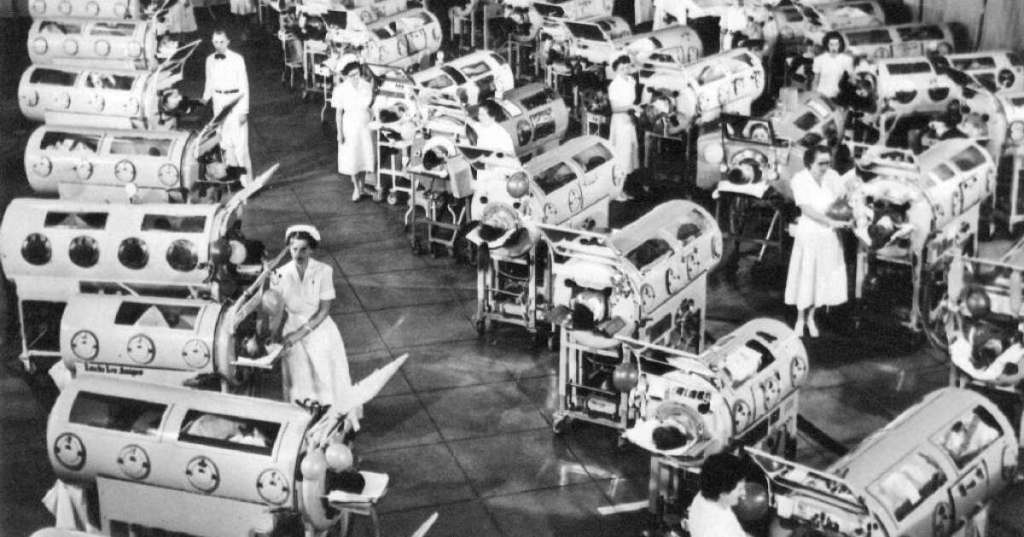
The problem with pure Libertarianism is that it completely falls apart the minute you have a society larger than about a hundred people. Under Libertarian principles of absolute rights, the government cannot tell me that I cannot set a fire on my land to clear brush anytime I so choose. But what if I choose to do so in high summer when there’s a windstorm, virtually guaranteeing that the fire will spread beyond my property and burn my neighbors’ houses down. Government exists to help us balance our individual rights with the individual rights of others. If a third of Republican voters stop vaccinating their children, I guarantee that the pestilences of the past will return and within a decade we’ll have kids in iron lungs. Public health law is not just about you. It’s about us, all of us, who have to somehow get along together and coexist. Unfortunately, one of our great political parties has pretty much decided that coexistence is for pussies and only dominance matters.

Then we have the debacle of the Savannah, Georgia Hyundai plant. Georgia spent millions in incentives to land an enormous facility to help produce electric vehicles and batteries. The plant is not yet finished and is a complicated build requiring a lot of proprietary high tech and Hyundai had a number of South Korean nationals on the property assisting with the build so that the plant could become operational and hire the locals for the jobs that would be generated. A would be politican, Tori Branum, who decided to out MAGA MAGA called ICE about all the illegal aliens working at the plant. ICE conducted an enormous raid, slapped nearly 500 South Koreans in chains and carted them off. In the past, if visas and work papers weren’t properly in place, there would have been some back channel phone calls and things would have been addressed. Now, we have an international incident with one of our closest allies, a major manufacturer wondering if their investment is safe, and probably every other multinational making fresh decisions about where to site industry in coming years. But, from what I read on the hellscape of X, MAGA has no conception of how badly they have shot themselves in the foot with this one. Ideology above all. It never ends well. Just ask the bears of New Hampshire.