September 8, 2021

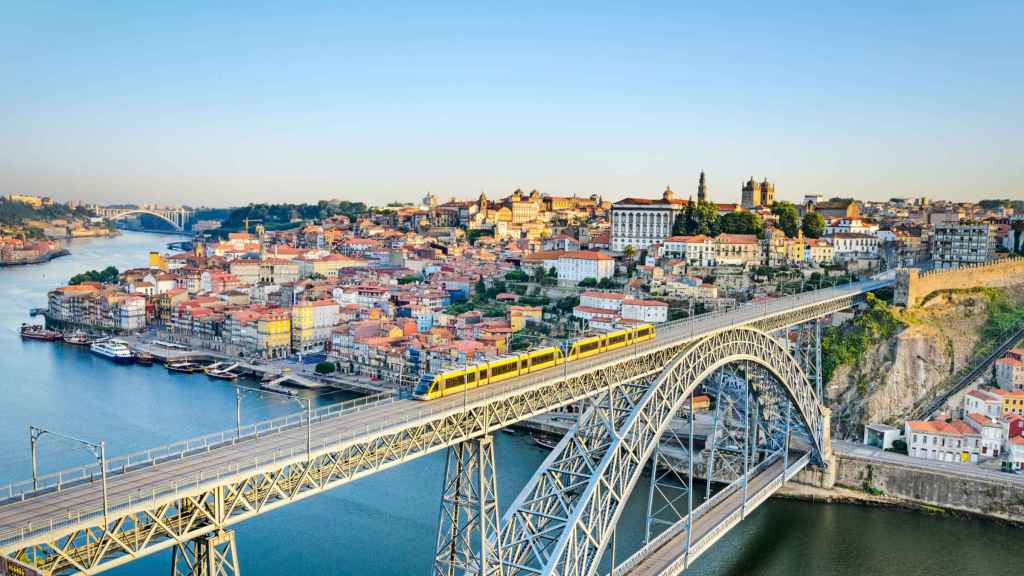
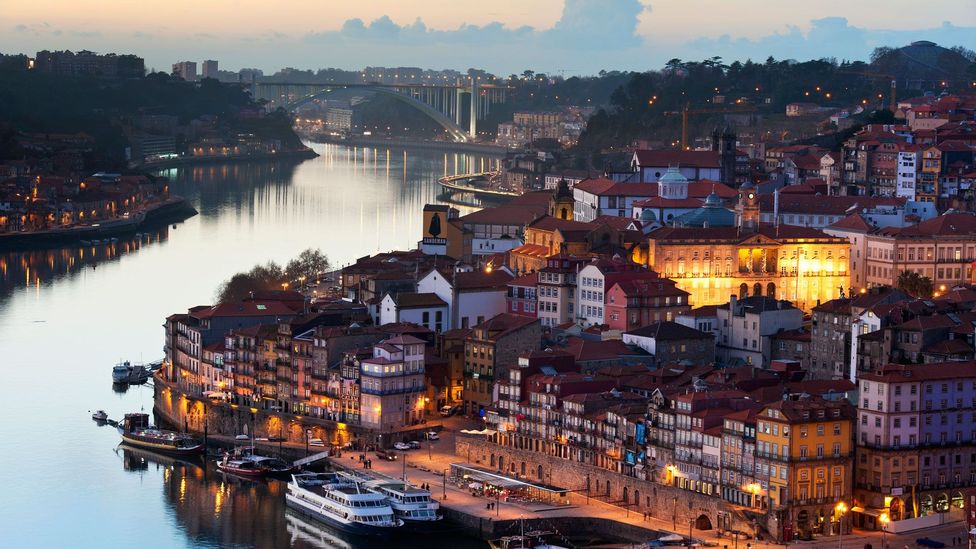
Dateline – Porto, Portugal

International Travel in the time of the Delta variant. I wouldn’t have booked this trip last spring if I had any idea of what was going to happen over the last couple of months but I did and when push came to shove, I decided Europe, where the population still believes in basic public health measures and community values was likely safer than the rural communities of North Alabama that I make my house calls in so here we are. My general takeaway from a twenty hour travel day involving four airports, three flights, two continents, and one set of lost luggage? Europeans are much better at universal masking than Americans, no one fusses about it, and everyone fills out a whole lot of paperwork so the authorities can find you and get you tested if you’re determined to have been in close contact with an infected person. Testing and contact tracing are believed in as general public health tools that have been used for centuries to mitigate epidemic disease rather than as some sort of impingement on ‘freedom’.

I arrived at Birmingham airport yesterday afternoon with plenty of time to spare just to give me some breathing room in case anything went wrong with my sheaf of travel and health documents. The lady at the Delta counter was very nice but thoroughly confused as to what I needed to have for the various legs of my flight as the rules keep changing and they no sooner get training in how to assist passengers then it all proves to be out of date. Bags checked through to Porto, a quick snack and then the hop to Atlanta for the trans Atlantic flight. We board in Atlanta and get settled in our seats. At takeoff time, we don’t – instead of phalanx of maintenance guys come down the aisle bearing mops. Not a good sign. The intercom comes on in English, and then French with a Chinese accent (my French is pretty good, but I could barely make out every fourth word. The flight attendant responsible for the French announcements was a native Chinese speaker and some of the pronunciations were quite new to me…) One of the aisles is dripping with water and we’re not going anywhere until the source is found and it’s cleaned up and repaired. The mop guys figured out the problems pretty quickly, a broken water line in one of the lavatories and not something that was going to bring the plane down, replaced a section of the aisle carpeting and we got underway an hour late.

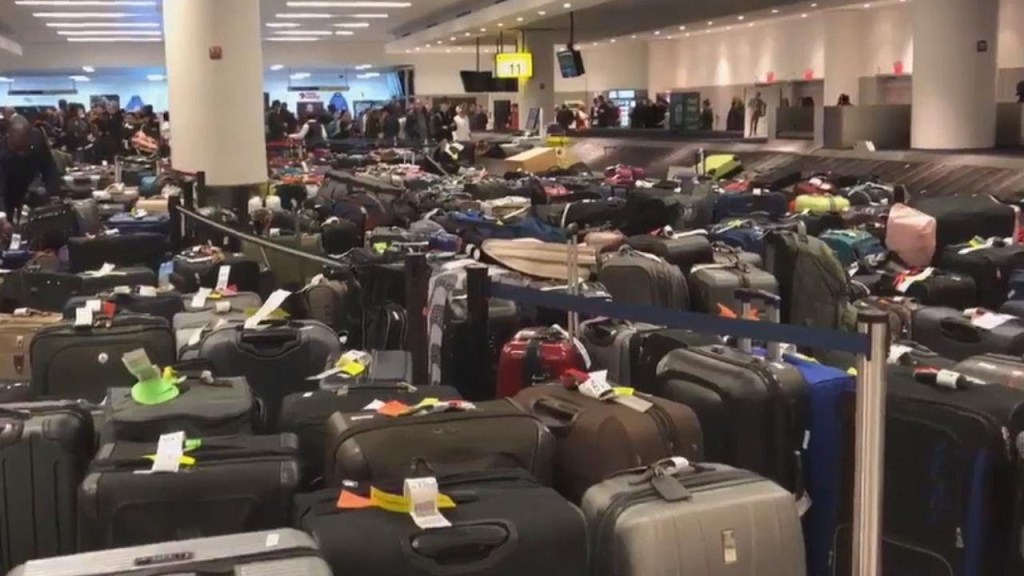
The long flight was uneventful, save for a closed lavatory on the opposite side of the plane, and we arrived at Charles De Gaulle airport in Paris safely, just an hour later than planned. That took my two hour layover down to one hour and it was a quick sprint through a maze of tunnels and concourses to find the domestic terminal. The only real issue being that the airport is designed so that you exit the secure area on leaving the international terminal and therefore have to go through security screening again. Fortunately, the line was moving without too much difficulty. On to the next plane for a flight over the Pyrenees from Paris to Porto. Unfortunately, I did not have a window seat so I didn’t get to see very much. Porto airport looks like every other midsize city airport you’ve ever been in. Down to baggage claim to wait for suitcases that never arrived. All of us who had been on that trans Atlantic flight, about ten of us, were luggageopenic. Apparently the late arrival kept the Delta carts from interfacing with the Air France carts or some such. I have a feeling that anyone who had less than a two hour layover that was on my transatlantic flight arrived at their destination sans baggage. Large crowd at the baggage office to register our missing bags (all apparently happily spending a night in Paris) and I have been told they will be on tomorrow’s flight and delivered to the hotel – unless the flight is late in which case they’ll show up on Friday. As I’m here until Sunday, it’s all good.

I was met by a lovely young man with a luxurious Mercedes who drove me from the airport into town and to my hotel, the Intercontinental, right in the middle of the old city. I got to my room, threw open the curtains and discovered that my usual luck was holding. I have a lovely view of the construction site next door. As I had no clothes other than the ones I’d been wearing for thirty six hours and had slept in, I located the nearby pedestrian shopping street, wandered up there, and found an H & M and a Benneton which supplied the basics for the next few days. The only thing in the suitcases I’m going to miss is my CPAP machine, too bulky for my carry on. Ah well, I just won’t sleep as well tonight as I might otherwise. I haven’t seen a lot of Porto yet. I’ll take care of that over the next couple of days. It appears to be a pleasant enough small city, full of baroque building covered with decorative tiles and with red tile roofs being the order of the day. Lots of tourists so plenty of different languages on the street. I can understand the English, French, some of the German, and some of the Spanish I’m hearing. I haven’t figured out the Portugese yet. I can read it without too much trouble but I haven’t figured out the rules of pronunciation.

I’m going to bed early this evening and will try to sleep as well as I can and that should adjust me for the rest of my sojourn.Be like the Portugese – wear your masks, watch your distance, wash your hands, get your shots.

September 6, 2021

It’s a double holiday today. Happy Labor Day and thank the union members of earlier generations who fought and died for weekends and the forty hour work week. Union membership as a counterweight to capital built the middle class in this country and it’s no accident that the decline of unions following the Reagan administration’s union busting tactics and successful campaign of rebranding unions as parasites in the eyes of voters parallels the decline of the working class into impoverishment. In addition, La Shana Tova to all of the members of the tribe out there. As a proud Unitarian Universalist, I’m happy to celebrate any religious tradition’s holiday that comes along. As we enter the year 5782, I have lots of things to look back on and lots of things to look forward to as well.

The most immediate one is I think I’ve made it through all the hoops and should be able to leave on vacation tomorrow. Fully vaccinated? Check. Negative Covid test yesterday? Check. Passport still in date? Check. Compression socks to keep the legs from swelling? Check. Forms filed with the Portugese Government so that they can track me down if the wrong person coughs on me on the trip? Check. I still fully expect something to go wrong and be turned back at one of the four airports I need to pass through in the next thirty six hours. But no one can say I won’t have tried. There’s a piece of me feeling very guilty about not having voluntarily cancelled this trip, booked in the heady optimism of last May when everything was improving on all fronts. Am I flaunting my privilege? Is it irresponsible of me to be traveling, especially by air, while Delta is running rampant? I’m not especially worried about being exposed during the trip. The tour company is mandating full vaccination for all guests and staff and, given the way things have been going around here, I’m likely less likely to be exposed in the museums and cathedrals of Iberia than I am in the local Wal-Mart. Travel journaling plus a look at American society and politics with an outside perspective should commence soon. If I don’t make it successfully, I’ll take some pictures off my back deck with the cats and we can all pretend they’re exotic.

I had dinner with Tommy’s parents tonight. We stay in touch and see each other every few months. They’re good people and we’ve worked out an appropriate friendly relationship now that Tommy is gone. Actually, I’ve always gotten along better with his parents than he did in our time together. I think deep down he wished that they had been a different kind of people, maybe more like my parents where I have always been perfectly happy to accept them and meet them where they are. I gave them a copy of the book. I wonder what they’ll think of it? They aren’t on line so they haven’t read any of the material before. I warned them that they might know far more about me than they want to know by the time they finish it.

The Original MTV VJs

On the way to and from their house, I had the XM radio on the 80s station and they were rebroadcasting a special they did last month celebrating the fortieth anniversary of MTV which began broadcasting August 1, 1981 with, as every trivia afficianado knows, the video to the Buggles’ Video Killed the Radio Star. All of the surviving original VJs were participating along with artists whose videos were played that first day. I didn’t see MTV at its debut. On August 1, 1981 I was floating somewhere in the Bering Sea on the University of Washington’s research vessel running water sampling equipment. I arrived back in Seattle a week or two later and did some odd jobs before heading to California and my sophomore year at Stanford. My parents didn’t have cable, so the early cable channels were something I enjoyed when visiting the family home of my college roommate Craig Mollerstuen, whose father was an executive in the Silicon Valley tech industry and who had all the latest gadgets. I do remember catching MTV with him, his younger brother David Mollerstuen, and a few others in their family room lat that summer and early fall. The songs they featured: Rick Springfield, Huey Lewis and the News, Men at Work, and all the rest immediately take me back to my undergraduate days, a period of time I enjoyed immensely. I also remember having quite the crush on the young, cute blond VJ Alan Hunter, never dreaming that our paths would actually cross about a quarter century later.

We all lay down the soundtrack of our lives from about the age of 11 to 25. I read somewhere that the pivotal year is the year we are 14. Whatever we are listening to at that time is what we carry in our brain as good music for the rest of our days. When working with my dementia families, one of the things I encourage them to do is figure out what the patient’s musical life was like at that stage and then get recordings of that music and keep them handy. When they’re getting restless or agitated, put that on and encourage them to sing along. It usually works and it’s a lot safer than antipsychotics. For my patients that grew up country without a lot of recorded music exposure, it’s the old hymns in traditional arrangements that work best. For those who had radios, Big Band, Frank Sinatra, Jo Stafford, Patti Page, Dinah Shore and others of that ilk. When I become demented, which I sometimes feel could happen as early as next week, people better start putting together a mixtape of 70s-80s pop, classic Broadway, the great American songbook, and symphonic music of the Romantic era, especially Tschaikovsky.

I’m going to try and get some decent sleep tonight as tomorrow night is a redeye flight and I doubt I’ll get a lot. Got my masks, got my hand sanitizer, got my shots, and I’ll try not to get too close to anyone.

September 2, 2021

We’re inching up on forty million confirmed cases of Covid-19 in the US since the pandemic began about 18 months ago. Over the last four weeks, there have about 4 million new infections and about 27,000 deaths. We’re not quite where we were last winter when no one was protected by vaccines but we’re rapidly approaching it, and have certainly surpassed it in the Republican states that have decided basic public health measures are somehow un-American. Florida, of course, continues to lead the way with numbers blowing last winter out of the water and Texas isn’t far behind. Alabama is not doing well, but at least our governor is taking a laissez-faire attitude towards tried and true means of spreading infectious disease rather than actively campaigning against them. The 7 day average for cases in Alabama is now about 15% higher than it was at the peak of the winter surge. How that’s going to translate into hospitalizations and mortality in a month or so remains to be seen as it’s unclear to me how many of those cases are in at risk for serious complication populations and how many are breakthrough cases in the fully vaccinated.

The resident I took on my rural house calls rotation today just came off the medical intensive care service and had a couple of interesting things to say about it. Last year, the residents did not work with Covid cases. Before the vaccine, we were not about to risk the health and lives of young people just beginning their careers. Now that health care workers are vaccinated, the risks are much lower and the house staff are working with those patients on those floors. This young woman mentioned that all she took care of during her month of ICU was Covid. She felt good about handling those individuals but feels that maybe she was cheated out of learning about other medical conditions that require intensive care, everything else having been crowded out. She also was very interested in the family dynamics of the people she treated. The majority were in their forties and fifties, previously healthy, and, therefore, had not given thought to their mortality and prepared no advance directives and had no discussions with their families about such things as code status, CPR, or final wishes. Time and again she found herself in the waiting room with their children, mainly high school age to mid-20s asking them what should be done and these young people not really being able to comprehend what was being asked of them. They almost always said ‘Do Everything’ because it’s their understanding that they should have their parents until they themselves are comfortably middle aged and they can’t imagine being young without them. They don’t really comprehend that ‘Do Everything’ in an ICU situation with a disease that destroys the lungs rarely turns out well for anyone concerned.

I was wondering what I should write about this evening when I ran across yet another news story about ivermectin, the antiparasitic drug that has caught on as a treatment for Covid-19. In this particular column, the author was talking about people getting the veterinary version as a topical paste, diluting it with water, and then injecting it. The trained physician in me just shivered as there’s so many things wrong with that approach that I don’t know where to begin. Perhaps they’ll start rubbing it into their eyeballs next. As I believe I wrote earlier, there is good scientific evidence that ivermectin blocked replication of the virus in the laboratory. Experiments to show what dose might be appropriate in a living human and whether it has that same effect in living tissue rather than in cell culture have begun but have not yet produced any data that would allow the FDA or any other regulatory body to approve the drug for use in the treatment of Covid. These experiments are in process and, if they show promise, I’ll certainly write about it at that time. In the meantime, ingesting topical horse paste or injecting dewormer mixed with tap water is a really bad idea. There are a number of people in ICUs nationwide with liver failure from ivermectin toxicity, taking up those few beds not occupied by Covid patients. And take it from a physician, dying from liver failure is not a pleasant way to go.

Physicians, with our ceremonial robes of the white coat, descend from the priesthood. We are the intercessors with the gods and with fate who miraculously restore the balance of the world through the healing of the individual. As George R. R. Martin put it, ‘What do we say to the god of death? Not today…’ As these age old archetypes have come down to modern America, a little of the idea of healing magic has continued to cling around the edges. We’re a very literal people so we like our magic to take physical form so we embody it in the prescription. Most healthy people, when they have need of medicine, have developed an acute illness or complaint that has some sort of reliable cure or amelioration. If we’re going to take a day off work, drive downtown, spend twenty minutes trying to find a parking space in the over full deck, wait while the doctor is running an hour or more late thumbing through an old Golf Digest, and then sit in a too cold exam room in our underwear, we figure we better get something for all that inconvenience or we’ve wasted our time. The prescription in part of the deal and its implicitly understood on both sides of healer and patient. We therefore tend to imbue the prescription with supernatural powers for good and we carry that idea of medicine is a good thing with us throughout our lives. When this gets mixed in with our cultural ideal of the quick fix, we lose track of what medications actually are. Medications are controlled doses of poisons.

What is a poison? A poison is a substance, which when taken into the body, alters that body’s balance and physiology to a negative end result. A medication is a carefully measured and tested substance, which when taken into the body, alters that body’s balance and physiology. It’s more or less the same thing, only with medicine you trust you aren’t going to get that bad thing happening. Some medications are literally poisons. The most famous example is the drug warfarin (brand name Coumadin) which is used as a blood thinner. It’s called warfarin because it was developed at the Wisconsin Army Research Facility (WARF) – it’s intended use when first invented? Rat poison. In the 19th century when medications were not regulated, people were poisoned and died from them all the time. The public outcry during the progressive era is what led to the creation of the FDA to begin with. It coincided with the Flexner report that helped to standardize medical education and society accepted that only trained individuals should handle and dispense medications as they could be dangerous in untrained hands which is why physicians, nurses, pharmacists and the like all have to go to school for a very long time and pass innumerable exams to get licensed. Every state in the union has a vested interest in making sure that even controlled doses of poisons are used judiciously with appropriate understanding – something one does not find in social media groups of people hawking outlandish cures.

The biggest issue I have with medications as a geriatrician is in convincing older people that sometimes deprescribing is better than prescribing. Older people, as they sail through life, collect up various ailments and disease processes. It’s inevitable. With access to Medicare and an almost unlimited number of specialists, they also collect up any number of medicines to treat these, or the side effects of the original medications (controlled doses of poison, remember…) Sometimes you need to put the ship in drydock and scrape a few of the barnacles off. Geriatricians are comfortable with this. Patients, their families, and most other doctors are not. There was a great experiment done a few decades ago using family practice residents. The residents sent their older patients to a geriatrician who would then make recommendations for care and send them back to the resident for implementation. Residents are young, impressionable, want to be the best they can be, and take their elders ideas and ideals as gospel as they prepare to move up in the world. You could see this in this experiment. If the geriatrician suggested that the resident start a new medication, they did this more than 95% of the time. However, if the expert recommendation was to stop a medication, the resident would only do this about 30% of the time. They would not deprescribe. Deprescribing is antithetical to how we are trained to think as doctors and it’s a concept that’s difficult for a brain, trained to hone down through a differential diagnosis to find just what the problem is an just the right medication to fix it, to wrap itself around.

As the baby boom, with its generational love of substances of all types, continues to age, becoming more and more geriatric by the year, it’s going to become even harder for I and my colleagues to keep people out of trouble. Not only do we have to worry about medications, we have to worry about substance use, over the counter medicines, herbal and other natural remedies, things hawked on late night infomercials, and stuff they borrowed from the neighbor which may or may not be appropriate for who they are. The average older person takes seven medications daily (four prescribed, three over the counter). There has never been a controlled study published in any language on a human body with more than three drugs circulating in their system at the same time. It’s too hard. We have no clue from a scientific point of view what’s going on in someone with 7…9…16…22…37 medications entering the blood stream daily. That’s the art of medicine and it’s more medicine Jackson Pollock than medical Rembrandt.

It’s late. I have an early morning meeting. You know what comes next. Wash your hands. Wear your mask. Keep your distance. Get your vaccine.

August 30, 2021

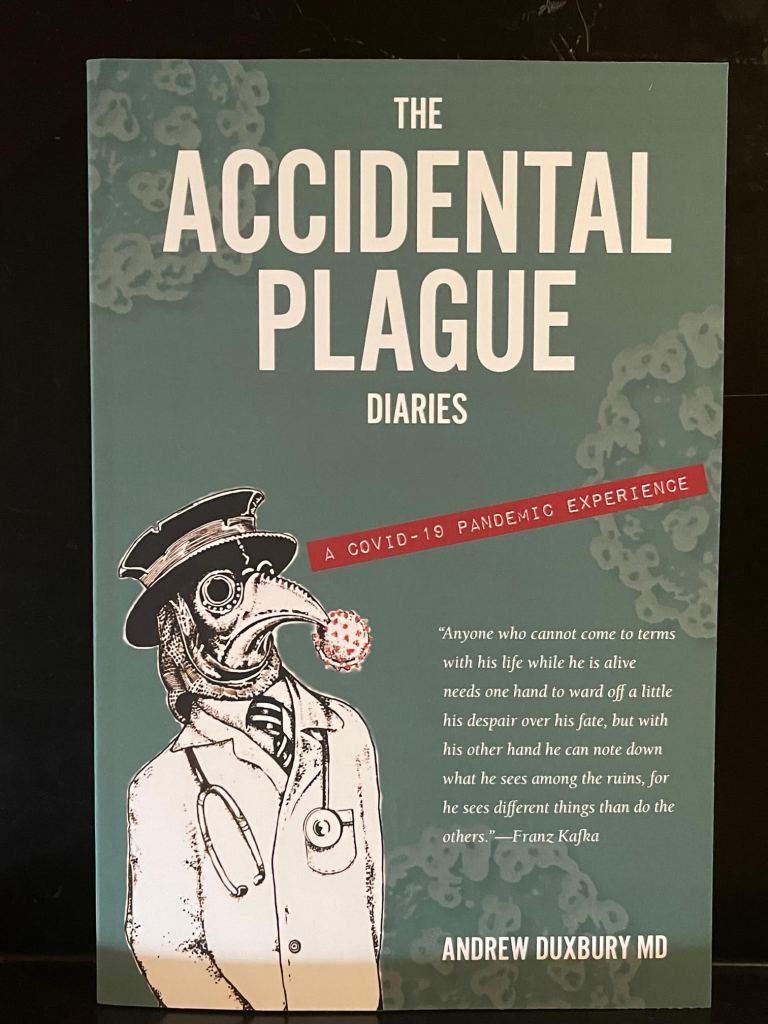
The book has been launched on an unsuspecting world. The publisher sent everything to Amazon and to Ingram book distributors on Thursday night last week and we figured that it would take at least a week for all the computers and algorithms to do their thing but lo and behold, it popped up as ready to go on Sunday afternoon. Thanks to the rapid spread of the news via social media, early orders have pushed it up the Amazon charts and it is in the top 10 in two of its categories (epidemiology and vaccinations) and top 50 in its other (industries). I’m not sure those are the most accurate descriptors of what it is but I’ll take what I can get. There was no Amazon category for plague diary. I hope everyone who is purchasing a copy enjoys it and, if you do, leave a good word on Amazon or Good Reads or some such so that all of the little algorithmic twists and turns bring it to the notice of other people who might enjoy it. There’s one little Easter Egg in the newly published edition. I rewrote the afterword last Wednesday so those who get their copies this week are going to have material less than a week old. The miracles of modern publishing and print on demand technology…

This is my last work week before some extended time off (three weeks with bookending long weekends). I haven’t taken this much time at once since well before the pandemic began. The EU has suggested to its member states that American tourists again become personae non gratae so the planned trip may not come off and I may not even know if things are on until I’m on my way to the airport in a week. No matter what happens, I am determined to enjoy myself, recoup some of my energies, and think about what the next projects are going to be. Finish up a second volume of The Accidental Plague Diaries? Get an e-book and audio book of the current volume done? Finally get around to some of my home projects that have been languishing? Watch a bunch of movies and write a number of my movie columns on which I am woefully behind? Audition for and book a decent role? If there’s one thing the last eighteen months have taught me, it’s that I’m pretty terrible at predicting the future so it’s probably not wise to plan too far ahead. Just keep moving, keep breathing, and go with the flow.

The rains of Hurricane Ida are pattering down outside. No major wind to speak of as we’re only getting some of the outer bands herein Birmingham. From what I can tell, all of my New Orleans friends have come through all right, but there’s a lot of damage – dormers blown off roofs, trees down, that sort of thing. I am quite concerned about the state of the hospitals, overcrowded with Covid and no power to speak of anywhere in the metro area and the latest estimates I have seen are up to three weeks to get everything back up and functional. The inpatient healthcare workers are exhausted already and additional privations related to power failure may send some of them over the proverbial edge.

The local Covid mask wars appear to be calming down as more and more prominent antimask/antivaccine personalities fall ill with the Delta variant. The number of news articles I’ve seen regarding someone of this type being hospitalized with critical illness or dying are heading towards the triple digits so maybe the message is finally beginning to seep through that defiance of public health precepts in the presence of a highly contagious viral illness may not be the best strategy for a long and happy life. We shall see. Rumor has it that the hold out local school district over masking is capitulating and I have certainly seen more and more adherence to masking and social distancing in my journeys around town over the last few weeks. My pharmacist friends also say that they are booking more and more appointments for first vaccine.

I’m trying to think of a good story to tell as it’s been a while since I recounted one of the adventures of my misspent youth. I’ve told all my personal hurricane stories in previous installments of these diaries so I’ll have to think of something else that involves Stormy Weather but without Lena Horne. (I did see her one woman show on stage in London back in 1984 and she was fabulous). I am the eldest child. My sister and brother are five and six years younger than I am respectively. In adulthood, that doesn’t mean much, but in childhood, it was a bit of a problem as I tended to be in a very different developmental stage than they were. My parents solved some of that by sending me off to summer camp for a few weeks every July to a place that specialized in horseback riding. My mother had been quite a horsewoman as a teen and she wanted her kids to have that experience as well. The camp I went to was called the Flying Horseshoe Ranch and it was in the Teanaway Valley just outside of Cle Elum. (For those of you who are not Washingtonians, this, of course, means nothing). I took to camp life and, although I was physically quite small, I had inherited some of my mother’s horsey genes and was quite good on horseback and came home with a number of blue ribbons from the horse show over the years. We did all of the usual camp things although, as this was the early 1970s, our counselors were a bit more permissive than they might be today and looked the other way sometimes when we were up to no good.

One year, we had a boys campout/sleep under the stars overnight away from the camp. We were all bussed to a campground on a stream higher up in the Cascades where we were allowed to run around and be little hooligans and work off our excess energy. It was a beautiful day but, that night, there was an unexpected thunderstorm. Lightning, pouring rain, and we were all just stretched out under the pines in sleeping bags without a tent in sight. Most of us crawled under the picnic tables which didn’t help a hole lot in terms of keeping the rain off and the counselors (old and wise to 12 year old me but likely all of 18 or 19) tried to figure out what to do. They decided to get us back to the camp that night. Of course the bus wasn’t slated to return until the next day so they stuffed us all in the three cars they had available and drove us back. I still remember being crammed in the back of an early 70s El Camino with nine other 9-12 year old boys, whizzing down a mountain road in a roaring rainstorm and having a great time. My frontal cortex not yet having developed enough to understand that maybe this wasn’t the wisest of ideas. We got back about 2:30 AM, nobody was hurt, and we all had stories to tell each other for the next few days in the ways of twelve year olds.

I’m hungry. Going to raid the refrigerator. Remember the litany. Wash your hands. Keep your distance. Wear your mask in public. Get your vaccine. Maybe I can make a campfire song out of it.

August 27, 2021

And another work week comes to an end. One more until I get a much needed break. My last time off was in early May, a time of optimism with vaccine being jabbed into willing arms and rapidly falling case loads. I made the mistake of coming back from that break, the drive cross country to Seattle and back, and setting up what I thought would be a pretty sure bet vacation in which I could recuperate from all of the stresses and strains of the past year. I set it for September, early enough for good weather, but late enough to avoid the crowds. More fool I having no idea of what was to come over the summer. I knew that the Delta variant was going to be a risk. I had no idea that half the country would refuse the vaccine and spend the latter part of the summer eating horse deworming paste. I’m still planning to leave after Labor Day but I am clear eyed enough to know that anything is possible over the next ten days and who knows whether I will get to enjoy a little R and R or be stuck with yet another staycation with the cats.

Things aren’t looking a lot better since the last time I ran the numbers. Birmingham and UAB are still holding steady at around 175 inpatients with Covid. The number of new cases statewide are now up over 5,000 daily which is the highest they’ve ever been Those will translate into hospitalizations in mid September and deaths at the end of that month. The lackadaisical attitude toward masking in local school districts has led to up to 20% of the students being out with Covid in some places. The teachers and staff are also getting sick leading to interrupted instruction, lack of supervision, and a rapid movement of the educators of my generation towards retirement. The morgue trailers are rolling into the Southern part of the state while the governor refuses to exercise any of her powers and the state board of education spends its time trying to protect impressionable young minds from critical race theory, taught only in PhD programs and law schools.

I think the theme of the evening is parasites. According to my dictionary, a parasite is an organism that lives in or on another organism and gets its sustenance from or at the expense of its host. There’s a lot of that going on in society at the moment. One sees that throughout the economic and political system – various and sundry types of people who do little to actually improve the world but who gather their riches from it all the same. There are those who might say the whole capitalist enterprise is parasitical in nature, with its emphasis on creating wealth from public resources and the labor of others and certainly the Marxists among us would have a lot to say about the parasitical nature of the bourgeoisie vis a vis the proletariat. But I am not a trained economist so I’m not going to belabor those points.

To start with the most basic of parasites, the biological kind. Ivermectin has been all over the Covid headlines in recent weeks. It’s been touted in alternative medicine circles as a cheap and effective treatment for Covid for some time, since nearly the beginning of the pandemic. Ivermectin is an antiparasitical drug that’s been around for decades, mainly to treat enteric worms in both animals and humans. I learned about it in med school in association with strongyloidiasis, ascariasis, filariasis and various other worm related diseases you’ve never heard of. Early on in the pandemic, when research labs around the world were trying various drugs off the shelf to see if anything would work in vitro to inhibit coronavirus replication, ivermectin was noted to work. This finding was rushed to publication and soon picked up by the lay press. What was not made clear by the initial reporting was that in order to attain the concentrations of drug in a living human that were possible in the test tube, you would have to give doses about a hundred times the fatal dose and that the results had yet to be replicated in vivo. (In vitro means in the lab/cell culture/test tube and in vivo means in a living organism for those not wise in the ways of science). Lots of studies all over the world were done with ivermectin with results all over the map. Some show efficacy. Some don’t. There have been significant charges of data manipulation and plagiarism with some studies causing them to be withdrawn. Let us just say that the jury is very much out so the FDA is not about to approve it as a treatment.

America’s Frontline Doctors, an alternative medicine group pretty much frowned upon by most physicians and medical organizations. (One of their leaders, Dr. Stella Immanuel, is the one going around stating ovarian cysts are caused by incubi and demon semen), picked up on Ivermectin and began promoting it, bringing it to the attention of the portion of the population conditioned to react badly to expert consensus and what they view as the elites. The Frontline group then partnered with an online pharmacy to begin writing prescriptions to pretty much anyone who asked and with the help of social media, demand escalated quickly, overwhelming the ability of the group to meet it. This caused a less sophisticated population with rural roots to realize that ivermectin was the active ingredient in a number of agricultural products available at your local Tractor Supply and there you have it. The thing that interests me most about this whole story is the economics. It takes a certain amount of cash to get the word out, set up partnerships with pharmacies and all the rest of it. Who fronted the dollars and who is making a killing on the back end?

Now on to Afghanistan and the ignominious end of the twenty years of misadventure there. It’s hardly the longest war in history. Both the thirty years war and the hundred years war in Europe far exceeded it but some of our current boots on the ground there weren’t born when it began. Why did we stay so long past all common sense and a decade after the stated objective of removing Osama Bin Laden was achieved? Again, I believe the answer is parasites. These parasites are contractors within the military industrial complex who scooped up more than their share of the two and a half trillion dollars expended over the last few decades. Ending things would have endangered their cash flow so lots of lobbying in DC to protect the status quo which continued until the previous administration set up the withdrawal on the worst possible terms. I feel very sorry for the young people of urban Afghanistan. All those under thirty who lived in population centers grew up under a relatively permissive society where they could start to realize their potentials. The Taliban is likely to extinguish this rapidly, but it’s not likely to be as easy for them this time around and I expect we will see a good deal of civil war for a very long time.

My last thought on parasites brings us back to Covid and some very dangerous rhetoric that is becoming more and more common from powerful voices. The governors of Texas and Florida, in particular, but they are not alone, have been blaming the spread of Covid in their states on illegal immigration across the southern border. This is easily debunked. If immigration were the cause the highest rates would be in border towns such as El Paso and McAllen and it’s not. Nor would it explain how it leaps hundreds of miles to Florida which has no Southern land border and I think we’d hear about it if thousands of boatloads of immigrants were descending on the beaches nightly. The problem is that the language regarding immigrants is changing and becoming more metaphorical. That they are diseased. That they are vermin. That they are parasites endangering the American citizenry. This language of dehumanization, which equates society with the body and the other as the disease invading the body is one of the necessary steps towards mass murder and genocide. It’s been well studied. If you look up the ten steps of genocide, it’s step four. We may like to think it can’t happen here, but I don’t think the people of Sarajevo at the time of their Olympiad imagined Srebenica was just over a decade in their future either. My antennae are up, especially if there is any movement towards organized paramilitaries aimed at ‘defense’ against ‘invasion’. That’s step five…

Enough negative thoughts for tonight. I’m going to pour myself another glass of wine and find a mental comfort food film, something like a cheesy 70s disaster flick or an 80s team comedy. I’m sure there’s something new out there, but nothing I’ve heard of has really spoken to me for a few weeks. And I’m trying to isolate some outside of work so I don’t get a breakthrough infection just as I’m trying to leave on vacation.

August 24, 2021

Another day, another slops bucket full of bad news. The seven day average of new cases in Alabama is back up over 4,000 cases a day for the first time since the peak of the winter surge in January. US deaths are back up over 1,000 a day. Statewide, we have about 60 more ICU patients than staffing. The nursing shortage is becoming more and more acute with hospitals frantically looking for and paying top dollar to anyone with a nursing license who is willing to work. (I’ve heard of signing bonuses in excess of $30,000). Birmingham itself remains relatively resilient as medicine is its major service industry so we have a lot of capacity in terms of both physical plants and staffing but, if the models that have cases doubling again between now and Labor Day hold true, even we will be treating people in parking garages and tents.

The local scuttlebutt passed around physician to physician is multiple stories of young healthy people 20-50, who went from the sniffles to full fledged Covid pneumonitis within a few days and are now fighting for their lives in the various ICUs around town. Nearly all unvaccinated, either for reasons of politics or inertia, they are the ordinary and everyday people that make up the background of our lives. A kindergarten teacher, a school bus driver, a fast food worker, an apparel store clerk. A tired workforce of nurses, therapists, physicians, pharmacists, unit clerks, custodians, dietary workers, and all the other people that make up the modern hospital trudge in for their shifts, hope to win small battles, and lock down the anguish when they lose and another once vital young person is no longer here. One of the things I hear bandied about is the idea of why should we worry, it kills less than 1%. (Actually, the total death toll to date is closer to 2% but as the elderly with much higher death rates have gotten vaccinated, the number is starting to fall…) It may be only 1% but for the people that love each victim, it’s a 100% loss. It’s easy to write off other people’s lives in the abstract, but a much tougher proposition in the concrete when it’s someone in whom you have emotional investment.

I read somewhere once about the shopping cart test. The way to tell if someone has empathy or consideration outside of themselves is to watch what they do with the shopping cart in the grocery store parking lot once they’ve loaded their purchases into their car. The empathic person returns the cart to the cart corral. It’s an easy thing to do, requires little effort on the part of the shopper, but does mean that they have to go out of their way a little bit to make someone else’s life easier. The non-empathic person leaves the cart to fend for itself, uncaring that they’ve created more work for the person whose job it is to round the carts up and return them to the front of the store for the next go round. And there’s the issue. Currently we’ve developed a society that not only doesn’t return its shopping carts, but also runs over them a few times with their SUV on the way out of the parking lot.

This innate selfishness shows up in a lot of different ways. Perhaps the most obvious is the forty plus year march to privatize and monetize the public sector which has left our governmental buildings and general infrastructure something of a shambles. Compare the public/governmental buildings of the US built over the last forty years to those built in almost any other developed country in terms of architecture, artistry, use of open space, and pleasant environment. I see it most clearly in the VA part of my job. The buildings and offices we work in, as they have had to be constructed on limited budgets, are functional but not necessarily inviting or inspiring of confidence. Today was an election day locally for mayoral, city council and school board candidates. All I could think of was the pictures of people waiting in lines hours long to vote in some precincts during the last national election and just what care was taken to design a system to allow that as, in my neighborhood, there would be a riot and a rush on city hall by people ‘that matter’ if such a thing were to happen.

I got wind today of a bill making its way through congress. The pandemic has ripped the blinders off our national government exposing something that I have been shouting from rooftops for the last thirty years. The departure of nurses, nurses aids, and other direct care providers from the health care industry is leaving a huge gap in available care for vulnerable and aging adults, just as the baby boom is starting into its years of infirmity. Anyone who has looked at a demographic chart for the US created after 1960 has known this would happen, it’s just a couple of years ahead of schedule due to the stresses of the pandemic. The bill in question would mandate a minimum wage of $15 an hour for any person involved in direct care for an elderly or otherwise vulnerable adult. This would include nurses aids, home health aides, sitters, therapy assistants, housekeeping assistants. Any one of the lower level positions that has to lay on hands in some way. The theory is that if the wages are improved, more people will flock to these jobs. I don’t think it’s going to be quite so simple. The nursing home and home health industries have structured themselves over decades around low wages for these sorts of positions (usually in the $8-10 an hour range) and mandating huge increases are going to put enormous strains on the corporate structures behind these companies. We’ve allowed this sector to move from not for profit to for profit and, if they can’t make a profit, these companies will simply cease to offer these services. Driving eldercare into bankruptcy just as the baby boom is going to require it doesn’t strike me as sound social policy. How to balance this? Quite frankly, I don’t know. These are issues that have been predictable and discussed in geriatrics/gerontology quarters for well over half a century. Society, with its focus on youth, hasn’t wanted to pay attention. They may be forced into it sooner than even I had thought. I was expecting the 2030s to be the decade of eldercare quandaries – looks like I was off by a few years.

The book is coming! Those of you who have signed up for more information at https://bit.ly/apd-sign-up should be getting an email from the publisher today. It should be live on Amazon in about a week and you can get your local bookseller to order it for you from Ingram as of this weekend. Early word of mouth from various reviewers etc. has been positive (and most of you saw my note from Stephen Sondheim regarding my theatrical Easter Egg in the chapter titles). Even though I have been delivering advance copies for a week, it still doesn’t quite feel real. I’ve decided the moment it becomes real is when I spot a copy someplace unexpected in the wild, one that I had no hand in getting there. For those of you who have read/are reading it – if you like it, tell people. Gotta sell a few…

In the meantime, you all know the drill. Wash your hands, stay distant in crowds, wear your mask indoors in public, get your vaccine.

August 20, 2021

The cast of Downton Abbey

Today is my early day so I came home early after my lunch meeting to do my zoom meetings I had scheduled. I finished them up around 3 PM and made my list of all the wondrous things I was going to get done with the rest of the afternoon. Next thing I know, it’s after 6 PM and I’ve been asleep on the couch for three hours. The lizard brain has me going into play dead mode again, making me save energy for further disasters to come – add that to the very long and somewhat toxic work week this week and nothing was going to get done whether I wanted it to or not.

I’m tired. No, I think a more correct way to put it is I’m tired of being tired. The health system is under severe strain again due to the never ending spread of the Delta variant and things are rolling downhill and I and what I do are squarely in the way. We’re pivoting back to more telemedicine appointments, on-line team meetings, virtual house calls, and losing our trainees to Covid surge teams. UAB and the Birmingham VA have got this. 2020 taught us all what to do but everyone in clinical medicine is getting tired and in need of a little R and R for rejuvenation. The other major difference between what’s happening now and what happened last year. Prior to the vaccine and a better understanding of Covid, everyone was at risk of serious complication and those of in health care understood that but for the grace of God, the person in front of them could be their spouse, their parent, their child. Now, the vast majority of those presenting with serious illness belong to a self selected group who have chosen not to take advantage of some fairly basic preventive measures. It’s getting harder and harder to generate empathy as the Delta surge rolls on.

Readying the cow pasture

The current local numbers are still running about 3,700 cases a day statewide. In the last two weeks, Birmingham metro has had about 10,000 new diagnoses. The number of children hospitalized has increased 500% in the last month and the state now has the highest rate of child hospitalization in the country. Statewide, we’re technically out of ICU beds (although here in Birmingham metro we’re still OK). The US death toll now stands at 628,000, surpassing the Civil War and moving Covid to the second highest mass casualty event in US history, ranking only below the Flu pandemic of 1918-20. The exact US casualties from that are not known. Estimates range from 500,000 – 850,000 with most coming in around 700,000. We’ll be there by the end of the year. In the meantime, the governor and state officials refuse to do much of anything regarding public health measures besides widely ignored suggestions. The mask wars rage on, especially in the schools where the virus is running rampant. And to top it off, the prior president is holding one of his rallies in a cow pasture roughly 50 miles north of town. I doubt there will be a mask in sight and I won’t be a bit surprised if we see an uptick in local cases in a couple of weeks that can be traced to the event. Our wet summer continues and I won’t be in the least bit downcast if it rains tomorrow and all the attendees find themselves up to their ankles in mud. It might be a reasonable metaphor.

The images of the last week, from babies being tossed over the wall of the Kabul airport to get them out of a Taliban controlled Afghanistan, to severely ill people lying on the floor of the main library in Jacksonville waiting to get monoclonal antibody treatments to hopefully keep them out of the hospital. (There are no hospital beds to be had), to right wing extremists frothing at the mouth as they confront school boards, city councils, and public health hearings full of high dudgeon and misinformation are enough to exhaust anyone. I gave up television news long ago. I realized it was bad for me. I’m currently giving Downton Abbey a rewatch. It’s a bit deceptive though. While it’s placid on the surface and full of lovely costumes and crisp dialogue, the subtext of a world undergoing wrenching changes from the Edwardian period to the Jazz age in some ways mirrors are current times where we are definitely evolving from something to something. Part of our problem as a society at the moment is that this process is happening so fast, that we can’t see very clearly where we were or where we’re going and all any of us can do is hold tight to the back of the dragon and try not to fall off.

Cliveden House, Berkshire

My mother’s parents grew up in the society of Downton Abbey. They were teens during World War I, and emerged into adulthood immediately thereafter as members of the Lost Generation. My grandmother, whose father was a physician in Edinburgh who died young, applied herself to her studies, went to medical school and qualified as a pediatrician going to work in the Lake District caring for the children of the villages there. She was well educated, somewhat fearless, making her rounds on a motorcycle, and as a woman in medicine, a bit of a novelty giving her a bit of an entree, but not a place in ‘society’. My grandfather, who came from a family of social climbers who had emigrated to South Africa, was sent to England for schooling at sixteen, also went into medicine (his father too, was a physician) and was a member of the Bright Young Things set in London. He was a popular extra man at country house weekend parties, being tall, good looking, athletic, an excellent golfer, and perfectly charming when he wanted to be. I don’t know if he ever spent a weekend at Highclere castle, but he was frequently a guest of Lord and Lady Astor at Cliveden. He eventually met my grandmother when he too finished his medical training at the University of Edinburgh. Various twists of fate brought them to this country in the early 1930s where they settled in San Francisco. My grandmother never practiced after she emigrated. She became the power behind my grandfather’s rise at the University of California, all the way to chancellor and became a friend and beloved mentor to the few women in medical school during the 30s, 40s and 50s. My grandfather used his charisma, his erudition, his athletic prowess, and his force of will to succeed. Unfortunately, he saved it all for his professional facade. He was nowhere near as nice a man in private life. But those are stories for another day.

I am supposed to go to Europe in two and a half weeks for my R and R. I keep expecting the trip to be cancelled by the tour company or flights to be grounded or some other disaster. It would fit in with this whole crappy year. There’s also a piece of me that feels incredibly guilty for wanting to go. That somehow it’s a flaunting of privilege in a world of suffering and discontent. I realize that I am very lucky. I am not in danger of losing my job. I have enough money to pay my bills. I can even afford a few little extravagances now and then. So many cannot say these things. But I do what I can. I get up in the morning, go to work, and try to save the world entire, one patient at a time. It’s all I can handle. And these days, there are times when I’m not sure I can even do that.

Enough… Time for the Dowager Countess of Grantham and her continuing battles with Mrs. Crawley. They knew a few things then. They washed their hands, kept appropriate distance from others, wore a mask when indicated, and believed in modern medicine.

August 17, 2021

I set a new record today on my rural house calls run. 310 road miles and seven driving hours. Due to some staff issues, I ended up having to do all the driving myself to Guntersville, Fort Payne, Henegar and Section. I was a wee bit fried by the time I got back to Birmingham. Notes will need to be written tomorrow as I am in no shape to battle the VA computer system this evening. I suppose today explains why there aren’t more rural house call programs in place. The VA can afford to run a program at a loss as long as it helps the system as a whole. Veterans enrolled in our program have somewhere between 60 and 75 percent fewer hospital days per year than age/morbidity matched controls who are not. It doesn’t take too many non-existent ED visits or ICU stays to free up enough dollars to pay for house calls. It doesn’t happen a lot in other systems for two reasons. First, in most systems inpatient and outpatient sectors are siloed from each other financially so there’s no way to calculate cost savings between the two realms. Second, there are a dearth of providers out there who feel comfortable and really understand how to provide care in the home environment. One of today’s patients was just out of a community hospital in Northeast Alabama and, per the family, it went from being relatively quite last week to a zoo over the weekend due to the impact of Covid patients.

The local news regarding Covid keeps getting worse and worse. Yesterday, there were two ICU beds available statewide. Today, there are a couple dozen more ICU patients in hospitals than there are staff to man those beds and the numbers aren’t even beginning to slow down. UAB’s inpatient census ticked up another couple dozen overnight. There are more than double the number of hospitalized children than there were at the peak of the surge last winter. Local school districts have only been in session for a few days and already the notices of exposures at school are flying thick and fast. We’re not quite at the level of Florida where one Tampa Bay school district had over 5,000 students out on quarantine but I won’t be shocked if we get there. The death rates are still relatively low, but that’s a lagging indicator and won’t really start increasing for another week or two.

There’s been a lot of grumbling among physicians and other healthcare workers of my acquaintance about having to take care of the willfully unvaccinated as they have deliberately put themselves in harms way and are not only requiring intense resources, but are also drawing away resources from patients with other conditions. While I get the emotional impulses fueling this (those working in health care are all exhausted after eighteen months of this with no end in sight), I can’t agree with it. My ethical compass dictates that I help patients, no matter the cause of their discomfort or illness. If we start drawing those sorts of lines, where do we stop? Do we stop treating lung disease in smokers? Liver disease in alcoholics? Injuries in those at fault in motor vehicle accidents? Heart disease and diabetes in the overweight? You can make all of the ‘right’ choices and you’re still eventually going to have something go wrong in your body and I don’t think any of us has the moral authority to sit in judgement in that way. So the health system is really not empowered to make people get vaccinated. The government really isn’t either in a free society. We believe in letting autonomous adults choose for themselves rightly or wrongly about all sorts of things. There are some carve outs for public health purposes, but with the highly polarized politics of the moment, I don’t see much of anyone in the governmental arena demanding anything from the entire population.

Coronavirus Wuhan. US quarantine, 100 dollar banknote with medical mask. The concept of epidemic and protection against coronavrius.

So what will increase vaccination rates? The thing that has always changed American behavior over the years – capitalism. Free market forces have already figured out that letting individuals with a potentially deadly infectious disease into your place of business may not be the world’s best strategy for economic growth. In addition, if your employees become either chronically or terminally ill, given our peculiar employment based health insurance system, Wall Street is going to stop wanting to pay for things which are largely preventable. Private enterprise is going to put more and more rules in place. They will, of course, be challenged in court, but with the packing of the courts in recent years with judges siding with corporate interests over the interests of the individual, I figure the right wing may find itself hoist on its own petard.

I had a meeting this weekend to start thinking about a possible new version of The Politically Incorrect Cabaret for the fall. Some ideas were bandied about but we were left at the end with the understanding that we had no knowledge of where society would be in a few months, in terms of either attending or comprehending satirical entertainment so we ultimately decided to see how things develop over the next few weeks before making any firm decisions. If I were writing the show this week, in addition to Covid, I would also be writing about Afghanistan and the situation there. The end game is incredibly sad, but was also inevitable as any student of land wars in Central Asia will attest. The final withdrawal has been a botch (but the administration assumed they would have weeks to plan and execute it, not just a few days) and my heart goes out to the Westernized urban populations of Kabul and Kandahar and other cities, especially the young who grew up in a relatively liberal atmosphere who are going to be pushed into a repressive medieval society not of their devising. But I can’t really think of ways to make either of these topics funny, even with the cutting humor I usually bring to the PIC that makes people laugh somewhat uncomfortably. Ah well, a problem for another day.

Litany in the meantime – In my best Ansager outrageous accent – Vash yer hends! Kip yer mesks ovuh yer nose unt yer mouth! Don’t git toooo close. Vaaahks!

August 14, 2021

The numbers keep soaring upwards and, six weeks into this new surge, we have case loads and hospital numbers we haven’t seen since last January when a new administration and distribution of vaccine finally began to bring numbers down. The pandemic during 2020 was, primarily, driven by systemic failures in our politics on a national level. The election of an administration that saw itself as a wrecking ball, bent on upending the entrenched ways in which the government does business, led to a situation where the federal agencies that keep us safe on a national level were simply unable to function as designed. The change in administration brought a new culture to Washington DC which, when combined with an efficacious vaccine, completely changed the equation and we were able to return to a more normal life.

The pandemic during 2021 is not due to a failure of our politics, it’s due to a failure in our society. We have, for whatever reason, decided it is no longer important to care for each other and selfish behavior has become the order of the day. This has given the Delta variant the perfect opportunity to seed itself in the unvaccinated population and travel far and wide in a very quick manner, bringing us right back where we were eight months ago. The federal government hasn’t brought this about. The Biden administration done everything it its power to get the word out on vaccines and to get the resources available to states and localities for both preventive and aggressive care. Some states have been working actively against this – Florida and Texas being the most obvious examples – but they wouldn’t be doing so if the majority of their citizens hadn’t decided to take a political stand based ignore they neighbor and love only thyself.

There’s nothing new about anti-vaccination and anti-science attitudes in North American culture. Mandatory small pox vaccination rules caused riots in the late nineteenth century. There’s always been a deep distrust regarding the ‘government’ and its role in regulating bodily autonomy. There’s also nothing new about selfishness as a political virtue. I suppose one of the reasons that all of the great religions focus so much on hospitality and welcoming the stranger and loving thy neighbor is as a counterbalance to the selfishness that politics and economics tend to engender. When churches loose that mission and natural pull against those forces, they tend to stultify which is why state churches very rarely succeed. They are two opposing forces and states of mind, a yin and yang of church and state that must figure out a way to coexist for society to be vibrant and move forward.

We’re in a moment when a significant number of those rejecting sound science and health principles are allied with certain religious denominations and many of those denominations, in chasing the prosperity gospel, have rejected the basic tenets of openness to the other, which is very hard for humans to do, in favor of closure and definition of themselves strictly by what they are not rather than what they are. I don’t think it’s a particularly good way for them to find continued long term success. I know how hard it is to accept that those different from oneself have full fledged, authentic lives. I don’t think I really got it until I started doing house calls routinely and was welcomed in to homes that were not white middle/upper middle class. I learned how to see the world in different ways than I was used to. It wasn’t easy. I still don’t get the life choices of some of my patients but I have gotten to the point where I will accept them as being theirs to make and not mine to gainsay or to change in any way

L0016950 Altar and statue of temple of Aesculapius at Epidaurus Credit: Wellcome Library, London. Wellcome Images images@wellcome.ac.uk http://wellcomeimages.org Reconstruction of the interior, altar and statue of temple of Aesculapius at Epidaurus. Watercolour after: Defrasse, Alphonse & Lechat, HenryEpidaure, restauration & description des principaux monuments du sanctuaire d’Asclépios Defrasse, Alphonse and Lechat, Henri Published: 1895 Copyrighted work available under Creative Commons Attribution only licence CC BY 4.0 http://creativecommons.org/licenses/by/4.0/

I’m wondering if what we’re seeing is the death of the religion of medicine. In the early 20th century, the majority of the population had little to do with organized medicine. Specialty and hospital care was for those few with money or who lived in cities. The majority of the population were doctored and nursed by grandma with some help from a neighborhood GP, if there was one to be found. Things got a little better between the wars, but the depression ensured there wasn’t a lot of expansion in the health sector and people, for the most part were born and died at home, many at young ages from what we would consider preventable causes these days. Things changed rapidly, however, in the years immediately following World War II.

The post war boom allowed for new hospitals to be built and for medical schools to upgrade their training facilities. The new wonder drugs, known as antibiotics, created medical miracles as those who would previously died at home were successfully treated and cured in these new temples of medical learning, filled with white coated acolytes. The idea of American exceptionalism in medicine took root in the culture and the people felt blessed and worshipped the stunning achievements that came along from CT scans to organ transplantation to robotic surgery. Doctors were granted incredible social authority and the idea of ‘Doctor knows best’ inculcated even the most modest of households and whatever the health system suggested, the people tended to obey without question.

Then things began to go wrong. The health system was sold to corporate America as yet another industry that could be monetized. Doctors became beholden to administrators rather than their patients. New information technologies allowed untrained individuals to access vast arrays of medical information with little guidance about interpreting their findings and results of their researches. A fractured media landscape allowed even the most lunatic of beliefs to find a foothold and an audience in the marketplace of ideas and to be amplified in the name of ‘fairness’. There was concern that the temples of healing might cater too much to the wrong sort of people so funding was diverted from the public health system to more private enterprises where the wealthy might take a cut. It is on to this landscape that Covid, like so many other infectious diseases before it, does its one and only job, move from human host to human host and replicate itself without care for what damage that may accrue to the host along the way. The people ignored the cries of the priests in their white coats as if they were so many Cassandras. They were determined to follow their own personal paths to salvation using the philosophies of everyone for themselves that had become popular in the political and economic spheres. Then they began to fall sick, and came to the temple for healing but there were too many of them and the temple and the priests, having been neglected, were incapable of meeting their demands and, their language of science, being full of uncertainties, confused the people with their sense of certitude in themselves. And so we are where we are. I don’t yet know the end or the moral of the story. It’s still being told.

I’m tired. I’m going to have to go back on jeopardy inpatient call again as UAB has to recreate the Covid surge teams of last winter. I don’t want to have to keep thinking about all this. But it’s our reality and here to stay for now. You know the litany: Wash your hands, wear your mask indoors in public, keep your distance when you can. Get your vaccines. The life you save may be your own.

August 11, 2021

This is a week old. You can continue that right hand side in your head…

It’s Wednesday night, it’s raining (again) and so there go the plans for the first church choir rehearsal of the season. We’re rehearsing out of doors due to the rapid spread of the Delta variant throughout the state. We’re pretty much all fully vaccinated but we don’t want to become a case report on an infection cluster so we figure we’ll rehearse outside for now, although that does leave us a bit at the mercy of the weather gods. Being from Seattle, rain doesn’t particularly bother me and I’m perfectly happy to show up in a rain hat and galoshes but I so suppose the pages of our sheet music will start sticking together, especially as we’re having these intermittent rain cells where absolute torrents pour down over ten minutes or so before it returns back to its regularly scheduled ninety degrees. As the next hour or so is now unexpectedly off, I might as well write.

There were 3815 new Covid cases reported to the Alabama Department of Public Health yesterday and the seven day average of cases is 3355. At the peak of the winter surge, our case numbers topped out with a seven day average of just over 4000 cases so we’re more than 80% there and the numbers show no signs of slowing down. At this rate, we’re likely to have more cases in the state than at the peak of the winter surge by the end of next week. The memos are flying thick and fast at my hospital systems to get ready to batten down the hatches again. Transfer visits that don’t need to be in person back to telehealth, reduce scheduled and elective admissions, prepare to have staff and students be pulled away from their current rotations back to Covid duty, drive through testing sites to be opened up again. The inpatient numbers aren’t as dire as they were this past winter – yet. This is likely a function of the elder population having had their vaccines and therefore not falling ill in the numbers that they were this past year. But the numbers are steadily mounting and everyday I hear about another relatively young healthy person who intersects with my circle of acquaintance being hospitalized in an ICU grievously ill.

The Delta variant, which if we had had better vaccination rates this past spring when vaccine became readily available, wouldn’t have become such a concern continues to rip through the land at a rather spectacular speed. Enough data has come in to suggest that it has an R0 of roughly 7. One infected person infects seven others on average. The original alpha strain had an R0 of about 3. One infected person infected 3 people on average. I’ve always been intrigued by exponents so lets look at the difference between the powers of 3 and the powers of 7. Calculators out: 3, 9, 27, 81, 243, 729, 2187, 6561, 19683, 59049. That’s enough. Now the other 7, 49, 343, 2401, 16807, 117649, 823543, 5764801, 40353607, 282475249. After ten iterations, the powers of 7 are nearly 5,000 times larger than the powers of 3. Now there are only about 5 million people in the state so it only takes 7 or 8 iterations at an R0 of 7 to get a number that surpasses the number of people. This is the reason why it’s so potentially dangerous and why it’s gone from zero to sixty seemingly overnight.

The thing I don’t quite get is the political doubling down coming from certain quarters of the Republican party. They should be able to do (or hire someone to do) basic math which shows exactly what’s happening and why and that a whole lot of people are going to get sick faster than the health system, already weakened by the first year of the pandemic, can possibly cope. Rather than quietly abandoning their rhetoric (which they could get away with under the improving conditions of the alpha strain seen this past spring and early summer) for a real world assessment of rapidly changing conditions, they seem content to play toddlers standing on the playground screaming ‘Mine Mine Mine’ and ‘No No No’ over and over again. Part of adulthood is recognizing that the world is the way it is rather than the way you want it to be and that no amount of magical thinking can change it. Unfortunately, the Republican party has, since at least the time of Ronald Reagan, used a combination of money and naked force to reshape political reality, at least, to their choosing and they have now made the mistake of thinking that these tactics can achieve success in any endeavor. However, coronavirus is like honey badger. It don’t care.

I was on a zoom call last night with a group of community leaders brainstorming ways to get vaccine rates up and how to communicate more effectively with various population subgroups. One of the leaders suggested that we all go to various political meetings with a message of vaccine positivity backed by science and our credentials. After seeing news footage of screaming mobs of anti maskers and anti vaxxers at school board meetings, city hall meetings, and town halls all over the country, I don’t think i want to subject myself to that kind of abuse. Doctors and nurses and public health workers of all kinds who are just trying to protect their neighbors from irreparable harm are being subject to assault, battery, doxxing, and general bad behavior of all sorts. I have absolutely no idea how you change people who are not living in a world of rationality, but in one of emotions and feelings and inflated egos. At least here, when people don’t agree with what I have to say, they have to leave it as a comment that I have the option of erasing should I so choose. (It’s very rare that I have to do that, but I have done it and will likely have to do it again.)

The advanced copies of the book are somewhere in transit. I’m hoping they get here by Friday so I can get them out over the weekend. It’s occurred to me that as my patients learn of it and start reading it, I’m going to lose a little of my mystique as ‘Dr. Duxbury’ as the book is very definitely written from the perspective of Andy. I’ve talked before about how I put on a somewhat different persona at work than I have in my private life and I guess that the book is going to level them out a bit. Do I regret it? No. I’m rather Edith Piaf about my life. Je ne regrette rien. I’ve never seen the point of dwelling too much on the past. It’s over. You can only move one direction through life and that’s forward. Sign up for updates on book availability by submitting your email here https://bit.ly/apd-sign-up.

The storms today were reminding me a bit of Tommy. He and I liked to sit in bed in the old house on the hill and watch the storms race up the Jones Valley. In 2004, when we had been together for about a year and a half and were just starting to dip our toes together into the Birmingham performing arts community, hurricane Ivan came ashore on the gulf coast and headed inland directly over the city. Everything was cancelled, the power was out and we were on the floor of the bedroom playing a prolonged game of monopoly. The winds were blowing, the house was rattling, but at 200 miles inland, we were unconcerned until we started to hear an odd noise from upstairs in the living room. We went up to investigate and found that the rotation of the winds, being the opposite of the usual prevailing weather, was pushing the rain up under the shingles and that water was pouring into the living room from several points (the only time we ever had serious leak issues). Of course, one of the major leaks was right over Tommy’s precious grand piano so we immediately had to move it and all the living room furniture into the dining area and fetch every bowl and bucket we could find. The piano survived (although we did have to get a few of the felt hammers replaced). The buckets were enough. We finished the monopoly game, and at seven o clock that evening, set out to see if there was power anywhere for dinner. Fortunately five points south was fully lit up so we went out to dinner, had several cocktails, and went to bed early. We decided dinner and cocktails was definitely the best way to end a hurricane and vowed to try and make that a tradition.

Rains a coming in again, both literal and metaphorical. Hold tight, put up the storm windows, wash your hands, wear your mask, and get your vaccine.