July 16, 2021

The news from Covidland is bleak. The numbers are trending up at rates not seen since the major surge last fall. The Ozarks are the canary in the coal mine, likely due to Memorial Day revelry in Branson, Missouri and environs and now, six or seven weeks later, the hospitals there are full, the death rates are spiking and they are as overwhelmed as they were six or eight months ago. There’s a difference this time around. Last year, there was a feeling of camaraderie and cooperation in health care and every one was running on adrenaline and a sense of mission and purpose. Then, this spring, through the miracle of vaccination, numbers came down, the pressure came off and exhausted health care workers took stock. Some retired, some transferred to less stressful jobs but the feeling was that the war, if not won, had at least moved into mop up operations. Then, antivaccine frenzy took hold and now, here we are.

We’re now no longer dealing with a race against time with a swiftly moving pandemic that’s gobsmacked us all upside the head. We’re now dealing with a totally preventable disease process that would be well on its way to control, at least on the domestic front had not a deliberate campaign of disinformation interrupted the flow of vaccine to the population, causing a lot of states to end up with less than half of their healthy adults protected. Add to this, a faster spreading Delta variant and we’re all off to the races again. Only this time, those falling ill are younger, have made a deliberate choice to set themselves up for infection and an exhausted health care system is running out of empathy.

I am not, at heart a conspiracy theorist. I know far too much about group dynamics to believe that evil cabals can secretly manipulate the world undetected. However, there must be some sort of political reason to explain why one of the two major political parties seems to be willing to tolerate the willful flaunting of the most basic public health precepts. All I can come up with is that a good deal of the current administration’s credibility rests on its proven ability to move rapidly to bring the pandemic under control. Therefore, if the pandemic surges again, with a little help from political rhetoric flouting the rather miraculous reduction of infection through vaccination, that serves to undercut the administration in power. I hate to think that one party is willing to sacrifice lives as so much collateral damage to one up the other party as I view that as ethically reprehensible, but our politics have become so screwy, I wouldn’t put it past the back room deal makers.

Locally, numbers are up about 50% over last week. Positivity rates of testing are surging. A number of acquaintances of my generation have fallen seriously ill despite being vaccinated (no one has died in that group yet but I know it’s coming eventually). Life goes on relatively normally. I’m not worried about myself but I am wondering what we’re going to have to do to keep us from going back to last winter. Full lockdowns are politically unpalatable. Do we go back to full mask mandate/social distancing rules? If the vaccines become fully approved (likely to happen within a month or two), do we start mandating them? Do we require vaccine passports for entry into public space? There are no easy answers. I’m being judicious with mask use, keeping my hands washed and staying somewhat distanced from populations of mixed vaccine status. What else can I do?

I went out on a limb last night. I was invited to be a storyteller at an event to benefit a local library system. It was a spoken word night with half a dozen storytellers and a few poets. I arrived, looked at the line up and my heart sank. I recognized more than a few names as folk with significant spoken word cred; the kind that I’ve heard on NPR and at poetry readings around town. What in the heck was I doing in that group? I’ve never been asked to do something like this before. I had rehearsed a couple of possible stories in my head but really had no idea what I was going to do. Fortunately, my slot was somewhat late on the bill and I had a chance to listen to some masters go first and got a sense of what was playing well to the audience. When it was my turn, I headed up front, grabbed the mic, thought to myself ‘well here goes nothing’ and entered the zone I go into when I do a public speech or am interviewed on television or the like. It’s hard to explain, but my usual brain gets tucked away in a little corner of my head and a whole different piece of my brain comes out and takes over and I just go along for the ride. I don’t know where it comes from or how it operates, but that piece of me is assured, rarely nervous, well spoken, and pretty nimble. Ten minutes later, I was done and then I fell apart inside and allowed myself to question every choice I had made and word I had spoken. I’ve never really been able to do stand up and I admire those who can because of the difficulty of balancing the humor, the audience expectation and the need to be honest to your material. I don’t get stage fright easily but I think I would in a comedy club. Tommy used to accuse me of always seeking a spotlight. I don’t think that’s true. I think when I let that piece of me come out (and I have to name him something. I just don’t know what…) he just knows how to communicate and the spotlight finds him.

A couple of people have suggested that I need to take some of my stories from work and my life and put them together in a Spalding Gray type monologue. I could probably write it but I’d have to find a director who could help make it into something besides my sitting there on a stool and talking into a mic for an hour and who would want to see that. Maybe someday. After the book is out. For various reasons, there has to be one more proof run on that and then we can get the advance copies run off and sent out. Hopefully before the end of the month. The general sale should begin in mid to late August. I’ll keep everyone apprised through my usual social media channels.
July 12, 2021

Right on schedule and completely unsurprisingly, the Delta variant of Covid is starting to spike in red states. There are now more cases of Covid in Arkansas than there were in July of 2020. New hot spots are emerging in Nevada, Louisiana, and Florida. The curve is shifting upward again at a steep pace. The relative numbers of cases remain low but it’s not going to stay that way with a more infectious strain and large unvaccinated populations in which it can easily run rampant. The number of deaths daily is back up in the 100s nationally, not on the scale of 2-3000 a day at the peak of the winter surge, but definitely going the wrong direction, especially as the individuals now heading to intensive care units and ultimately the morgue are tending to be in the 20-60 age group. (Those older have, for the most part, gotten their vaccines and are less likely to congregate in groups).

It’s become very clear from the data that we have separated into two distinct populations when it comes to public health – divided by politics into red and blue, for want of a better shorthand. Blue populations are much more likely to be vaccinated and in regions where they are dominant, the line against Covid is being held. Red populations are less likely to be vaccinated and are playing host to the vast majority (upwards of 95%) of new infections. Data out of Florida shows that case rates in red voting counties are double those in blue voting counties. We here in Alabama, currently in last place when it comes to percentage of the adult population who are fully vaccinated (not yet to 40%), can’t seem to get anyone out to vaccine centers so they have, for the most part shut down. There is plenty of vaccine to be had through commercial pharmacies and county health departments but no takers.

I’m just waiting for Delta to fully take hold. It’s here. It will happen. We could easily see local numbers similar to last year. I don’t know what to do about it and I think there’s very little I can do as an individual other than gentle encouragement on a one to one basis with patients (pretty much all my friends and acquaintances are vaccinated) and their families and patiently answer questions and try to dispel myths. But when a political party at its rallies and conventions has turned anti-vaccine rhetoric into applause lines, there’s not much else to do but hunker down and let them learn the hard way. If I was running a political party, I would not want to take positions that were likely to kill off my most ardent adherents, but that’s just me. What happens when numbers really start to take off in August? I don’t know, but I plan on being here continuing to observe and write and help us all muddle through this rather peculiar time in history. And if they do, a second volume of The Accidental Plague Diaries is pretty much a guarantee.

Do the completely different political realities of blue and red America devolve into civil war? I certainly hope not but I put nothing past the major mental health crisis the country seems to be going through. I think an actual shooting war would be difficult as the populations are so intermixed. There are blue and red states, but even in the red states, the cities and economic engines are blue and it would be very bad for business to round up all your educated city dwellers and run them out of town. The Khmer Rouge tried that in the 1970s and we all know how well that turned out. Perhaps we would go the way of 1980s Northern Ireland with blue and red neighborhoods with a sort of no mans land in between. I don’t think either side would stand for that as waste ground and barbed wire in the middle of your subdivision is bad for property values and likely against your HOA policies. I think we’re going to be stuck in a sort of mutual revulsion for a while longer until some sort of major existential threat forces us back together again. One would think a global pandemic would have done it, but obviously that’s not the case.

Today was definitely a Monday at work. No Covid, but a lot of significant mental health issues complicating family dynamics and patient care. Individuals have just reached their breaking point due to societal stress and brains awash in catecholamines and, when you add elder care responsibilities on top of all that, things are starting to go a bit haywire. The current elder generation, with their very long lives, don’t die rapidly. They decline slowly over years to decades and children, who take them in, thinking it’s going to be a year or two are feeling rundown after a decade or more with no end in site. Covid has made communal living for the elderly a less attractive option and hiring in home care, not a Medicare benefit, is prohibitively expensive for most. It’s going to get even worse over the next decade when you add in the denial of the realities of aging evidenced by the mind set of the aging baby boom. If I have day after work day like today marching into the future, I won’t be able to stick with it long term. I can absorb a lot with my empathic abilities but even I have my limits. My usual ten hour work day stretched to twelve and I arrived home with no energy to do much of anything other than feed the cats. The legal cases I am working on will have to wait.

I no longer think I have to end these posts with my litany of wash your hands, wear you mask, stay distant as only the first of these is really required if you’re fully vaccinated and moving among other vaccinated populations. That, however, may change as the variant spreads. There are more and more reported breakthrough cases of Covid infection in the fully vaccinated including some clusters. However, the vast majority are infections that can be treated at home and are not life threatening. Just use common sense out there. And if you have unvaccinated friends or family, gently urge them to begin the process now before things start to get hairy later this summer.

July 8, 2021

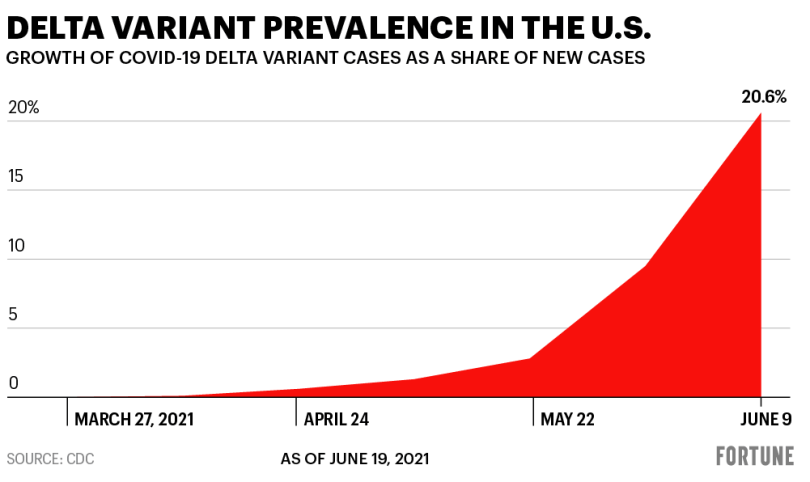
With ‘The Accidental Plague Diaries’ coming out in book form shortly, you’d think I could start writing about something other than Covid but the combinations of mother nature’s rules and human folly keep giving me more grist for the mill (and, the way things are going, a high likelihood of a volume 2 in another year). Here’s some statistics I’ve come across in the last few days. First, the number of global deaths has topped 4 million. The United States continues to tick up, not at the rate seen six months ago but still ever upwards: we’re at about 606,500. Second ,the cluster in Southern Missouri I alluded to earlier this week continues to explode with the local hospitals swamped and EMS runs happening frequently per local news sources. The deaths will spike in two to three more weeks per the usual patterns. Third, the percentage of Delta variant cases nationwide was running about 20% in mid June. It increased to 30% at the end of that month and now, just over a week later, it’s over 50%. Given it’s much more rapid transmissibility, it’ll be over 90% by the end of the month. Fourth, here in Jefferson county, the number of cases of Covid diagnosed doubled this week over last week. The number of people hospitalized at UAB with Covid has gone up five times from 5 to 25 in the past week. What do all of these cases have in common? Lack of vaccination. Somewhere between 94 and 99% of infections (depending on the study) now happen in the unvaccinated. If you’ve not been vaccinated yet, it’s not too late but remember it’s roughly six weeks from your first shot until you achieve full immunityand that may be a helluva gauntlet to have to run given what’s going on at the moment.

Am I worried about the Delta Variant? Not especially. I’ve been fully vaccinated for some time, tend to hang out with people who work in health care or who have careers that depend on Covid risks being reduced and who therefore lined up for a jab as soon as they were able. I have a small chance of contracting a breakthrough infection and a very, very small chance of that infection making me seriously ill. It passes my test of being less risky than getting in a car routinely (1/8400 chance of death this year) so I’m not going to dwell on it. I am slightly concerned about the Delta variant mutating again in an unvaccinated population to become even more virulent but I’m not going to borrow trouble. There is good news as well. A study out of Yale that was published today computed that vaccines have so far saved about 300,000 US lives and promise to continue saving many more.

As bad as the pandemic has been, on individuals, on the health system, on the economy, on our collective psyches, it could have been a lot worse. The original SARS virus (Covid is officially classified as SARS-2) had a mortality rate of 14%. If Covid were similar, we’d have nearly five million US citizens dead over the last fifteen months (about one person in 75). Maybe the next pandemic will bring us that. There will be another one. Hopefully, not for some years, but they roll around as regular as the seasons and all we can do is try to prepare in advance and hope our leaders don’t take a wrecking ball to the public health system just prior to the occurrence.

I’m having new headshots taken this weekend. The last professional ones I had done are now more than fifteen years old and I must admit I no longer look like I did in my early 40s. And I just got my haircut short for summer which I hope will make me look distinguished rather than dorky. Hopefully they’ll turn out well and I’ll use it on the back book cover and for upcoming auditions. I’m itching to get back on stage in something. There usually isn’t a lot of theater around here in the late summer/fall because football so I’m holding out hope of booking something interesting for the holidays or early in the new year. There are a few projects coming up I’m interested in. We’ll see what happens. I’m trying to think of a good story. This one’s a short one and goes back to my senior year of high school – I’ll leave the names out of it but my high school friends will know who it’s about. It comes to mind because theater…

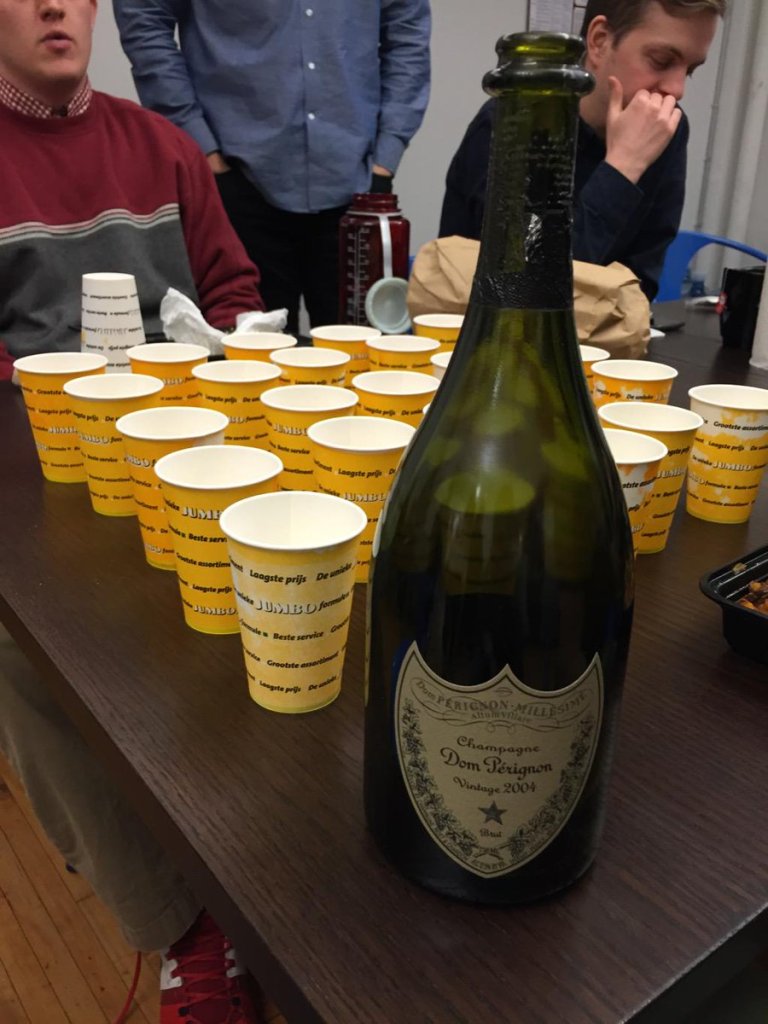
When I was in high school, our campus went through a significant expansion plan building several new buildings at once. One of these was an arts center to create new studio space for visual art and a new theater space. Prior to this, the theater program had used the chapel – which had, for instance, no way to access the stage left wings without climbing a ladder through a window. Teenage me wandered into the new building for the first time, walked on to the stage and looked up at the flies and was smitten. I wanted to know how to use these tools to create art so I immediately signed up for technical theater and found that my calling was in stage management. Some months later, I was stage managing a production of that old chestnut, You Can’t Take It With You. It was mid December. We were rehearsing up through the break, then coming back to tech and perform in January. The cast and crew were mainly over achievers of one kind or another and the guy playing Mr. DePinna had found out that day that he had been accepted into Harvard on their early decision program. In celebration, his parents had given him a bottle of champagne which he brought to rehearsal and everyone had a swallow in a dixie cup to toast his good fortune. The next day the whole cast and crew were called into the principal’s office. We were all to be suspended for drinking on campus. Pandemonium. We all went home for Christmas vacation two days early and that evening twenty sets of irate parents descended. They were reassured that the school realized the offense was somewhat ridiculous and that no names were being taken, no records were being kept, but they felt that they had to enforce the rule to keep something more problematic from occurring in the future. My parents laughed about the whole thing as they knew I was far from a troublemaker, besides which they’d allowed us kids small amounts of alcohol at family celebrations for years and knew that a sip of champagne wasn’t anything to me. It was the only ‘serious’ trouble I ever got into during my school years.

July 5, 2021

Usually Monday is my double clinic day at UAB, a slog through 14 or 15 patients with an emphasis on dementia, family dynamics, diabetes in poor control, the aftermath of strokes and heart attacks, and a few unsolvable social programs thrown in for good measure. Thanks to the timing of the calendar, this Monday has been spent sleeping in, playing with cats, and carefully going through the first proof of the book page by page to catch any errant typos or misprints that still remain. I’m about 40% through and have until next weekend to finish the job. Those corrections will go in next week, and then I can order and distribute advance copies while making plans for an official release date.

It’s felt very strange and a little humbling to hold an actual physical copy of ‘The Accidental Plague Diaries’ in my hands. I’ve always felt capable of writing a book but have never had the perseverance to take anything of this length to completion in the past. As I reread it, yet again, trying to catch every last misplaced comma and minor spelling error, I’m torn between thoughts of ‘this is pretty good’ and ‘this is three hundred and some pages of navel gazing’. I guess I’ll just have to throw it out there into the world and see what the world ends up making of it. I should have details on a signing event or two, Amazon links, and where it might be available locally for those, like me, who still like to patronize bookstores in the next week or two. Watch this space. Currently there are only two printed copies, the one I’m working from and the one in the hands of Steve Peha, my brilliant editor/publisher who is doing his own last minute scrutiny so no, you may not borrow it.

The theme of the long weekend was social gatherings, both in person and on line. A game night at a friends house. A zoom game of Apples to Apples with a bunch of old friends from college now scattered around the country, but with forty years of shared history. A 4th of July party that happens every year at an old friends house which is one of the usual markers on the social calendar of Bohemian Birmingham. She lives right below Vulcan on Red Mountain and has a terrific view of the fireworks display. As I stood there watching the explosions, my mind drifted back over various other fireworks I have attended over the years, some with family, some by myself, some with either Steve or Tommy at my side. Steve was a Southern California boy who was the right generation to have come of age with Disneyland (he was seven when it opened and his parents took him opening week). We went to Disneyland together a lot during our California years and he always insisted that we stay until the end of the day for the fireworks and took great joy in them, clapping and cheering. I’m sure they carried them back to his childhood for a moment or two. Tommy could take or leave fireworks, but would stop what he was doing if they were around to enjoy them. I remember standing on the back of a cruise ship with him, as it pulled out of Nassau on the last night of the cruise that was our first vacation together, enjoying a fireworks display over the harbor arranged by Atlantis Events and being able to hold each other at the rail as were in a safe gay space and could do that without fear of attack. The most memorable fireworks I viewed alone were at the Tivoli Gardens in Copenhagen. The rules seem to be a bit different in Denmark and they were shot off so low to the ground, that we could all feel the hot sparks drifting down on our scalps and cheeks. I found it a little unnerving.

This weekend also marked the 40th anniversary of the first mention of what would come to be called the HIV epidemic in the press. It was a small article in the New York Times that appeared July 3, 1981 on page 20, taken from a mention in the weekly Morbidity and Mortality Weekly Report published by the CDC about a rare cancer (Kaposi’s sarcoma) having been diagnosed in a cluster of gay men. I didn’t read it. I was 19 at the time and not necessarily predisposed to reading the New York Times in a day before electronic accessibility, besides which I would have had a hard time accessing a copy. I spent the summer of 1981 in the Bering Sea working on the University of Washington’s oceanographic research vessel, the Thomas G. Thompson, running water sampling machinery on the graveyard shift and they weren’t delivering a whole lot of newspapers to our few land stops – Dutch Harbor in the Aleutians, the Pribilof Islands, Nunivak Island, Seward on the Kenai peninsula. I was busy punching buttons in the middle of the night, reading voraciously (I finished War and Peace in five days), and visiting the occasional elephant seal rookery while in the lower 48, natural and political forces were coming together that would end up shaping my life in ways I could not yet imagine.

I started to hear about the mysterious new disease when I got back to Stanford that fall (we were just down the peninsula from San Francisco) but I was still closeted and developing my dichotomous life between a double science major during the day, and a theater whiz in the evenings and weekends which didn’t leave me a lot of time to get into too much trouble. And it’s the pattern that likely saved my life when so many others of my generation were taken. As time went on and the negligence of the government condemned many in the gay community to death (shades of our current pandemic), I braced myself for a short life span and became determined to pack as much into it as I could, which is likely why I continue to overwork and overcommit. There’s a piece of me that has been conditioned since my late teens to believe that there will never be enough time to complete your goals.

The biggest thing it ended up doing to me was killing off a majority of the out professional gay men a decade or so older than I. This meant that as I moved through my education and into my career, I had almost no gay role models. No mentors. No one who could help me navigate through the inherent homophobia of academic medicine of the late 20th century. No one to help me open doors or smash glass ceilings. Consequently, I made more than a few mistakes over the years and my career took some unusual twists and turns. It all came out ok, I think, but I sometimes wonder what I might have accomplished if HIV hadn’t been a part of my times. But it did give me enough experience with how American society refuses to provide succor to marginalized populations in times of public health crisis to give me some decent tools for handling my job over the years and to see many of the socio-political themes behind the current pandemic more clearly and, if I couldn’t do that, there would be none of these essays and no book.

July 1, 2021

It’s another month and we’re half way through 2021. At times, the days fly by, and at other times each one seems to drip drip drip by at an interminable pace. I think pandemic thinking and experiences have screwed up my brain’s inner understanding of time. It no longer seems to be uniform with each hour identical, but more elastic stretching or compressing like Silly Putty depending on events or my inner moods. Society, at least around here, seems hell bent on restoring itself as if the pandemic were over and there’s a need to make up for lost time. The trouble is that it’s not. The number of cases and the death rate continue to inch up. We’re at something over 605,000 dead now, not that much further until it surpasses the Civil War and becomes the second largest mass casualty event in American history – the 1918-19 flu epidemic is likely to hold on to the number one spot, at least for a while.

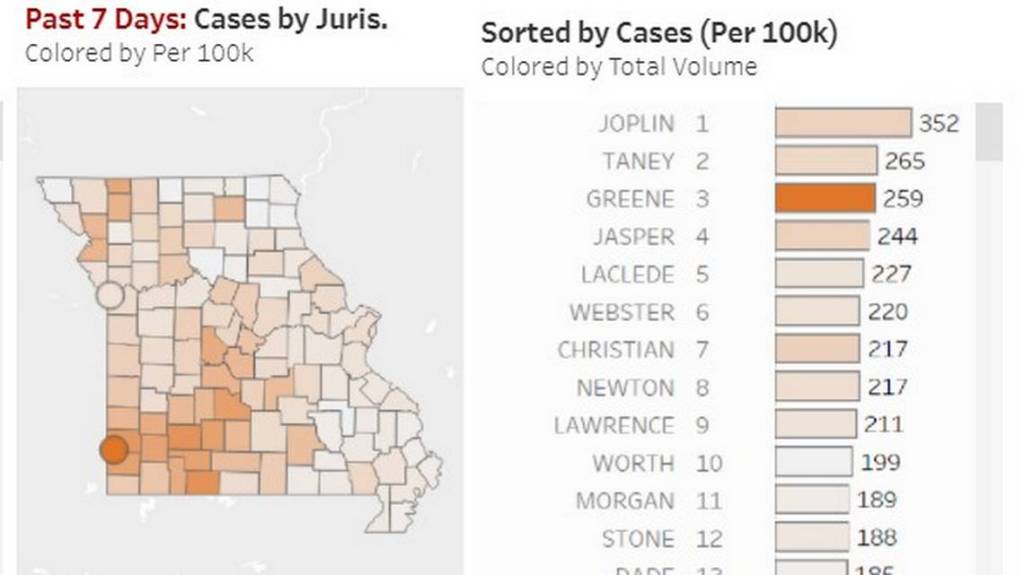
The big problem area at the moment is Southwest Missouri, home of the Ozarks and Branson. I would venture to guess that the latter is why this region has become the first major cluster of the Delta variant. The type of person who vacations in Branson (and the usual tourist traps are booming as people come out of a year or so of restricted life and movement) is less likely to be vaccinated. They have come from all over, crowded into various theaters and attractions, and brought their viral hitchhikers with them passing them on to employees who then carry them into the surrounding communities. The local hospitals are inundated again and transferring patients to St Louis and Little Rock. I have a feeling that this is a canary in the coal mine moment and, as visitors to the area return to their homes, Delta will soon be popping up in a community near you where, given it’s increased transmissibility over the original strains and its predilection for young and unvaccinated people, numbers will start rising in hospital systems elsewhere. Given the usual timelines between seeding of virus, a significant population developing virus, and when that population starts getting seriously ill, I’m thinking we’ll start seeing a spike in casualties at the end of the month.

Of course, the vaccine will help, but the lack of enthusiasm for vaccination by a majority of the unvaccinated crowd means that even if it becomes clear that numbers are going up, the mass vaccination sites have been dismantled due to waning interest and there is roughly a month delay between first jab and full immunity so they would have to begin the process now to be protected by August when we’re likely to start seeing some more concerning numbers. I don’t have a lot of empathy for willful antivaxxers who are becoming ill at this point. Who I do have empathy for are the burnt out health care workers who are being called on to keep on keeping on in a preventable situation. This has very real consequences. People are quitting clinical health care positions in droves and there aren’t a lot of folk standing in line to take their place. Almost everyone I know of my generation and older is taking a fresh look at their retirement plans and the stories of docs having to not only do their work, but pitch in to change the sheets, administer the medications, and mop the floors due to a shortage of other clinical workers are legion. Most physicians I know will buckle down and do anything necessary in a crisis but it’s not a sustainable long term model for a functional health system.

I wish I had a better read at the moment on the business of health care. I knew I should have gotten that MBA when I seriously looked into it a couple of decades ago. From what I can tell, there’s a major acquisition spree going on in the C suites with small and medium size players being swallowed up for larger interstate players and this seems to be true in most sectors of the business. The AMA released a report this week that for the first time, a majority of physicians worked for a hospital or health system entity rather than for themselves in private practice. I don’t think that’s necessarily a bad thing. I have always worked for a large academic health system as faculty – it’s a model I grew up with, allows me a certain amount of freedom to feed my intellect and soul as well as make money, and I like knowing how much money is coming in each paycheck. I haven’t gotten rich doing it but I keep the bills paid and can afford to retire when I think the time is right. The problem is that most of the big players are not academic health systems, which are not for profit public goods but rather private companies whose only goal, ultimately is profit.

As the profit motive has invaded sector after sector of our economy and lives, there’s been a certain level of degradation of our way of living. The wheels of capitalism grind on, lifting a few up and right over the backs of most of the rest. That’s because of when we are asked to choose profit or people, we currently choose profit and turn a blind eye to the people that creation of profit may harm. In medicine, the profit motive at upper levels leads to additional layers of byzantine bureaucracy as each tiny kingdom attempts to minimize its cost centers and buff up its balance sheet. It leads to clinicians being asked to do more and more with less support. (Support salaries are expensive). It leads to an obsession with data and numbers over the actual patient. I keep having to teach medical residents that lab numbers are not interchangeable with the patient and to go talk to him or her and get a decent history about how they’re feeling and symptoms before relying on what spits out of a lab computer.

The sucking of money out of systems for profit is leading to other problems as well. Compare our decayed public infrastructure with that in other wealthy countries and a political system that is having extreme difficulties coming up with solutions as it might require additional public spending. It’s seeping over into private spending as well. Would the Surfside condominium tower have collapsed if the squabbling residents in the HOA had been willing to fund the urgently needed repairs when they were identified several years ago? Now I know a few readers are busy calling me communist in their heads. I’m not. I’m just not a vulture capitalist that believes that everything should always be about profit all the time. The profit motive is a good one and keeps us industrious but I do think it has to be shaped and managed by good government and policy so that a handful of families control more wealth than half the country. My work on rural house calls routinely takes me into the homes and lives of those that capitalism has completely crushed through no fault of their own and I get a lot more of the downsides than most in the professional classes, who have minimal contact with others not like them, do.

I’ve been booked as a ‘celebrity’ story teller at a fund raising event in a few weeks. I’m trying to decide just which of the stories of my life I need to tell. I’m leaning towards the saga of Steve’s cremains as it’s a classic but I’m afraid it may be just a bit morbid so I should think of something a bit more uplifting. While perusing the internet this week, I found that a previous blog (written from 2005-12) is still on line and accessible. Maybe I should poke around that. I have had two other blog lives – one from 2001 started just after Steve died and kept off an on up through meeting Tommy in 2003 (which I cannot find a trace of on the internet although it may be archived somewhere I haven’t thought of looking yet) and a group blog called Eternity LTD from the late 1990s that covered the period where everything fell apart in California and Steve and I had to relocate to Alabama. (I think I know where that one may have an archive.) Do I dare read any of them? Will I even be able to read these posts in another decade without cringing? And what about the book? Am I going to look at it in a few years as a significant accomplishment or a slight embarrassment? I would like to think that practice is making my writing better with time but one never knows, does one…

June 27, 2021

I’ve been exhausted most of the weekend. There’s no reason for me to be particularly tired but I still slept ten hours Friday night, required a two hour nap Saturday afternoon, slept another eight hours last night and napped again today. It reminds me of coming home from college for vacation. I’d do little but sleep as my body unwound from the stress of the previous quarter and prepared for the stress of the upcoming quarter. I’m not sure if this is about the receding of Covid and political stressors or if my body knows on some level that there’s more to come and making me slow down and store energy for the next round. All I know is I’m not proceeding terribly quickly on my next few projects. Fortunately, they aren’t things with specific deadlines attached so if I keep losing time to naps, I’ll still be OK. If nothing else, the cats seem very taken with my predeliction for falling asleep and snuggle up to do the same.

Covidland is relatively quiet. The number of US deaths has dropped below 300 a day, despite the spread of the delta variant. Whether this is now the new normal or the calm before the storm of an exponential rise in cases in states with low rates of vaccination remains to be seen. The problem with exponential numbers is that everything seem placid and calm and then all of a sudden things are everywhere seemingly out of the blue so it’s entirely possible that there will be a relatively rapid rise in cases to be followed by increased mortality later this summer. We shall see what we shall see. In the meantime, I’m taking advantage of a more open social life as the theater folk are starting to get back together as we have all been vaccinated. There was a very nice backyard gathering last night where I saw many folk I have not seen for the last year and a half.

The book is essentially finished. After much consultation with my editor/publisher we’ll be running a couple of preliminary copies next week to go over with a fine tooth comb to make sure all the errors have been caught and that all of the art/titles are correct. Advance copies should come out the second week of July to send to people to try and garner some positive buzz and reviews and then it should go on general sale at the end of July. I’ll be working on setting up some readings/signings locally. It still seems very dreamlike, as if I’m discussing someone else’s work and I don’t know if it will seem real until I have actual physical copies in my hands. Even then, it might not seem real. I don’t know if it’s my impostor syndrome or my underlying Eyore personality that makes me feel like it’s always someone else’s story anytime I have a significant accomplishment.

As I don’t really have much to say this evening, I suppose it’s story time. This one is from many decades ago, back when Steve and I were first together. As I related in my last post, I have a bit of an odd GI tract that does weird things. One of the things that it does is react strangely to local water systems. I figured this out years and years ago when every time I would visit LA, I would have an upset stomach that would go away as soon as I returned to Seattle or Northern California. I don’t know what it is about LA but I assume it has something to do with the mineral content of the water or how it’s treated. Anyway, Steve was an LA boy who had only moved up to the Sacramento area about a year before we got together so most of his friends remained in LA. We therefore drove down a couple times a year to see some of his old friends and visit his old haunts. The run from Sacramento to LA down I-5 was about seven hours so we could even bop down for a long weekend, especially with two drivers.

One visit, early in our relationship, we decided to go to Universal Studios – neither of us had been for at least a decade and we thought it might be fun. We got up early to get to the gates before things opened so we wouldn’t have to wait in line. My upper GI tract was bothering me, as it usually did in LA, so I hadn’t had any breakfast and really wasn’t interested in eating anything. Steve was having none of it so he went over to the snack kiosk and bought me a banana and stood over me forcing me to eat it. Ten minutes later, my stomach rebelled and the banana was going to reappear. We were in the middle of the plaza in front of the gates with no convenient rest room so I did the only thing I could do and leaned over the rail at the edge of the plaza. There was a drop of some forty feet down to a flower bed which the regurgitated banana sailed down, to the consternation of the tourists marching up the drive. Steve was mortified. I felt much better and we ended up having a great time on the tour. Steve learned his lesson. Ever after, if I told him I wasn’t hungry or didn’t want to eat something, he took me at my word. And to this day, I do not eat bananas other than the occasional slice in a fruit salad. And don’t get me started on banana pudding which is constantly offered but always politely refused.

June 23, 2021

Today is apparently International Widow(er)s Day. The things you learn from social media. It hasn’t quite become a Hallmark holiday. Even Hallmark would likely have difficulty selling greeting cards emblazoned with some variation of Happy Widowhood! on them. It’s not something one really feels like celebrating. It’s just an uncomfortable fact of life that when you have a partnership, if it ends through natural rather than accidental causes, as most do, one is going to survive the other. It’s a state I can’t really recommend. The hardest part about it is no longer having the one other person who knows all your secrets and stories and shared memories no longer there. You can build a new life and new patterns but the keeper of the flame of the old one is gone and the light is out in the temple and later you start to wonder what was real and what was nostalgia as that partnership recedes in the mists of time with no one to help you with a reality check. Steve will have been gone twenty years six weeks from now. So much of our time together is now almost dreamlike as we spent nearly all of it in another state from where we now live and I don’t have a lot of contact with people who knew him on a regular basis. Tommy, having been gone only three years, is much more real and there is a lot of life and people around who knew and loved us as a unit but I know even that will eventually change.

I’m thinking about the hundreds of thousands of new widows and widowers created over the last fifteen months by the pandemic. At least mine happened during relatively normal times when I could be surrounded by people, have proper wake/memorials, take the time I needed to travel and do the things I know that help heal myself. Too many people this year lost a partner to a plague they knew was allowed to spread through governmental inaction, could not be present for the death, could not hold a proper memorial, and then had to retire immediately to the place of their memories as there was no where else for them to go. Just one more piece in the giant pile of mental health issues that COVID-19 is leaving in its wake. As the pandemic wanes and patterns return, those of us in health care are seeing sharp upticks in behavioral issues, depression, anxiety, maladaptive coping mechanisms and all the other frustrating and agonizing parts of the human condition. It’s going to be a long few years and it’s going to take a lot more than prescriptions for Zoloft and Ativan.

We’re at about 603,000 dead as of today. The bodies are no longer piling up by the thousands, only by the tens and twenties, but its still too many as at this point, because with successful vaccines, COVID-19 is essentially a preventable disease. Almost nobody has to die going forward but with about 35% of the population unvaccinated nationwide (closer to 60% in Alabama), the casualties will continue to mount. There are now reports of the Delta variant in numerous places and hot spots are developing in various communities with low vaccination rates. Rural Missouri appears to be spiking currently. With its increased transmissibility, increased virulence, and rapid spread among young and healthy people, there are going to be a lot more young widows and widowers in the coming weeks. Someone is going to have to explain to me why ‘freedom’ is more important than ‘life’ in the minds of those who are of a more conservative bent than I am. I just don’t understand.

I have the long weekend off and I thought perhaps a trip to the beach might be nice. Then I checked the lodging prices. When Motel 6 is over $400 a night, I stay home. I’m assuming that the owners of lodging establishments are attempting to cash in on everyone’s need for busting out of their cocoons of the last year and a half but I’m not sure predatory capitalism is the solution for society’s current ailments. I foresee a lot of people running up some significant debt as they splurge and then having to try and service that debt in an uncertain time. The 1918-19 pandemic helped fire off the Roaring 20s a century ago and we all know how that ultimately turned out for everyone in 1929.

I am not practicing predatory capitalism myself. The book, when it becomes available next month, will be priced at $14.95. I’m not trying to make money off it. I’m just trying to get it out there. If you want to be on my list of people to send teasers and other information to and you don’t think I have your email address, send it to me by DM. I will have a signing event or two in Birmingham for those who really want my terrible handwriting scrawled across the title page.

I haven’t told a story for a bit. Here’s one from a few years ago. Those of you who know me well know I have a bit of a weird GI system (thanks for those genes, Dad) which can act up from time to time. Generally it’s under reasonable control with medication but if it decides to go crazy, not much I can do about it. One of the things it can do is go into acutely painful intestinal spasm. I’ve gotten used to it – given that it’s been happening since I was a teenager – but my autonomic nervous system never has. When it really gets going, is sends my parasympathetic nerves into overdrive which do various things, especially drop my blood pressure causing me to roll up my eyes and faint. During medical school, I once did this in a room with forty medical students and eight attendings. There was a great deal of clamor and I got a free tour of the emergency department on a stretcher. The last time I had a severe attack, I was out shopping for supplies for one of Tommy and my famous cast parties. I had made the rounds – Winn Dixie, Sam’s Club, and, as a last stop, the liquor store. As I headed up to the cashier with my bottles of Cointreau and Amaretto, it hit and, while waiting to pay my bill, down I went in an ashen heap much to the consternation of the cashier and the other patrons. I came too enough to finish my transaction and stumble out the door. I just needed to get to the safety of my car. And down I went again in the rain in the middle of the parking lot. (Fortunately the bottles did not break). This time, I did not come to quickly and the ABC store clerk called the police about a drunk and disorderly. I was woken up by a nice policeman, came to enough to explain that I was a doctor, I was not drunk, I was not stoned, and I knew exactly what was happening. He took me at my word but flatly stated that he wasn’t going to let me drive anywhere. I returned home in the back of the squad car. I got home, took a nap, and then had to explain to Tommy, once he got home, just why we had to go back to the liquor store to pick up my car. He was highly amused. Every time we went to the liquor store together after that, he would inquire innocently if he should catch me as we approached the register. It’s missing the little jokes like that which can make widowhood difficult.

June 19, 2021

Happy Juneteenth. (A holiday long deserved and which better not be taken over by white culture with mattress sales or beer busts). Mine is starting at 4:30 AM as it’s my call weekend and a resident at the nursing home that I cover as part of my call duties decided this was the right time to act up in such a way that the nurses needed to wake me up. Call is a necessary part of the job and my duties aren’t especially onerous (about three weeknights a month and a weekend every other) but I learned long ago that my brain/sleep physiology is such that if I’m woken up in the middle of the night, I rarely am able to get myself back to sleep again and I’ll be faced with a number of hours of wakeful tiredness before I have to get up and face whatever the next day has to bring.

This is my first call night without a beeper. UAB has finally fully joined the digital/cell phone age and replaced beepers with an app on our smartphones that serves a similar function. Having had a beeper on my belt for professional purposes for something over thirty years, it feels a bit odd to be without one. I was a bit worried that the phone wouldn’t wake me up (I’m well conditioned to that obnoxious beep but can sleep through nearly anything else – internship in the pre-limitations on residency work hours will do that to you) but the ring tone they’ve chosen is piercing enough to work just fine. So here I am, in the pre-dawn hours, listening to the birds outside my bedroom window greeting the imminent arrival of the miracle of another day and batting away Anastasia who is trying to help me type.

The persistence of the beeper is only part of the health care system’s continued reliance on 80s/90s technology in a world where other industries have fully embraced the digital era. For instance, we are the only industry that still runs on the fax machine as an essential mode of communication. (I still have a landline not because I use it or because anyone ever actually calls me on it but because it’s necessary at times for me to fax documents larger than the fax app on my smartphone can handle). Some of this is due to the medico-legal system. Most of the laws that govern the handling of medical information were written forty or fifty years ago and haven’t been updated to take modern technology into account. Things change piecemeal bit by bit. The electronic transfer of prescriptions for controlled substances, which used to only be valid via hardcopy with an original signature, became a reality a couple of years ago making everyone’s lives easier. The home care and hospice industries, however, still run on fax and I get about 150 pages a week, each of which needs to be signed and dated and sorted into the appropriate piles to fax back. Everything in the medical system requires the signature of a licensed physician somewhere on some piece of paper in order for things to move forward. (Electronic signatures now work within certain parts of electronic health records). If we were all to break our wrists on the same weekend, the entire US healthcare system would grind to a halt.

Some of the lack of progress comes from the inherent conservatism of the profession and its practitioners. You don’t really learn to be a physician in medical school. You learn a lot of random facts and you learn how to train your mind to sort through those facts and parse them properly to understand what’s going on. All the things you really need to know are actually learned on the job by observing your colleagues and peers and modeling what they do. This makes the profession very dependent on ‘we do it that way because we’ve always done it that way’ thinking and highly resistant to change that does not naturally enter the work flow through physician practice. If you ever want to see physicians, especially clinicians, get their collective backs up, try imposing mandates on what they do from outside – especially when they come from areas where they are designed by individuals who are not themselves practicing clinicians.

Then there’s the silos and fractures in the system regarding information. Every other country with an advanced health system has a single way of collecting data and recording patient information no matter where in the system you may go. This allows charts to be shared electronically between any physician or nurse, any hospital, or any ancillary service and everyone is working off a single data stream. (We have that in this country in just one place – the VA system. It’s possible to pull up the same records in any VA hospital or clinic from Fairbanks to Miami). Everywhere else in the US works off jealously guarded proprietary information systems which do not interface with each other. I can see everything that happens in the UAB system in a patient’s electronic chart but if they see a provider or obtain a service outside of UAB, even if it’s across the street, forget it. (Unless somebody sends a fax.) Patients and their families really don’t understand this issue and think that records miraculously move from place to place. A huge amount of my time is spent trying to reconstruct what happened in another emergency room or repeating a test I really didn’t have to repeat because I had no way of accessing the results. Even in the same institution, the data systems often don’t interface properly so that the billing system and the clinical system, for instance, don’t talk to each other which requires everything to be entered twice. This is why you’re constantly filling out forms at the doctor asking for the same information over and over and over again.

We could have a single data system for health care in this country. It’s been proposed countless times. It tends to be shot down for the same reasons that the rest of our infrastructure is falling apart. The only entity that’s big enough to marshal the resources to make it work and bring it to every health care provider would be the federal government meaning a large outlay of tax dollars and some sort of federal agency to run it. For forty years now, the more conservative of our political parties has run on a platform that government is the problem, not the solution and wanted all such issues handled through private enterprise. The result is many small private solutions, developed piecemeal to the detriment of the system and the health of the great American public. It’s not a problem I have a solution to as long as that philosophy remains entrenched.

Back to the beeper. They have changed some over the years. When I started in medicine, they were analog short wave radio receivers. In the hospital, you called a number and spoke into the phone and your voice would emerge from the belt line of one of your colleagues. Given the age of medical residents and the punchiness of constant sleep deprivation, this usually led to a lot of practical jokes which we would find hilarious. One female resident of my acquaintance announced that her beeper must be like a penis. It hung at the front of her pants and would call attention to itself at inopportune moments in an obnoxious manner. No one disagreed. By the early 90s, beepers went fully digital and voices were replaced with short bursts of text. The arrival of the world wide web meant that you could access them from any digital device on your own. Before that, outside of the hospital, you had to call the hospital operator and ask them to access the system for you. The hospital operators knew everything about everyone and you never wanted to get on their bad side for fear they might spill the tea. The ones at UC Davis during my residency years were all very sweet and were good at keeping our private lives private – most of the time…

Digital communication has been a wild ride over my career – from landlines and pay phones to car phones to cell phones to smart phones. You have to wonder what’s next. Implantable devices allowing us to communicate with anyone anywhere without having to actually have an object external to our bodies? Wave your arm over the grocery check out to pay for your items? Download any piece of information directly into your brain? Who knows.

June 15, 2021

I’m returning to the field with my VA house call program. Today was spent in Huntsville, last Thursday in Guntersville, and shortly off to Jasper. If all goes according to plan, I will be adding Childersburg to the list. At that point, if we can get functional teams in Muscle Shoals and Anniston, we’ll be able to offer house calls to every veteran in the Birmingham VA catchment area. If I retire with that having been accomplished, then I’ll think I’ve really managed to do something lasting with my job. Hopefully the stars will align. Who am I kidding? It’s not up to the stars, it’s up to the bean counters in a back office making decisions based on allocated funding and cost benefit analyses. Medicine, like everything else in US society, revolves entirely around money. The first thing I teach medical students when they ask why things are a certain way is for them to figure out who is being paid and how much. That usually answers their question for them.

I don’t have much to report from Covid land. We are over the 600,000 death mark. Only 10,000 more to go to top the Civil War in terms of casualties. We’ll likely hit that by fall as we’re still recording dozens, if not hundreds of daily deaths. The rates around here, which had been falling precipitously through the spring thanks to vaccination, have stalled and are now inching back up due to the number of unvaccinated people in our local communities. While a lot of states are celebrating the 70% level, Alabama remains stalled around 40%. The number of vaccines given the last couple of weeks has been going up, possibly due to the end of school and more free time for people to go get one, but we still need a lot more. We’re now about two weeks out from the long Memorial Day weekend so the hospitalization rate, if its been affected by behavior changes then, should reflect that this next week or so and the death rate will reflect it the first couple of weeks of July.

I’ve run into a number of people recently who have developed Covid these last few weeks despite being fully vaccinated. I’m wondering if that’s the spread of the more contagious and virulent Delta variant. The good news is that studies and anecdotal evidence have shown that if you catch the disease after full vaccination, you may be miserable for a while but you won’t be sick enough to require hospitalization and the chance of death is negligible. The bad news is that as people jettison their masks and learned behaviors for ‘normal’ and more than half remain unvaccinated, your chance of running into the disease remains rather high and, as the Delta variant takes hold and aggressively crowds out other strains, you may get sick this summer. I don’t take foolish chances, but I’m fully cognizant that I am not immune to the vagaries of fate so I’m expecting to feel rotten sometime between now and Labor Day.

The big thing at work, as far as my patients go, has been the approval of aducanamab (trade name Aduhelm), the first new medication for Alzheimer’s disease in decades. There has been some breathless coverage in the lay press aimed at seniors which has got a lot of people worked up about a potential miracle drug for themselves or loved ones. Alzheimer’s disease is one of the scariest diseases out there for most elders. Everyone recognizes it as the disease that destroys the self and, as the self is the most basic concept we have in Western thought, it is absolutely devastating for all involved. I’m rehearsing my gentle speeches for my patients in my head so when they ask, I can let them down gently and explain that the drug is not what they think it is. Most drugs rarely are.

When I entered geriatrics, back in the very early 1990s (30 years ago next month), there were no real medical treatments for Alzheimer’s or other dementias. We tried to control symptoms with various psychoactive drugs, often not very well, but we experimented and learned and stopped doing some of the more destructive things we were doing at the time because we didn’t know any better. Actually, there was one drug on the market for dementia – hydergine. I don’t think they even make it any more as it didn’t work. Everyone knew that the major mechanism in memory involved neurons using acetylcholine as a neurotransmitter and that if you could increase the amount of that chemical in the brain, things should get better. The problem is taking oral acetylcholine is useless – gastric acid breaks it down into acetate and choline which get nowhere near the brain.

People were experimenting with direct injections of acetylcholine into brain ventricles and all sorts of other iffy things without much success until someone hit on the idea of just using the acetylcholine that was already in the brain. Rather than adding more, create a medicine that would prevent it from being broken down in the brain’s constant recycling of materials. Drugs were developed that blocked the enzyme responsible for this breakdown. The first one was tacrine (Cognex) which came out towards the end of my fellowship. It was imperfect. It had to be taken four times a day and it was very toxic to the liver in certain individuals requiring regular blood tests. (Both of these things can be problematic in the demented.) A few years later, better drugs came along with the same mechanism of action donepezil (Aricept), rivastigmine (Exelon) and galantamine (Razadyne). They were not toxic in the same way and could be dosed once or twice a day. None of these drugs is great. They may show down the disease process some for a time, generally not more than a year or two, but they cannot prevent the disease’s slow inexorable march across the brain. But they are something and we use them routinely.

About twenty years ago, one more drug appeared, memantine (Namenda) – it has a very different mechanism of action. It prevents neural cell death by blocking the process of apoptosis – programmed cell destruction. It is only proven to have positive clinical effects in moderate dementia (the point at which someone cannot go into the bathroom in the morning and get ready for the day without help) but again, it’s something. Aducanamab, unlike these other medications, is not an oral drug but rather a monoclonal antibody which enters the brain and prevents amyloid protein (which slimes over and prevents proper function of neurons) from attaching itself and accumulating with time the way it usually does in Alzheimer’s. The clinical trials showed no clinical benefit in terms of improving memory in test subjects, they instead showed a decline in protein accumulation over time. Whether this change manifests itself as any sort of benefit in a living person remains unclear. This is why a lot of experts in the area were against the approval of the drug and a number of people affiliated with the FDA resigned when it was approved as they were so against a drug of such unclear benefit being launched on the world. Monoclonal antibodies must be given as infusions, not as pills. They would be destroyed by the acid environment of the stomach. There are some significant brain bleeding complications in certain individuals requiring routine MRI scans of the brain to detect early problems. Trying to explain infusions and MRIs to the demented can be problematic and the procedures themselves are scary. Then there’s the cost. Biogen has decided $56,000 a year is appropriate. It is unclear which insurances are likely to cover it due to its weak evidence. The FDA has demanded post approval data showing clinical benefit or they will rescind their approval. We don’t know if it will be possible to ascertain this.

Needless to say, it’s not high on my list of things to prescribe to patients. I’ve been laying this all out to patients and families so they have information on which to base choices. We’ll see who opts for the drug and I’ll report back on my clinical experience when I have some.

June 12, 2021

Tomorrow, the US will hit 600,000 Covid deaths since the beginning of the pandemic. Actually, we probably hit it today, or maybe even yesterday. As the vaccines have rolled out and the educated moneyed classes have been protected, there’s less and less interest in following the disease in real time and state health departments are no longer uploading daily totals, but rather biweekly or even weekly totals. That may make the functionaries who gather and tabulate data have an easier life but it means we lose the ability to pinpoint what’s going on with any accuracy. These decisions are being made just as the Delta variant, which spreads much more quickly that the original strain, is starting to make significant inroads and, with more lax data reporting, its possible that weeks may go by before we start to notice a disturbing trend – and with exponential numbers, that may be a significant issue.

Today is either the 456th or the 458th day of the pandemic. It’s the former if we use the date the Trump administration called a national emergency on March 13, 2020 – two days after the WHO declared the SARS-2 coronavirus a global pandemic on March 11. Thanks to human ingenuity, and some political changes at the top, things are starting to return to normal, at least among the privileged classes with access to vaccines, health care, information, communication, transportation and all the rest of it. Those of us who live in this world usually consider it to be the norm as everyone they know and interact with on any sort of equal footing belongs to it. I spend a good part of my life, thanks to decades of house calls and case management programs in rural and impoverished areas, in and out of the homes of people who are not of this world. For various reasons, the pandemic isn’t over there and isn’t likely to be over there for quite some time. One of the great failings of our health system currently is that it’s designed by the upper classes for the upper classes and there are really no mechanisms by which less privileged communities can get it on the ground floor to tell their stories and needs so that systems can be designed to help them from the ground up rather than a shoddy attempt at retrofitting after the fact. A great case in point was the pivot to telemedicine last spring where more than one health administrator of my acquaintance assumed that all patients would have a smartphone or iPad, home WiFi and be adept at using said tools.

We hit 100,000 domestic deaths on 5/27/2020 (Day 77). 200,000 on 9/22/2020 (Day 195). 300,000 on 12/14/2020 (Day 278). 400,000 on 1/19/2021 (Day 314). 500,000 on 2/22/2021 (Day 348) and now 600,000 on 6/13/2021 (Day 458). Obviously the vaccine is working to reduce the death toll but the disease remains, although, at least anecdotally, it’s circulating mainly in unvaccinated populations where, as the substrate tends to be young and healthy, it’s not causing the same rates of illness but continues to send people who should have long and fruitful lives ahead of them to the ICU and to the morgue. As more than half of the state of Alabama remains unvaccinated, despite the pleading of all of us who work in health care, we’re going to be coping with Covid for a very long time.

Today was Central Alabama Pride. Given the pandemic conditions of the last year, planning and permitting for the usual parade in Birmingham was not possible so it was more of street fair with entertainment this year. It was very hot and sticky so I did not stay long but I did break out my festive new shirt bought for the occasion covered with rainbow dragons. I do so like to be tastefully understated in my sartorial choices. In my forty plus years as an adult gay man (most of them very out of the closet), I have been to lots of Pride celebrations. I’ve been to parades and gatherings in Seattle, Sacramento, San Francisco, Los Angeles, San Diego, Birmingham, Atlanta, New York, and Amsterdam – and those are just the ones I can recall quickly. I have rainbow Tshirts, necklaces, hats and other accoutrements stretching back to the mid 80s packed away in various boxes. Steve, who loved Pride because he came out seven years prior to Stonewall, and had way too many memories of police raids and a complete inability to be an authentic human in public, instilled the value of Pride celebrations in me during our years together. It was one day where we could walk down the street, hand in hand, without fearing reprisals. Where we could greet friends with a hug and a peck on the lips without drawing withering stares. Wherever we were in June, we made sure to attend the local celebration. My standard uniform for Pride for years was a Tshirt he bought me at San Francisco Pride, our first summer together, with a hand done silkscreen of a rainbow over the Golden Gate Bridge.

The Prides of the 80s and early 90s of my youth were very different than they are now. LGBTQIA issues were not part of the national conversation. There were no corporate sponsors. (The liquor companies and HIV pharmaceutical companies started to creep in in the 90s sometime). Everything was local community time and energy. The moneyed gay community, at best discreetly out, did not make free with their power and connections. Things were a bit ramshackle, but the HIV crisis had turbocharged the need to organize and to get things done quickly and efficiently and that spilled over into Pride and didn’t just reside in health care. The young people of today have no idea of how different it was – the presence of the sick among us, the inability of public officials to acknowledge the existence of the community (I remember Steve and I whooping when we watched the Clinton inaugural in 93 when Maya Angelou read her poem as it explicitly mentioned gay people – it was unheard of for something like that to happen on a national occasion of the type), the knowledge that if the wrong person spotted you, even as an observer on the sidewalk, that it could mean the loss of your job or your lease. Now Target hauls out the rainbow merchandise in June in the annual rotation between Easter and the Fourth of July. A whole new world indeed.

Tommy was deeply ambivalent about Pride. He was fine with the concept and would usually go with me to the event but he didn’t like the fact that the most visible parts would be the drag queens or the leather guys or the go go boys from the local strip bar. He hated that those images would dominated the media coverage and that the world would then apply those images to him. I kept trying to explain to him that we live in a visual media world and that whatever makes the best viusals is going to make the news. You don’t get ratings when you broadcast a bunch of gay and lesbian CPAs walking down the street in business suits. He would have none of it. I don’t mind any of it. It’s our party. We can act and dress how we want. It doesn’t make us less human or less worthy of respect. The straight world is perfectly welcome to join the party but it’s the one day a year it gets to be our day and our rules and if you don’t like it, you can lump it.