November 9, 2022

It’s the day after the midterms. And the result is… the country is as divided today as it was yesterday. It may be a while before we know who controls congress due to any number of close races and need for runoffs, but it looks like the gap will be narrow between red and blue, no matter which way the pendulum eventually swings. It’s not the result that the partisans on both sides were exulting about, all in their own ways, these past few weeks, but it’s what we’ve got and what we have to use to move forward.

How will this impact what comes next when it comes to the pandemic? It’s tough to say. A lot will depend on how well the current administration can maneuver with a narrowly divided legislative branch. A smart president and cabinet can use that dynamic to benefit their agenda but it needs to be done carefully and with a certain amount of finesse and I’m not sure the Biden administration possesses those skills. I might be surprised. They may be able to push through some legislation that will strengthen the health care sector, public health programs and future pandemic response. Then again, they may decide that’s all yesterdays news and go for actions that will appeal to the more current kitchen table economic issues that have bedeviled them over the last six months or so.

I was relieved that the party that seems to be most wedded to a philosophy of selfishness and greed rather than to one of cooperation and altruism did not win in a blow out. Given the current economic conditions, that should have easily been the case, but the fact that the big win failed to materialize suggests that the American voting public is more interested in governmental solutions to big problems than in destroying government’s ability to respond to big problems. The more contested states that have been on the fence between R and D seem to be moving a little closer to D in their voting patterns. Have they noted the general prosperity of the more liberal parts of the country as compared to the more conservative? Did the death of a million or so voters over the last two and a half years, more conservatives than liberals due to to vaccine denialism change the balance of power just enough? Is the public sick of obnoxious bloviators with minimal intelligence representing the country in congress and in the media? Who knows. I’ll let the political scientists sort through all of that.

In viral news, the numbers for Covid remain relatively stable. We’re still at about 300 deaths a day. 30,000 people remain hospitalized, roughly 10% of them in intensive care. It’s still not possible to completely parse out whom is hospitalized for Covid (the infection being the major reason they are ill) versus whom is hospitalized with Covid (they test positive but the real pathology putting them in the hospital is either only tangentially related or unrelated). I haven’t been able to find any recent numbers on what percentage of hospitalized are unvaccinated vs vaccinated vs vaccinated and boosted. The common sense conclusions that are emerging with the most recent data are that vaccines are very good at preventing serious disease and reduce the chance of prolonged illness or long Covid significantly. Vaccine immunity, however, isn’t forever and tends to wane somewhere around six months after the shot so booster shots remain a good idea and will likely become annual. The mRNA technology allows them to be relatively easily adjusted for new circulating strains. Natural immunity from infection also appears to wane after six or eight months so its possible to get reinfected a couple of times a year. (It was roughly eight months between my two bouts this past year and I had had a booster shot in between). It’s also becoming clear that Paxlovid, when used shortly after symptoms appear in older adults, is very good at reducing symptoms, duration of the infection, and development of long Covid. It doesn’t seem to help younger people with more boisterous native immune systems much.

Locally, the viral news isn’t about Covid. Numbers here are relatively low. The Birmingham VA, which still issues reports on numbers, is down to three inpatients and seven staff out with infections. Two months ago it was about five times this. We’re having a major influenza outbreak instead. Both influenza A and B are circulating in high levels locally and causing a lot of misery. It’s a bit weird. Generally flu season in Alabama, due to its southern clime, is January-February, not late October-early November. We’ve also been having unseasonably warm temperatures with afternoons going up to the high 70s and low 80s. At least the humidity is gone. The numbers are high enough that it’s drained the local pharmacies of their supplies of flu antivirals – it’s difficult to find a dose of Tamiflu anywhere in the metro area. At least I’m not hearing about significant upticks in hospitalizations and/or deaths yet.

Why are the numbers so high? The prevailing theory is that the last two and a half years of reduced viral transmission due to masking and social distancing, having more or less come to an end, has led to more people coming into contact with more microbes than they have for a while. As everyone has had less respiratory illness due to these same factors, immune systems may not be as revved up as they usually are and that is making people more susceptible, especially among younger school age populations who then carry it home to parent and grandparents. Hopefully, it will burn itself out shortly. In the meantime, this would be a really good year not to skip your annual flu shot.

I have finished editing the print proof copy of Volume II of these Accidental Plague Diaries. The changes are in at the publisher and I can announce a street date as soon as those last few typos are corrected. It should be by the end of next week. I think I have one more volume in me, covering the age of omicron, to come out in 2023 and then I think it’s time to lay this particular project aside. Of course we’re only one mutation away from the pandemic careening into some new form that will require additional study and understanding, but I’m hoping it doesn’t come to that.

So, if I’m going to reduce my plague writings, where and how do I direct my focus to a new writing project? Do I keep up these writings and see if they morph into something unexpected? Do I see if I can actually write some sustained fiction worth reading? Do I go back to the original book about the aging of the Baby Boom and wrestle with it? (Most of what would have gone into that has appeared in some form in The Accidental Plague Diaries over the years so it strikes me that that would just be repeating myself). Do I write a play? Maybe two? I don’t know the answers to any of these questions. I’ll leave it up to coincidence and serendipity. They’ve been my guiding stars for years.

Some things I do know. Clean hands are good for you. Masks never hurt. Covid shots and boosters are a really good idea. It’s a good time to be gentle with each other; we’ve been through a lot and we’re all hurting from our experiences, each in our own way. Perhaps the greatest thing you can do in life is tell the story.

November 5, 2022

And Volume II of these Accidental Plague Diaries is now a reality. Well, at least I finally have a proof copy in my hands and am busy plowing through it looking for egregious mistakes and typos before unleashing it on an unsuspecting world. I’ll let everyone know when there’s a formal release date. Should be in about two weeks, just in time for your holiday shopping (hint… hint…). It’s really odd reading over things that happened a year or so ago and having them feel like ancient history, especially when I realize that I’m in the midst of writing the end of Volume III. I’m pretty sure I know where the cut point for that is going to come. Will there be a Volume IV? I certainly hope not.

So where are we with the pandemic? It’s still very much with us. The numbers of ill and dead remain relatively consistent with about 40,000 new cases and something over 300 deaths reported daily nationwide. It’s the new normal that we as a society have decided is acceptable. Will these numbers go up as we head into later fall and winter? It remains to be seen. The underlying strains remain omicron but we’re transitioning from the BA 4 and 5 variants that were prevalent this summer to BQ 1 and BQ 1.1 which were unknown a month or so ago and are now responsible for about 35% of US infections. They appear to be as easily transmissible as other omicron lineages but there are also a couple of nasty surprises. Preliminary data suggests that they are quite good at evading the immune system’s natural responses so natural immunity from prior infection isn’t as good as it has been (the jury is still out on vaccine mediated immunity). BQ 1.1 also appears to evade Evushield, the drug given to the severely immunocompromised in whom vaccines are ineffective. Paxlovid still seems to be working.

Those at risk appear to be the elderly, especially those over the age of 75 or so (watch out Cher) and the seriously chronically ill. These tend to be somewhat hidden populations in our youth oriented society so morbidity and mortality in these ranks don’t always penetrate public consciousness the way that they should. Vaccines remain the best weapon we have so go get that booster you’ve been putting off. The new bivalent with specific effectiveness against omicron is going begging. Once the money congress has appropriated for it which has made the vaccines free to the public runs out at the end of the year, we’ll see even less likelihood of people going out and getting it.

The pandemic isn’t over. I’m not even certain it will be over within my lifetime, but the acute phase seems to be drawing to a close and we’re settling in to a new chronic phase where it’s just there in the background of life. I can live with that but I live with it with one eye open and a conscious desire to know what’s going on. As it becomes less and less of a headline generating, all encompassing topic, most aren’t going to take the time and trouble to really know what the issues are or what’s really going on. Especially in this day and age of infotainment and corporate ownership of media where everything is about revenues and clicks rather than about keeping the public informed. Here in Birmingham, we no longer have a daily newspaper. There is a web presence, but that eliminates dissemination of news to populations who are either too poor to own devices or who are of an age that they don’t feel the need to learn new technologies. And that latter is the group most at risk from Covid. The disappearance of print is one of the things that has pushed susceptible populations into the clutches of the 24 hour news channels with their partisan focus and their reliance on hyperbolic opinion over fact.

All of this worries me, not so much about Covid, which is reaching some sort of equilibrium, but about the natural history of the next pandemic. And there will be a next one and chances are it will be much nastier than what we have seen to date. There are now eight billion human beings on the planet (about three times the number that existed when I was born). This means humans are pushed into new habitats and into contact with new environments and their microbes. Add to that modern transportation and something highly transmissible and highly fatal is going to enter modern urbanized society eventually – and we have laid a social groundwork of distrust of public health measures, division into us and them where bad things and diseases are only a problem of the them, and a rejection of expertise for personal feeling and belief, no matter how outrageous those may be. If something with a ten or twenty percent mortality rate gets lose, we’ll be lucky if Western Civilization doesn’t come crashing down.

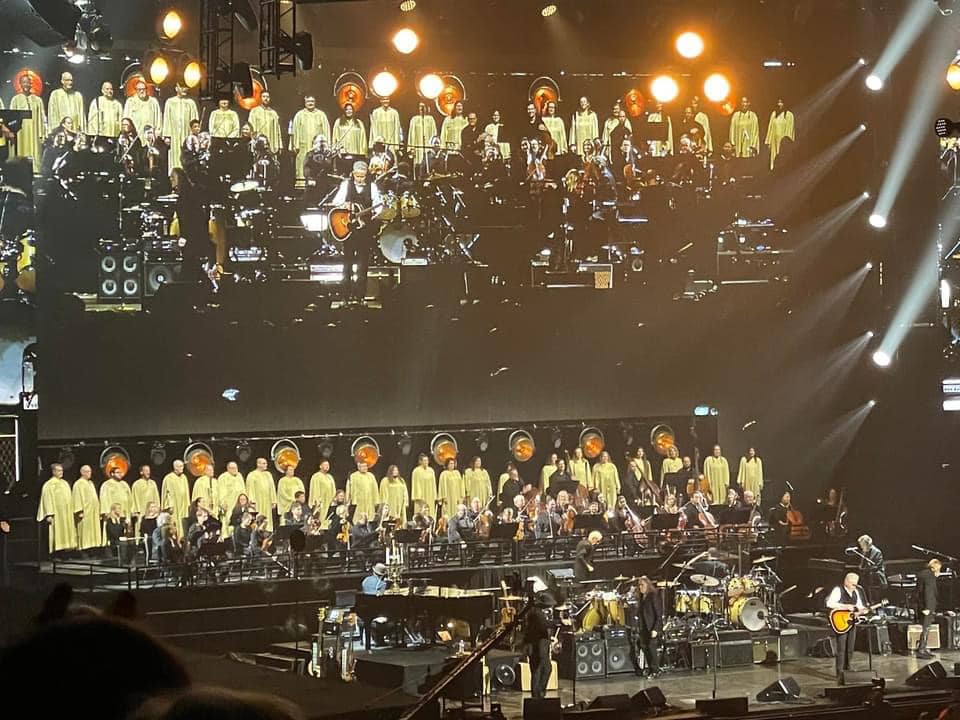
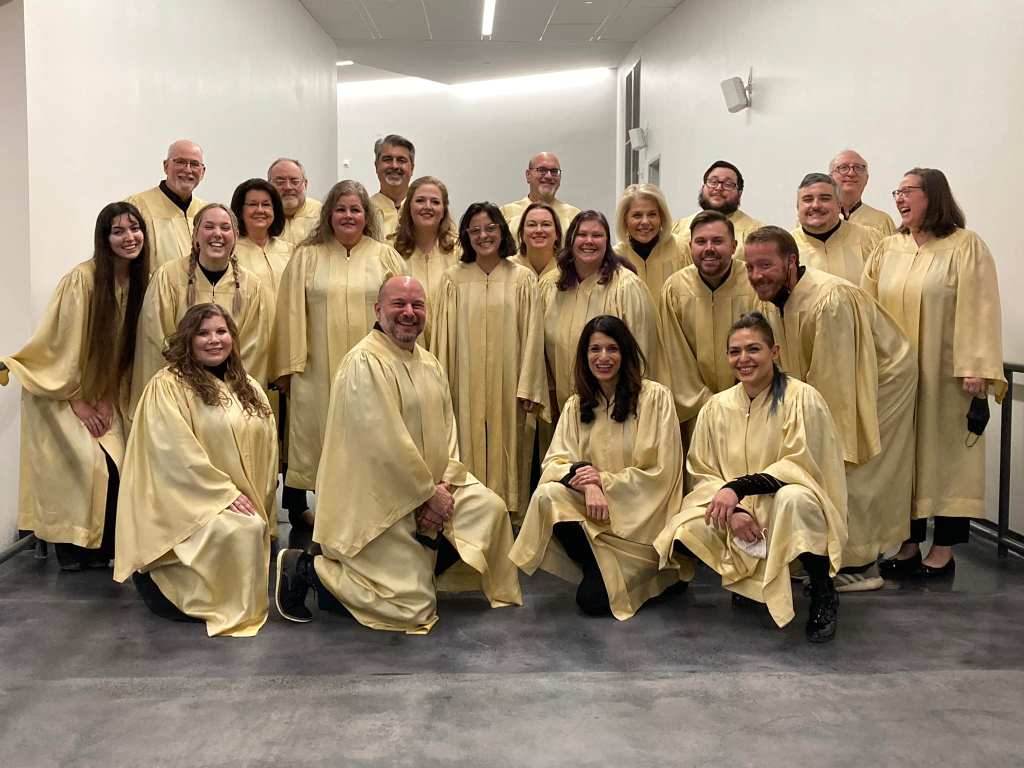
In other news, the holiday play that I was in the process of rehearsing has been put on ice until next holiday season. It’s one that requires more rehearsal than this company can give it so, as we’re all used to putting things off these days, it’s been decided that that is the best course of action. There have been unexpected good things that have come out of this decision, the first being that I’m going to direct Dearly Departed for The Belltower Players at Eastlake Methodist. Auditions are next weekend, rehearsals start January 9th and it goes up late February if you’re interested. The second is that it frees up my schedule to sing The Messiah with the Alabama Symphony Orchestra on December 17th. So that settles my music-theater life for the next few months. Assuming the pandemic doesn’t have other plans…

The midterm elections are in a few days. Figure out your Tuesday schedule and get out and vote. We only make progress when we do it together. When half to two thirds of the population checks out, minority policies and opinions prevail. Just wash your hands before and after you go to the polls. And consider masking if your polling place isn’t particularly well ventilated.

November 1, 2022

It’s All Saints Day, following hard upon Halloween, with All Souls Day coming up the stretch and Guy Fawkes Day taking the pole position. There really are a few too many notable occasions crowded into this week. Perhaps a few could be shifted to August which is notable as being the month without any significant holidays of any type. To me, of course, this week marks the anniversary of my arrival in Birmingham with Steve, Patrick the cat, and a 1994 Acura Integra stuffed with boxes and baggage as the vanguard of our household relocation; the moving van was a day or two behind. We hadn’t quite closed on the house so after we dodged the crowds of trick or treaters driving up Clairmont Avenue (never knowing that years later we would own one of those houses), we checked into the Crestwood Holiday Inn which was our base of operations while we got the furniture into the new house, got the utilities transferred over, opened the bank accounts, and all of the other annoying little details a cross country move entails.

That was two dozen years ago. I was thirty-six, licking my wounds after the ignominious end of the clinical geriatrics program at UC Davis into which I had poured seven years of my life and energy, figuring I would be here in the deep south for maybe five years before moving on somewhere more propitious. Boy was I wrong and I had absolutely no idea the twists and turns that life was about to take. I feel like I’m at a somewhat similar crossroads now. I’m transitioning into the final arc of my professional career and I can’t yet see how that’s going to turn out or what it’s going to entail. Will it be mainly clinical? Will it be more creative than that and be more about programmatic development? Will factors outside my control force me to reduce my usual days of racing from pillar to post, trying to get all of the tasks completed and the deadlines met? I haven’t a clue.

Three years ago this week, I was recovering from the usual wild ride of putting together an edition of The Politically Incorrect Cabaret. I had additional performances on the books: The Messiah and The Mozart Requiem with the Alabama Symphony Orchestra and Chorus, Cendrillon with Opera Birmingham, Herr Schultz in Cabaret and a small part in 1776 with Virginia Samford Theater and talk of a production of The Gin Game. Only a few of those came to fruition because, four months later, the world as we knew it shut down. The writings that I had been doing to entertain myself and my friends morphed into these Accidental Plague Diaries documenting, from my own unique point of view what was happening, and continues to happen to our world.

I’m starting to think it’s about time to put these writings to rest. Not because the pandemic is over, but because we believe the pandemic is over and our choices and behaviors echo that belief, no matter what science and fact tells us. I’ve spent too much of my life in geriatric medicine, calling out like Cassandra about the weaknesses in the American health system as it has to deal with a rising and inexorable tide of aging Baby Boomers, to want to remain a lone voice in the wilderness, preaching to my audience of one. I’d like to write about other things. History, art, music, social science, but not necessarily seen through the lens of Covid.

I’ve spent a lot of time poring over numbers, trying to reduce some rather complicated epidemiologic concepts to easily digestible morsels, looking at mortality, morbidity, case rates, the exponential math of spread and the like. Where are we now? Deaths remain relatively flat and stubbornly in the range of 300-400 daily. This multiplies out to somewhere between 100,000 and 150,000 annually. This is far below the 375,000 deaths in 2020 (about 10% of all deaths) and 460,000 deaths in 2021 (about 14% of all deaths). But it’s still about five times the annual death rate for influenza and high enough that this disease, absolutely unknown three years ago, looks to be the third leading cause of death 2020-2022, behind heart disease and cancer, and will be fifth or sixth going forward assuming there are no further surges (and that’s not a great assumption to make).

Modern science and the new mRNA technology allowed us to develop effective vaccines in records time. The first shots were going into arms less than a year after the virus was first detected in Wuhan. Despite widespread availability, the most recent booster has been greeted by a collective yawn by the American population. Fewer than ten percent of eligible adults have received the bivalent booster engineered to be more effective against the omicron variant. Is this how the pandemic ends? Not with a bang but with a whimper of apathy? I’m planning on getting every new booster as it becomes available. The virus has proven itself to have way too many nasty effects with unknown and unknowable long term effects waiting to surprise us later on. Most people aren’t as most people, who have had a combination of original vaccines and boosters and natural infection have enough of an immune response that when they have gotten the disease recently, they aren’t all that sick. Unfortunately, it may not remain that way as both natural and artificial immunity wanes fairly rapidly with time.

The antiscience antivaccine crowd aren’t apathetic. They’re still out there trading their conspiracy theories in the darker corners of social media, popping to the surface occasionally. A large contingent descended on the Greenwich Village annual Halloween parade this past weekend. A week from today, we go to the polls. One political party has repudiated this type of thinking, one has embraced it. Whichever one wins is likely to determine our continued pandemic responses going forward. Like every election, we’ll get the result we deserve.

I went to a reception earlier this evening at the UAB President’s mansion. I hadn’t been there in twenty four years, the only other time I was invited was to the party welcoming new faculty the fall I arrived in Alabama. This was to celebrate the creation of an endowed chair in LGBTQ health equity in the School of Public Health. I warranted an invitation as I had contributed to the necessary fund raising. As I stood nursing my drink on the terrace, I thought back two dozen years. It wasn’t that long ago but celebrating such a post would have been inconceivable back then. We couldn’t even get an equal protection clause into UAB policy at that point. Time marches on, things change, and the arc of history slowly and painfully bends towards moral right.

October 26, 2022

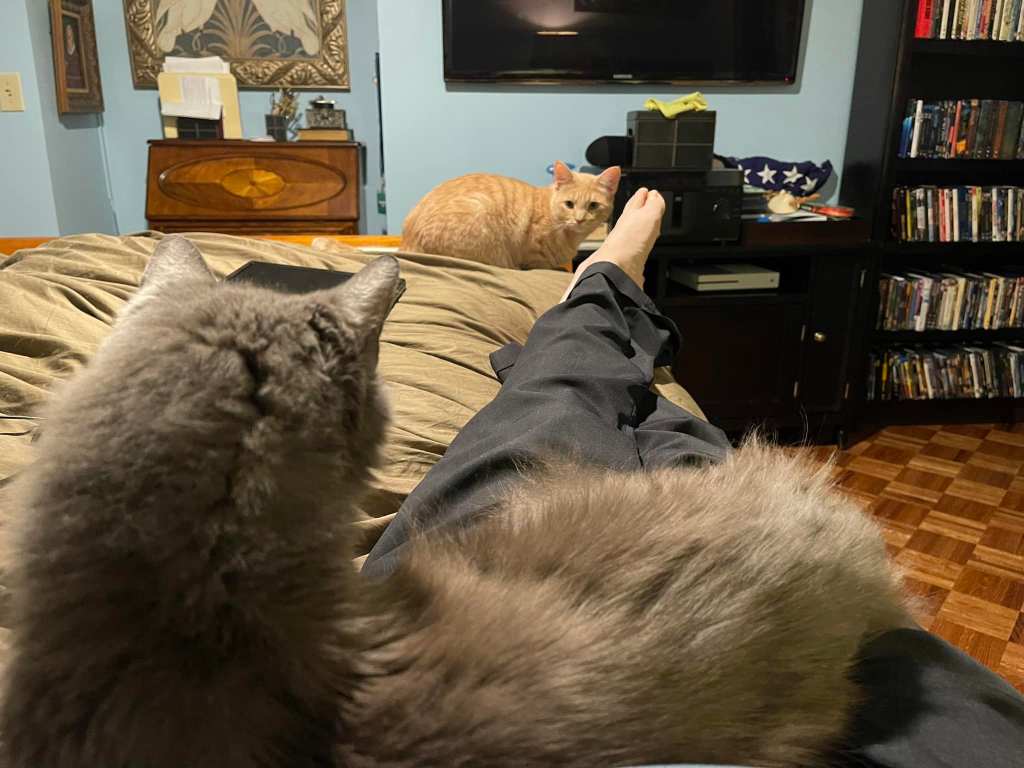
The problem with writing these essays, especially when I diverge into travel writing, is that I need to make sure I write a finish to each journey or people start to assume that I’m not coming back or that I’m felled by illness or accident in some foreign locale, languishing alone and forlorn. I assure you I am safely home in Birmingham, currently lying on my bed with my laptop in my lap and banging away at these words while Oliver the cat purrs beside me. Binx, the ghost cat, is no longer in hiding. He now wanders in and out of the room repeatedly, playing with various things on the floor, getting under the bed and clawing at the mattress, and shrieking and scampering out of the room should I happen to look at him for more than five seconds or make any sort of motion in his general direction. I assume it’s some sort of improvement in human cat relations and, at this rate, he may let me approach him from time to time around the holidays.

The trip back from Miami was uneventful. It’s about 800 miles, more than I will drive alone in the car on my own at my age so I stopped for the night in Tallahassee. Most of Florida is flat. The part of the panhandle with the capital at least has some rolling hills making it a rather nice small city, not that I saw much of it as I arrived around dusk and didn’t exactly feel like sight seeing the next morning. I finally got back home around dinner time on Sunday and did the usual post trip things. Unpacking. Laundry. Unwinding from long hours in the car (roughly 1,800 miles in toto over the week). I celebrated by doing not much of anything and starting House of the Dragon in HBO Max. I’ve read George R R Martin’s Fire and Blood so I know what’s going to happen to the various branches of the Targaryen family but now that all episodes have dropped, I can binge it over the next couple of weeks and get my medieval fantasy fix.

Of course, returning from a week off means having to dive into everything at work again. The issue with being gone for only a week is that the system isn’t very good about taking care of things in your absence, understanding that you’ll be back relatively soon and so things just pile up in inboxes rather than being dealt with. If you’re gone for two or three weeks, things actually get done in your absence as no one wants to be the person who let the urgent clinical issue molder for a couple of weeks leading to complications and unhappy patients. I got the last of the inboxes emptied today so I’m pretty much back at my usual square one. There were no major disasters while I was gone. The fire and blood were left to fantasy television rather than in my waiting room.

While I was gone, I was cast in a new show, The 1940s Radio Christmas Carol. A group of radio players, demoted from New York City to Newark, are doing a live broadcast of Dicken’s A Christmas Carol. Backstage drama, musical numbers, live foley sound effects, a Shakespearean lead in a dissociative state, hijinks ensue. I’m playing the host/narrator that’s trying to keep the whole thing moving along. It should be fun, although I have far too many lines. I think I’m going to cheat on the radio drama piece and keep my lines on my clipboard as I’m supposed to be reading them anyway…

The health press is full of provocative, if not entirely accurate headlines about a possible ‘triple threat’ this winter of colliding influenza, respiratory syncytial virus, and covid. Will that happen? It’s too early to say. What does seem to be going on is that covid numbers are remaining relatively static. Various new variants continue to circulate but none of them appears to be surging forward with major increases in infection or percentages of cases. The surges in Europe, Singapore, and elsewhere over the last month are abating without huge impacts. Respiratory syncytial virus (RSV), which usually affects children, is having a significant impact on childrens’ hospitals nationally with localized outbreaks in Texas and on the Eastern Seaboard. It’s a virus that causes mainly a bad chest cold in healthy adults but can cause serious pneumonia in the very young and the very old. The current thought among epidemiologists is that this is a result of pandemic era behavior. Most young children have been kept at home most of the last two years. This fall, daycares started to open up and fill at something closer to prepandemic rates. All sorts of toddlers who had had minimal exposures to peers and their viruses have all suddenly been exposed relatively quickly and so cases that would have normally happened over a year or two are happening over just a few short weeks.

Influenza is circulating. For some reason, there are relatively high rates currently here in Alabama and elsewhere in the Southeast. Usually it gets here later as it’s warmer here than most other parts of the country. Why this should be this year is unclear. I’m guessing that at least in part it’s because this is the part of the country least likely to have individuals mask or stay home when they’re having signs of respiratory illness so things just spread a little faster here, but that’s just a guess. Anyway, if you’re in this part of the country, I’d go get your flu shot now instead of waiting for later in the season. I got mine Monday morning. It made me a little under the weather for 24 hours but nothing I couldn’t handle or that required me to adjust my schedule at all.

No, I don’t know when Volume II will come out. My publisher and the book distributors are having words of some sort. When it all gets resolved and I have a proof copy in hand, I’ll be able to let y’all know. In the meantime, keep those hands washed, stay home if you’ve got respiratory illness symptoms, and get your flu shot and bivalent covid booster. You can get them at the same time for convenience, one in each arm. Just pretend you’re a military recruit in basic training.

October 21, 2022

South Beach

Dateline – Miami, Florida

It’s been a lazy couple of days hanging around the South Miami / Coral Gables part of the metro area. I’ve been staying with my friend who lives just a few blocks away from the University of Miami campus as he does not like to drive. He moved here at the same time I moved to Sacramento to start my internship so he’s been in this job and this house for nearly thirty five years. I’ve been down to visit him a half dozen or so times over the years, to say hi to his dogs (several generations now), the peacocks that wander through his yard and jump up on his roof (A peacock on the roof, sounds crazy, no?), and the very large banyan tree in his front yard that looks like it came out of a theme park Adventureland. We’ve spent a couple of days catching up, reminiscing about our times together in undergraduate and graduate programs, trying to outdo each other with outrageous puns, and reminding ourselves why we have remained close friends for over forty years.

Having been to Miami a number of times over the years, I did not feel a particular need to sight see. I did head over to South Beach to people watch and to have brunch at the Birdcage Cafe, occupying the building where the movie was filmed, and to walk a bit along the beach. The locals are beautiful but as vapid as ever. I remember my first trip to Miami with Steve thirty some years ago. We went to the beach in South Beach and started to tune in the conversations of the pretty people around us and realized there were only three topics – the gym, drugs, and nightclubs. We looked at each other and wondered what was going to happen to them in another decade or two when they weren’t as pretty, there was a new generation of hot young things, and they hadn’t managed to build a life. We both remembered that attitude vividly when we had the opportunity to move to Miami Beach five or six years later and it was one of the things that pushed us towards Birmingham instead. I also spent a little time in Coconut Grove and at the Biltmore Hotel which is just up the road from where I’ve been staying and remains one of my favorite pieces of 1920s fantasy architecture.

The Biltmore

Tomorrow, I begin the trek back to Birmingham. I could do it in one very long day but I’m getting too old to put that many miles in alone in the car so I’m going to split it in half and spend the night in Gainesville or Tallahassee or some other equally exotic place. Then, feeling somewhat rejuvenated, I’m going to sit down and take a long hard look at all the projects that have to be completed by the end of the year and make sure they are on appropriate timelines and that I haven’t forgotten anything significant. The second volume of the book is chief among them. There’s been a bit of a delay with Ingram, the book distributors, so the proof is still not ready. It should be ready next week and, as soon as I get it and check it, I’ll announce the publication date, likely mid November sometime. As long as it’s out for the holiday shopping season so you can all add it to your Christmas lists.

On the Covid front, it’s kind of hard to know just what to think. As so much of the world has acted as if it’s over, the data just isn’t being collected in the way that it was and it’s hard to determine just what trends are at this point. From what I can tell in the national numbers, we’re holding pretty steady. Daily deaths remain in the mid 300s and new cases remain around 35,000 a day. As so many of the diagnoses are now done through home tests and are relatively mild, it’s had to know how accurate those numbers actually are. All signs point to new strains of omicron rapidly arising and promulgating. Whether this will change the trend of the numbers back up into another surge remains to be seen. That’s certainly happened in Europe so it’s likely. Whether that surge will translate into more seriously ill individuals requiring hospital care is also unclear. There’s some data out of Germany suggesting that serious cases, while going up, aren’t soaring so that’s relatively good news. I suppose we won’t really know if there’s going to be a fall/winter surge until we’re actually in it given the lack of data and the disinterest of the media in actually presenting or explaining what data there are.

What can you do? Get your bivalent booster this fall. From what we can tell immunity, whether natural from infection or from vaccination starts to wane after about six months so regular boosting is likely going to be necessary going forward, just like flu shots. It won’t necessarily keep you from catching Covid but it will help keep you from needing the hospital and there’s some evidence that it reduces the chance of long Covid symptoms. (My fatigue, after two months, is still there but continues to improve). Keep your hands washed and sanitized. Should you continue to mask and where and when? Isn’t that the $64 question. I don’t know that anyone has exact answers on that. I continue to mask at work as I am in close proximity in enclosed space with people for some time. I’m not masking much in my private life unless it’s going to be contact of more than fifteen minutes in enclosed space with poor ventilation and a high likelihood of individuals who are unlikely to follow good public health measures. I think we all have to run our own risk benefit calculations.

October 19, 2022

Dateline, Miami Florida

Sorry for the lack of an update yesterday evening but twelve hours of theme park/roller coaster riding and 25,000 steps logged on the pedometer left me with little energy to write yesterday evening when I got in. It was a matter of laying on the bed, putting my feet up, and not moving for several hours. The days (and years) of where I could do that sort of activity unscathed have definitely receded into the past. I have a decade or two more of roller coastering in me yet but I will have to do some pacing of myself going forward. Fortunately, I did not have that much to do today other than drive the five hours to Miami from Orlando and that didn’t need to happen until after I got some decent sleep.

When I decided to stop in Orlando, I realized I would have a day for theme parks and thrill rides should I so choose. What should it be? Disney to see the new Star Wars attractions? Universal to see the expanded Harry Potter land? Sea World or Lego Land or one of the other ones I’ve never been to? I opted for Universal. I was pretty sure I could manage both sides (Islands of Adventure and Universal Studios) in one long day and I remain a huge Harry Potter fan, despite J. K. Rowling’s somewhat uncomfortable politics. I was introduced to Harry Potter when Steve was sick and an old friend sent me the first three books (all that had been published at the time) as a cheer me up sort of present. One of the things I did during the evenings during Steve’s terminal illness was read to him for an hour or two after dinner every night. It was togetherness time. I had always read to him on long car trips while he drove (the days before Audible) and it always reminded me of my childhood when my father, no matter how busy he was, took half an hour or so to read to me from the children’s classics at bedtime.

Harry became a favorite of Steve’s and I read him the first three a couple of times, joined by The Goblet of Fire, when it was published in the year before he died. He did not live long enough to read the others or to see any of the films. The first one opened a few months after his death. Tommy came along a couple of years later and was a big Potter fan. On our first vacation together, The Order of the Phoenix was released and we went out to the late lamented Times Square Virgin megastore at midnight to buy our copies. We made it a special date night to see each new film as it was released. We saw them in Birmingham, Seattle, and Orlando over the years.

And so, armed with a park hopper pass with an express add on in order to skip the longer lines, I headed to Universal Resort Orlando yesterday morning, arriving at City Walk just after the parks opened for the day. The weather was perfect – sunny, high 70s, no humidity. Warm enough for the water rides but not so warm as to be uncomfortable with running about. By 6 PM, I had hit the majority of the major attractions, had my body shot into the air, corkscrewed, and accelerated in reverse, and was pretty much sated. Thoughts on the Universal parks. Islands of Adventure is better designed that Universal Studios and more fun to spend time in. They have cleverly split the Harry Potter themed areas over both parks (connected with the Hogwarts express) so you have to go to both (for an extra fee) to get the full experience. Their newest ride, Hagrid’s motorcycle ride through his bestiary is great fun and well designed but I still prefer the original Hogwarts ride. The Escape from Gringott’s is fun and the interior design for the queue through Gringott’s bank is marvelous and worth seeing, even if you chicken out and don’t get on the coaster piece at the end The new Velocicoaster which is themed to Jurassic World and the raptors is perhaps the best roller coaster I’ve ever ridden. Dizzying drops. Multiple loops. Incredible theming. Definitely worth the half hour in line.

At dinner time, I met an old friend from Birmingham who has relocated to Orlando and works at one of the hotels on the property. She has an annual pass so we trotted off to Harry Potter land together and had dinner at The Three Broomsticks. Madame Rosmerta was not in evidence but the fish and chips were remarkably good. We caught up on each others lives and then she was kind enough to drive me back to my hotel so I didn’t have to walk that last mile. Collapse followed as mentioned above.

This morning, after sleeping in, I pointed Hope southward on the Florida turnpike towards Miami. The cold front bedeviling most of the US has arrived to Florida. It was in the low 50s in Orlando this morning, didn’t get much about 65 all day and has been raining off and on. Rain and Florida interstates are not the best combination so I did not make great time but eventually arrived in South Miami to spend a few days with one of my oldest friends, having been close since my freshman year of college, who teaches at the University of Miami law school and has for more than thirty years. We try to spend some time together every few years to catch up on life. I have no agenda for the next couple of days with him. He teaches in the mornings but we’ll come up with something to do in the afternoons, even if it’s just conversation. He’s one of the few people I know that can outdo me in the pun department and I’ll have to brush up my rusty skills.

I’ll do some reading up on covid variants and vaccine rates and other pandemic news in the next day or so and will update y’all on that front either tomorrow or the day after. In the meantime, I’m in the mood to wax poetic on any of the elder care issues I haven’t tackled yet. Requests are taken by sliding into my DMs as the kids say.

October 17, 2022

The Dali Museum – St Petersburg

Dateline, Orlando Florida

I woke up to sun streaming in off of Tampa Bay and through my windows (where not blocked by the parking garage), had the usual tasteless Hampton Inn free breakfast, arranged for a delayed checkout and set out to explore downtown St. Petersburg on foot. The bay was lovely. The pelicans were soaring overhead and there were herons and egrets breakfasting on the lawns nearby. Or maybe they were ibises. I didn’t have a copy of Roger Torey Peterson close at hand to double check. I ended up walking down the bay front, past the arts center and arrived at the Dali museum just as it was opening for the day. It’s the largest collection of his surrealist works outside of his own museum in Catalonia so I popped in to take a look.

Seeing somewhere between eighty and a hundred of his canvases arranged in chronological order, it was possible to see his development from his early classical work (influenced heavily by the impressionists and the fauvists) to academic studies from art school to his rapid transition to surrealism in the late 1920s to his more dreamlike enormous canvases of his later post war career. I hadn’t seen a lot of his earlier work before and that’s one of my favorite things to do, trace a visual artists development over time and see how they are influenced by other artists or social movements so I now feel I have a better understanding of Dali than just floppy watches. (Although I must admit I did buy a pair of Persistence of Memory socks in the gift shop). The museum is encased on the harbor end in a multitude of triangular glass tiles that look like they were put together by Buckminster Fuller after a three day bender. I was wondering a bit about the wisdom of having a museum made of glass in a hurricane zone but the collections themselves are in another part of the building constructed in a style best described as concrete bunker.

The Persistence of Memory – a piece not in the St Petersburg Dali museum

A further walk through downtown and then a battle with the valet to retrieve my car from the overnight parking as they had mislabeled my key as belonging to a large black van looking like it had been driven last by Ted Bundy but we eventually got it straightened out and I headed a little further to the west to St. Pete beach in order to spend a little time on white sand and dip my toes into the Gulf of Mexico. The Gulf beaches really are some of the nicest in the world and, being a Monday morning, there was next to nobody there. Then, back in the car and across I-4 and the flat lands of central Florida to Orlando, arriving late afternoon. I had dinner this evening at a very good Indian restaurant in Winter Park with an old friend from early UAB days whom I have not seen in person for seventeen years and we caught up on each others lives. I am now stretched out and conserving strength before theme parking it tomorrow.

I’m trying to detach from all things work related but I am in Central Florida and not far from The Villages so there are constant reminders around me about the clinical geriatrics part of my life. When I travel alone, I people watch and have spent the last few days observing the Florida retiree in their native habitat and have been busy diagnosing gait disorders, memory issues, and various neurologic complaints in the passers by. Many years ago, after UC Davis decided in a fit of pique to eliminate their clinical geriatrics program, Steve and I found it necessary to relocate away from the west coast. Our initial plan was Florida. I interviewed for a number of jobs in Miami, Fort Lauderdale, Orlando and some other town whose name I don’t even remember at this time. I left almost every one of those interviews with a very bad taste in my mouth. It was clear that the purpose of Florida geriatric medicine was to maximize reimbursement at all costs and that the actual clinical needs of patients was much lower on the list of priorities. (There was one exception – Mount Sinai in Miami Beach. I nearly took the job there but the finances of the program were tenuous at best and it was clear it would collapse in a few years – it did).

The Villages, just up the turnpike from Orlando, is the largest senior living development in the country – with a population of about 80,000 people in planned communities of homes for ‘active seniors over age 55’. It’s just one of many types of senior living available in the US. These type of communities, popular in sun belt states, are basically subdivisions with HOA rules restricting residence to certain age groups. You’re expected to maintain your own property and, as the majority of the residents are retirees, there’s plenty of people with too much time on their hands running around and ensuring conformity. The larger developments of this type have ‘care centers’ for those who can no longer live an ‘active life style’ where those who might remind the healthy residents of the inevitability of illness, incapacity, and death can be safely tucked away out of sight.

The Villages from the air

More popular than these behemoths in most places are independent senior living facilities, usually large apartment buildings with some central services such as dining facilities and recreation rooms. They may also have campuses with independent houses. Again, you’re supposed to be able to live your own life, just as you would in your own condo or house. The community may offer services such as housekeeping or meals for additional fees. You generally must be able to care for yourself (independent in your ADLs (activities of daily living) as we say in the biz) and have ways to maintain your IADLs (instrumental activities of daily living – the big four are meals, wheels, bills, and pills). Senior living isn’t cheap (usually 2500 to 4000 a month depending on the amenities) and is not paid for by Medicare or other health insurance as it is not medical care. There are some facilities that are run by charitable institutions for certain social groups and there are buildings which offer submarket rents to low income seniors through federal subsidies known as Section 8. Some states also allow for senior boarding homes or board and care homes which can function in this way on a much smaller scale. Regulation is left up to each state with different licensure, inspection and support programs. In some states, Medicaid dollars can be used for this sort of support, but not in Alabama.

The next step up (or down) is Assisted Living. This is for individuals who have difficulty maintaining their own bodies without assistance. (Their ADLs are compromised – the usual one being that they need help to bathe or shower safely). Assisted Livings are not that different from Independent Senior Living facilities architecturally and often both sorts of facility are housed in the same building or community on different floors or in different wings. In some communities, services, can be adjusted without someone having to move to a different unit. In general, to qualify for assisted living, you need to have no needs that would require a skilled nurse (such as a catheter), enough wits to know your medications (as they generally don’t have a nurse to dispense), and enough physical ability to exit the building with the assistance of no more than one other person. Again, this is not paid for by Medicare or health insurance, is more expensive than senior living, but can be covered by long term care insurance, if you’re lucky enough to have purchased it. As it has proven actuarially unsound, it’s difficult to find these days.

Similar to assisted living, is dementia living for those who are still physically active but who have lost their cognitive abilities. These facilities are licensed to keep the doors locked and to prevent residents from leaving against their will for their own protection. (In regular assisted living, you can walk out anytime you want – the facility may have rules but it’s not a jail). They also must take custody of medication to prevent misuse or errors. Again, it’s even more expensive than regular assisted living and, again, is not paid for by Medicare or medical insurance.

What we tend to think of as a nursing home (although all of these places might be considered such) is the skilled nursing facility or SNF. These are tightly regulated by both federal authorities (as Medicare dollars are spent here) and by states (as they are a major cost center for Medicaid dollars). They are designed for people who cannot care for themselves (in general missing multiple ADLs) or who have complex medical care needs such as indwelling catheters, feeding tubes, or major wounds requiring dressings and treatments. They, in general, offer three kinds of stays. Acute rehabilitation (such as after a serious accident or stroke). For this, a person must have the stamina for four or five hours a day of physical and other therapy and is generally reserved for younger people with a good chance of recovery. This is covered, to a certain extent, by health insurance with various terms and conditions. Subacute rehabilitation, which has far less intensive therapy and is the most usual kind of short term stay for an older person following a hospitalization for a serious illness or injury. It is a Medicare benefit which can be accessed as long as there has been a hospitalization of three days duration (defined as being admitted over three midnights) and generally lasts for up to twenty days. (It can be extended beyond if additional rehab will be helpful and the patient is willing to pay additional copays up to a total of 100 days). Lastly, custodial care, admission without plan for discharge. This is not paid for by Medicare. It can be covered by Medicaid if you are impoverished but most states are looking for ways to recoup those costs from families. SNF care is quite expensive (generally more than 6000 a month) and a good argument for long term care insurance as the average stay in a SNF for someone admitted for custodial care is four and a half years. People in these facilities are required to have medical care and evaluation on a monthly basis.

Lastly, there is Long Term Acute Care (LTAC). These are specialized hospitals for those who are critically ill but medically stable (think long term coma or ventilator patients). You never want to see the inside of one. Again, there may be some insurance coverage as it’s considered ‘medical’ in nature.

LTAC care

Most people think of these places as being populated by nurses. They’re not. As there has been a move away from not for profit to for profit in this sector as in every other, there has been more and more consolidation in the industry and most senior living facilities of whatever stripe are now owned by for profit corporations whose eye is on the bottom line, not on the comfort or needs of the residents. The average facility usually has an RN on duty day shift whose job it is to complete the paperwork that only an RN can do under federal and state regulations. Below them there will be a couple of LPNs whose job is mainly medications and more complex care such as catheter care. The fast majority of care is provided by CNAs, certified nursing assistants, who generally have a twelve week course in the basics to obtain their certification. They have traditionally been paid not much more than minimum wage.

The pandemic has upset this model. The women (they’re nearly all women) who generally filled the CNA jobs are no longer taking them. In some cases, they are finding easier jobs at higher wages. In others, they’ve been called back home to take care of children or elders due to changes in family structure due to the death or disability of a prior caregiver. We used to import a lot of women for these jobs through immigration but anti-immigrant sentiment has cut that way down. Whatever the reason, 98.5% of senior facilities in this country are currently short staffed just as the Baby Boom is beginning to age to the point where they will need them. This is obviously unsustainable. There’s going to be a major disruption in senior living, sooner rather than later. I have no idea what form it’s going to take but I expect that in another twenty years when I will need to consider such a facility, they won’t look like the ones of today.

October 16, 2022

Dateline – St. Petersburg, Florida

I slept in this morning before setting off on my continued journey south. It wasn’t all that exciting a drive through rural Georgia. The front entrance to Fort Benning with its statuary and flags was somewhat impressive but that soon gave way to cotton fields, peanut farms, flat stretches of scrub land with scraggly pine trees, and the red Georgia clay peaking through where the locals had been busy with their off road vehicles. I was off the interstate and soon found myself going through towns named things like Ty Ty. I think I passed by Plains, home of Jimmy and Rosalynn, but if I did, it made no impression. Kind of like the Carter presidency. He may not have been that great of a chief executive but we’re likely never to have another ex-President of his stature and moral fiber and I will be sad when he finally goes.

Eventually highway 82, or whatever it was, hit I-75 and I turned right towards Florida passing through such exciting towns as Valdosta. I had been to Valdosta once before. Many long years ago, I was brought in to be a lunch program on dementia for the local hospital staff. There were no good flights back to Birmingham that day so I was put up at some ranch in Thomasville that had been made into a boutique inn. It was notable for having been the gathering place for the Hollywood types in 1939 who came to Georgia for the premiere of the film version of Gone with the Wind in Atlanta and my room had a number of framed newspaper accounts of the festivities on the walls. I fully recognize the issues with that film in this day and age but I still love Scarlett and all of her gorgeous costumes. There is an infamous picture of me as her in the barbecue dress from one of the Politically Incorrect shows hanging around somewhere.

Found it….

Traffic came to a standstill on I-75 southbound somewhere around Lake City, Florida for no particular reason – at least I never saw an accident. Fortunately, I have good air conditioning and audio books so 45 minutes of staring at the back of a semi-truck didn’t pass too slowly. Eventually, the road swung a bit to the east and, as the sun set I was driving into the Tampa Bay area. (Tampa being one of the few major American cities I have never visited). It was too dark and too late to do any sight seeing and I ended up booking a hotel in St. Petersburg across the street from the St. Petersburg Yacht Club for the night. I arrived about 8:30 PM, found that I had a lovely view of the parking garage, took a walk out the St. Petersburg public pier and back and have retired for the night. I’ll leave more exploring until daylight hours tomorrow. I have some time as I’m not due in Orlando until the dinner hour and it’s not that far.

I promised a quick update on the coronavirus situation. We must take all information about what’s going on these days with a very large grain of salt as the data is not what it once was. Data isn’t being collected or being collected at much lower rates and intervals. It’s sluggish at being reported to CDC or other national authorities who can synthesize incoming information streams form hundreds of autonomous public health departments into reasonable predictors. The epidemiologists of my acquaintance are simply shaking their heads, unable to offer the guidance they once did. A quick perusal of news stories and coronavirus information sites shows that we continue to be in a relative lull, if you can call a continued death rate of 300-400 people daily a lull. At least the general trend is still slowly down from earlier in the summer.

At the same time, there’s a new Omicron variant on the scene. This one, dubbed BQ 1.1 went from being less than 1% of cases a week ago to more than 10% of cases this week. This suggests an exponential growth curve and there’s some evidence that it’s better at evading the immune system and vaccines that previous omicron variants. If you’re over fifty or have a chronic illness affecting the immune system, the new bivalent booster with the omicron specificity is looking like a really good idea. It’s most efficacious if there’s a twelve week gap between any other booster or infection which is why I can’t get it yet. I’m only about six weeks out from my recent infection so I can’t get it until about Thanksgiving. I’m champing at the bit. Will the BQ cause a new surge this fall? Only time will tell. Numbers are definitely up in Europe but that’s likely due to a combination of colder climate driving more people indoors and German Oktoberfest celebrations acting as super spreader events. I look at that BQ and my brain either wants to add another B and order the pulled pork sandwich or shift the B to a D and order a Heath Bar Blizzard. I think that’s my road trip brain calling. Dairy Queen is one of the few things you can count on off the beaten track.

I feel like I need to write a learned post on another senior health topic. Have I done how senior living facilities work and the differences between them yet? If not, I may tackle that this week. But not tonight…

October 15, 2022

Dateline – Columbus, Georgia

A number of obligations prevented me from getting out of town on my make it up as I go along week away as early as would have liked so I haven’t exactly made it terribly far. As these obligations included dinner with a friend, a fund raiser for the theater with which I have been most frequently affiliated over the last few decades, and a children’s opera in the park, I can’t say it wasn’t a pleasant delay before I was able to toss my bags into my Prius, the great red Hope, and finally start heading southward. The major last minute delay was getting the last of the notes and emails for work finished up. For reasons known only to the laws of firewalls, I can only get those to work properly on my old laptop which is not the one I use for browsing and writing and I didn’t feel like dragging two laptops down south with me. I hit send on the last note around 2:30 this afternoon and was able to leave the condo to the cats (Binx has finally come out of hiding and is doing the cat exploration thing which seems to consist mainly of knocking things over about 3 AM) and get on the road.

I thought about heading to the gulf beaches first, but after looking at hotel prices on Saturday night, I thought better of that and decided instead to head down highway 280 towards Georgia whence I could turn either towards western, central, or eastern Florida. As the miles hummed along, I realized that I would pass through Auburn, home of the university of that name and then it struck me. I’ve lived in Alabama for two dozen years and I’ve never been there so that would need to be the first stop. So a few hours later, I parked near campus, took a walk through some of the quads, saw Jordan-Hare stadium and Toomer’s corner and the other landmarks of which I have heard for years but never actually seen. Working at UAB, which is an urban campus without the rolling grounds and gardens and quadrangles typical of most American universities, you don’t get the usual rhythms of campus life, especially at my end, the medical and health professions end where everything goes hell for leather 365 days a year. This afternoon, in perfect weather, the Auburn campus was full of young people playing frisbee on the lawns, studying under trees, gathered around picnic tables with their lattes, the sort of things I did more than forty years ago when I was a college freshman just starting to discover adult life.

Fall is my favorite time of year. I think it has something to do with having always lived and worked in the educational environment. Fall is the time of new beginnings, the changing of the seasons away from excess heat (and humidity in the south), the colors of the leaves (orange is my favorite color – I have no idea why), and the expectations of the holidays to come. As I was watching those eighteen and nineteen year olds, young adults whose educational lives have been upended and scarred by the pandemic, I drifted back to other falls and other campuses: The Lakeside School in Seattle where I spent my high school years with its maple trees and New England style buildings of red brick, white paint, and the occasional cupola. Stanford University with its sandstone archways and red tile roofs. Washington State University with its views of the rolling wheat fields of the Palouse stretching off in every direction. The University of Washington with Mount Rainier always hovering in the background when the sun was out.

I figured I had to at least get across the state line and into the Eastern time zone prior to stopping so I kept on going and decided to spend the night in Columbus where I am ensconced in my usual Hampton Inn close to Fort Benning. It’s dark so I can’t tell too much about what’s going on out there other than there seem to be a great many pine trees and there seems to be some sort of marsh across the road. Maybe there will be some interesting bird life tomorrow. Today’s bird life consisted of a flock of lazy and somewhat bad tempered Canada Geese at Avondale Park. I had gone to the amphitheater there this morning to see Opera Birmingham’s children’s opera about Little Red Riding Hood. The geese were lounging besides the path leading up to the seating. Fortunately they stayed where they were rather than pestering the toddler patrons for their veggie straws.

Little Red Riding Hood’s Most Unusual Day was highly amusing. Like most good children’s theater, it operated on two levels, one for the children and the other for the adults. For the kids, the story was the familiar one (with some twists) and there was a certain amount of breaking of the fourth wall. For the adults, the music included spot on parodies of such familiar pieces as Largo al Factotum and Offenbach’s Barcarolle from The Tales of Hoffman. Children should be introduced to opera and serious music early. I know as a child I had kids records of a number of classical pieces such as Peter and the Wolf, The Carnival of the Animals, and selections from Gilbert and Sullivan. I attended my first adult opera in fourth grade under the aegis of the Seattle Public Schools. In that period, the early 1970s, Seattle Opera did school matinees in English and all those who wished to pay a small fee for the field trip, were bussed down to the Opera House at the Seattle Center for the performance. As an adult who now performs on stage, I wonder what those singers thought of a house of several thousand fourth and fifth graders (plus long suffering chaperones). As I remember it, we were reasonably well behaved for children and stayed in our seats but boy we were noisy before and after the performance.

The Opera House – as it was in the 60s and 70s

I recall performances of Faust, The Valkyrie, and The Barber of Seville. I think there was a fourth one in there but I’ve forgotten what it was. Did they make me an opera fanatic? No, but it raised my consciousness as to what opera was and kept me from being scared of it so I would catch the occasional broadcast of Live from the Met on PBS or see a performance and have a pretty good idea as to what I was in for and how it worked and what to listen for. It left me primed for being open to learning a great deal more when I met and eventually married a true classical musician in Tommy who had opera in his blood. (He made his debut at age 10 as the shepherd boy in Tosca). And now here I am as the president of Opera Birmingham’s board of directors. Something ten year old me, sitting in the audience of Faust in Seattle back in 1972 could never have conceived of.

I haven’t done much reading of my usual Covid materials and blogs recently as everything seems to be fairly quiet. I don’t know if that’s going to last. Apparently there’s a bunch of new strains beginning to spread. I’ll see what I can put together and try to write about that tomorrow, wherever I end up. Tampa? Orlando? Dexter’s boat?

October 9, 2022

I’m getting a lot of complaints from patients and their families about the lack of timely availability of specialty and other services these days. There isn’t a day in the office where I’m not having to try to end run scheduling software in order to get someone something before next March. It’s become yet another daily task for which I was left unprepared by medical school. We didn’t have classes in data entry either but that’s become a big piece of what clinicians have to do these days. Fortunately, my high school career as a keypunch operator gave me certain skills that I have retained. I suppose I have come full circle. The requests for additional data fields that have no clinical relevance in some parts of my job have required me to put my foot down occasionally. The data is there and the administrative office that wants it can hire an abstractor rather than make me fill out yet another form.

My patients keep asking me why the American health system, at least form their point of view, is falling apart. It’s a complicated question without an easy answer but I’ve been able to piece some things together and, of course, a good deal of it is pandemic related. I think we’re all going to continue to find that a lot of the changes that are coming in our society over the next decade will be traced back by historians to the pandemic and political upheavals of the last five years or so. Don’t expect any of this to end any time soon. The closest analog is likely the impact of World War I and the 1918-19 flu pandemic. Take a look at the society of Titanic (1912) and The Great Gatsby (1923) – only eleven years apart but everything has changed.

Once upon a very long time ago in the spring of 2019, I had an idea for a book. It was to be called Boom! and, as I leisurely wrote it over the next five years or so, it would come out in the mid 2020s explaining how the health care system would be changed by the pressures of the aging Baby Boom which would start needing geriatric care en masse starting in the late 2020s and early 2030s. I wrote a couple of chapters over that spring and summer and then, as fall arrived, got caught up in various theatrical endeavors so I put it aside to work on again in the spring of 2020 when the theater season would be slowing down for summer. Nature, of course, had other ideas and upended all of our lives in March of 2020 and I, as part of my coping with wrenching change, began these writings, completely unaware that they would morph into what is now two and almost certainly to become three volumes of The Accidental Plague Diaries. The rough chapters of Boom! were transformed into some of the material that has gone into these essays – perhaps I’ll pull it out again and rework it and Boom! will live again. Perhaps not. I’ll just have to put aside those daydreams of being hailed as a clairvoyant as my predictions regarding the health system came true.

The pandemic put various trends that were already present on steroids and so here we are in 2022 starting to have problems that I thought we wouldn’t see for another five to ten years. The inability to provide services in a timely fashion is a key one. I won’t say that the US health care system is irreparably broken at this point, but it’s definitely on the critical list and it’s going to take some major changes in policy to right the ship. If that doesn’t happen, we’re going to see continued and worsening delays in the system and people will die as they won’t be able to get what they need when they need it.

So why is this? The first pandemic related reason is departure of skilled clinical staff. This doesn’t just apply to providers but to all of the other professions that make up modern health care – nurses, therapists, social workers, pharmacists, dietitians… the list goes on. Being on the front lines in the early pandemic prior to the availability of vaccines meant that some died or developed long covid related health issues that kept them from working. The older generation used the pandemic as a reason to retire. Loss of other family members forced some to leave the work force to take over as caregivers for suddenly parentless children or family elders who no longer had a consistent adult to help them at home. Most of these positions require a highly skilled individual with many years of training and licensure requirements. They can’t be created from scratch in a year or two. Personally, I had thirteen years of higher education. When everyone has a job, there’s no one left to hire. (Our current anti-immigration sentiment, even against highly skilled immigrants isn’t helping).

Tangential to this is that a lot of the departures to retirement are of senior individuals with decades of experience who are adept at caring for large panels of patients. It’s not something you can do right out of training. You have to have a great deal of real world experience to learn how to juggle all of the balls at once. I didn’t really become good at my job until between five and ten years after completing my training. That was now twenty years ago so I feel like I’m really good at it at this point but there are very few around who could step up and do just what I do. Every one that retires throws hundreds to thousands of patients back into the system looking for new medical care and snatching up new patient appointments.

The pandemic also prevented the system from operating normally for several years. It’s only really gotten back to working in its usual way this past summer. Two years of seat of the pants ad hoc medicine and postponement of routine procedures and screening tests means two years of disease that might have been detected early getting away and presenting at a more advanced and complicated state requiring more intensive treatment and more appointments. There’s a huge backlog of mammograms and colonoscopies and other such things that have to be worked through. I would like to think that we’ll be able to operate normally going forward but I’m not so sanguine in thinking that everything is over. New variants keep circulating and human nature, politics, and inertia are keeping people of getting their boosters.

After the pandemic, the next most important issue is demographics. Here comes the Baby Boom. The lead edge will turn 77 next year and the years form 75-85 are generally when individuals start to transition from the robust health of late middle age to the collections of chronic diseases and dysfunctions that characterize old age. The Greatest Generation and the Silent Generation (to which most of my current patients belong) tend to be a stoic and accepting lot who understand that as their bodies age, things will change and they aren’t happy about it, but they do get the basic biological issues that aging presents. The Baby Boom is not of this mindset. They consider themselves forever young and the problems of aging, being diseases, must therefore have cures and they must have them dealt with and removed now, thank you very much, for they are interfering with their life plans. As they continue to age, more and more of their problems will not be amenable to any sort of curative treatment and they are not going to like that one bit and make demands of the health care system that cannot be met. There is also the impact of their huge numbers. The Baby Boom in the US has had 10,000 people a day celebrating their 65th birthday since the first ones did on January 1, 2011 and that won’t end until December 31, 2029. We haven’t substantially increased training programs for health care providers since the turn of the century despite this demographic imperative. It’s too expensive.

Politics comes into play. The passage of the Patient Protection and Affordable Care Act (Obamacare if you will) substantially altered the US health insurance market and, in the decade or so since its implementation, the number of uninsured has fallen from about 15% to about 5% nationwide. This is a laudatory goal (and has anyone else noted that the Republican Party is no longer introducing bills to repeal Obamacare ever other week?) but it has had the effect of granting an additional thirty million people or so easier access to the system and all of them are wanting and should be entitled to services.

Then there are the rather peculiar capitalistic beliefs under riding American medicine. In most countries, the health system is studied and planned and the pieces are designed to maximize the health of the population and to provide the widest possible service for the lowest possible cost. This means the types of specialties are controlled to the needs of the population, not the needs of the stockholders of hospital corporations or other such motivators. Our system is more of a free for all. There are limitations on the number of specialty training positions but less popular specialties, which tend to include those that provide the majority of ambulatory care are often going begging. We need about 35,000 geriatricians in the 2030s and 2040s due to the needs of the Boom which will be in their 80s and 90s during that period. We have about 6,000 currently and we’re only producing about 200 new ones a year, just enough to offset retirements.

Put all of these things together and, yes, you’re going to have to wait for that appointment. I’ll do my best for you. I’ll pull strings when I can. But it’s just where we are.